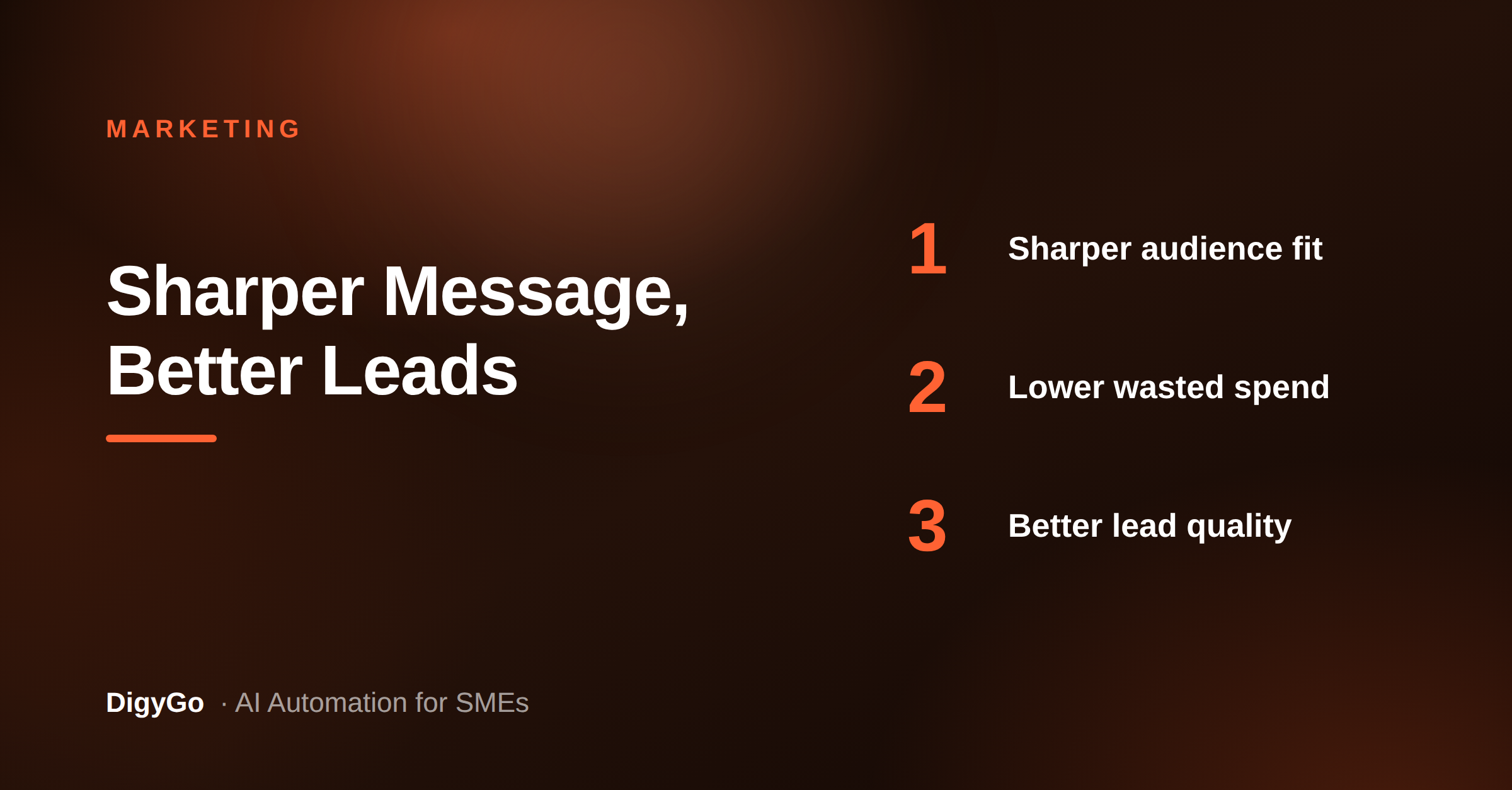
Most SMEs do not have a lead problem first. They have a positioning problem. If the market cannot quickly tell who you help, what you solve, and why you are different, every campaign has to work harder than it should.
A practical guide for SME founders on tightening positioning so content, ads, and sales conversations attract better-fit enquiries without increasing spend.
Clear positioning is not a branding luxury. It is the filter that makes demand generation cheaper, content more useful, and sales conversations easier. When the message is sharp, the right buyers lean in and the wrong ones drift away before they waste your time.
Key takeaways
- Positioning decides whether the right buyer understands your offer in seconds.
- Better positioning reduces wasted spend because fewer unfit leads enter the funnel.
- Content works better when it speaks to one audience, one pain point, and one outcome.
- Strong positioning makes sales follow-up faster because the prospect already knows why you matter.
Why positioning changes lead quality
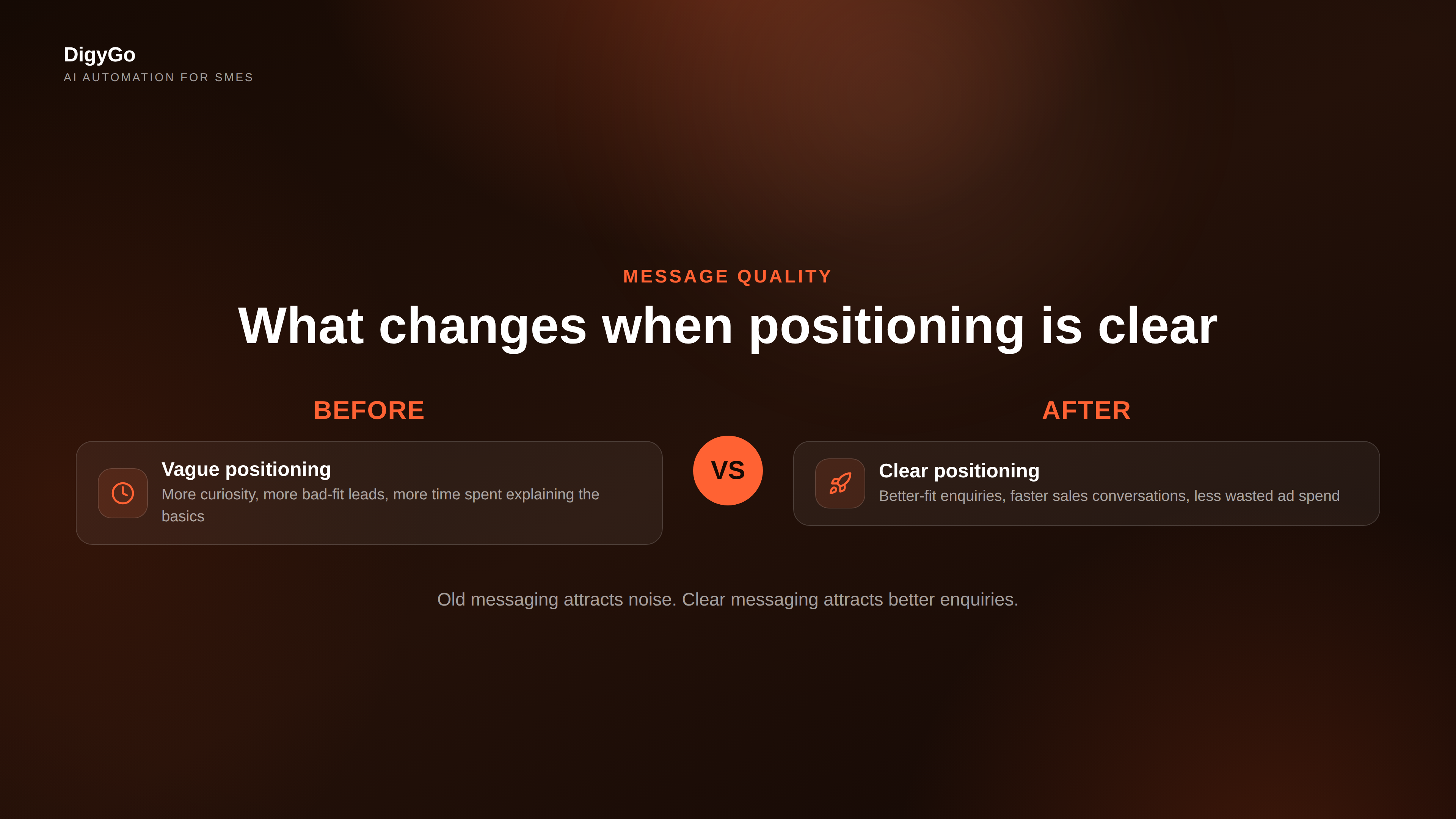
When SMEs say they need more leads, they often mean they need more of the right leads. A vague message attracts curious visitors, bargain hunters, and people who are not ready to buy. That creates noise for the sales team and makes marketing look weaker than it is.
Positioning fixes that by answering three questions early: who is this for, what problem does it solve, and why should the buyer trust this business now. If those answers are clear, your ad, landing page, social post, or WhatsApp follow-up can do less convincing and more qualifying.
What changes when the message is sharp
- Your content gets easier to write because every post can point back to one core promise.
- Your ads waste less budget because the wrong audience does not stay interested for long.
- Your sales team spends less time explaining the basics and more time solving the actual problem.
- Your follow-up becomes stronger because the enquiry already understands the business context.
What clear positioning looks like
Good positioning is simple enough to say out loud and specific enough to matter. It does not try to impress everyone. It tells one ideal buyer exactly what result to expect and why your process is different from a generic competitor.
A useful positioning sentence: We help specific buyer achieve specific outcome without common frustration.
For example, a generic line like “we do digital marketing” sounds broad but forgettable. A sharper line like “we help local SMEs turn website traffic into qualified enquiries with content, proof, and follow-up systems” gives the market something concrete to remember.
That same clarity should show up in your homepage headline, ad copy, email signature, sales deck, and content calendar. If each touchpoint says something different, prospects have to re-learn your business every time they see it.
How to sharpen your message
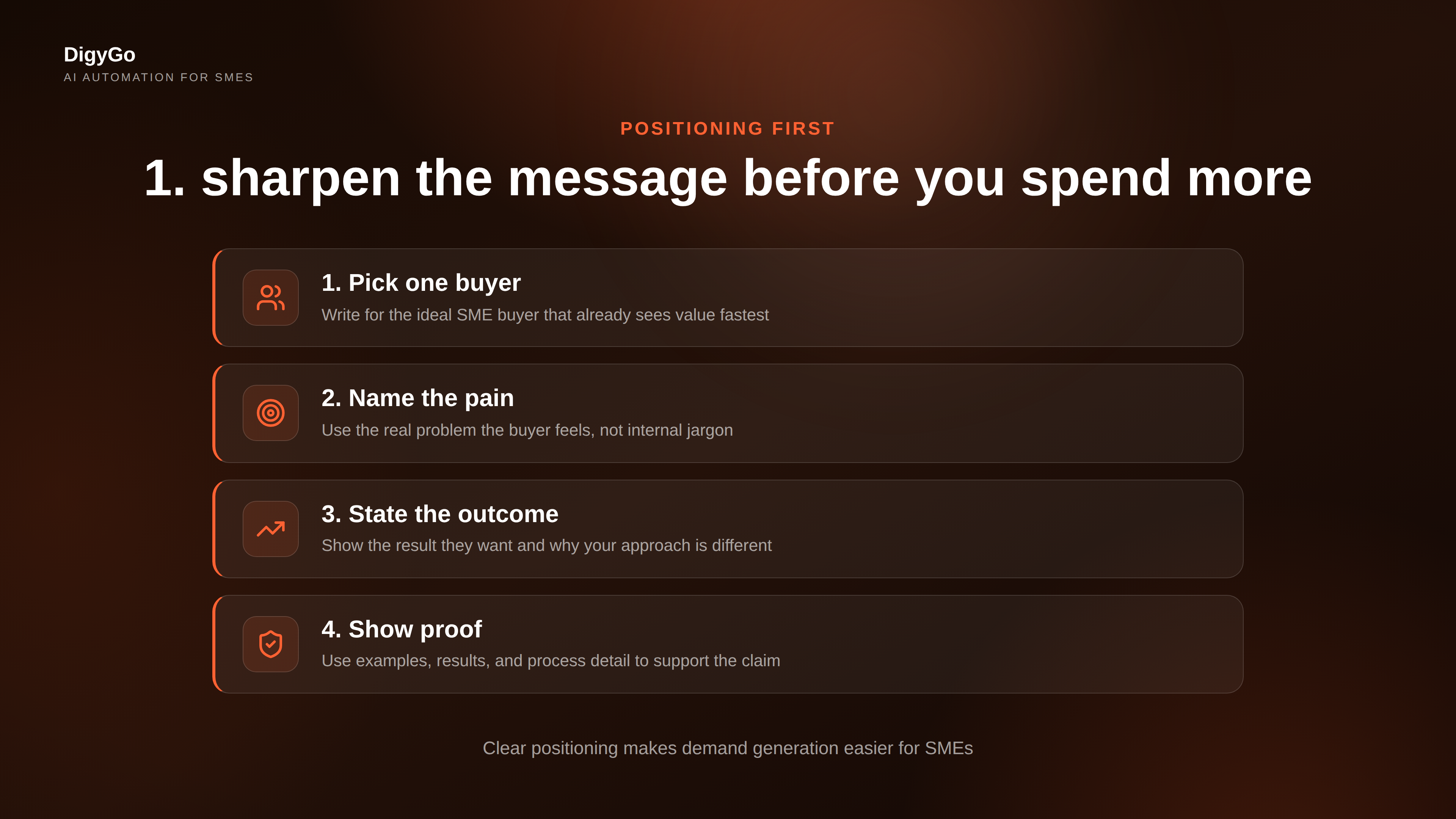
You do not need a complicated workshop to improve positioning. Start with the buying conversation. Look at the best leads you already closed and ask what they had in common.
- Pick one buyer type. Do not write for every SME in the market. Choose the segment that already sees value fastest.
- Name the real pain. Use the problem the buyer feels today, not the internal jargon your team uses.
- State the outcome plainly. Tell them what changes after they work with you.
- Show proof in the same language. Use examples, results, or process detail that support the claim.
- Remove extra offers. Too many services make the message weaker, not stronger.
Use content as a positioning test
Every blog post, reel, and case study is a chance to test whether your message is actually landing. If the post gets attention from people who will never buy, the positioning may be too broad. If the post attracts fewer visitors but better enquiries, the message is probably getting sharper.
That is why content should not just chase traffic. It should reinforce the buyer's understanding of who you help and why your approach is worth a conversation. The best content does both at once: it educates and it qualifies.
Build content around one buying trigger
Many SMEs publish content around topics they like, not triggers their buyers care about. A better approach is to anchor each article to one real buying trigger. That might be slow lead response, messy follow-up, low-quality enquiries, unclear offers, or poor conversion from website traffic.
When you write around one trigger, the article becomes more useful to the buyer and more reusable for sales. It can be turned into a LinkedIn post, a WhatsApp message, a short video script, or a sales objection response.
- Trigger: Leads are coming in, but they are weak.
- Message angle: The offer is too broad.
- Content goal: Show how positioning improves lead quality.
Once that trigger is clear, your marketing starts to compound. The same message appears in more places, the audience hears it more often, and the business looks more consistent.
How to know your positioning is working
You will know it is working when fewer prospects need the basics explained, your enquiries sound more relevant, and the sales team spends less time filtering out bad-fit leads. You may also see better response rates on content that speaks directly to the problem you solve.
The result is not just better branding. It is better economics. Clear positioning helps SMEs waste less money, waste less time, and create a sales process that feels easier on both sides of the conversation.
FAQ
Is positioning the same as branding?
No. Branding is how people recognize you. Positioning is why they should care and when they should choose you.
Can stronger positioning reduce ad spend?
Yes. Better positioning usually improves relevance, which means more of your budget reaches people who are actually interested in the offer.
How often should SMEs review their positioning?
At least whenever the market shifts, the offer changes, or the lead quality starts dropping. If enquiries are getting weaker, the message should be checked first.