Most SME leads arrive on WhatsApp. The customer sends a message after seeing a Google post, a friend's recommendation, or your ad. You reply once. Then the chat sits there — the customer doesn't reply immediately, the follow-up never happens, and the lead goes cold on the channel where it arrived warmest.
WhatsApp is where most SME leads arrive, but one-and-done replies let them go cold. A practical guide on building a three-stage automated WhatsApp follow-up sequence that converts more chats into booked jobs without losing the personal touch.
WhatsApp is not just a messaging app for SMEs in Tamil Nadu. It is the front door of the business. Yet most lead follow-up systems treat WhatsApp the same as a website form or a phone call — one-size replies that do not account for the expectations, the read receipts, the typing indicator, and the always-on nature of the conversation.
The businesses that convert more do one thing differently: they treat WhatsApp as a structured follow-up channel, not a one-off reply.
Why WhatsApp Follow-Up Is Different from Email or Phone
Before you build a WhatsApp follow-up system, it helps to understand what makes this channel behave differently from email or phone calls:
- Immediate expectations. On email, a reply within an hour feels fast. On WhatsApp, the customer sees your "online" status and expects a response in minutes. Speed-to-lead on WhatsApp is measured in single minutes, not hours.
- Read receipts change the game. The customer can see you have read their message. If they see a blue double-tick but no reply, the damage to trust is instant. Your follow-up system cannot leave a "read but not replied" situation hanging.
- Threads stay alive longer. An email thread gets buried. A WhatsApp chat sits on the customer's home screen, visible every time they open the app. That works in your favour — your follow-up touches are more likely to be seen — but only if the messages are useful, not annoying.
- Voice and media are expected. On WhatsApp, sending a photo of the finished work, a voice note explaining the service, or a quick video of a similar job is completely natural. Your follow-up system should use this, not just send plain text.
Key takeaways
- WhatsApp leads expect a reply in minutes, not hours — speed-to-lead is tighter here than on any other channel
- Read receipts expose you: a seen-but-not-replied message damages trust instantly
- A structured WhatsApp follow-up sequence converts more chats into booked jobs than ad-hoc replies
- Voice notes, photos, and quick videos belong in the follow-up — WhatsApp is built for rich media
The Problem: One-Message-and-Done Follow-Up
The most common WhatsApp follow-up pattern in SME businesses looks like this:
"Hi, thanks for reaching out. Our pricing starts at ₹X,000. Let us know if you're interested."
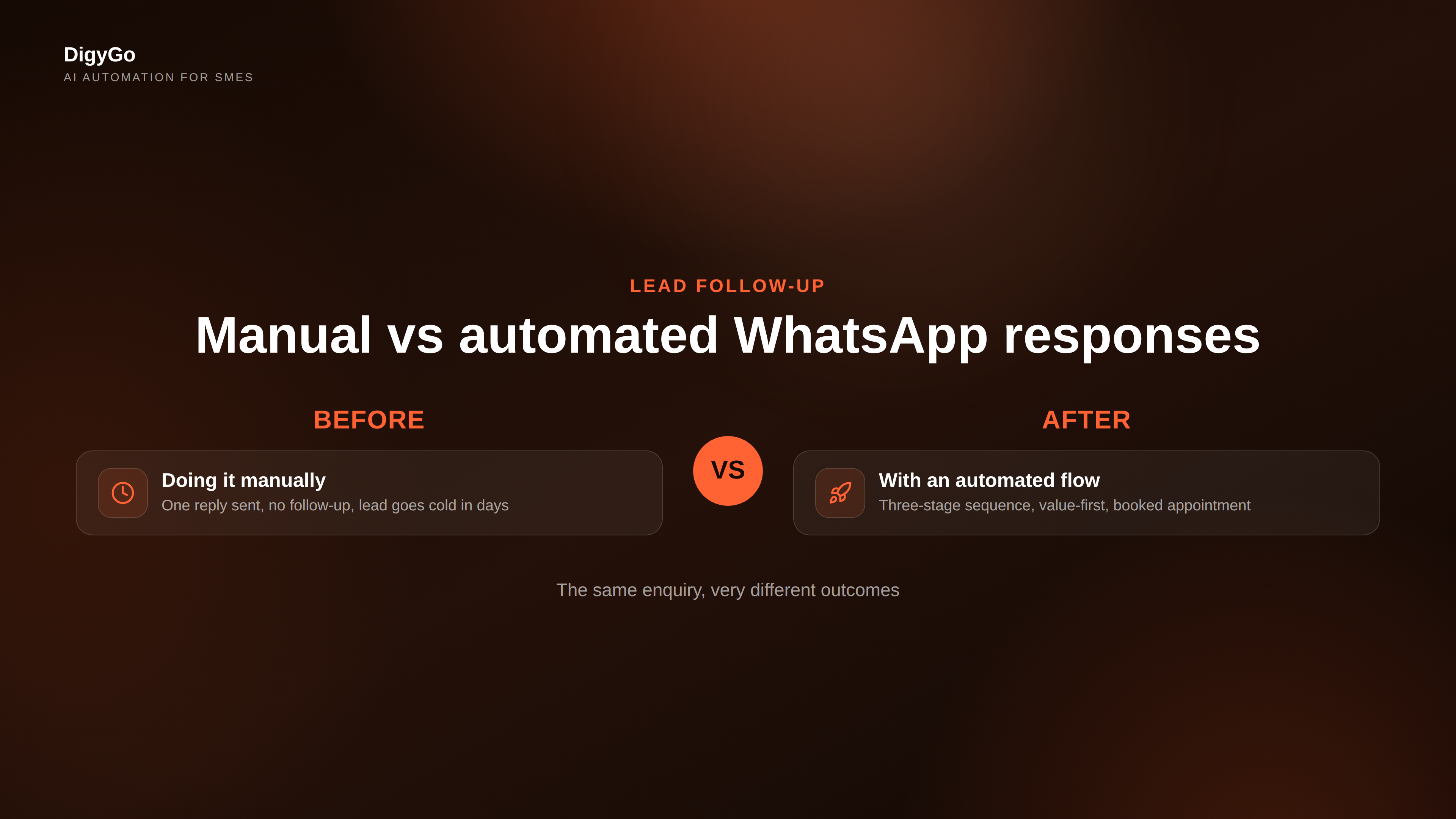
Then nothing. The customer reads it, may even be interested, but they are not ready to say "yes" to a price tag without more context. The message sits. Days pass. The next time the business follows up, it is either a generic broadcast or it does not happen at all.
This one-message-and-done approach loses leads not because the customer was not interested, but because the follow-up did not give them a reason to reply. A single reply treats the conversation as a transaction. A structured follow-up treats it as a relationship that needs a few useful touches before the customer is ready to book.
Building a Three-Stage WhatsApp Follow-Up Sequence
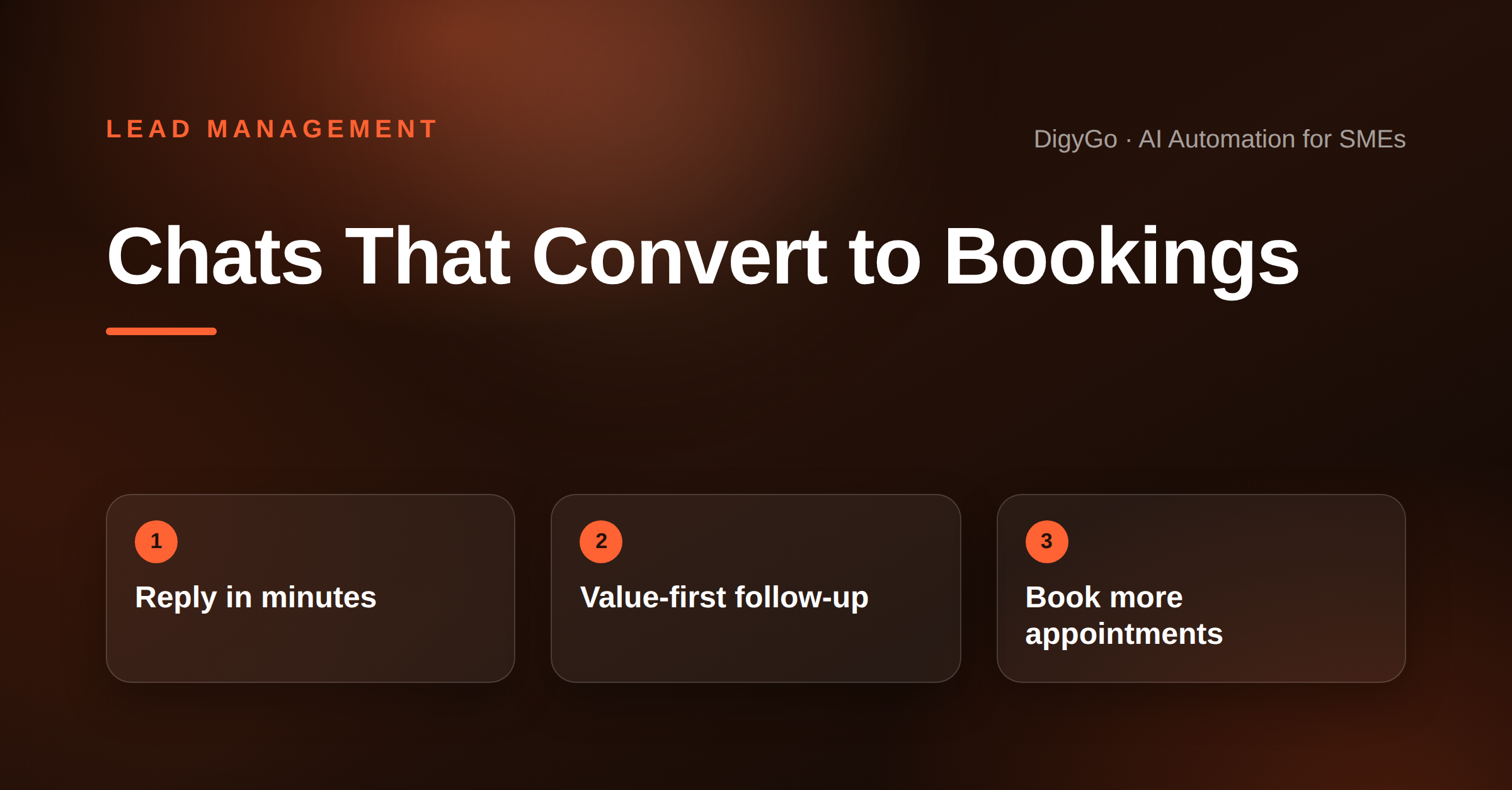
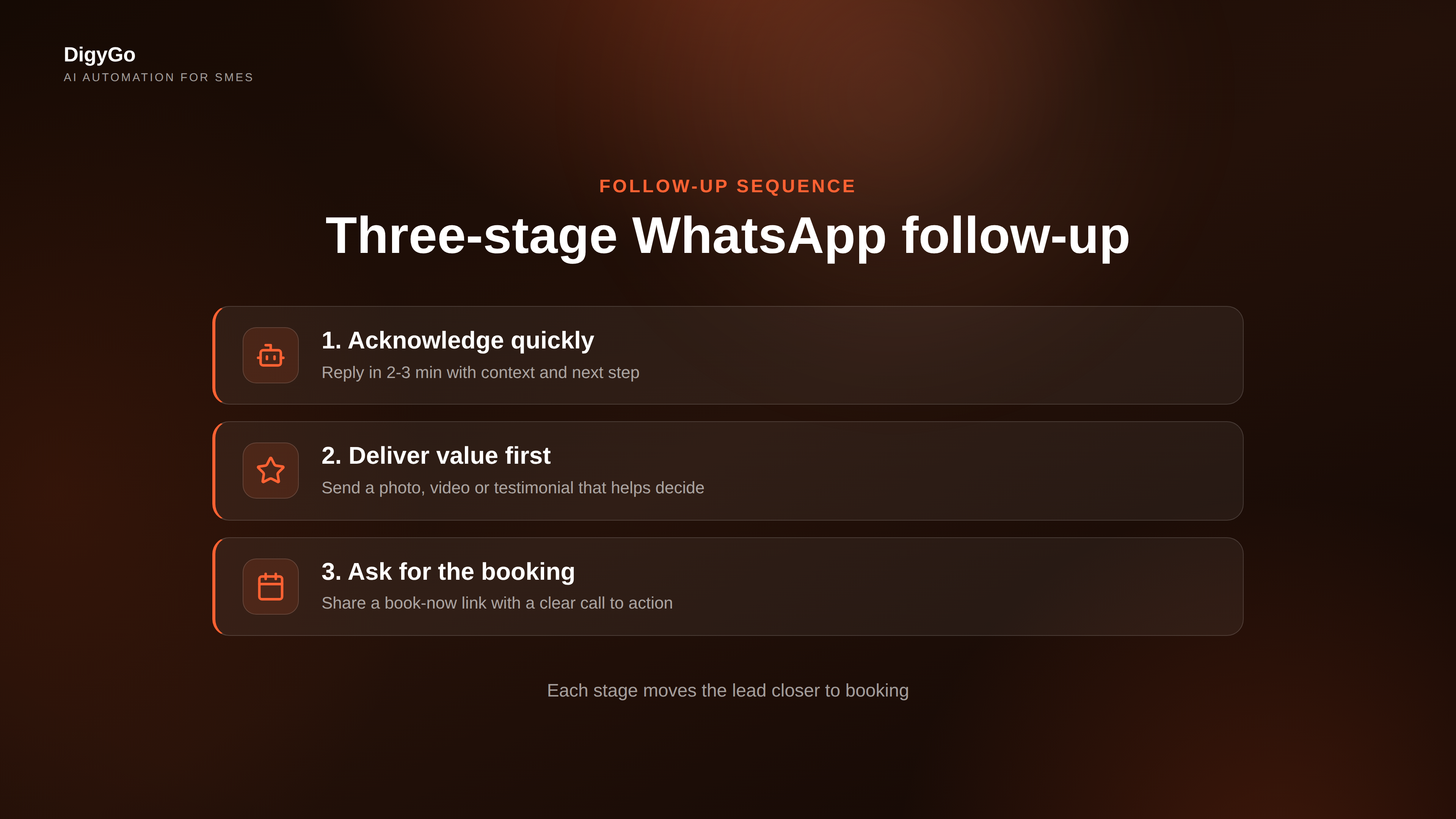
The most effective WhatsApp follow-up system has three stages. Each stage has a different job, and once you set it up, it runs without you having to remember which lead is at which stage.
Stage 1: Acknowledge, Contextualise, Set the Next Step
The first reply should arrive within 2–3 minutes. It must do three things:
- Acknowledge — confirm you received the enquiry and that a specific person will handle it.
- Contextualise — repeat what they asked about so they know you were listening ("I see you are looking for a plumber for your residential project in Peelamedu").
- Set the next step — tell them exactly what happens next ("Let me share a quick overview of how we handle this type of work, and then we can set up a call").
This first message does not ask for a sale. It establishes that someone is paying attention, that the business is organised, and that the conversation has a path forward.
Stage 2: Deliver Value First
An hour later (or the next morning if the enquiry came at night), send a follow-up that delivers something useful — not a discount or a pressure message, but information that helps the customer make a decision.
This could be:
- A photo or short video of a similar job your team completed recently
- A brief breakdown of what the service includes (materials, timeline, what you cover)
- A quick voice note explaining your process in 60 seconds
- A link to a testimonial from a customer with a similar requirement
The job of Stage 2 is to move the lead from "interested and cautious" to "informed and ready to talk." Do not skip it. Most leads that go cold do so between Stage 1 and Stage 2 because the business never sent that value touch.
Stage 3: Direct Booking Ask
Once you have acknowledged them quickly and delivered something useful, the third touch is where you ask for the booking. By now, the lead has seen that you are responsive (Stage 1) and that you can show proof of your work (Stage 2). The booking ask feels like the natural next step, not a cold pitch.
Send a direct message with a clear call to action: a book-now calendar link, a suggested day and time, or an offer to send someone to their location for a free estimate. Make it one tap to respond.
How Automation Keeps It Personal
The concern most founders raise is that automating WhatsApp follow-up will sound robotic. The truth is the opposite — a well-built automation system makes follow-up more personal because it never forgets a lead, never sends the same message twice to the same person, and always follows up at the right time.
Here is what good automation looks like for WhatsApp:
- Automatic Stage 1 triggered the moment the enquiry arrives — no human needs to remember to send the acknowledgement.
- Timer-based Stage 2 — if the lead did not reply within one hour (or overnight), the value touch goes out automatically.
- Escalation to human. If the lead replies at any point, the automation pauses and a real team member takes over. The chat history is right there — nobody has to ask the customer to repeat themselves.
- Booking link inserted automatically in Stage 3, with a fallback to a human call if the customer prefers.
The automation is doing the timing and the delivery. The content can still be written in the business's voice — even a pre-written template can sound natural when it refers to what the customer asked about and includes the business's real work samples.
Real example: An electrical contracting business in Coimbatore set up a WhatsApp follow-up sequence through DigyGo. Leads that used to sit unread for 2–3 days now received a photo of a completed wiring job within 2 hours of the first message. Their booking rate from WhatsApp enquiries doubled in six weeks. The founder never picked up a single extra phone call — the system handled the follow-up timing, he handled only the leads that replied.
The Metrics That Matter for WhatsApp Follow-Up
If you are going to run a WhatsApp follow-up system, track these three numbers:
- Reply rate to Stage 1. How many leads reply to the initial acknowledgement? If this is low, the acknowledgement may sound too generic — personalise it with their name and their specific request.
- Booking rate after Stage 3. How many leads that receive the full three-stage sequence end up booking? This is your conversion benchmark. A 15–20% booking rate from WhatsApp leads is a strong starting target.
- Time from lead arrival to booking. The faster a lead moves from Stage 1 to Stage 3, the less likely they are to go cold. If bookings cluster within 24–48 hours of enquiry, your sequence timing is working.
Review these once a week. If any number drops, the issue is usually in the content of that stage — the message is too long, too salesy, or missing the context the customer needs to move forward.
Frequently Asked Questions
Will automated WhatsApp messages look spammy?
Only if the message is generic and sent without context. A message that references what the customer asked about and includes a real photo of your work does not feel spammy — it feels like a helpful business that pays attention. Avoid broadcast-style messages with no personalisation.
Do I need a separate WhatsApp Business API account?
For a basic follow-up sequence with a few automated messages, the standard WhatsApp Business app (free) works for many SMEs. A WhatsApp Business API account through a provider gives you more control, better analytics, and the ability to scale beyond one device — but start with the free app and upgrade only when the volume justifies it.
What if the lead replies in the middle of the sequence?
The automation should pause immediately and hand the conversation to a human. A lead that replies mid-sequence is engaged — the last thing you want is to keep sending automated messages after they have already started a live conversation. The system should recognise a reply and route the chat to your team without delay.
How many WhatsApp follow-up touches should I send?
Three well-timed, useful messages are enough for most lead types. More than four touches without a reply starts to feel like pressure. If the lead does not engage after three touches, move them to a monthly broadcast list and focus your energy on leads that are responding.
Can I send images and videos through automated WhatsApp follow-up?
Yes, and you should. WhatsApp supports rich media in automated messages. A photo of a completed job, a short video walkthrough, or a PDF price sheet adds more value than text alone. Just keep the file sizes reasonable — standard phone photos and 30-second videos work well.