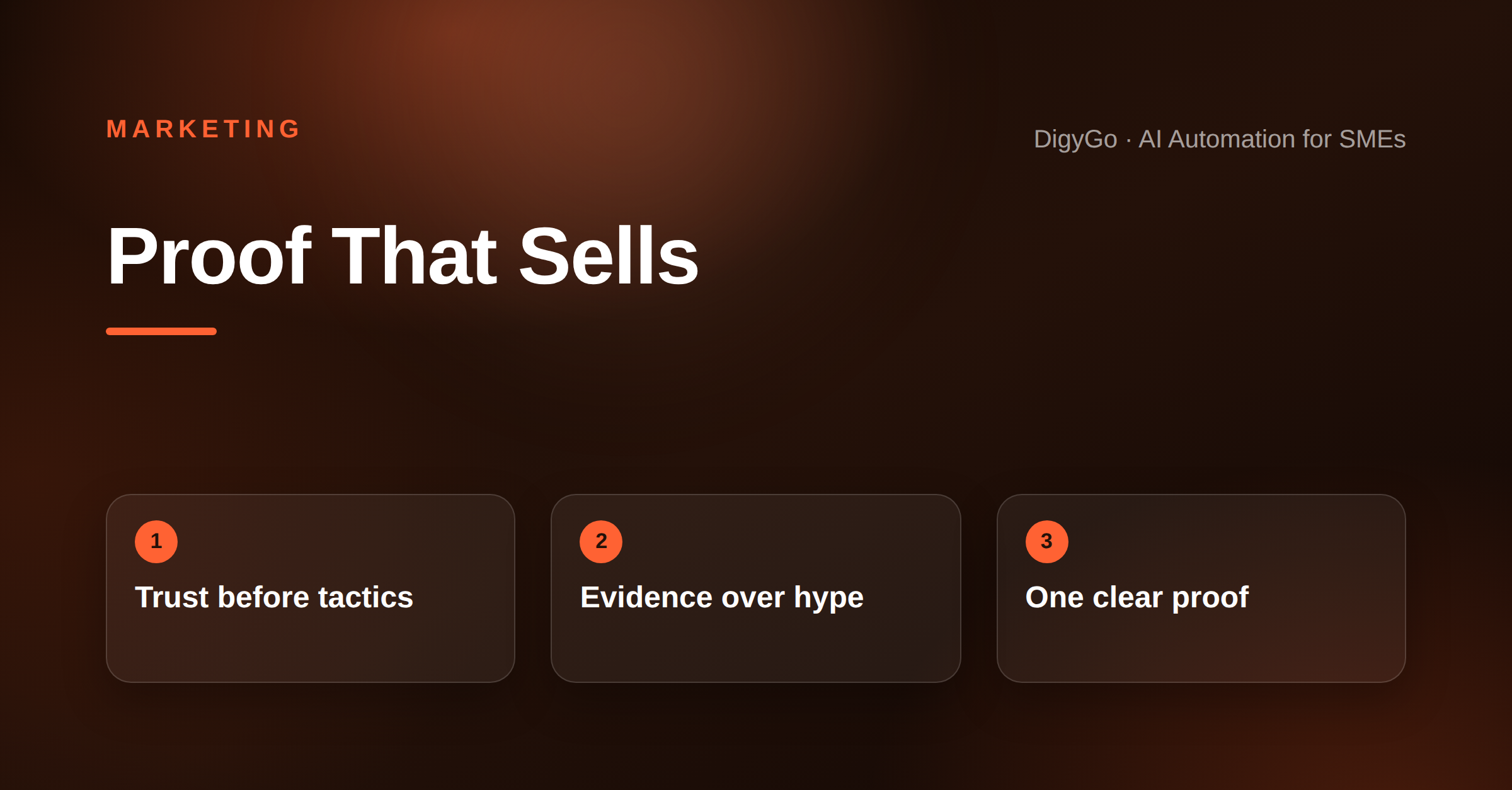
If your marketing sounds ambitious but feels hard to believe, the problem is rarely the channel. It is usually the message. For SMEs, proof beats polish because buyers want to know three things fast: have you solved this before, is it relevant to my business, and can I trust the result.
A practical guide for SME founders on replacing vague marketing claims with proof-led messaging that builds trust, reduces buyer hesitation, and makes campaigns easier to convert.
Why proof matters more than louder claims
Most SME marketing fails in the gap between promise and evidence. A founder says the team is fast, reliable, and expert. The buyer hears a familiar claim with no reason to move. Proof closes that gap. It turns a generic promise into a believable business case.
That matters because modern buyers compare quickly. They scan your ad, landing page, website, or follow-up message and decide whether your offer feels safe enough to explore. If the content only describes what you do, it creates interest. If it shows who you helped, what changed, and why it worked, it creates confidence.
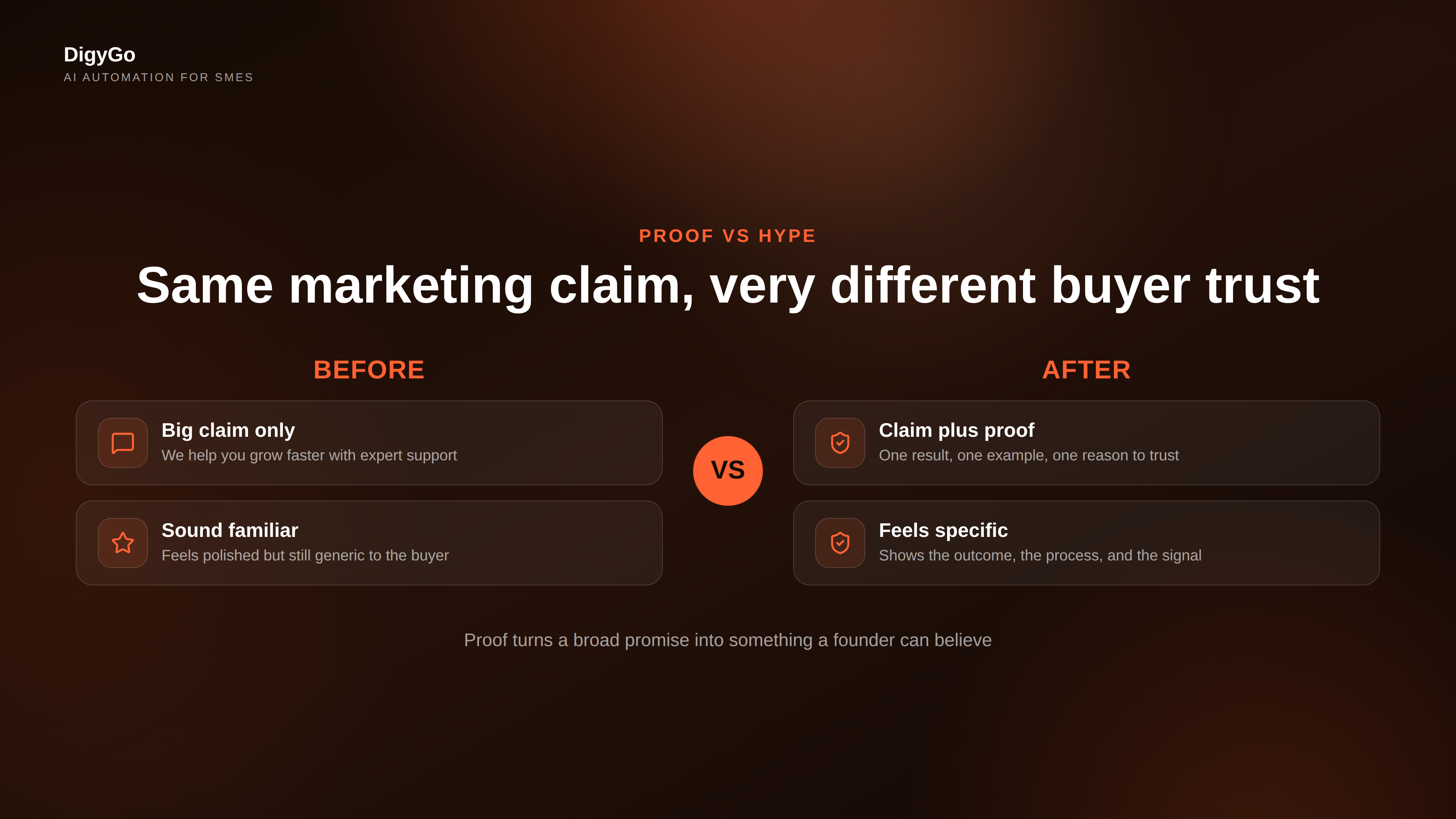
What weak marketing usually sounds like
- We deliver quality service.
- We help businesses grow faster.
- We are trusted by many clients.
- We offer end-to-end support.
Those lines are not wrong, but they are too broad to build belief. They do not anchor the buyer in a situation they recognise. They also do not reduce risk, which is the real job of marketing for SMEs.
What proof looks like in everyday SME marketing
Proof does not have to mean big case studies or enterprise-level reports. In fact, smaller businesses often win more with simple, specific evidence. A screenshot, a number, a before-and-after, a short client quote, or a process detail can be enough when it is placed next to the claim it supports.
Think of proof as the bridge between attention and action. When a buyer sees a claim, the proof should answer the next question instantly. If you say you respond quickly, show the time-to-reply. If you say you reduce manual work, show the workflow. If you say you improve conversions, show the result.
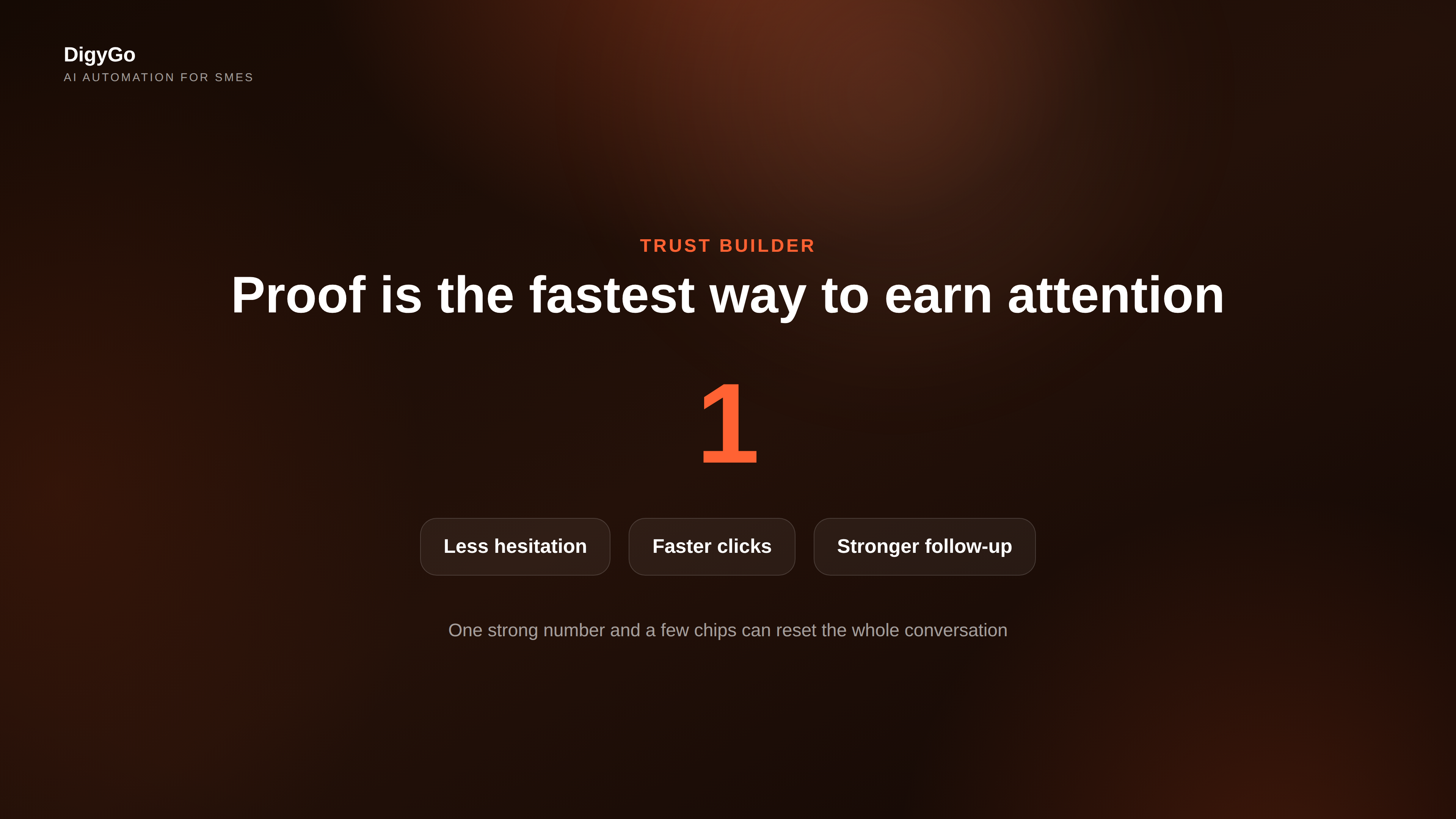
Useful proof assets for SMEs
- Client outcome: one sentence about what changed.
- Process proof: the steps you use to deliver consistency.
- Operational proof: response time, turnaround time, or volume handled.
- Visual proof: screenshots, dashboards, or short clips.
- Social proof: reviews, referrals, and repeat work.
The strongest proof is usually the one that matches the objection. If buyers worry about reliability, show consistency. If they worry about results, show outcomes. If they worry about complexity, show simplicity.
Turn claims into proof-led marketing in three moves
Start with the claim you want to make. Then attach evidence. Finally, rewrite the message so the evidence is visible in the first line, not buried at the bottom. This is the easiest way to lift credibility without redesigning the entire brand.
- Pick one claim. Choose the message you most want buyers to remember.
- Attach one proof point. Add a number, example, quote, or screenshot.
- Place it early. Put the proof near the headline, not after the CTA.
For example, instead of saying, “We help SMEs improve lead quality,” you might say, “We help SMEs improve lead quality by qualifying every enquiry before it reaches sales.” That is still a marketing claim, but it now hints at a process. Add one proof element next to it, and the message becomes much stronger.
Build a proof stack across your channels
Once you know the proof that matters, reuse it across your main channels. Your ad should open the loop. Your landing page should explain the result. Your follow-up should reinforce it. Your sales conversation should echo the same evidence. That consistency makes your brand feel sharper and more trustworthy.
For SMEs, this usually works best when the proof stack is simple:
- Top of funnel: one proof line in the ad or social post.
- Middle of funnel: one example or mini case in the page body.
- Bottom of funnel: one strong result in the CTA section.
That is how marketing becomes easier to run. You stop inventing new messages for every channel and start repeating the same believable story in different forms.
FAQ
What if we do not have many case studies yet?
Use process proof, team proof, and small operational wins. A clear workflow or measurable response time can still build trust when the business is early.
Should every marketing claim have proof?
Yes, especially the claims that affect trust, budget, or speed. You do not need to over-explain everything, but the core promise should never stand alone.
Is proof only for B2B marketing?
No. Local and service businesses also benefit because buyers want to feel safe before they enquire. Proof reduces hesitation in any market where trust matters.
Want help turning your marketing claims into proof-led campaigns? Talk to DigyGo.