A service page should not wait until the last scroll to answer the biggest buyer question: what does this cost, or at least how is pricing handled? A short pricing FAQ helps SMEs filter out the wrong enquiries early and make the right ones more comfortable starting the conversation.
A pricing FAQ helps SME service pages reduce hesitation, qualify leads earlier, and make the right buyers more comfortable starting the conversation.
Key takeaways
- Pricing questions are trust questions
- A pricing FAQ can qualify leads before the sales call
- Clear price context reduces friction and saves time
- The best service pages answer money questions without sounding defensive
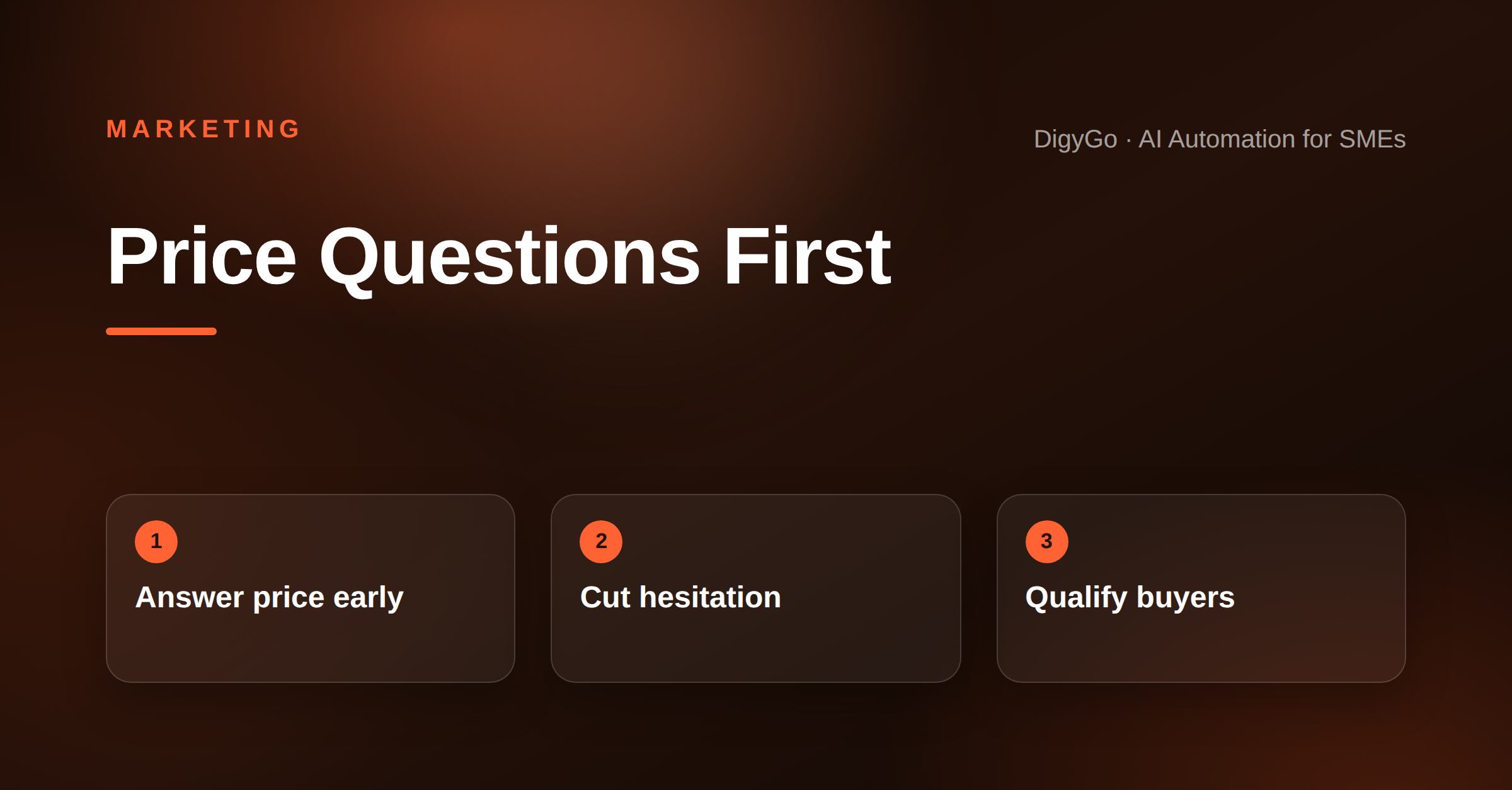
Cover line for thumbnail: Price Questions First
Why pricing FAQs matter on service pages
Most founders think pricing details will scare people away. In reality, the opposite is often true. When a page is silent about price, visitors assume the worst: it is either too expensive, too vague, or too awkward to discuss.
A pricing FAQ does not need to reveal every number. It just needs to give enough context for the right buyer to stay engaged. That might mean a starting range, a note about custom quotes, or an explanation of what affects the final cost.
What you should answer in the pricing FAQ
You do not need to publish a full rate card if that is not the right fit for your business. But you do need to answer the practical questions people are already asking in their heads.
- Is there a starting price? Even a range is better than silence.
- Is the work fixed or custom? This helps the buyer understand flexibility.
- What changes the price? Scope, timeline, and add-ons should be clear.
- What happens after enquiry? Explain the next step so the lead is not guessing.
- Who is the service best for? This keeps low-fit visitors from forcing a conversation.
That last point matters a lot. A pricing FAQ is not only about explaining cost. It is also about protecting sales time. The more clearly you describe fit, the less time your team spends handling leads that were never a match.
Simple rule: price context should make the right enquiry easier, not make the page feel defensive.
How to write the pricing FAQ without hurting conversions
The language matters. If you sound evasive, the buyer loses trust. If you sound too rigid, the buyer may assume the service is not flexible. The goal is calm clarity.
Use plain language
Say what the cost depends on in normal business language. Avoid jargon that makes the answer feel hidden behind internal process.
Be specific where you can
If you can share a starting price, share it. If you cannot share the exact number, give a practical range or explain the project factors that affect it.
Connect price to value
Do not leave pricing floating by itself. Briefly explain what the buyer is paying for: speed, expertise, implementation, support, or long-term results.
Make the next step obvious
After answering the money question, tell the visitor what to do next. A good FAQ ends by moving the lead forward, not by closing the door.
A simple pricing section structure
At DigyGo, we like service pages that answer pricing in three clean layers.
- Top-line answer — give the short version first.
- Context — explain what affects the cost and who it suits.
- Action — offer a clear next step for serious buyers.
This keeps the page useful without turning it into a long negotiation. A founder who is truly ready will appreciate the clarity. A visitor who is not ready will usually self-select out. Both outcomes are good for the business.
Should I put exact pricing on every service page?
Not always. But you should still give buyers enough context to understand whether the service is within reach.
What if my pricing changes often?
Use ranges, starting points, or scope notes. The point is clarity, not rigid pricing copy that becomes outdated.
Will pricing details reduce enquiries?
They may reduce low-fit leads, but that is usually a win. The real goal is better-fit enquiries with less sales friction.
Where should the pricing FAQ go?
Place it after the offer and proof sections, but before the final CTA so visitors can make a confident decision.
FAQ
What if I am afraid pricing will scare leads away?
Unqualified leads may leave, but that is often a good thing. Clear pricing helps serious buyers trust you faster and saves your team from wasted calls.
Can I use a pricing FAQ if my services are custom?
Yes. You can explain the pricing model, the scope drivers, and the kind of budget a project usually starts with.
Does this work for SME service businesses?
Absolutely. Service pages for marketing, automation, consulting, and implementation all benefit from better price context because it improves lead quality.
Bottom line
A pricing FAQ is not just a support section. It is a conversion tool. It reduces hesitation, filters out bad-fit enquiries, and helps the right prospect move forward with more confidence.
If your service page is getting clicks but not enough qualified conversations, price clarity may be the missing piece. Talk to DigyGo about building a service page that answers the money question before the sales call.