Most SME marketing fails for a simple reason: the business is trying to say too many things at once. A message house gives your brand one clear idea, one proof path, and one call to action so every post, ad, and sales conversation sounds consistent.
A practical guide for SMEs on building a message house that keeps marketing, ads, and sales aligned around one clear promise.
- A message house keeps your positioning consistent across content, ads, and sales.
- It should define one core promise, three supporting messages, and proof for each.
- Consistent messaging makes marketing easier to scale and easier for buyers to remember.
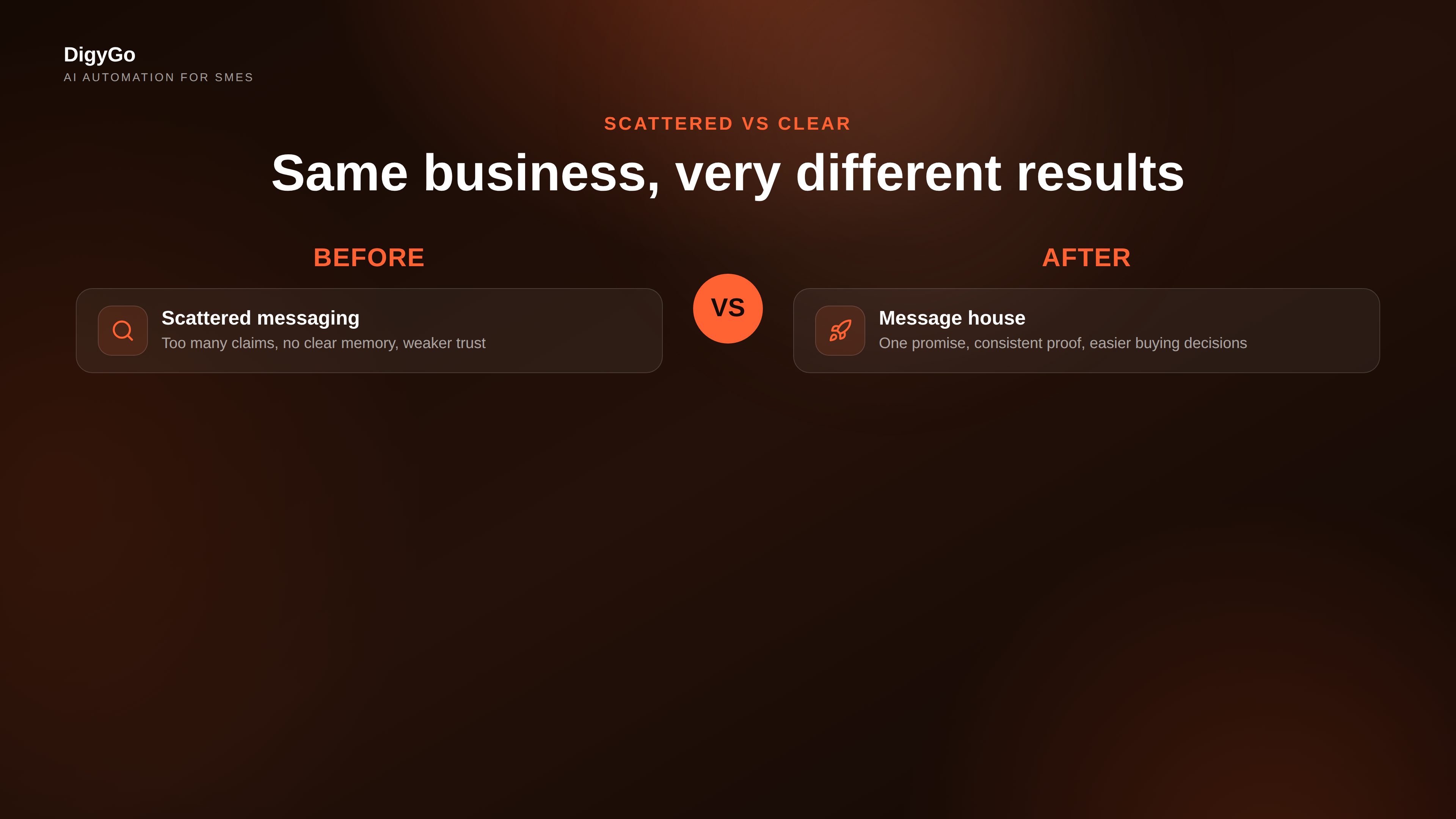
When your audience sees mixed signals, they hesitate. One post says you save time, another says you cut cost, and a landing page says you do everything for everyone. That kind of positioning blurs trust. A message house fixes that by turning your offer into a simple structure the whole team can use.
What a message house is
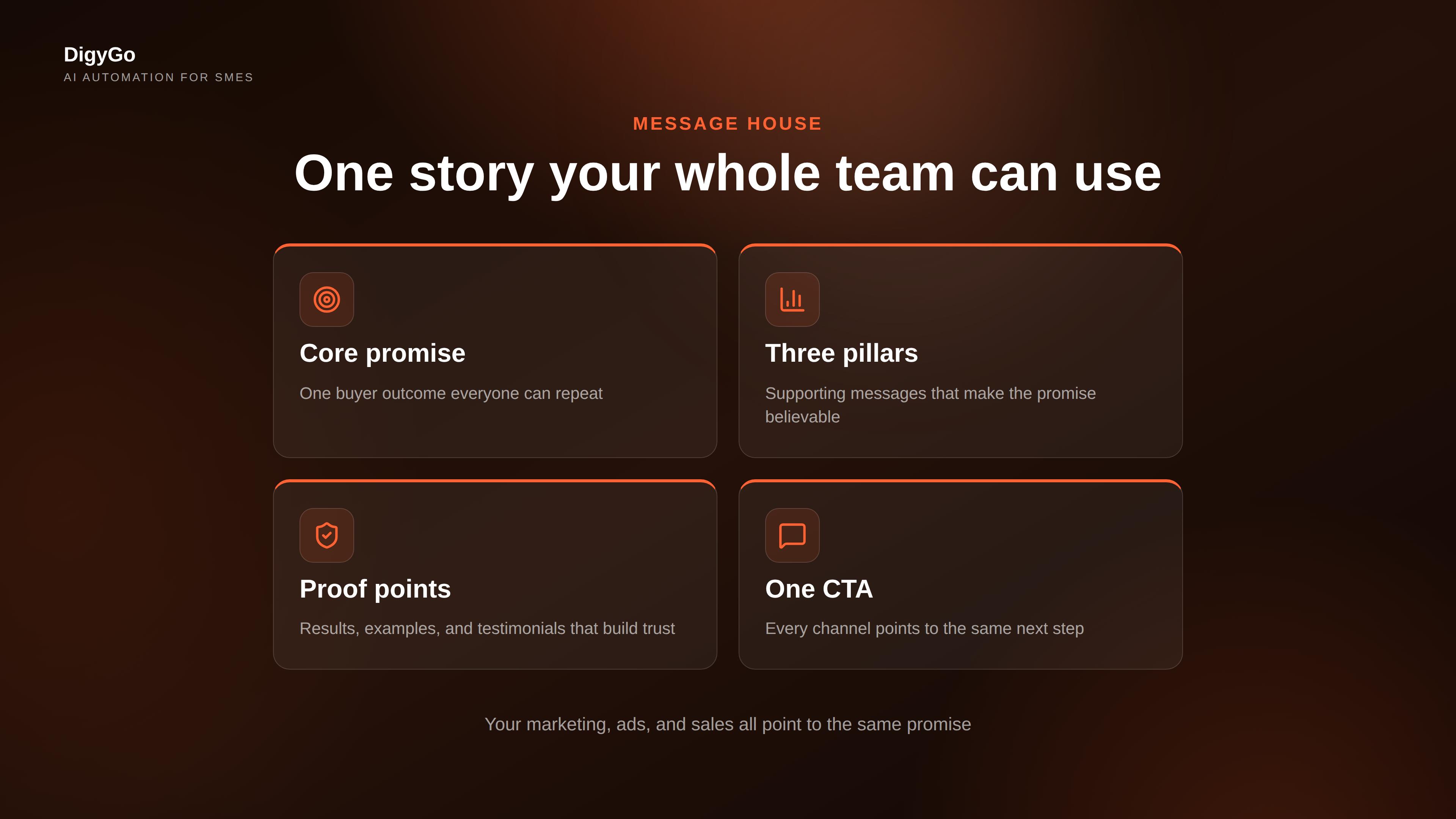
A message house is a simple marketing framework that keeps your brand story tight. The roof is your core promise. The pillars are your supporting messages. The foundation is the proof that makes the promise believable.
For an SME, this is more useful than a long brand document because it is easy to apply. Your sales team can use it. Your content writer can use it. Your ad copy can use it. Most importantly, your customer hears the same business story everywhere.
Start with one promise
Do not begin with a slogan. Begin with the outcome your ideal customer actually wants. If you serve manufacturers, that might be fewer delays and cleaner follow-up. If you serve service businesses, it might be more qualified enquiries and less wasted time.
The promise should be specific enough to matter and broad enough to repeat across formats. If the promise changes every month, the market never learns what to remember about you.
Why consistency wins attention
Marketing works better when the same idea shows up repeatedly in a recognisable form. Buyers rarely convert after one touchpoint. They notice you, compare you, forget you, and then come back later. If your message changes every time, you make that memory harder to build.
Consistency also makes your brand look more established. Even a small business feels bigger when its website, social content, ads, and sales follow-up all sound like they came from the same company.
How to build one for your SME
Keep the structure simple. You do not need a marketing workshop that lasts all day. You need a practical system that can be used on Monday morning.
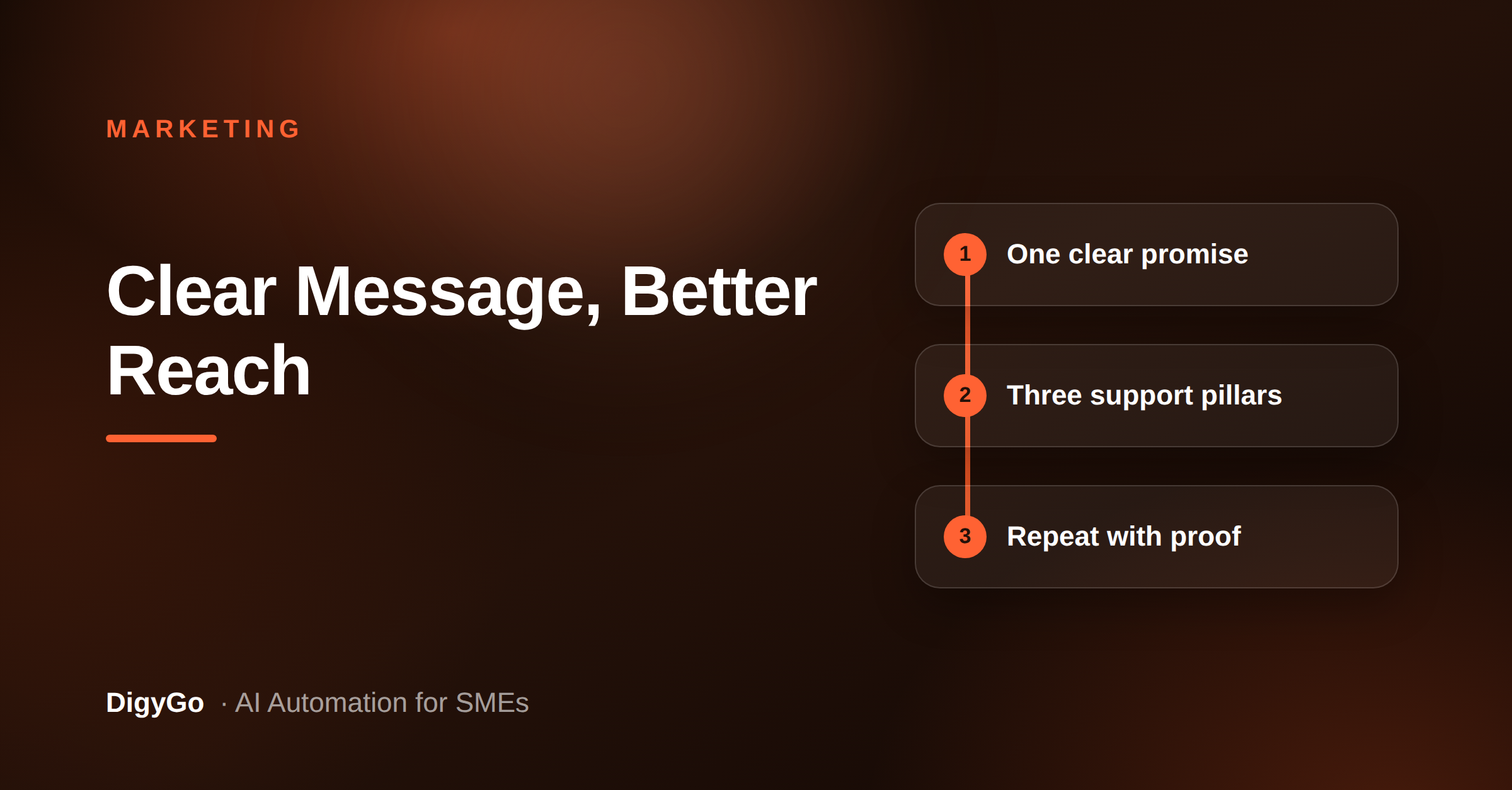
- Write the core promise. One sentence only. Make it about the buyer outcome.
- Add three supporting messages. These should explain why your promise is believable.
- Attach proof points. Use examples, results, process details, testimonials, or before-and-after outcomes.
- Define the next action. Make sure every message points to one clear CTA.
Once this is done, your marketing becomes faster to write. You stop inventing a new angle for every post and start repeating a message that compounds.
Where to use it every week
Your message house should not live in a document nobody opens. It should guide the real work.
- Website copy: Use the core promise in the hero section and the supporting messages in the body.
- Content marketing: Each blog post should reinforce one pillar of the message house.
- Sales calls: Reuse the same proof points your marketing already introduced.
- Paid ads: Test one message at a time so you know what actually gets attention.
That is how marketing starts to feel coordinated instead of random. The audience sees the same value from different angles, and repetition does the heavy lifting.
FAQ
Is a message house only for big brands?
No. SMEs benefit from it even more because it reduces wasted effort and keeps small teams aligned.
How many messages should it have?
Three supporting messages is usually enough. More than that often creates confusion instead of clarity.
Can I change it later?
Yes, but not every week. Update it only when your offer, audience, or positioning genuinely changes.
Talk to DigyGo about clearer positioning and marketing that actually sticks.