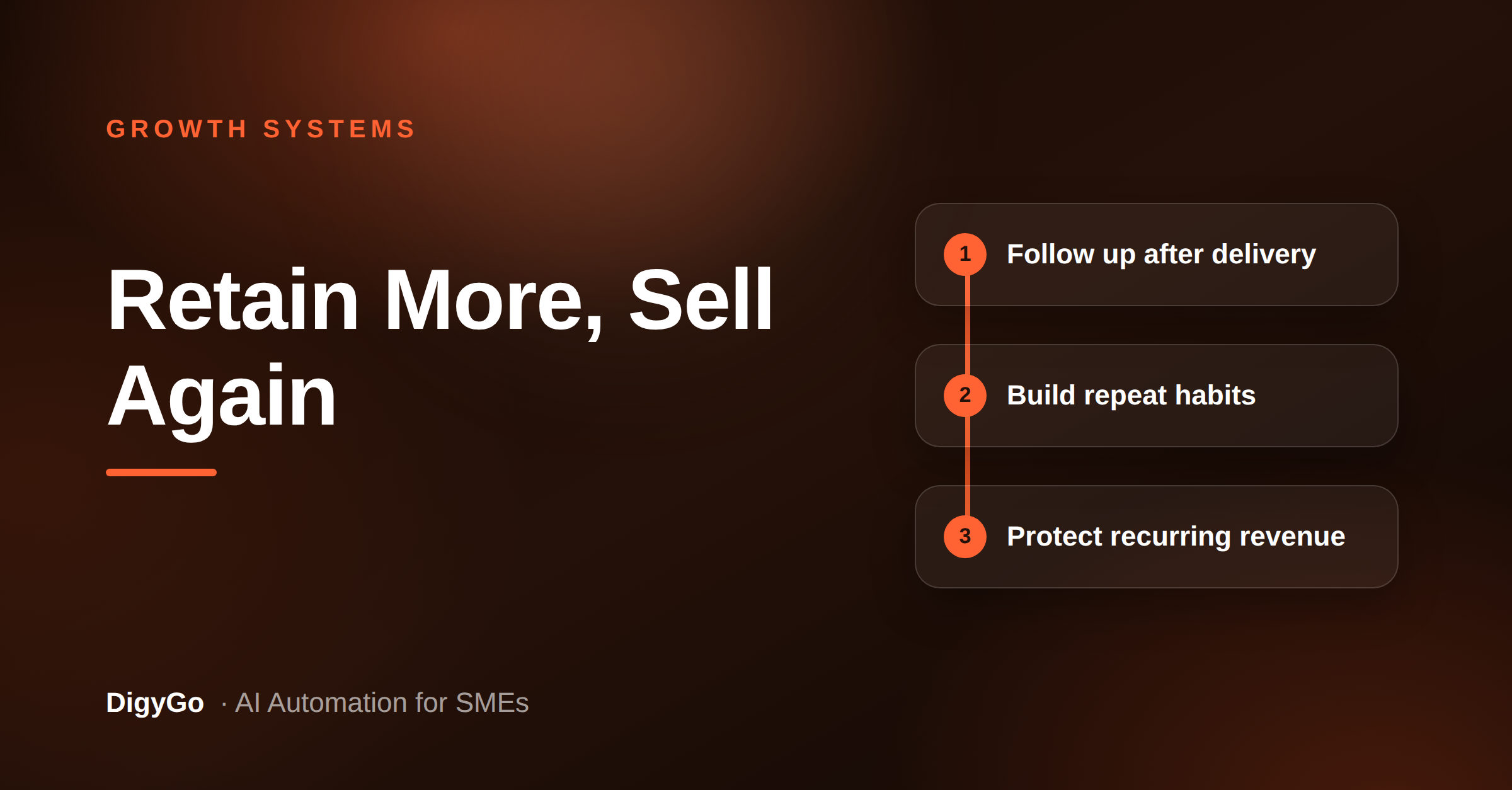
Most SMEs focus on getting the first sale right. Fewer focus on what happens after delivery. A structured post-delivery follow-up system turns one-time service customers into repeat buyers — and repeat buyers into the most predictable revenue stream the business has.
A practical guide for SME founders on building a post-delivery follow-up system that turns one-time service customers into repeat buyers with less ad spend and more predictable revenue.
- A single post-delivery check-in can increase repeat purchase rates by 40% compared to no follow-up at all.
- Separate service follow-up (did it work?) from sales follow-up (need more?) — each has a different timing and tone.
- Automate the reminder, not the conversation — personal replies build trust, not templates.
Why repeat customers matter more than new ones
Acquiring a new customer costs 5 to 7 times more than selling to an existing one. For SMEs operating on thin margins, that gap is not a statistic — it is the difference between spending heavily on ads every month versus building a base that buys again without being sold.
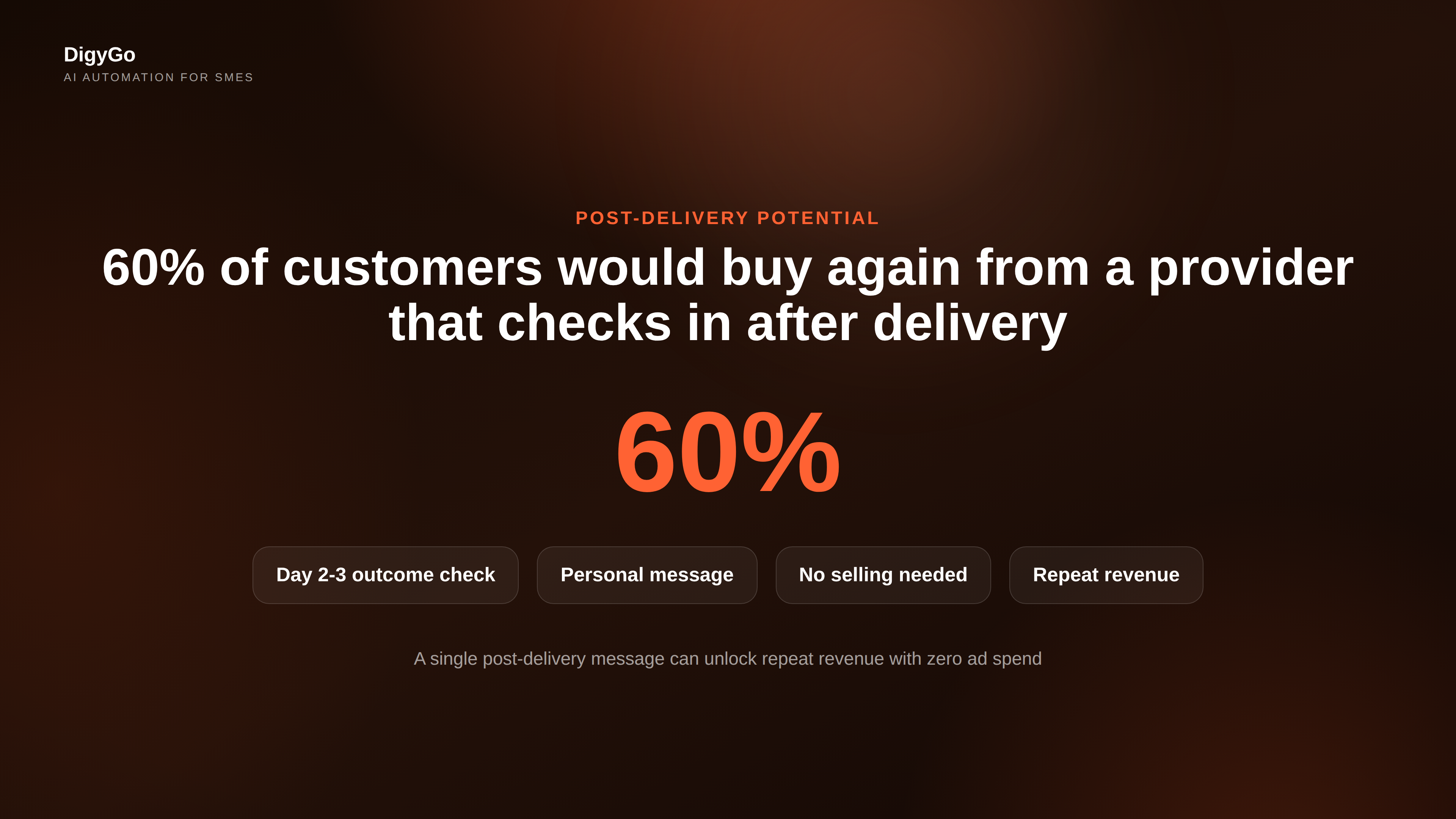
Yet most SMEs invest zero effort in the period between delivery completion and the next purchase trigger. The customer walks away satisfied, but nobody asks them to come back. Over 60% of customers say they would buy again from a service provider that simply checked in after the job was done. The system is already there — it just needs to be triggered.
Separate service follow-up from sales follow-up
One of the biggest mistakes in post-delivery communication is mixing service quality check-ins with sales pitches in the same message. They serve different purposes and need different timing.
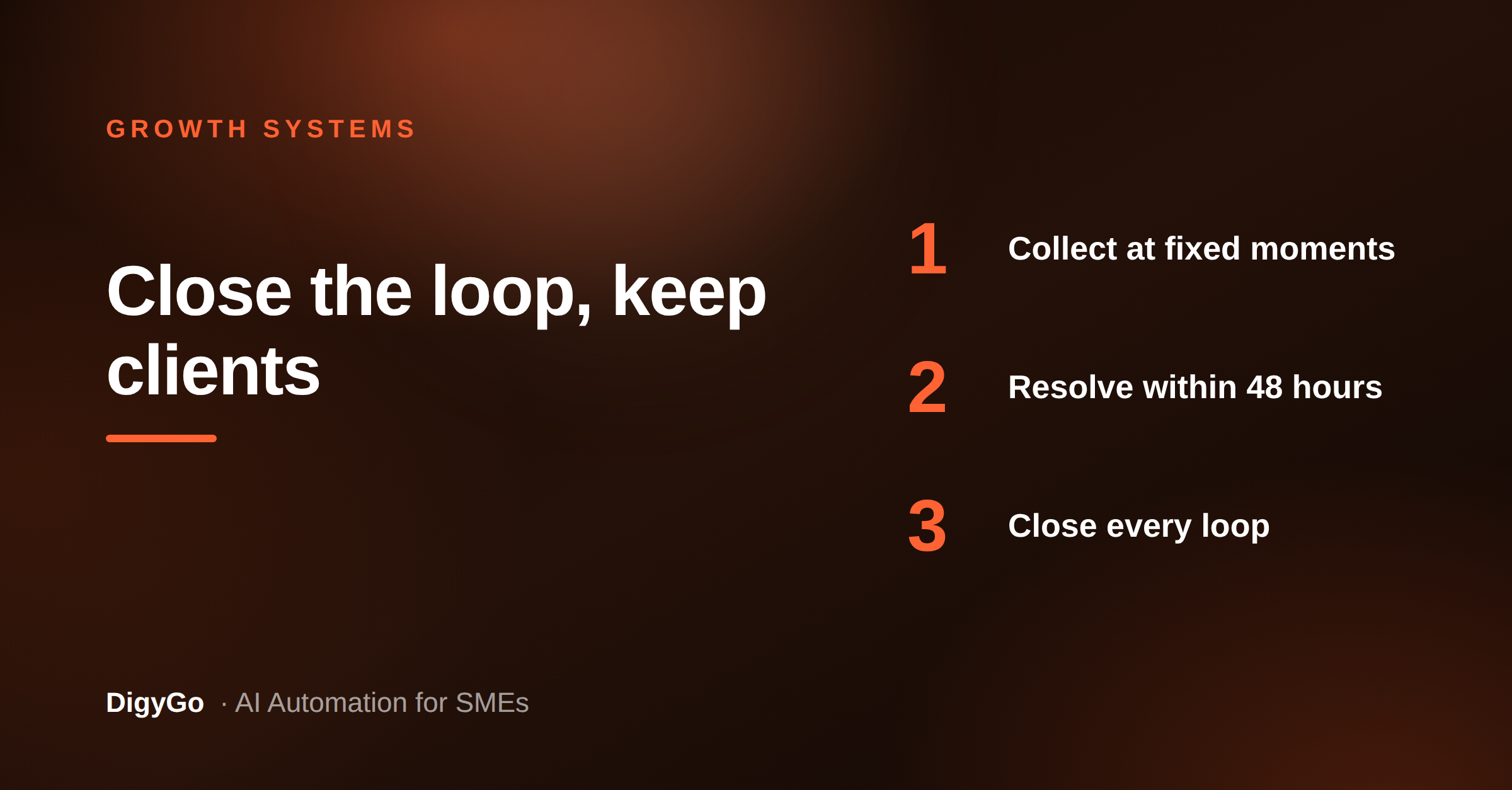
Service follow-up happens 2–3 days after delivery. Its goal is simple: confirm the outcome, fix any issues, and prove you care about the result. This builds trust and reduces churn before churn has a chance to start.
Sales follow-up happens 2–4 weeks later, depending on the service cycle. Its goal is to surface the next need — a maintenance visit, a renewal, an upgrade, or a referral.
When both follow-ups happen in the same message, the customer feels sold to instead of cared for. When they are separated, the first message delivers goodwill, and the second one lands on warmer ground.
Three essential stages of a post-delivery system
Building a repeatable post-delivery system does not need complex software. It needs a clear sequence that the team follows every time, without deciding case by case.
Stage 1: The outcome check (Day 2–3)
Send a short, personal message asking whether the delivery met expectations. Do not ask for a review yet — reviews come later, after the customer has used the service long enough to form a full opinion. At this stage, the message is purely about care:
- Did everything work as expected?
- Is there anything that needs adjustment?
- Is there anything the team can improve for next time?
This stage alone eliminates most post-delivery dissatisfaction because it catches small issues before they grow into complaints.
Stage 2: The proof request (Day 7–10)
Once the outcome is confirmed and the customer is happy, ask for a testimonial, a Google review, or a case study permission. The timing matters — too early and the customer has not seen the full value yet. Too late and the experience has cooled and the ask feels random.
- One review on Google Business Profile improves local search visibility.
- A short testimonial works as social proof on the service page.
- One referral introduction from a happy customer can be worth more than ten cold leads.
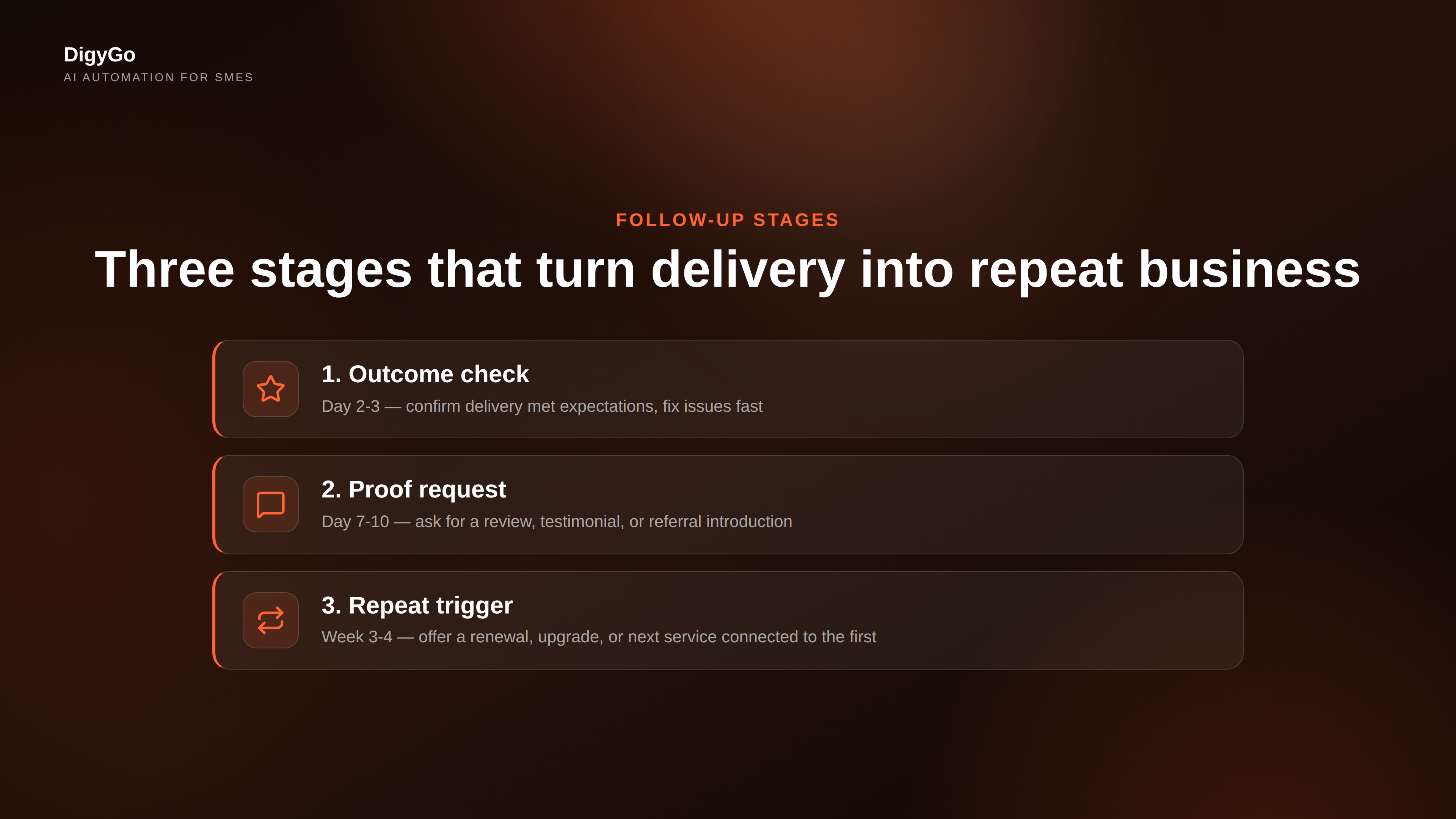
Stage 3: The repeat trigger (Week 3–4)
This is where the system pays for itself. Contact the customer with a relevant next offer — something connected to the service they already bought. Do not pitch an unrelated product. The logic should be:
- If they bought a cleaning service, offer a scheduled renewal or a seasonal deep-clean slot.
- If they bought a digital service, offer a quarterly review, an upgrade, or an add-on module.
- If they bought a consultation, offer a follow-up session or a retainer package.
The repeat trigger converts a one-time transaction into a recurring relationship. And because the customer already trusts your delivery, the second sale requires far less selling effort.
Automate the reminder, keep the conversation human
The biggest risk in a post-delivery system is making it feel robotic. If every customer gets the exact same message at the exact same interval, the goodwill effect wears off fast. The right approach is to automate the trigger — the calendar reminder, the task assignment, the template draft — but deliver the actual message with a personal touch.
Use a simple tool for this:
- A CRM that logs the delivery date and creates a follow-up task for the assigned team member.
- A WhatsApp or email template that the team member personalises before sending — same structure, different conversation.
- A recurring calendar reminder that prevents follow-up from being forgotten in a busy week.
The automation handles the memory. The human handles the relationship.
Quick test: pick any 10 customers from the last 60 days. If you cannot tell how many received a post-delivery follow-up, the system does not exist yet — you are relying on memory, not process.
Track what the system produces
A post-delivery follow-up system is only useful if the team actually uses it. Track three simple metrics:
- Follow-up rate — what percentage of completed deliveries received a stage 1 check-in.
- Repeat rate — what percentage of customers bought again within 90 days of a completed delivery.
- Review rate — how many happy customers left a public review or agreed to a testimonial after the proof request.
These three numbers tell you whether the system is compounding growth or just adding administrative noise. If follow-up rate is high but repeat rate is flat, the timing or the offer needs adjustment. If repeat rate is improving, the system is working — scale it by making sure every delivery triggers the same sequence automatically.
How growth compounds through retention
Post-delivery follow-up is not a sales tactic. It is a growth system. Every happy customer who buys again replaces the need to acquire a brand-new one. Every review from a repeat customer strengthens the brand and brings in more enquiries. Every referral from a satisfied long-term buyer costs nothing but creates the highest-converting leads the business can get.
The system compounds because each repeat sale improves margin (no acquisition cost), improves brand (more proof), and improves operations (the team already knows the customer's preferences). That is how a simple post-delivery sequence creates more value than most marketing campaigns — without any extra ad spend.
FAQ
How long should I wait before the first follow-up after delivery?
2–3 days is ideal. It gives the customer enough time to use the service but not enough time to forget the experience.
What if the customer was unhappy with the delivery?
That is exactly when follow-up matters most. A fast, personal response to a complaint often turns a dissatisfied customer into a loyal one. Fix the issue first, then proceed with the later stages.
Should I send follow-ups by WhatsApp, email, or phone?
Use the channel the customer used to book. For most SMEs in tier 2 and 3 cities, WhatsApp is the most natural and highest-response channel. Email works well for documentation-heavy services. Phone calls are best reserved for high-value or B2B clients.
How many times should I follow up before giving up?
After three attempts with no response, move the lead to a nurture list and revisit after 90 days. Avoid chasing beyond three touches — it damages the relationship rather than rebuilding it.
Do I need software to run a post-delivery system?
Not at first. A shared spreadsheet with delivery dates, follow-up status, and owner assignments works for teams handling up to 30 deliveries a month. Beyond that, a CRM with task automation saves time and reduces missed follow-ups.