Most SME marketing does not fail because the business has no offer. It fails because the message changes from ad to landing page to follow-up, so the buyer has to keep re-decoding what you do.
A practical guide for SME founders on keeping ads, landing pages, and follow-up aligned around one clear campaign message so marketing becomes easier to run and more effective.
Why one campaign message works better
When the promise stays the same across every touchpoint, people understand the value faster. That usually means less friction, better-qualified enquiries, and a smoother sales conversation.
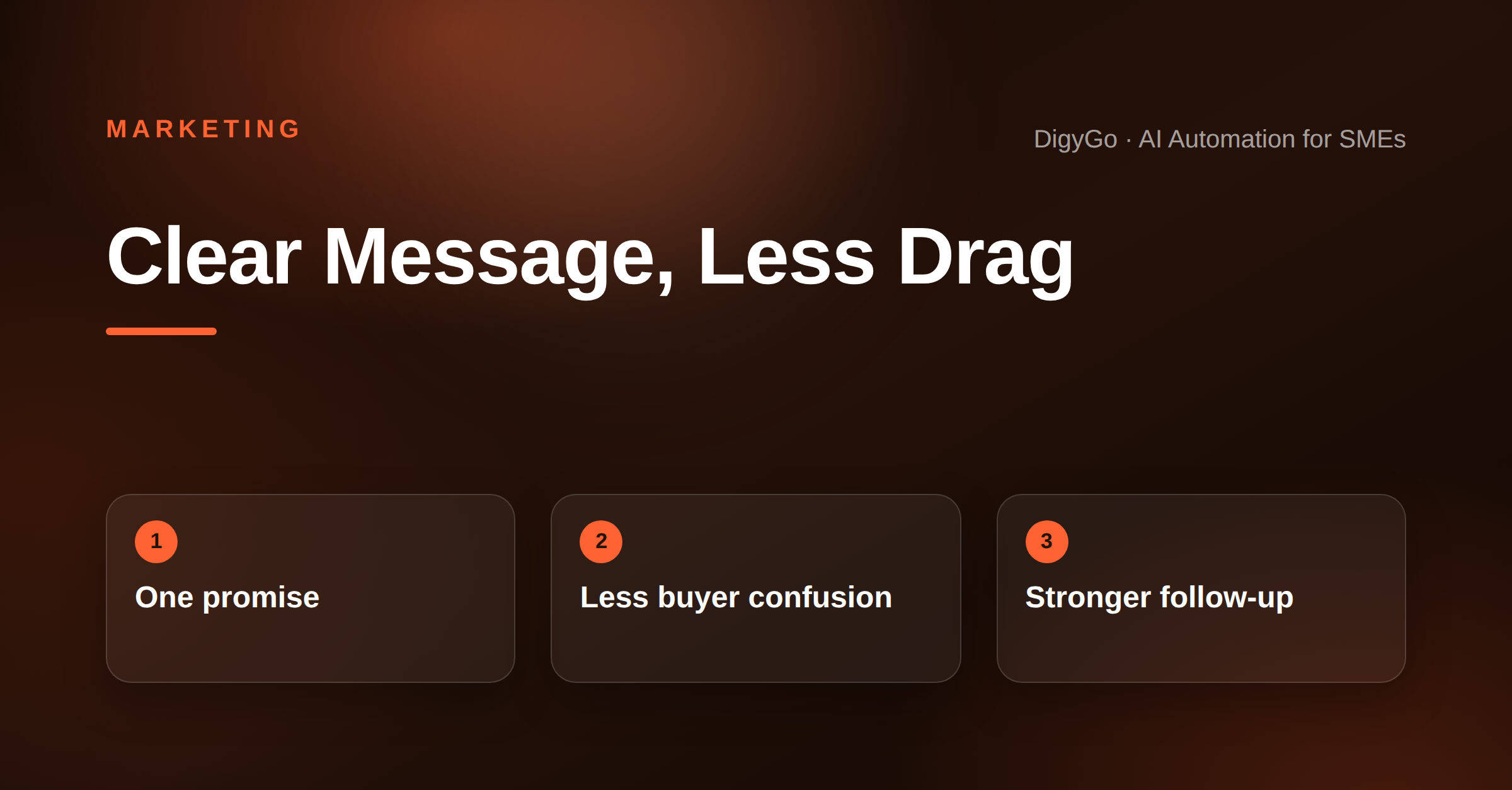
- One promise: the same core idea appears in ads, content, and sales replies.
- Less confusion: buyers do not have to translate the offer three different ways.
- Better leads: the message attracts people who already want the outcome you sell.
Build the message once, then reuse it
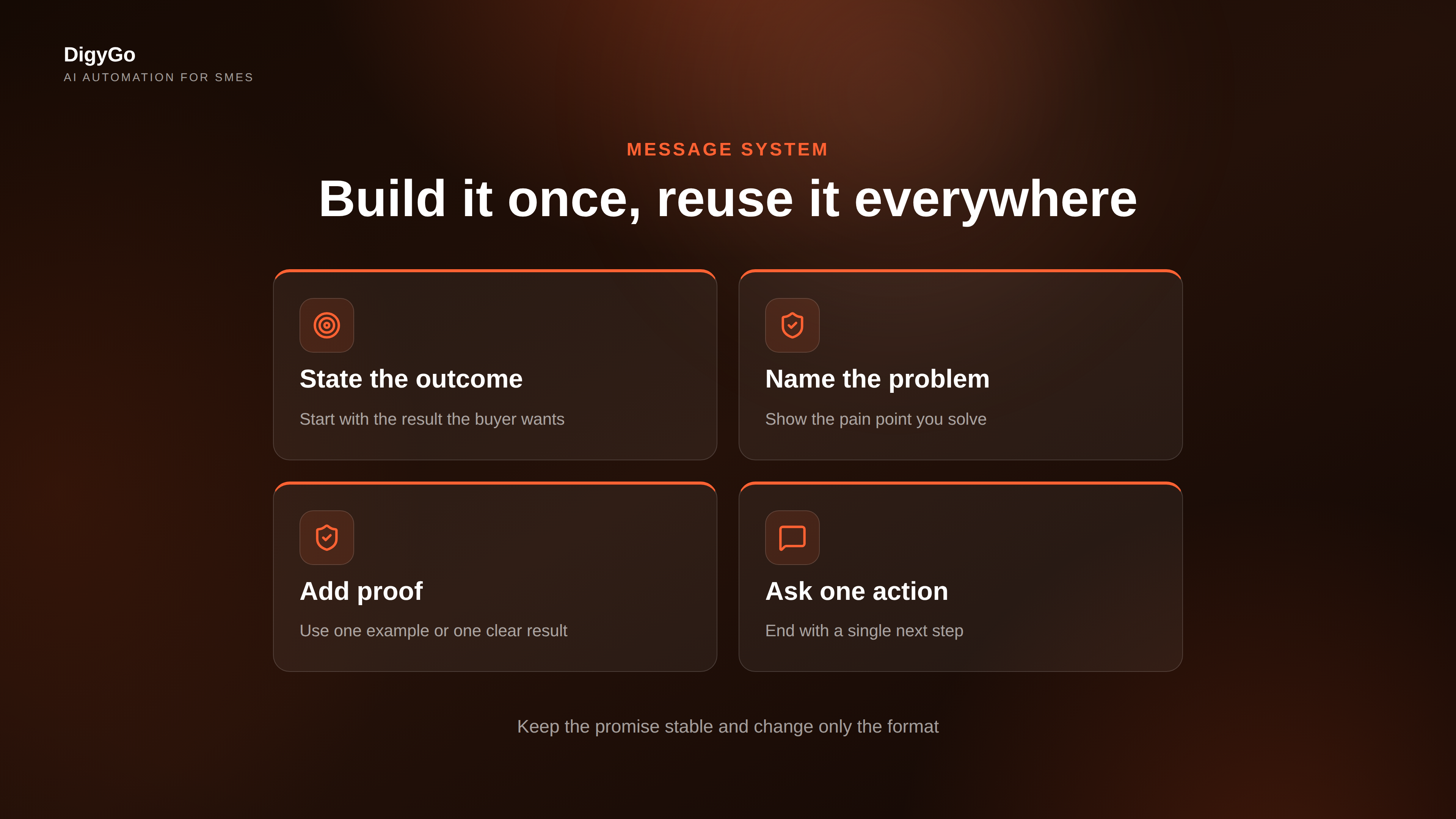
The easiest way to make marketing easier is to write one campaign message and reuse it everywhere with small adjustments for format. Start with the outcome, name the problem, show proof, and end with one clear next step.
Use the same structure in every asset
- State the outcome in plain language.
- Explain the pain point it solves.
- Add proof or an example.
- Ask for one action, not three.
That simple structure makes it easier to produce posts, ads, emails, and sales follow-up without restarting from zero every time.
What breaks when the message shifts
When an SME says one thing in the ad, another thing on the website, and a third thing in the follow-up, trust drops. The buyer starts wondering what the real offer is, and that hesitation slows replies.
Consistency is not about sounding repetitive. It is about sounding reliable. The strongest SME brands make the buyer feel like the business understands their problem clearly and can solve it without drama.
A simple test for better marketing clarity
Before you launch the next campaign, ask these three questions:
- Would a first-time visitor explain the offer the same way after reading the ad and the landing page?
- Does the follow-up message repeat the same promise instead of introducing a new one?
- Can a sales rep describe the value in one sentence without sounding generic?
If the answer is no, the message is doing too much work in too many different directions.
Keep the promise, change the format
Your marketing becomes easier when the promise stays stable and only the format changes. Turn the same message into a short post, a proof-led ad, a FAQ block, a follow-up email, and a sales script. The engine stays the same even when the wrapper changes.
That is how SMEs reduce wasted effort and make every campaign asset reinforce the same buying decision.