If your website, ads, WhatsApp replies, and sales calls all say slightly different things, buyers feel that drift. A message hierarchy fixes that by deciding what you say first, what you say next, and what proof backs it up — so your marketing sounds clear instead of scattered.
A practical guide for SME founders on building a message hierarchy so every post, ad, reply, and sales conversation sounds consistent and easier to trust.
- One core message should show up everywhere.
- Support points make the promise believable.
- Proof and examples stop the message from drifting.
Why message drift hurts SME marketing
Most SMEs do not have a traffic problem first. They have a clarity problem. The founder says one thing, the website says another, the ad says a third thing, and the sales team explains the offer in its own words. That inconsistency makes the right buyer hesitate.
A message hierarchy solves that by creating a simple order of communication. The buyer hears the main promise first, then the supporting detail, then the proof. When every channel follows the same order, your brand feels easier to trust.
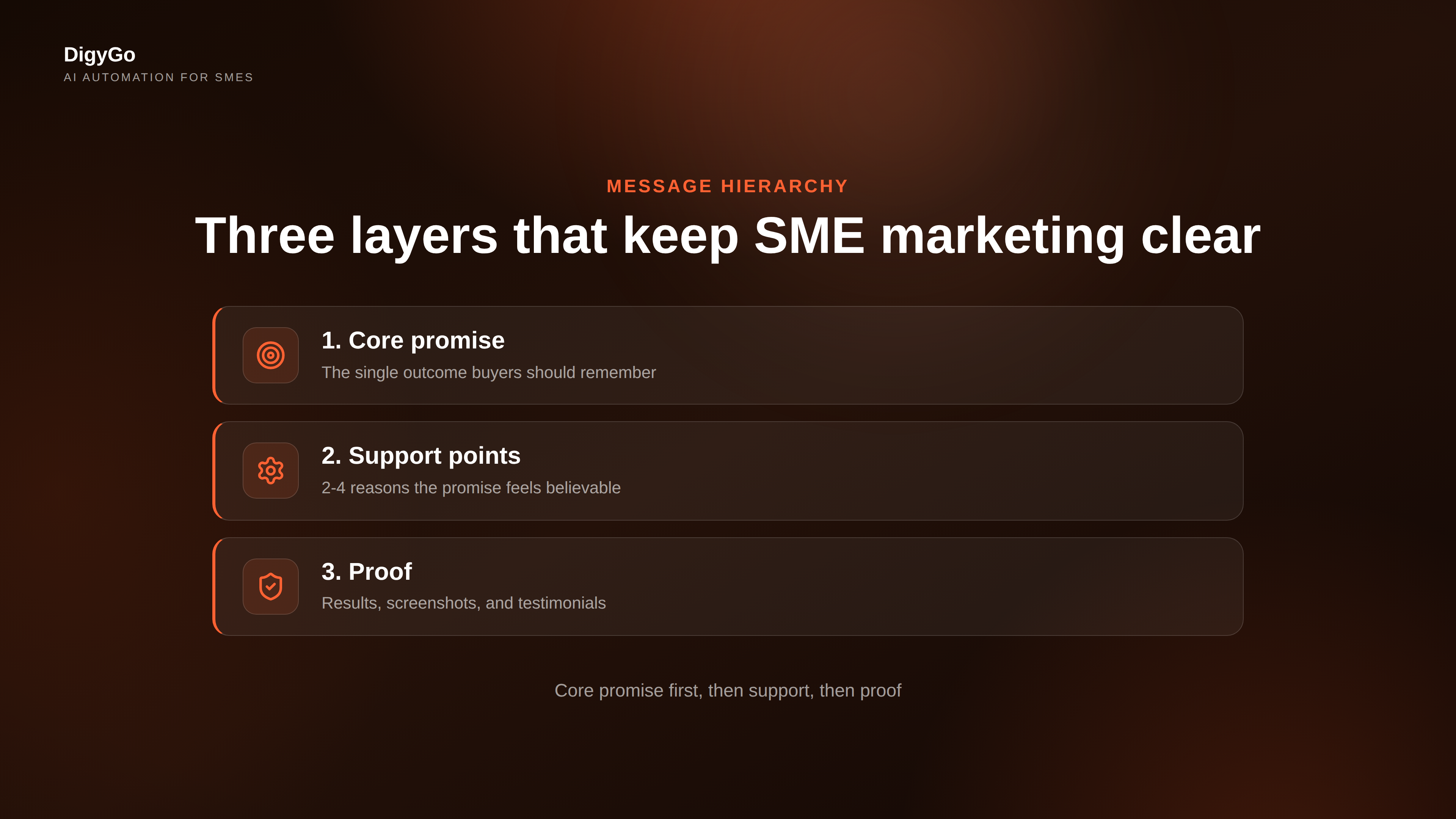
The three layers every SME should write down
Keep the hierarchy simple. If it needs a workshop to understand, it is too complicated for real marketing.
- Layer 1: Core promise. The single outcome you want buyers to remember.
- Layer 2: Support points. The 2–4 reasons that make the promise credible.
- Layer 3: Proof. Results, screenshots, case notes, testimonials, or process evidence.
When these three layers are fixed, content becomes easier to produce. You are not inventing a new angle every time. You are simply choosing the right layer for the channel and the buyer stage.
How to use the hierarchy in real channels
Use the core promise on homepage hero sections, ad headlines, and the first line of your social posts. Use support points in carousel cards, landing page sections, and short explainer videos. Use proof in comparison posts, case studies, and replies to objections.
This structure also helps sales. A sales conversation gets sharper when the team is repeating the same promise the customer already saw online.
Before and after: random messaging vs clear hierarchy
Here is the difference most SMEs feel once the message structure is fixed. The goal is not to sound more “markety.” The goal is to become easier to understand, easier to remember, and easier to choose.
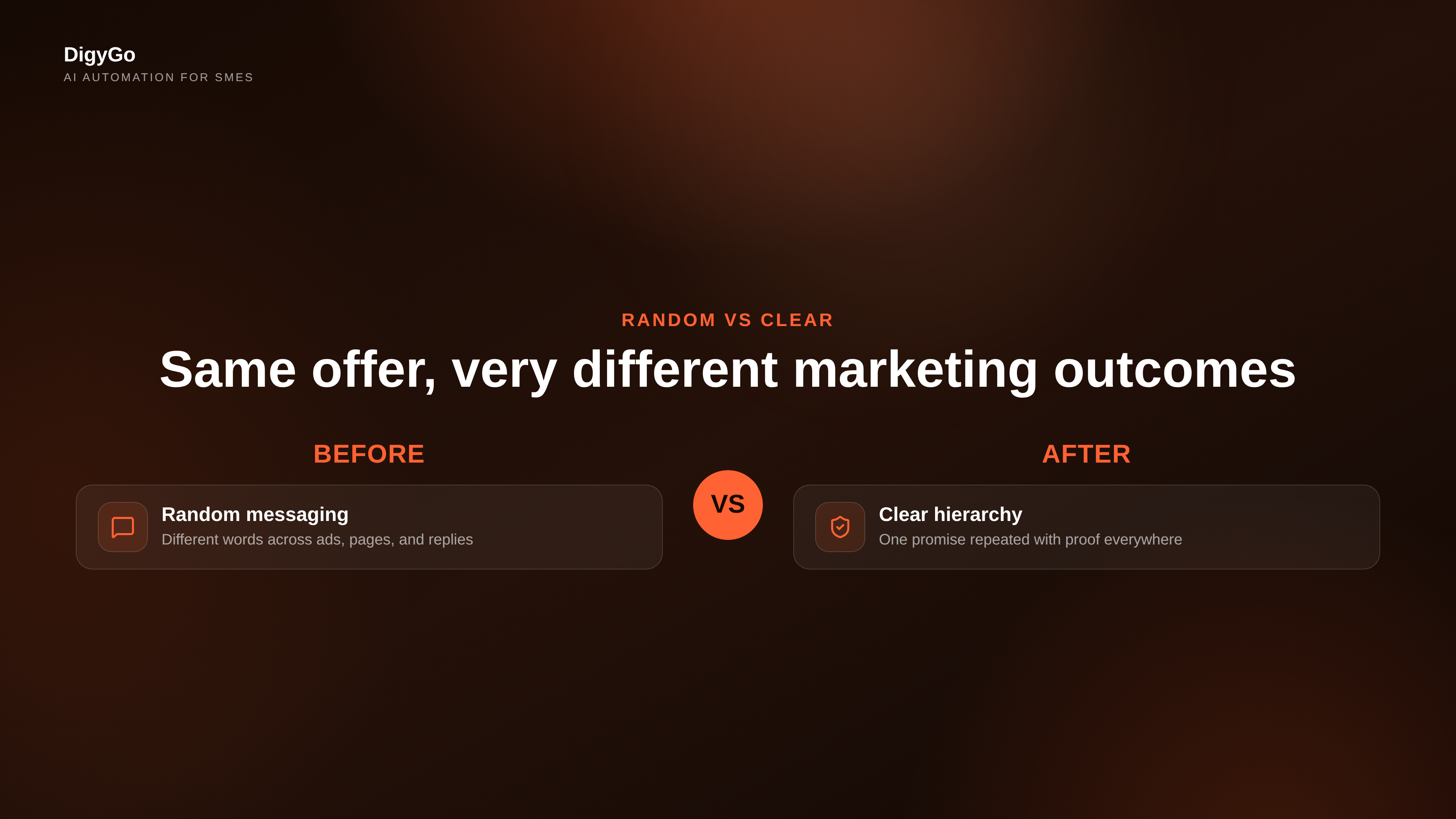
Random messaging usually looks like this
- Too many offers in one place
- Different wording across channels
- Features first, buyer outcome later
- No proof near the promise
A clear hierarchy looks like this
- One promise repeated consistently
- Support points that match the buyer's pain
- Proof placed where doubt appears
- Content that can be reused instead of rewritten
A simple weekly process to keep the message tight
- Write the core promise in one sentence.
- Add three support points that explain why it matters.
- Collect one proof item every week.
- Review your homepage, ad copy, and sales reply for drift.
- Replace vague claims with specific evidence.
That five-step rhythm is enough for most SMEs. You do not need a huge brand workshop to become clearer. You need one message system that everyone can use.
FAQ
What is a message hierarchy?
It is the order in which you explain your brand: the core promise first, support points second, and proof last. It keeps communication consistent across channels.
Why do SMEs need one?
Because scattered messaging confuses buyers. A hierarchy helps the right people understand the offer faster and trust it sooner.
Can I use the same hierarchy for ads and sales?
Yes. In fact, that is the point. The same promise should show up in ads, landing pages, social content, and sales replies.
Want DigyGo to help tighten your message system? Talk to us here.