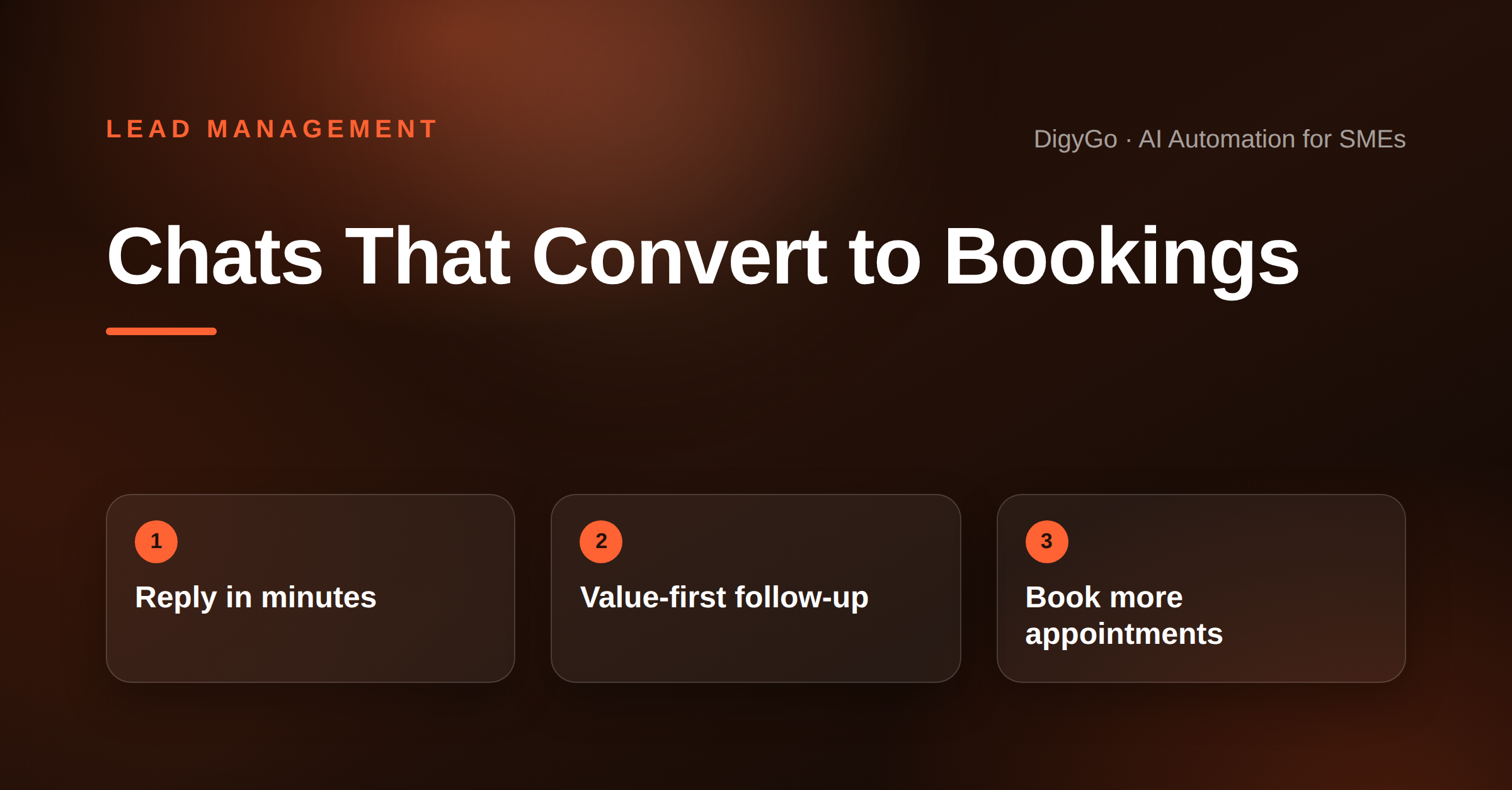
Most SMEs know they should reply to leads faster. But speed alone does not close a deal. What you say in those first few messages determines whether the prospect replies, schedules a call, or goes silent. A structured lead response content framework helps your team send the right message at the right stage, based on the source and intent of the enquiry, without losing the human tone that builds trust.
Speed alone does not close leads. A step-by-step guide for SMEs on building lead response content that is source-aware, intent-driven, and human at scale — so every reply earns a reply.
- Why response content matters as much as response speed
- A simple framework for crafting replies based on lead source and intent
- Templates for first reply, follow-up, and re-engagement touch
- How to keep responses human at scale without losing consistency
Speed Gets You in the Door. Content Keeps You There.
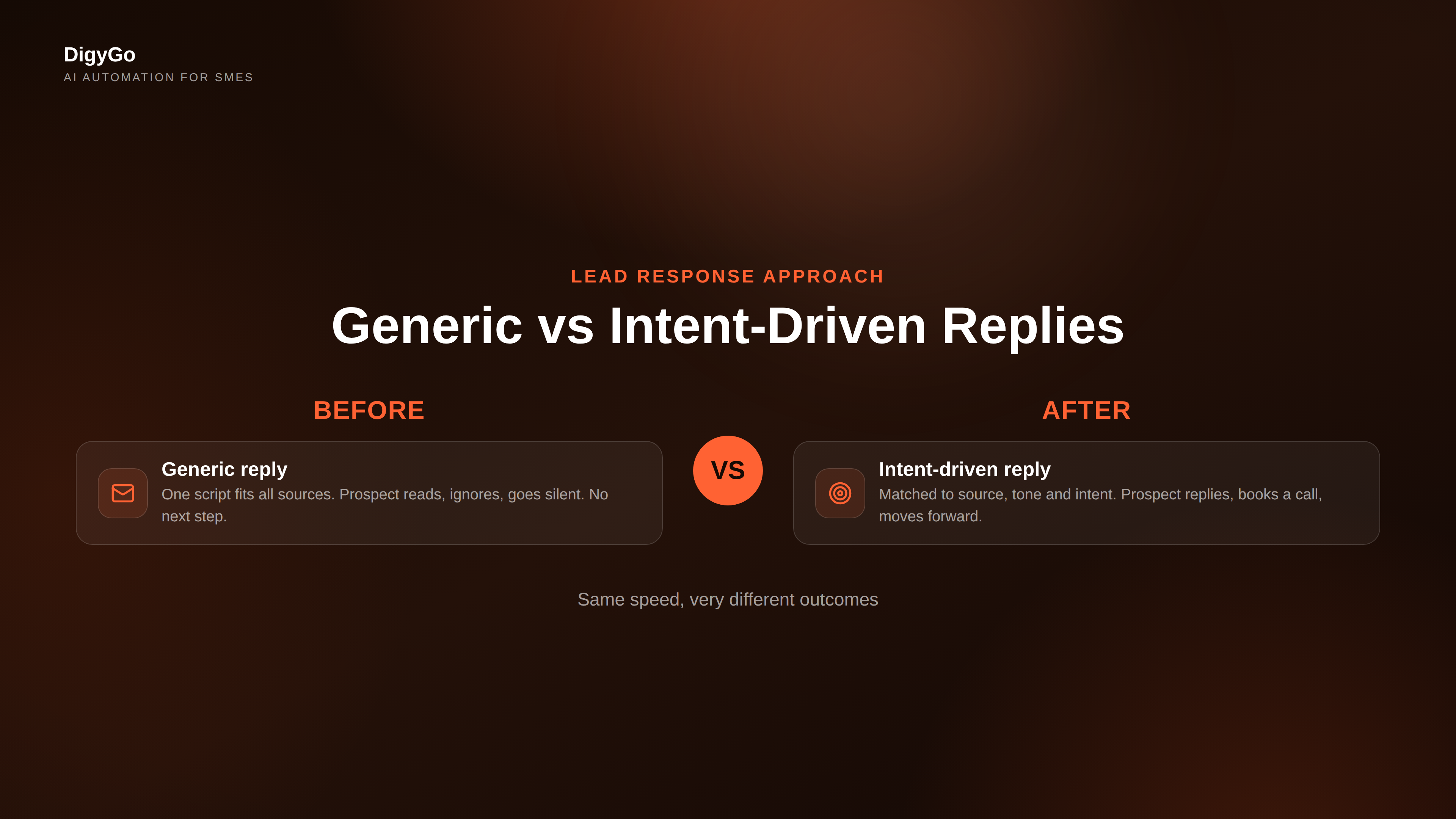
Responding within five minutes is a proven advantage. But if that fast reply reads like a generic script — “Thank you for your enquiry. Please call us at your earliest convenience.” — the prospect has no reason to engage further. A fast generic reply still feels like a dead end.
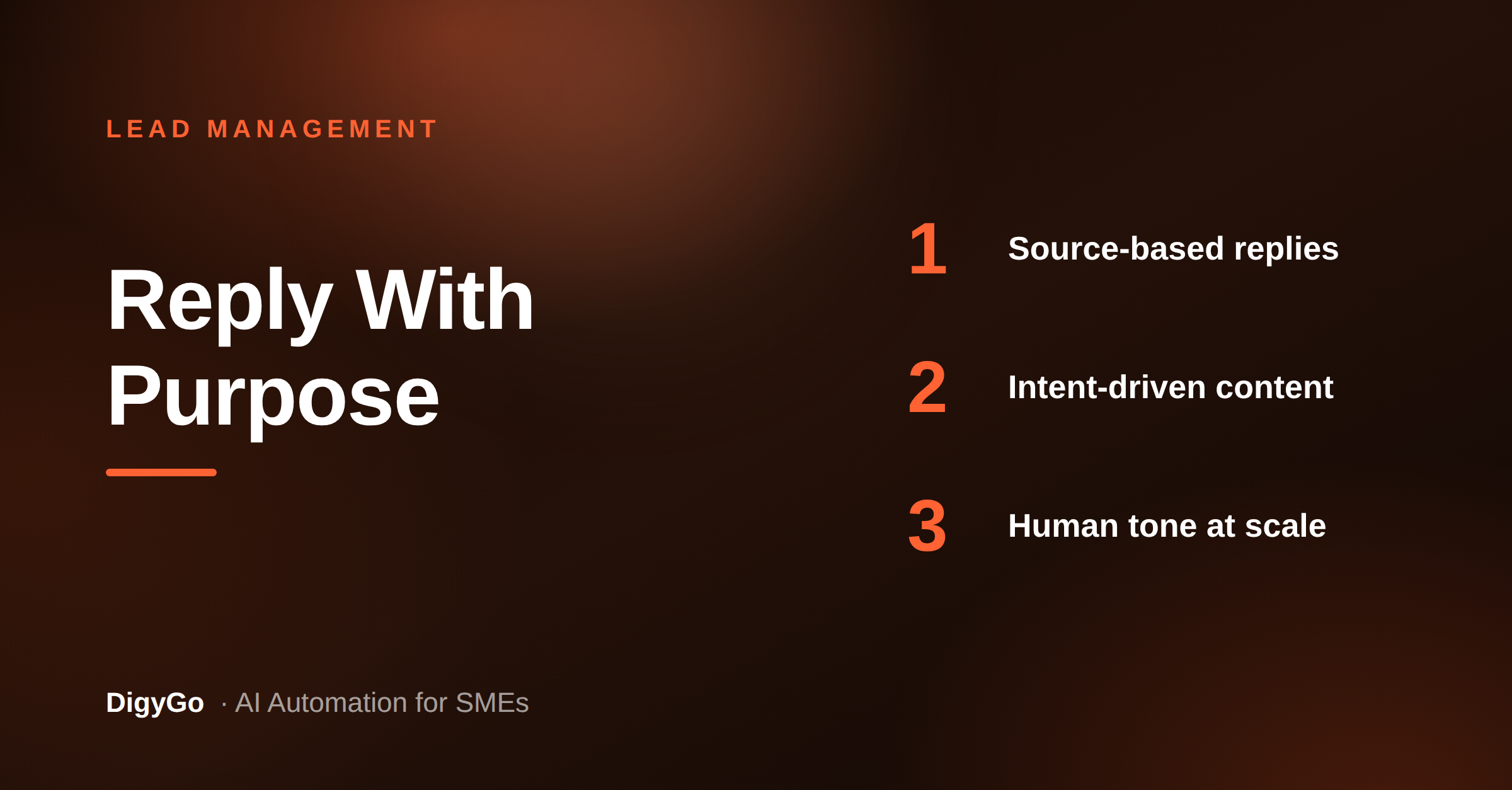
The difference between a reply that gets ignored and one that starts a conversation comes down to three things:
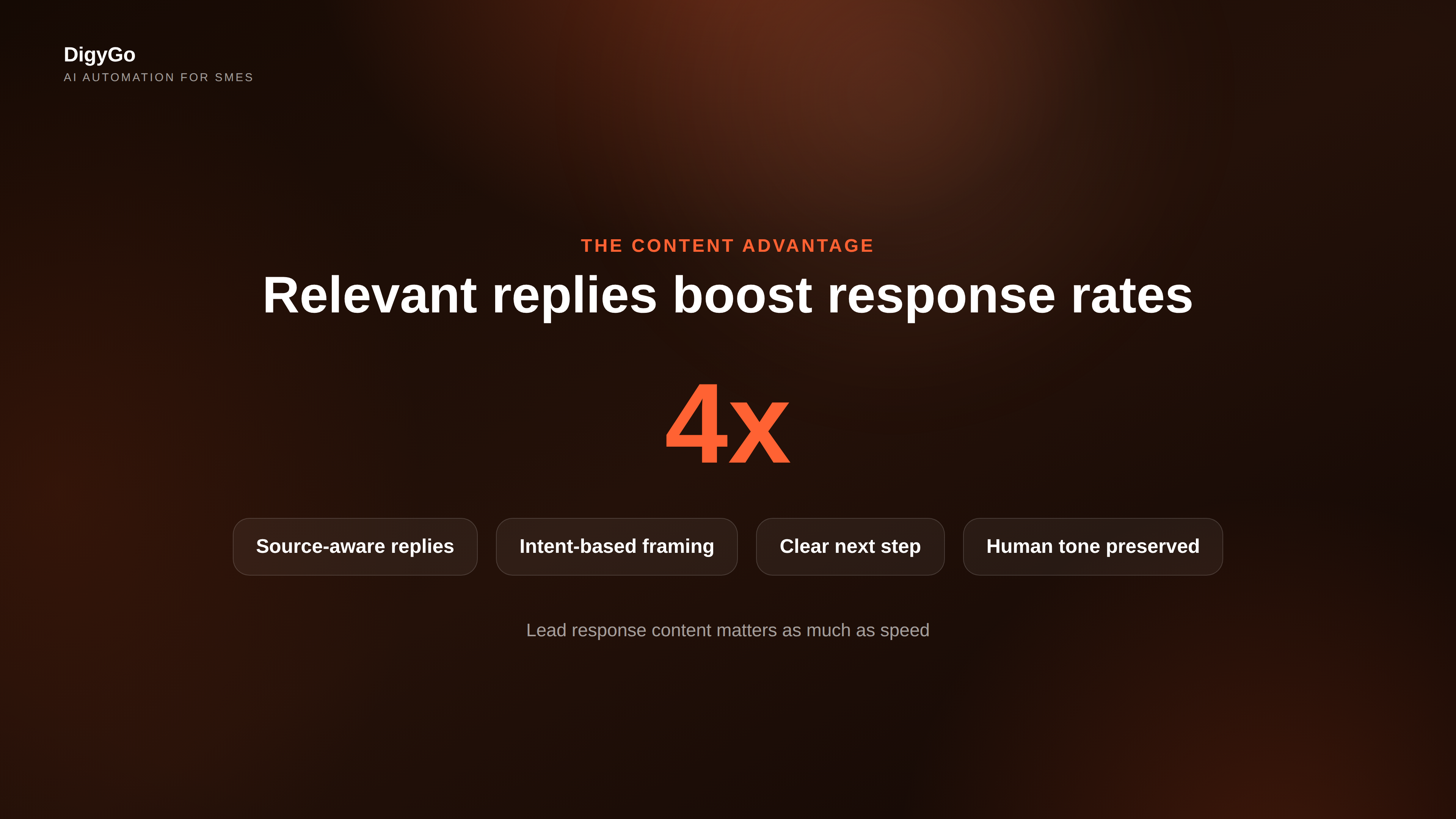
- Source awareness. A website form enquiry needs a different tone than a WhatsApp message from a referral.
- Intent recognition. Someone asking “How much does service X cost?” needs a different response than someone asking “Are you available next Tuesday?”
- Next-step clarity. Every reply should make it obvious what the prospect should do next — and why doing it benefits them.
When you build responses around these three pillars, your lead response system stops being just fast and starts being effective.
Mapping Your Response Content by Lead Source
Not all leads are the same, and treating them that way is one of the fastest ways to lose good prospects. The source of the enquiry tells you a lot about what the prospect expects and how they prefer to communicate.
Website form enquiries
Someone who fills out a contact form has already invested effort. They have read your service page or blog and decided to reach out. Acknowledge that effort by referencing what they asked about and skipping the long introductions.
Example first reply: “Thanks for reaching out through our site. You mentioned you are looking for help with [specific service]. Let me share a quick overview of how we handle that and suggest a time to discuss your situation in more detail.”
WhatsApp and DM enquiries
These are usually shorter, more urgent, and less formal. The prospect wants a quick answer, not a sales pitch. Match their tone. Answer the question directly, then offer one clear next step.
Example first reply: “Thanks for messaging. Yes, we do offer [service]. The starting range is roughly [range] depending on scope. Would you like me to send a detailed overview, or should we set up a quick call to go through your specific needs?”
Referral leads
Referral leads arrive with built-in trust. That does not mean you skip the process, but you can be more direct because the prospect already has a positive impression. Name the referral source early and move quickly to the next step.
Example first reply: “Great to hear from you. [Referrer name] mentioned you might be interested in [service]. I would be happy to walk you through how we handle it. Are you free for a quick call this week?”
Missed calls and voicemails
A missed call with no follow-up message is a lead that arrived without context. The response needs to acknowledge the call, give context about who you are, and invite them to share what they need. Speed matters most here because the window is narrow.
Example SMS or WhatsApp reply: “Hi, this is [name] from [business]. I saw we missed your call. Let me know what you were looking for, and I will get back to you with the right information right away.”
Structuring Replies by Intent, Not Just Source
Source tells you where the lead came from. Intent tells you what they actually want. Combining both lets you craft a reply that feels personal without requiring your team to write every message from scratch.
| Intent signal | What the prospect wants | Best reply focus |
|---|---|---|
| Pricing question | Budget fit, quick comparison | Give a range, explain what affects price, offer a call to scope |
| Availability check | Ready to book, needs timeline | Confirm availability, share calendar link, confirm details |
| Service inquiry | Exploring options, comparing | Describe the service, share relevant proof, suggest a discovery call |
| Problem description | Needs a solution, may be frustrated | Acknowledge the problem, explain how you solve it, offer next step |
| Vague or one-word | Low commitment, testing | Ask a gentle qualifying question to draw out intent |
The Three-Touch Response Sequence
A single reply rarely closes a lead. Most leads need a short sequence of touches, each building on the last. Here is a simple three-touch structure that works across sources:
Touch 1 — Acknowledge and qualify (within 5 minutes)
The first reply acknowledges the enquiry, shows you understand what they need, and asks one gentle qualifying question. Do not try to close here. Your goal is to get a reply and confirm interest.
Touch 2 — Provide value and proof (within 24 hours of reply)
Once the prospect responds, share something useful: a relevant case study, a brief overview of how you handle their type of request, or a direct answer to their pricing or timeline question. End with a soft next step — a call, a visit, or a proposal.
Touch 3 — Re-engage with a useful prompt (2–3 days after silence)
If the prospect does not respond to touch 2, send one more message that adds value rather than just checking in. Share a relevant tip, a recent result, or a limited-time offer. If there is still no response, move the lead to a nurture sequence with longer intervals.
Keeping Responses Human at Scale
The biggest fear SME teams have about structured response content is that it will sound robotic. That fear is valid, but the solution is not to abandon structure. It is to build templates that leave room for personalisation and train the team to edit before sending.
Rules for human-sounding templates:
- Write the way your team speaks. Read every template out loud before using it.
- Leave placeholders for personal details (name, service, referral source) and make sure the team fills them every time.
- Never send a template without reading it first and adjusting the tone to match the conversation.
- Rotate templates regularly so repeat enquirers do not get the same message twice.
Building Your Lead Response Content Library
Start small. Pick the three lead sources that generate the most enquiries for your business and write one first-reply template for each. Use them for two weeks, then review which replies got responses and which fell flat. Refine based on actual results, not guesses.
Once the first-reply templates are working, add touch 2 templates for the same sources. Then add touch 3 re-engagement templates. Over three to four weeks, you will have a complete response content library that your whole team can use without sounding like a bot.
FAQs
How long should a lead response message be?
Keep first replies under four lines. Longer messages get skimmed or ignored. If you need to share detailed information, send it in touch 2 after the prospect has confirmed interest.
Should I use the same template for WhatsApp and email?
No. WhatsApp replies should be shorter and more conversational. Email replies can be slightly more detailed. Adapt the same core message to match the channel.
What if a lead asks a question my template does not cover?
Answer it directly and honestly. Use the template as a starting structure, not a script. If the same question comes up repeatedly, add it to your template library.
How often should I update my response templates?
Review your templates every month. Remove anything that is not working, add new responses for questions that keep coming up, and rotate language to keep replies fresh.
Stop Worrying About Speed Alone
Fast replies matter, but content is what converts. A lead who receives a thoughtful, relevant response within minutes is much more likely to move forward than one who gets a generic message at the same speed. Start building your response content library today — one source, one intent, one touch at a time.
If you want a lead response system that sends the right message at the right time without extra manual work, talk to DigyGo.