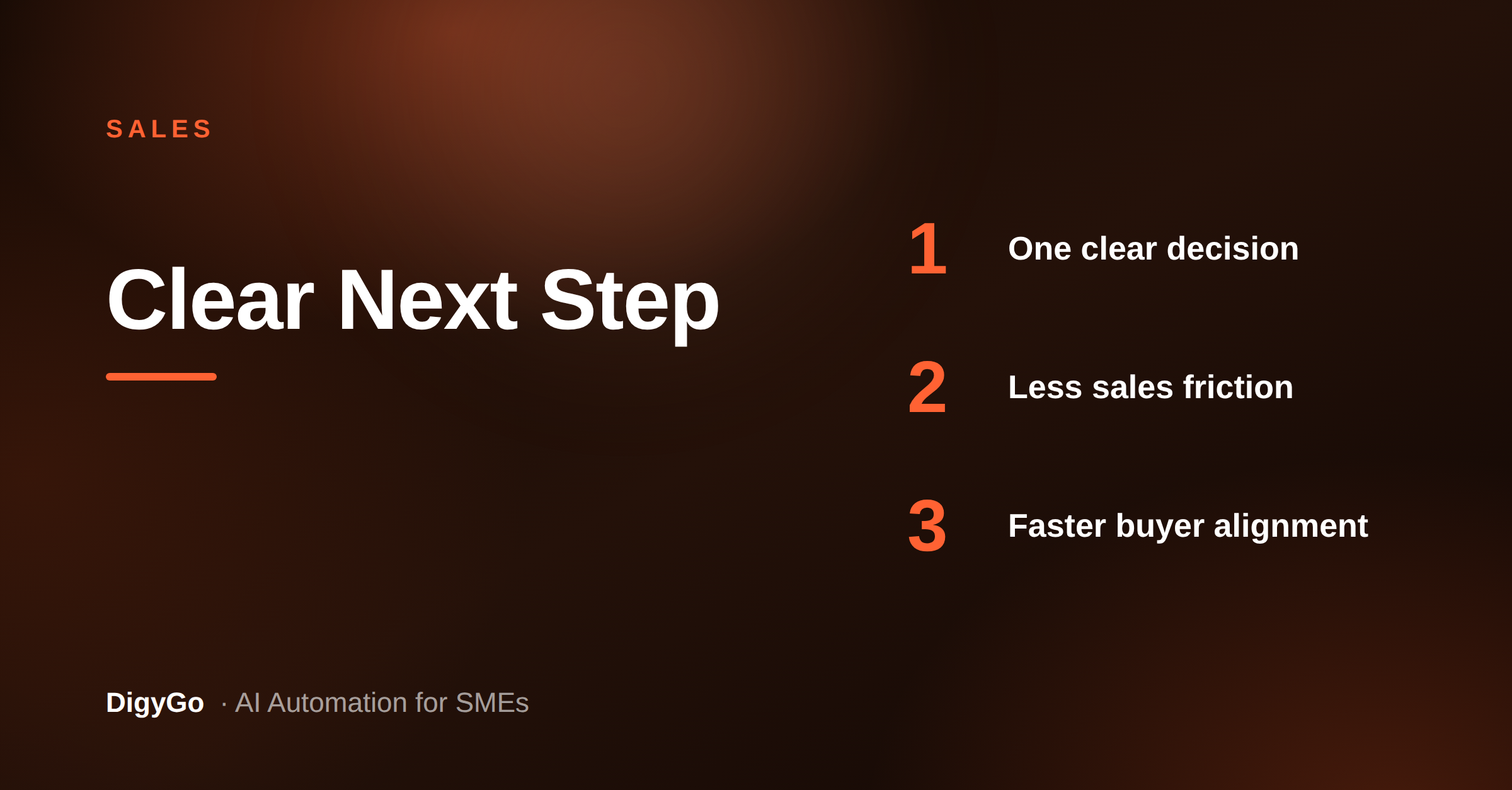
When a prospect asks for time to think, the deal usually stalls because the next step is unclear. A simple sales decision memo gives SMEs one page that aligns the offer, the proof, the price, and the deadline so the buyer can decide faster without endless back-and-forth.
A practical guide for SME founders on using a short decision memo to align the offer, proof, price, and deadline so prospects can decide faster.
- Use one decision memo to keep the sales conversation focused on the actual decision.
- Show the problem, the outcome, the proof, and the next step in one short page.
- Cut delay by answering the buyer’s hidden questions before the follow-up starts.
Why deals slow down after a good call
Many SME sales teams lose momentum after the discovery call. The buyer may like the service, but the team sends a long proposal, a few extra messages, and a generic follow-up reminder. That creates friction. The buyer has to figure out what matters most, who should approve it, and why the decision is urgent.
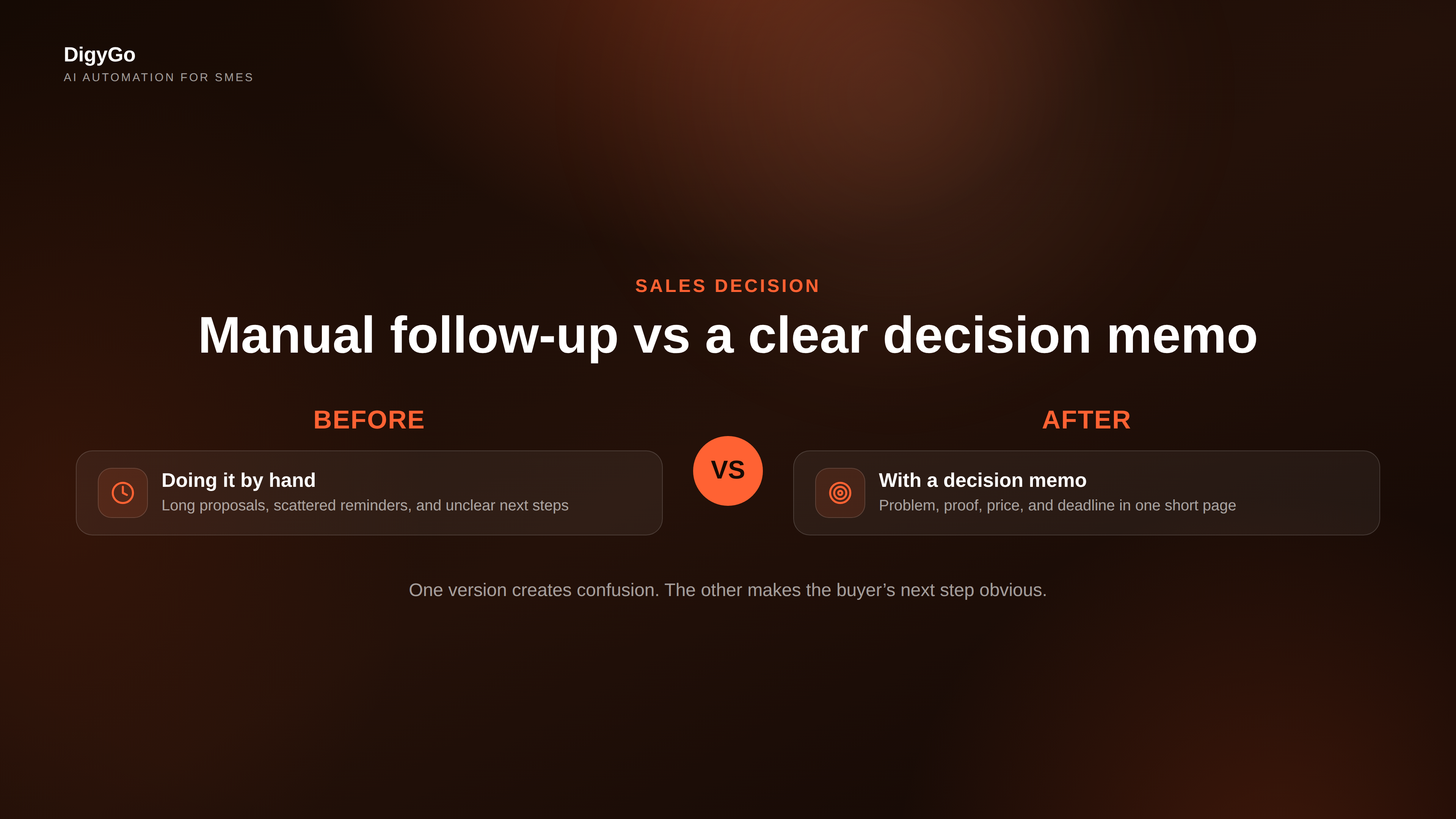
A decision memo fixes that by turning the next step into a clear business choice. It is not a proposal dump. It is a compact summary that helps the buyer say yes or no with confidence.
What belongs in the memo
The best memo is short enough to read in a minute and strong enough to answer the obvious objections.
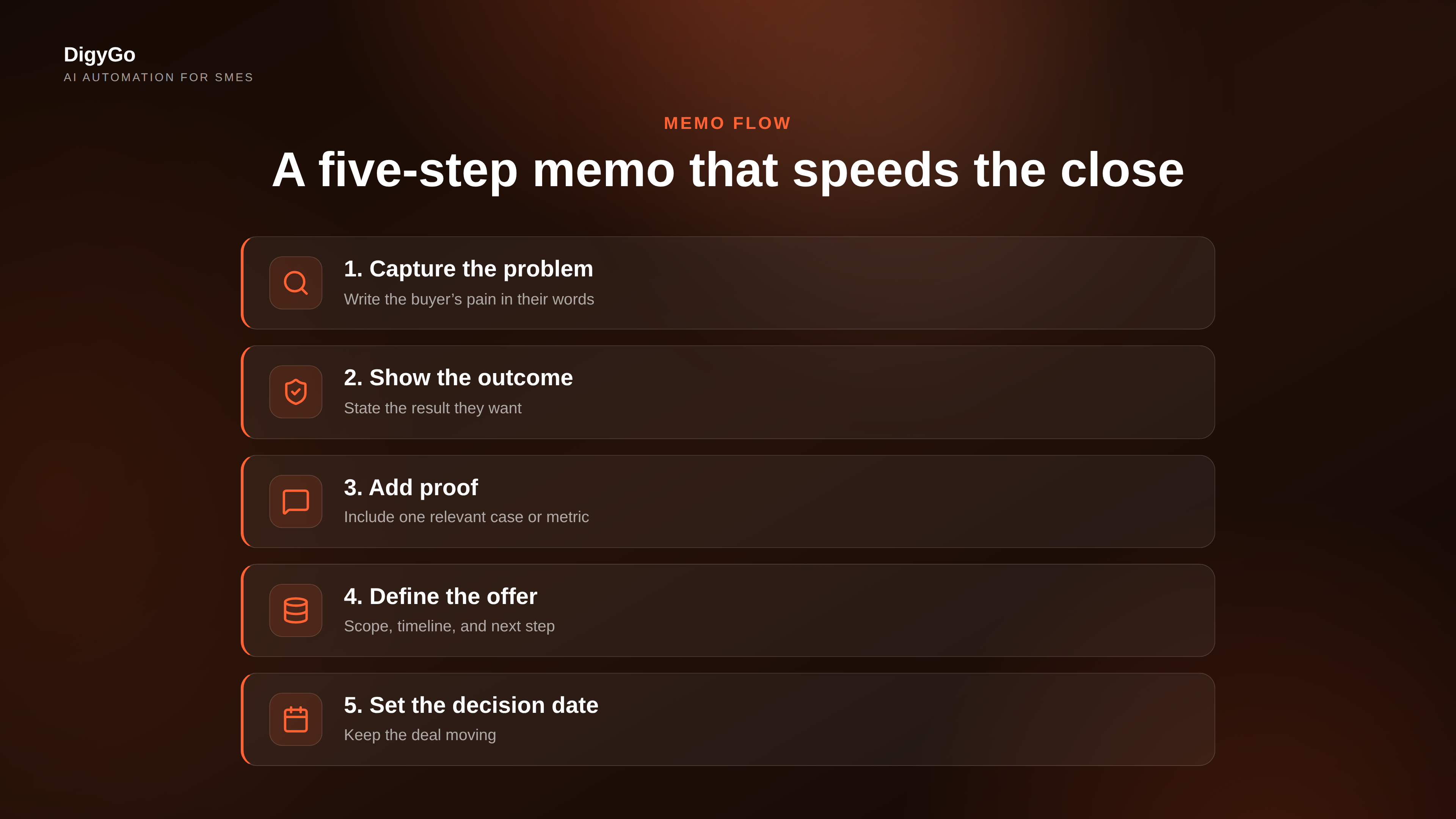
- Problem: what is costing the buyer time, money, or missed revenue.
- Outcome: the result they want, in plain language.
- Proof: one testimonial, metric, case study, or before-after example.
- Offer: what is included, what is not, and how delivery works.
- Decision date: when the buyer should confirm, so the conversation does not drift.
That structure works because it reduces the need for back-and-forth. Instead of sending three separate messages, the salesperson gives one document that supports the decision.
How to use it in the sales process
The memo should be shared after the discovery call and before the proposal gets too complex. It works especially well for services, retainers, and implementation projects where the buyer needs internal alignment.
- Capture the buyer’s exact problem in their words.
- Summarize the desired outcome and the business case.
- Add one proof point that makes the offer believable.
- State the scope, timeline, and decision deadline.
- Follow up with a short message that points back to the memo.
The goal is not to pressure the buyer. The goal is to remove noise so the right people can decide faster.
Why SMEs should prefer clarity over volume
Small teams do not win by sending more documents. They win by making the decision easier. A well-written memo improves close rates because it keeps the team aligned, shortens the sales cycle, and creates a more confident buying experience.
It also helps the salesperson stay consistent. The same memo can be reused, refined, and adapted for every qualified lead, which makes the sales process easier to train and easier to scale.
FAQ
Is a decision memo the same as a proposal?
No. A proposal lists the work and price. A decision memo makes the buyer’s choice easier by showing the problem, outcome, proof, and decision date in one compact format.
When should a salesperson send it?
Send it after a qualified discovery call, when the buyer has shown interest but still needs clarity before moving forward.
Does this work for smaller deals too?
Yes. In fact, it works well for small and mid-sized deals because it saves time for both the buyer and the sales team.
Want help turning your sales follow-up into a faster closing process? Contact DigyGo.