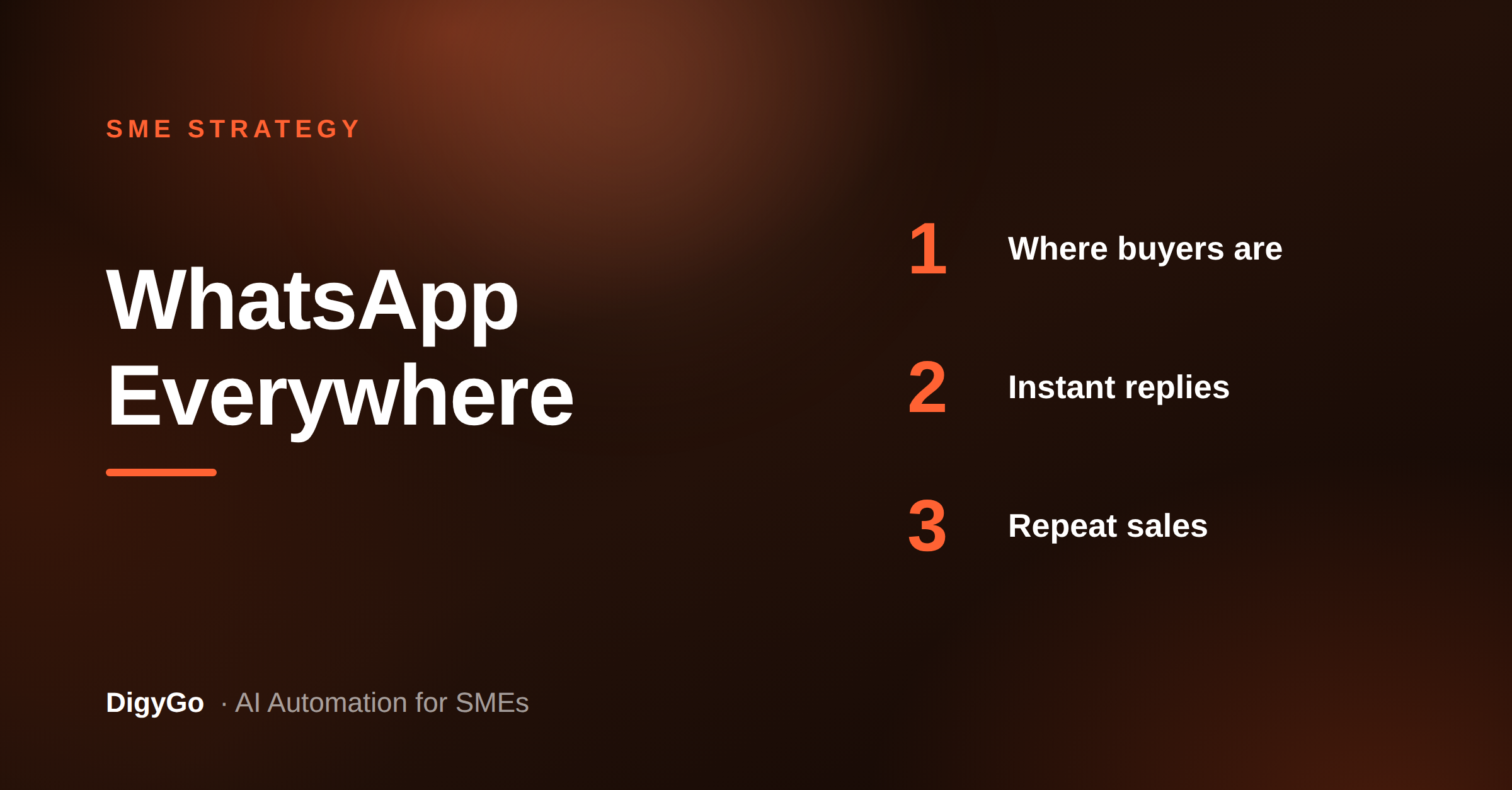
In tier 2 and tier 3 Indian cities, WhatsApp is not just a chat app — it is a daily business channel. Customers ask questions, compare prices, confirm appointments, and close decisions there faster than in email or web forms.
WhatsApp is a daily business channel in tier 2 and tier 3 Indian cities — and SMEs can use it for faster lead handling, support, and repeat sales.
For SMEs, that changes the playbook. If your audience is in smaller Indian cities, your growth often depends on how quickly and clearly you respond on WhatsApp. This article breaks down why usage is so strong in these markets, what that means for local businesses, and how DigyGo recommends using WhatsApp as a serious sales and support channel.
In this guide
- Why WhatsApp is a default business channel in tier 2 and tier 3 cities
- How customer behavior changes when decisions happen in chat
- What SMEs should automate first without losing the human touch
- How to turn WhatsApp into a lead and support system
Why WhatsApp dominates in smaller Indian cities
WhatsApp feels familiar, fast, and low-friction. For many customers in tier 2 and tier 3 cities, it is the easiest way to message a business, send an address, ask for pricing, or follow up after seeing a post or ad. That convenience makes it a natural place for everyday commerce.
The result is simple: if a business is easy to reach on WhatsApp, it often feels more trustworthy and more responsive than a competitor that forces people through a long form or a slow email chain.
WhatsApp sits at the center of the local buying journey
For tier 2 and tier 3 cities, the same chat thread often handles discovery, enquiry, comparison, follow-up, and closing.
"In smaller cities, people do not want to wait for a reply. They want a quick answer and a clear next step."
— DigyGo field note from SME conversationsWhat this means for SMEs
WhatsApp changes customer expectations. Leads expect fast replies, easy follow-up, and a simple path to action. If you are slow, the customer often moves to another seller who answers first.
- Faster response wins trust in crowded local markets
- Simple chat flows reduce drop-offs after enquiry
- Catalogs, images, and voice notes help people decide faster
- Follow-up messages keep interested leads from going cold
- Automation helps scale without losing the personal feel
Where WhatsApp helps most
Fast replies. Clear offers. Fewer missed leads.
Best WhatsApp use cases for local businesses
1. Lead capture from ads and posts
When someone clicks from Facebook, Instagram, or Google and lands on WhatsApp, the conversation can begin immediately. That is often more effective than asking people to fill out a long contact form.
2. Quote and enquiry handling
For service businesses, WhatsApp is ideal for collecting basic details, sharing pricing ranges, and moving the conversation to the right person.
3. Appointment and order reminders
Automated reminders reduce no-shows and help small teams stay organized without manually chasing everyone.
4. Customer support and FAQs
Common questions about timing, availability, location, and service scope can be answered quickly on chat, saving time for both sides.
5. Repeat sales and retention
WhatsApp is also useful after the first sale. Updates, re-orders, seasonal offers, and loyalty follow-ups can all happen in a format customers already use every day.
"Once we started replying on WhatsApp within minutes, our enquiries from smaller towns became much more serious. People were ready to buy faster."
What to automate, and what to keep human
Automation should handle the repetitive parts: greetings, FAQs, routing, reminders, and missed-message recovery. Human support should take over when the lead is serious, the request is complex, or the customer needs reassurance.
This balance matters. A good WhatsApp system feels responsive and helpful, not robotic.
A simple WhatsApp strategy for SMEs
- Make your WhatsApp entry point obvious on your website, ads, and social profiles.
- Write a short welcome flow that asks what the customer needs.
- Add FAQ replies for common questions.
- Route serious leads quickly to a human team member.
- Track response time and conversions so you know what is working.
For many local businesses, this one channel can become the main bridge between marketing and sales.
Bottom line
Tier 2 and tier 3 city customers are already using WhatsApp as part of their buying journey. SMEs that treat it as a serious communication channel will reply faster, build more trust, and close more business.
If you want help turning WhatsApp into a real lead system for your business, book a free 30-minute call with DigyGo.