Most SMEs do not lose growth because the market stops responding. They lose it because no one is reviewing the system often enough to catch small leaks in lead flow, follow-up, delivery, and retention.
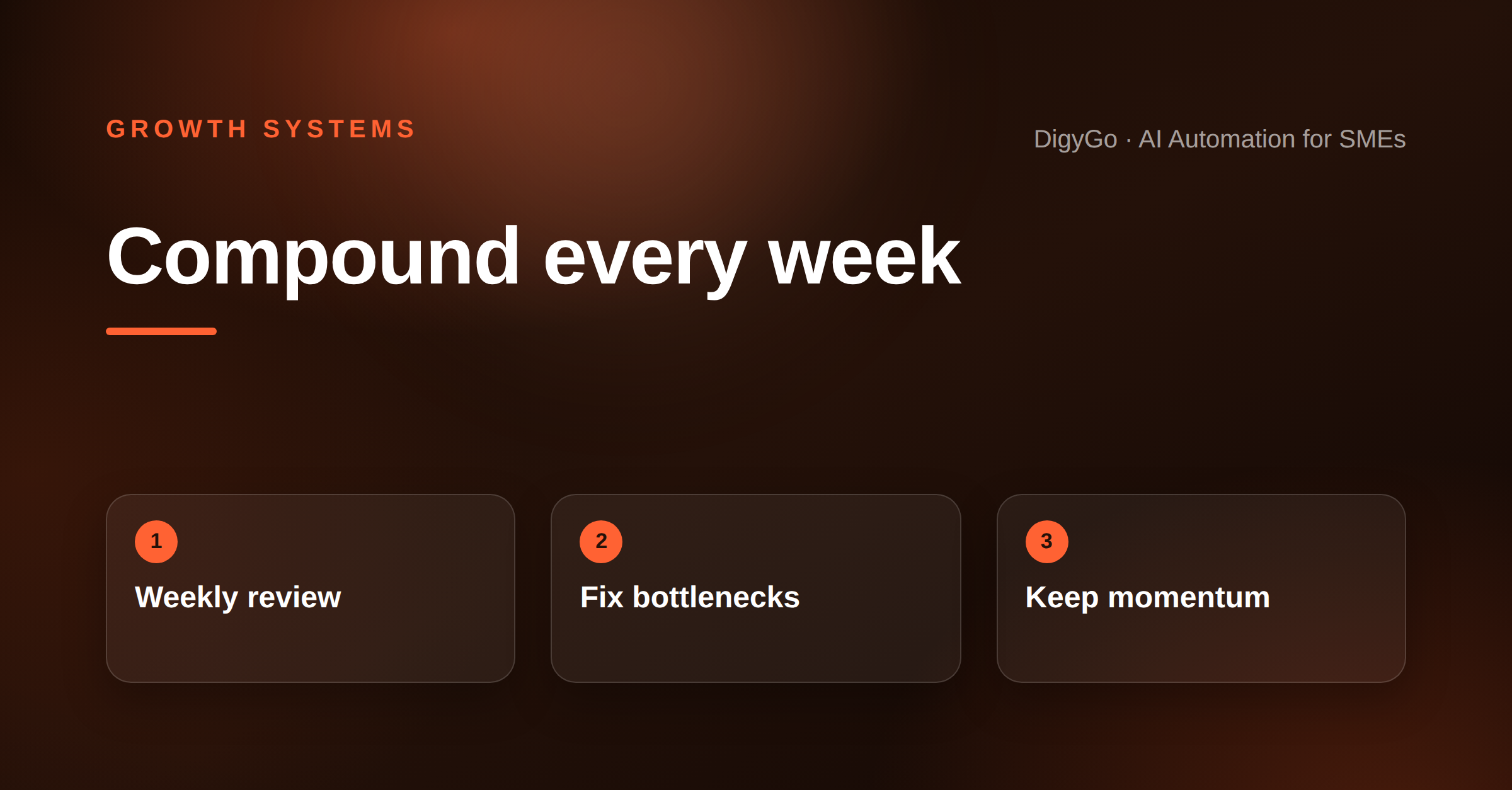
A simple weekly operating review keeps leads, follow-up, delivery, and retention moving in the same direction so growth does not leak between busy days.
Why weekly reviews compound faster than ad hoc firefighting
A weekly growth ops review is not a status meeting. It is a short decision loop that answers four questions: what moved, what stalled, where the leakage started, and what gets fixed before next week.
When a founder or project lead runs the same review every week, the team starts to see growth as a chain of connected systems instead of isolated wins. That shift matters because a strong lead week still fails if follow-up slips, and good delivery still underperforms if retention never gets checked.
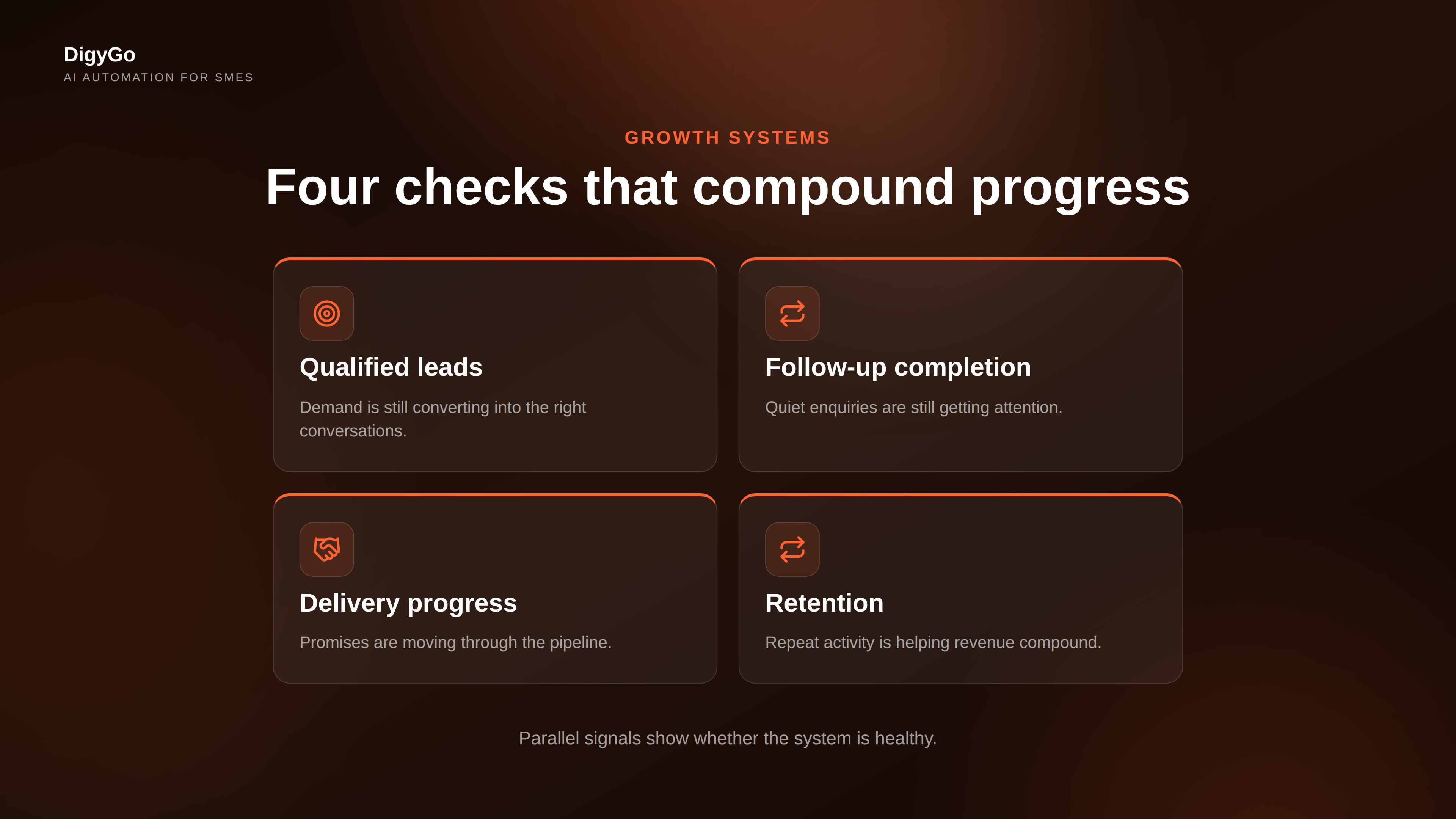
The four numbers that deserve the same meeting every week
Keep the review tight. The goal is not to inspect everything. The goal is to inspect the few numbers that reveal whether the engine is healthy.
- New qualified leads: shows whether demand generation is still producing the right conversations.
- Follow-up completion: shows whether opportunities are being nurtured before they cool off.
- Delivery or onboarding progress: shows whether promises made in sales are being converted into visible momentum.
- Retention or repeat activity: shows whether the business is creating enough trust to compound revenue.
What the review should produce, not just discuss
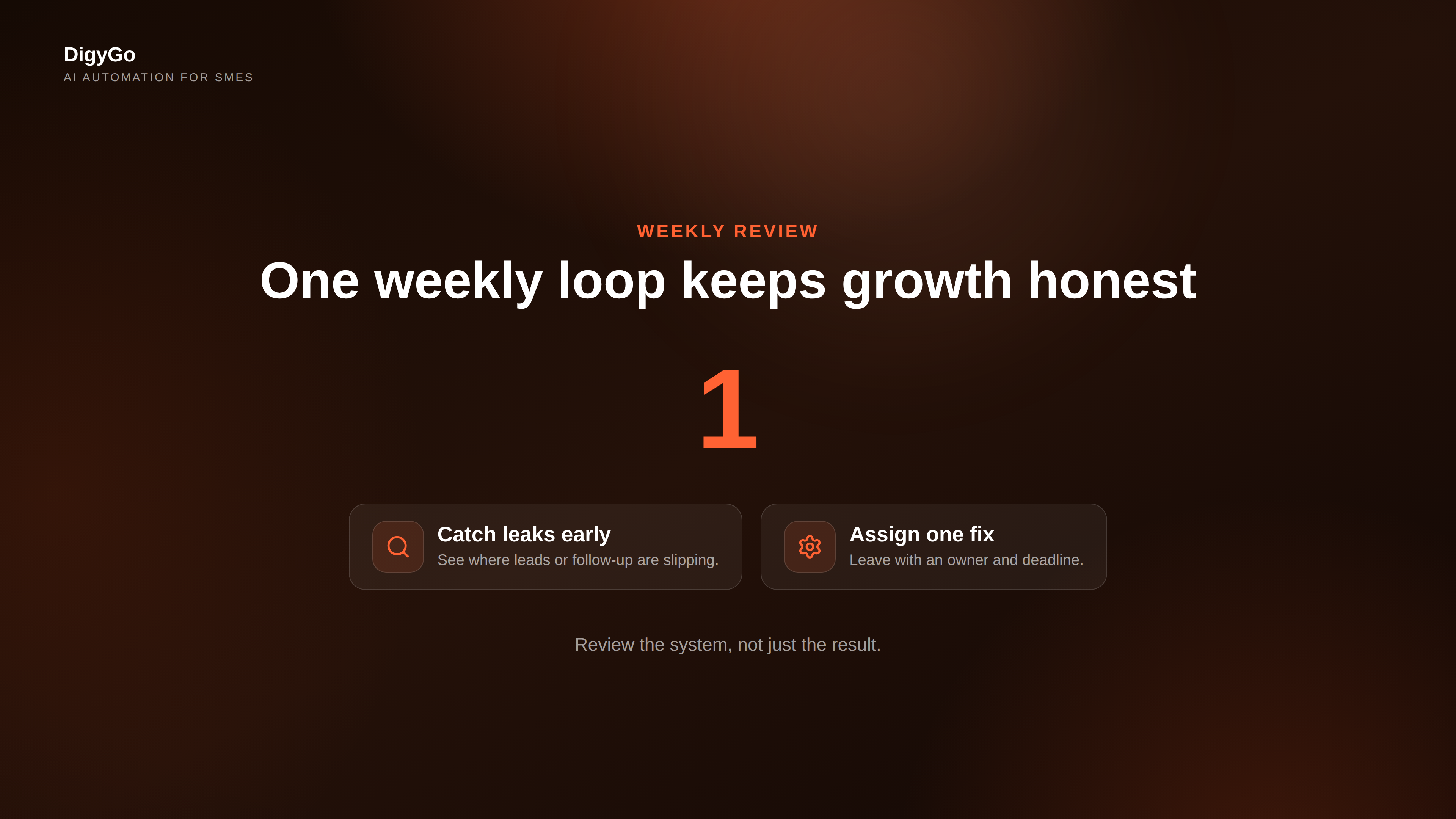
If a weekly meeting ends with polite agreement and no operational change, it is not a growth system. Each review should produce three outputs:
- one bottleneck to remove,
- one owner for the fix,
- one check-in point before the next review.
That structure keeps the team honest. It prevents the meeting from becoming a reporting ritual and turns it into a compounding loop. Over time, the business gets better at noticing patterns early, which means fewer surprises, faster recovery, and cleaner execution.
How SMEs can keep the meeting lightweight
The best weekly review fits into 20 to 30 minutes. Start with the scorecard, then move to exceptions only. If a number is healthy, do not spend time celebrating it in detail. If a number is off track, identify the cause, the owner, and the next action.
Use the same order every week:
- review the scorecard,
- spot the biggest deviation,
- name the fix,
- confirm the deadline.
Repetition is the feature, not the bug. The point is to make growth visible enough that the team can respond before the quarter is already gone.
When this system starts paying back
Most teams notice the payoff in three places: fewer dropped leads, smoother handoffs, and cleaner team accountability. Then the real benefit appears. Because the review is consistent, decisions become faster. Because the decisions are tracked, the same mistakes happen less often. That is how small operational discipline compounds into visible growth.
If you want a simpler way to grow without adding more chaos, start with one weekly meeting, one scorecard, and one fixed follow-through rule.
FAQ
How is a weekly growth ops review different from a normal team meeting?
A normal meeting often shares updates. A growth ops review checks the system, spots friction, and assigns a fix before the next cycle starts.
What should SMEs avoid in the review?
Avoid long discussions, vanity metrics, and open-ended action items. Every issue should end with an owner and a deadline.
Can smaller teams use the same format?
Yes. Smaller teams often benefit even more because the loop stays simple and decisions happen faster.