Most SME teams do not need “more software.” They need one assistant that can read the daily noise, route the right work, and remind the team before things slip. That is what an AI daily operations assistant does: it turns scattered requests, follow-ups, and task updates into a simple operating rhythm.
A practical guide for SMEs on using one AI assistant to capture requests, assign ownership, and keep daily work from stalling.
Why this pattern works for SMEs
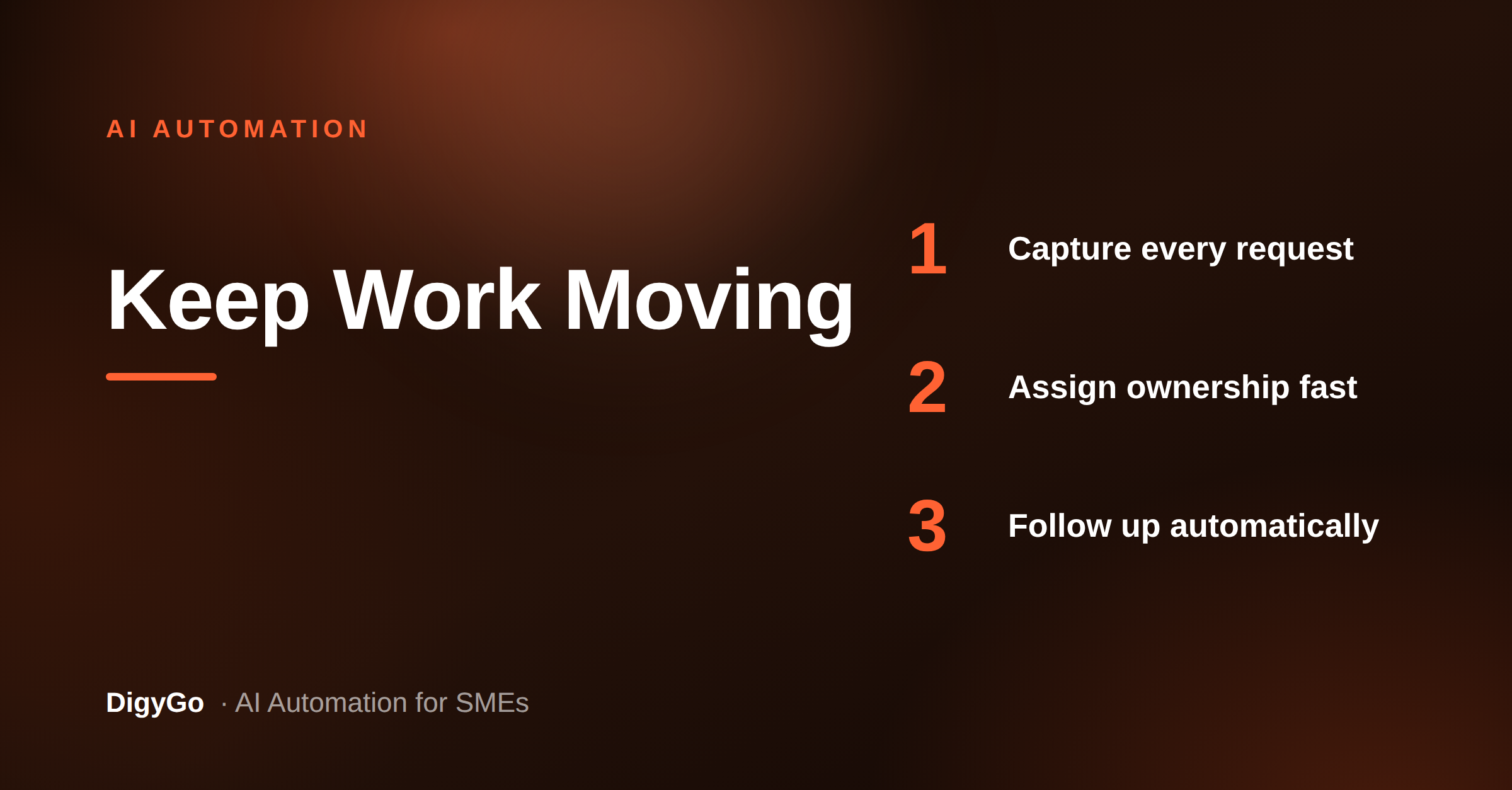
When a founder or ops lead is forced to check WhatsApp, email, spreadsheets, and CRM notes all day, work slows down because every handoff needs a human to remember the next step. An AI system can keep the flow moving by doing three jobs consistently: capture, classify, and chase.
- Capture every new request in one place.
- Classify the request by urgency, owner, and next action.
- Chase the follow-up until the task is closed or reassigned.
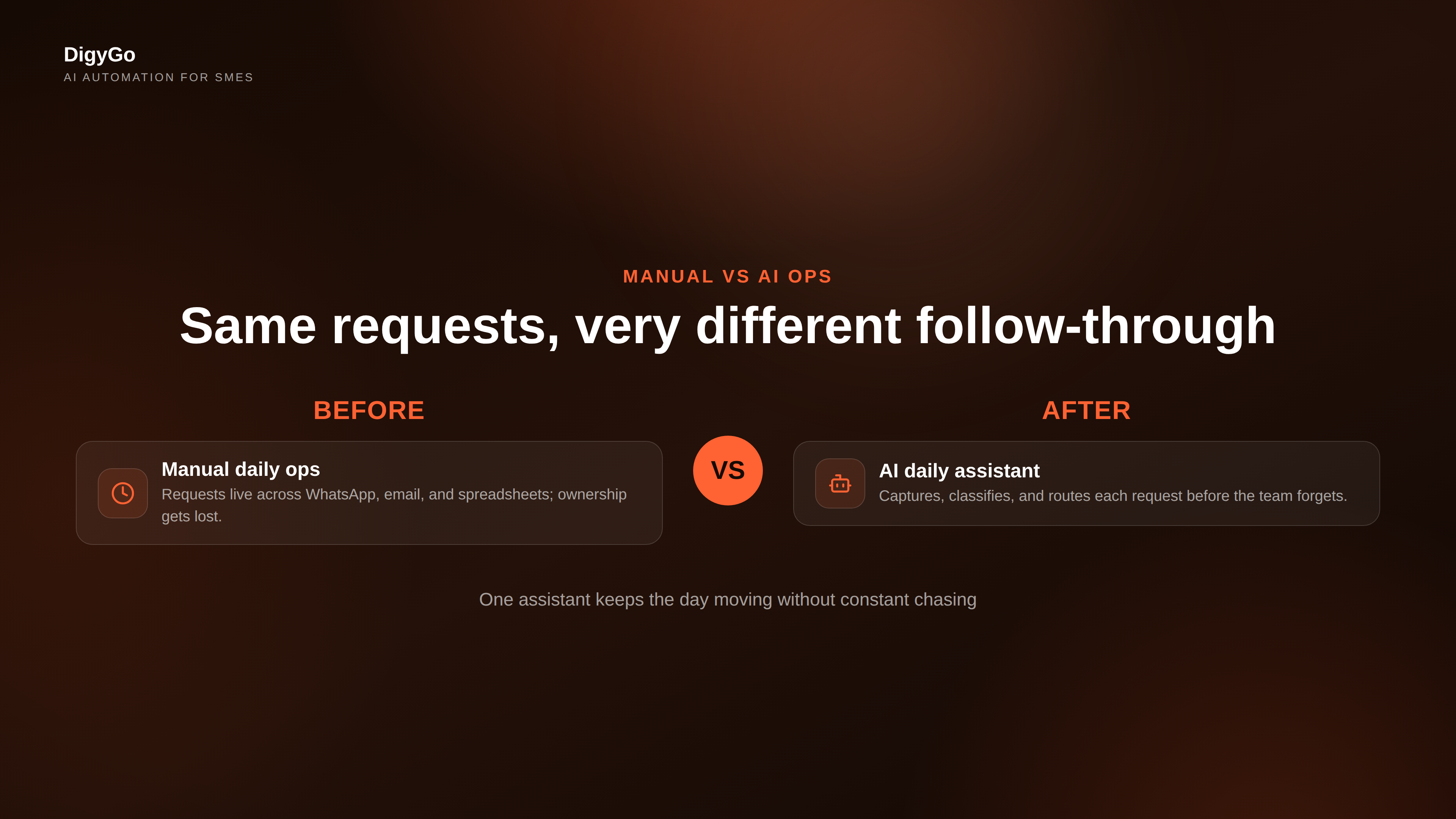
What the assistant should actually do
Keep the scope practical. A good operations assistant is not trying to replace your team. It is trying to make sure nothing useful gets lost between the first message and the final handoff.
Start with the highest-friction tasks
Do not automate everything at once. Start where your team wastes the most time: new inquiries, missed follow-ups, internal approvals, or repeated status checks. Those are the places where an AI layer produces immediate relief.
The daily flow: from request to completed action
The best pattern is a simple sequence. First the system receives the request. Then it decides who should own it. Finally, it nudges that person until the task is handled or escalated.
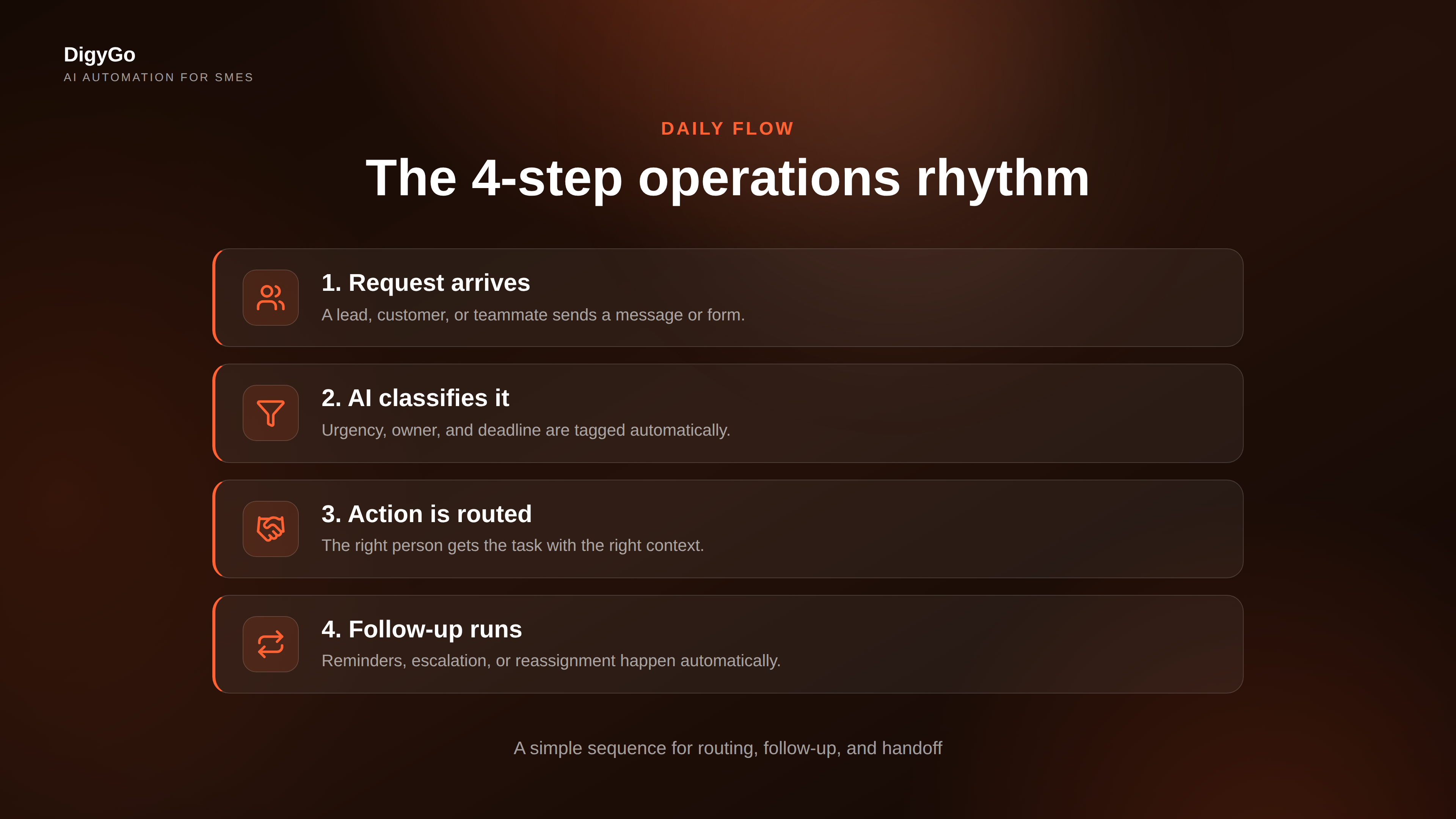
- Request arrives. A lead, customer, or teammate sends a message or form submission.
- AI classifies it. The system identifies the topic, urgency, and likely owner.
- Action is routed. The right person gets the task with enough context to respond fast.
- Follow-up runs automatically. If there is no response, the assistant reminds, escalates, or reassigns.
Where SMEs get the biggest win
The biggest win is not fancy prediction. It is consistency. An AI assistant can enforce the same operating standard every day, even when the team is busy or someone is out of office. That means fewer dropped leads, fewer forgotten approvals, and fewer “I thought someone else handled it” moments.
The goal is not to automate your business into complexity. The goal is to make the next action obvious every time a message lands.
How to launch it without overbuilding
Begin with one workflow, one owner, and one success metric. For example, measure response time for new enquiries or time-to-assign for internal requests. If the AI assistant shortens that cycle, you can expand into the next workflow with confidence.
- Pick one daily bottleneck.
- Define the trigger and the owner.
- Write the routing rule in plain language.
- Add reminders only where work tends to stall.
FAQ
Is an AI daily operations assistant hard to maintain?
No, if the first version is narrow. Keep it focused on one process, then refine the rules as you see real usage.
Do SMEs need a full AI agent platform for this?
Usually not. Most teams get value from a small workflow that handles routing, reminders, and visibility.
What should I automate first?
Automate the work that gets forgotten most often: new requests, follow-ups, and internal handoffs.
Talk to DigyGo about building a practical AI operations assistant for your team.