If your sales team keeps discounting to win deals, the problem is often not price. It is a weak offer, a vague pipeline, or a follow-up process that lets the wrong leads linger too long. For SMEs, the fastest way to close more of the right deals is to tighten the offer, qualify better, and make the next step obvious.
A practical sales playbook for SMEs to sharpen the offer, qualify better, and handle objections before discounting becomes the default.
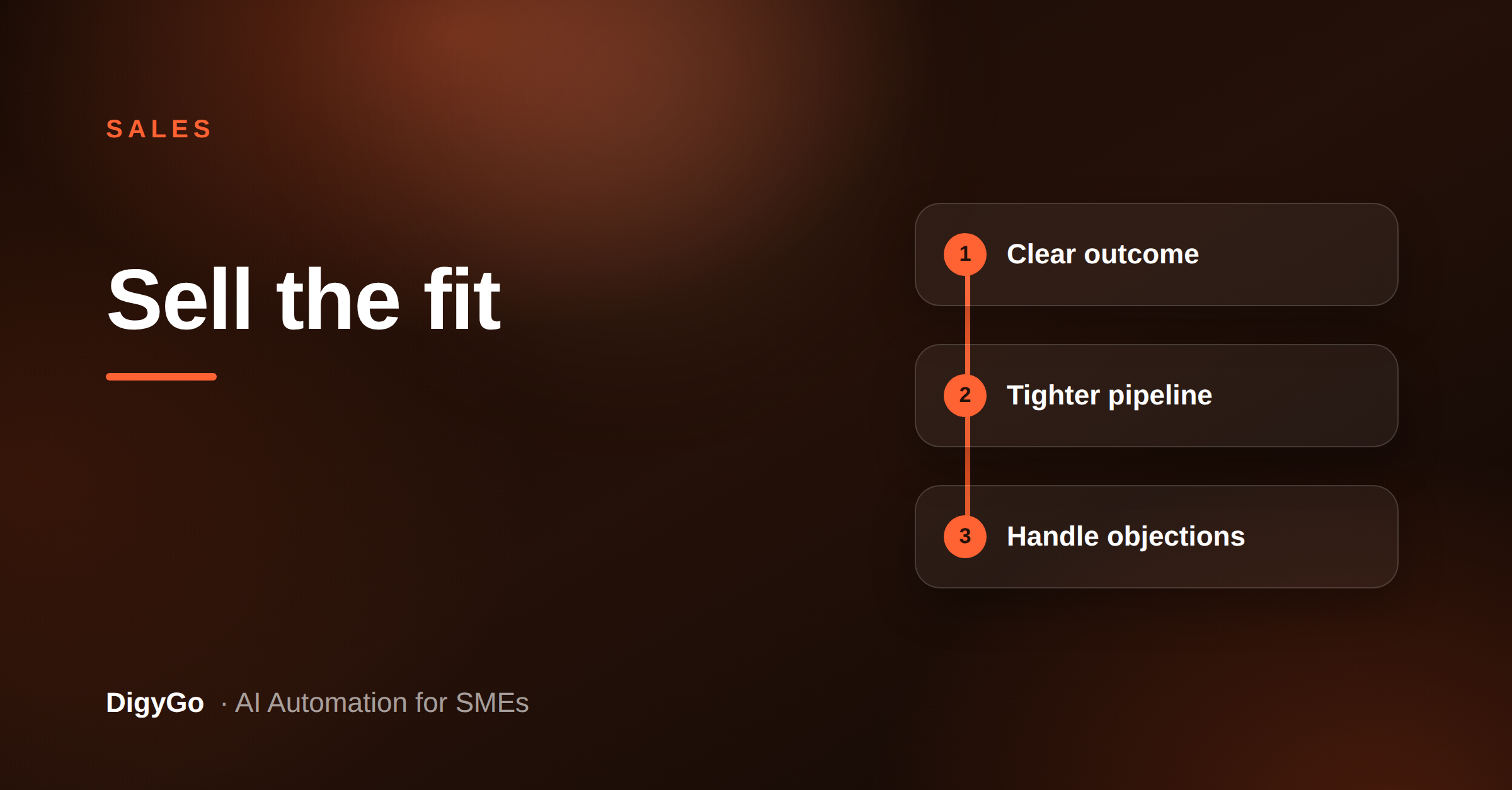
- Sell one clear outcome instead of a long list of services.
- Move prospects through a simple pipeline with clear exit criteria.
- Handle objections before the call ends, not after the deal stalls.
Why discounting becomes the default
Discounting usually shows up when the offer is not sharp enough. The prospect cannot see the difference between you and the next vendor, so price becomes the easiest comparison. If your package sounds broad, the buyer assumes the work is generic.
The fix is not to push harder on urgency. It is to make the outcome specific. A clear offer gives the buyer a reason to choose you for the result, not just the rate.
Build an offer the buyer can repeat back
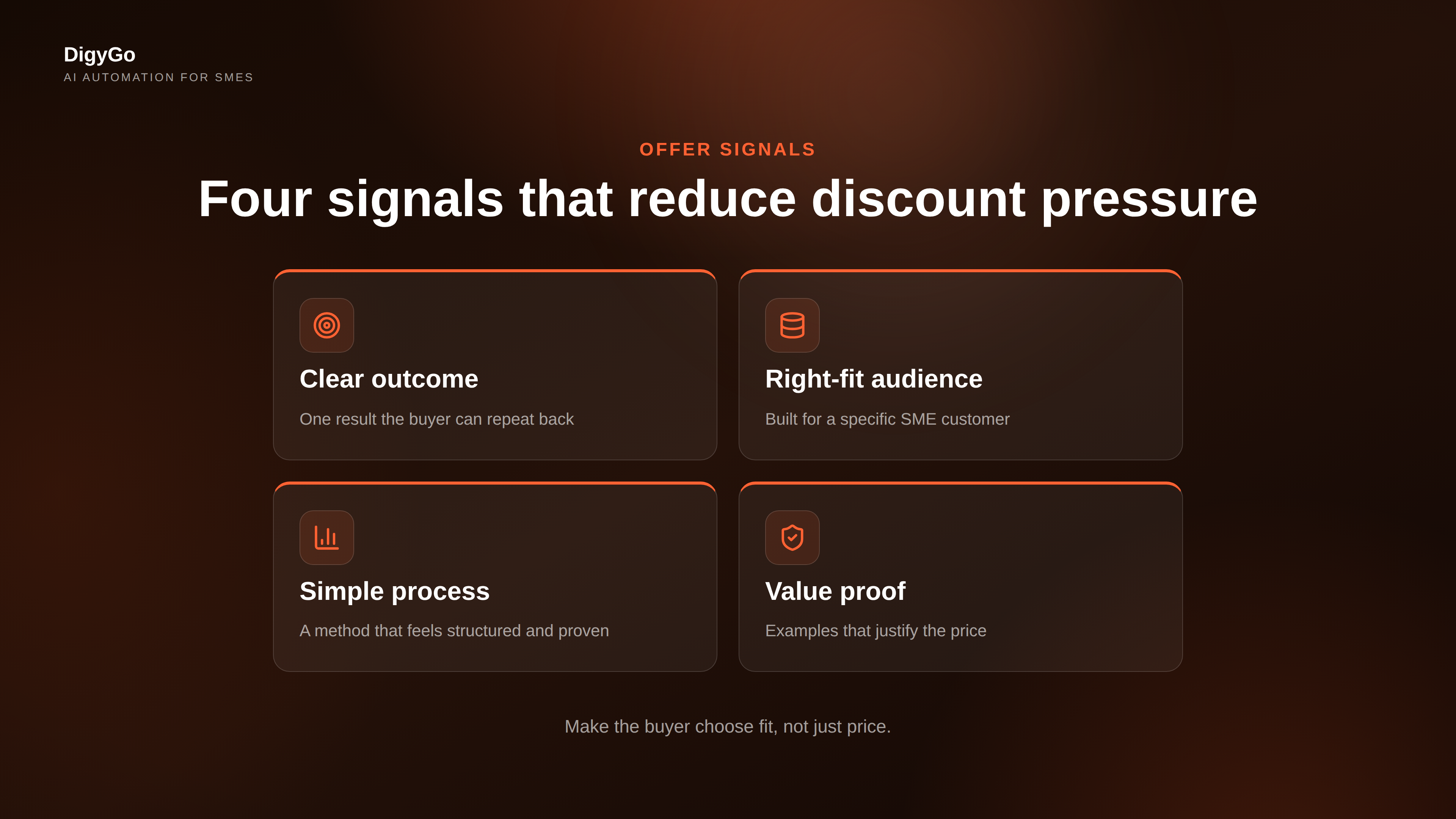
A strong SME offer should be easy to explain in one sentence. It should answer four questions fast: what problem you solve, who it is for, what outcome they get, and why your method is different.
- Problem: Name the pain in business language, not internal jargon.
- Audience: Say exactly which type of customer it is built for.
- Outcome: Focus on the business result, such as more booked calls or faster close rates.
- Method: Show the process that makes the outcome believable.
When prospects can repeat your offer back to you, the sales conversation becomes simpler. They stop shopping for random alternatives and start judging fit.
Keep the pipeline small enough to manage
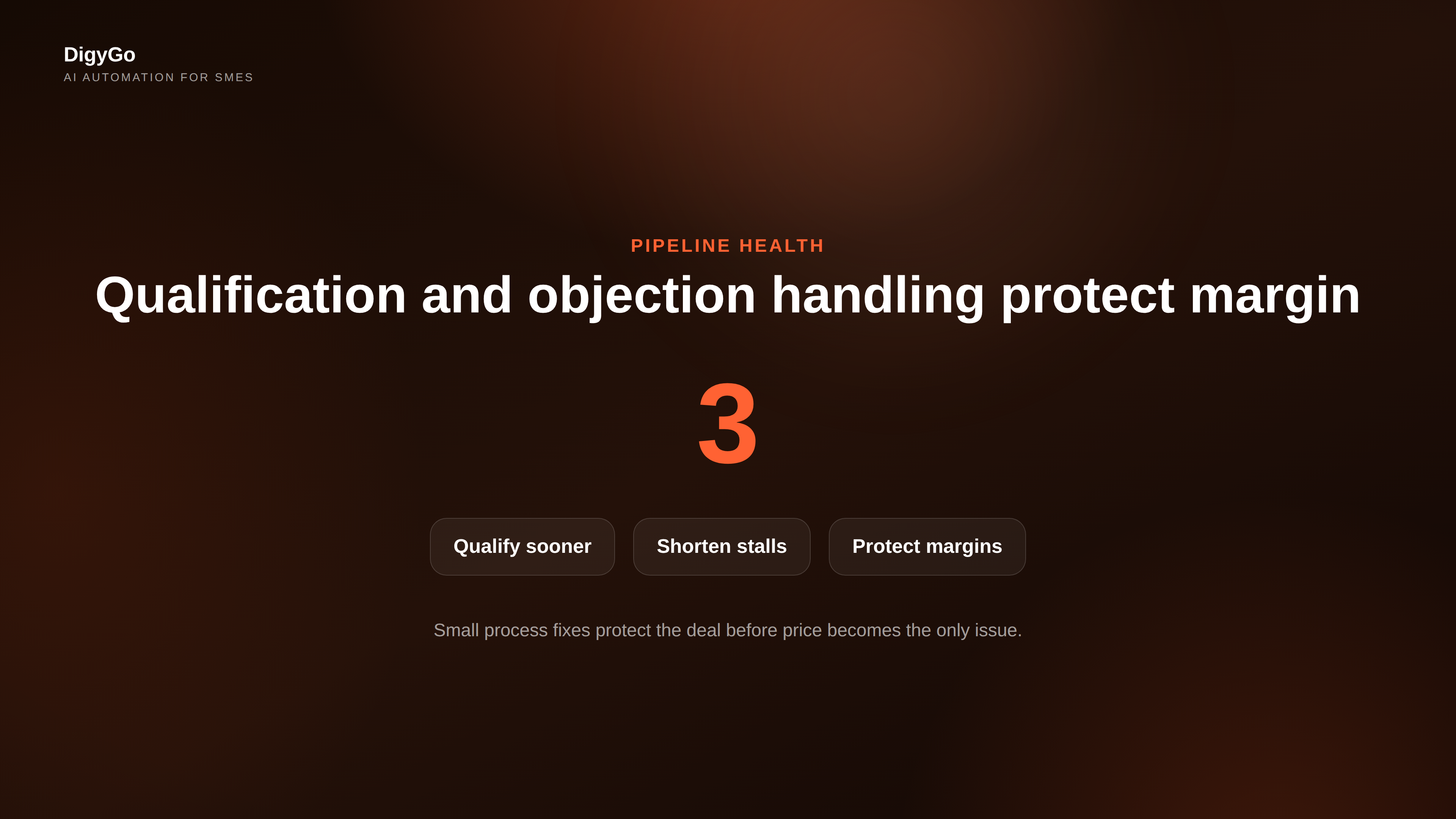
A messy pipeline creates fake optimism. Too many stages, too many exceptions, and too many stalled leads make it hard to know what to do next. A clean pipeline should tell you where the lead is, what has happened, and what must happen before the deal moves forward.
Use fewer stages and stronger exit rules. For example, a lead should not move from discovery to proposal unless the pain, budget range, and decision process are already clear. That stops teams from preparing proposals for people who were never ready.
Handle objections before they become stalls
Most objections are not surprises. They are signals that should have been uncovered earlier. If you ask better questions, you will hear the concern sooner and avoid wasting the last part of the sales cycle.
Three objections come up again and again:
- Price: Respond by reconnecting cost to the value of the outcome.
- Timing: Show what happens if the problem is left unsolved for another quarter.
- Trust: Use proof, examples, and a clear process to reduce risk.
The goal is not to overcome every objection with pressure. The goal is to make the buyer feel that the next step is safe and logical.
Use follow-up to keep the right deals moving
Many deals are lost in the gap between interest and decision. A short follow-up sequence helps you stay useful without sounding pushy. Each message should answer one simple question: what happens next, and why should the buyer care now?
Good follow-up is specific. It reminds the prospect of the problem, the payoff, and the next action. That is far more effective than sending generic check-ins that only ask if they had a chance to review.
What founders should change this week
- Rewrite your main offer in one plain sentence.
- Remove one unnecessary pipeline stage.
- Add one objection question to your discovery call.
- Replace vague follow-ups with outcome-based reminders.
If you tighten these four parts, your sales process becomes easier to run and easier to scale. You will spend less time defending price and more time closing the right customers.
FAQ
How do I stop discounting in sales?
Make the offer clearer, qualify leads earlier, and connect price to the outcome the buyer wants. Discounting becomes less necessary when the value is obvious.
What is the biggest sales mistake SMEs make?
They try to sell a broad service package to every lead. Narrowing the offer usually improves conversion faster than adding more pressure.
How many pipeline stages should a small team use?
Use only the stages you can review and act on every week. Fewer stages with stronger rules beat a long pipeline that nobody trusts.