Most SME marketing fails for one simple reason: the message is too broad. If the right buyer cannot tell, in a few seconds, what you solve, who it is for, and why it matters now, they scroll past. A stronger message does not shout louder — it removes confusion faster.
A practical marketing playbook for SMEs on turning a vague offer into a clear message that attracts the right buyers and filters out the wrong ones.
The goal is not attention for everyone
The best marketing message is a filter. It should attract the people who already feel the problem and quietly ignore the rest. That is how you cut wasted enquiries, improve lead quality, and make every campaign easier to run.
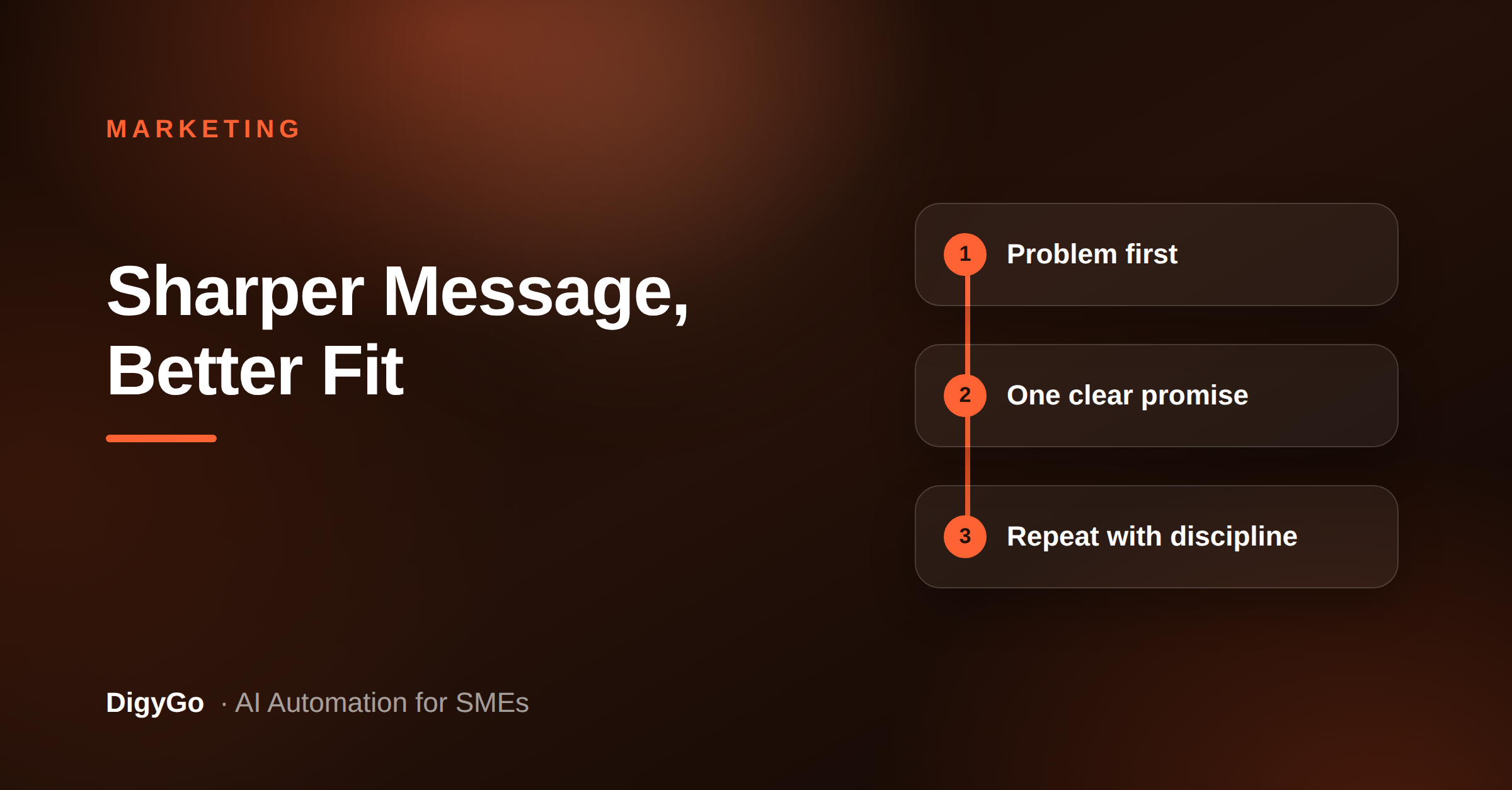
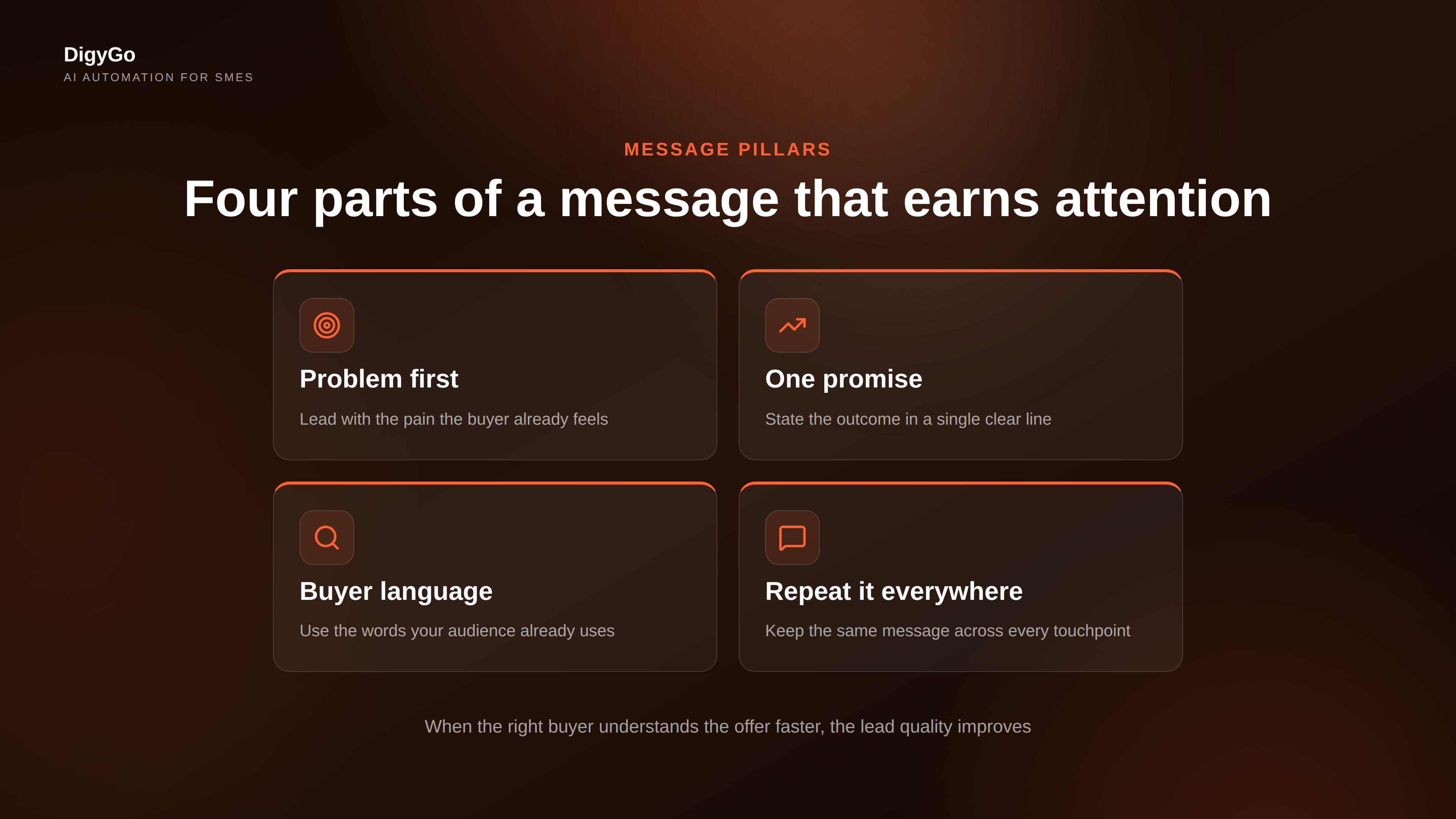
- Lead with a problem your buyer already feels.
- Use one clear promise, not five vague benefits.
- Repeat the same message across ads, website, and follow-up.
- Test for clarity before you test for cleverness.
Start with the buyer's urgent problem
Strong positioning begins with the pain your buyer wants to remove, not the service you want to sell. A founder reading your homepage or ad should think, “Yes, that is exactly the issue we keep facing.”
- Describe the problem in the buyer's words.
- Show the cost of leaving it unresolved.
- State the outcome they want instead.
If the message is built around your internal process, you are making the buyer translate. If the message is built around their pain, they feel understood immediately.
One promise beats a long feature list
SMEs often try to look credible by listing every capability. That usually creates a fog of features. Buyers do not remember long lists; they remember the one outcome that matters to them most.
A cleaner structure is:
- Who it is for
- What problem it solves
- What result it delivers
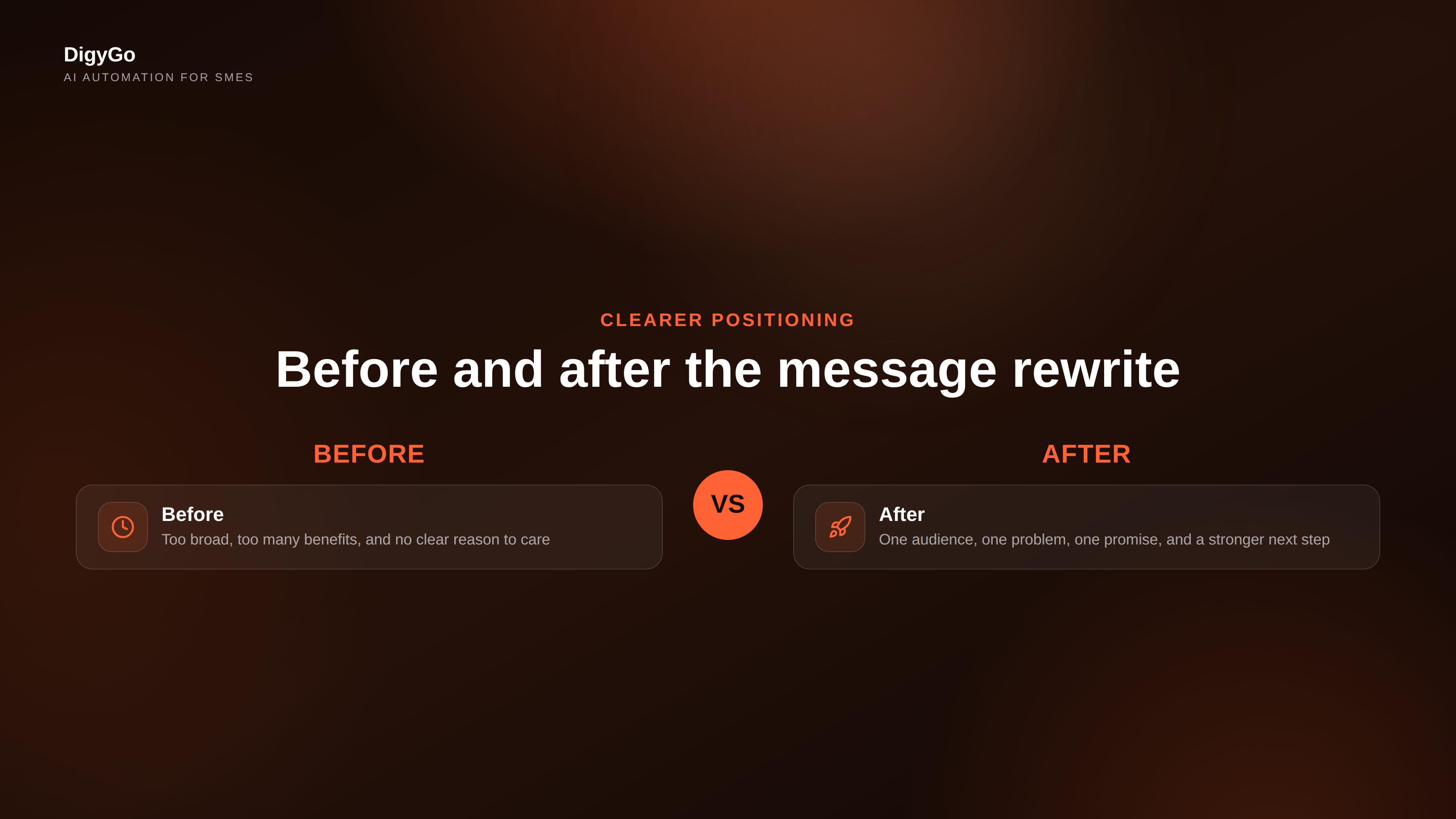
For example, instead of saying you help with marketing support, say you help local businesses turn scattered interest into booked conversations. That is specific enough to attract the right people and simple enough to repeat consistently.
Make the same message appear everywhere
Good marketing is repetition with discipline. The same promise should show up in your homepage hero, ad copy, email follow-up, social posts, and sales conversations. When those touchpoints all say the same thing, trust builds faster.
Use this simple alignment check:
- Does the headline match the ad?
- Does the follow-up email reinforce the same promise?
- Does the sales team use the same words?
When the answer is yes, the buyer experiences one coherent message instead of disconnected marketing assets.
Test clarity before creativity
Creativity matters, but clarity comes first. Before launching a new campaign, ask a person outside your business to read the message once and explain it back to you. If they cannot repeat the offer in one sentence, the message still needs work.
That test is useful because it reveals hidden jargon, weak promises, and overcomplicated positioning long before you spend money on reach.
A practical rewrite formula for SMEs
If your current marketing message feels generic, rewrite it using this pattern:
We help [specific audience] solve [specific problem] so they can achieve [specific result] without [common frustration].
That one sentence is enough to guide your homepage, ad campaigns, and introductory emails. Once it is clear, you can expand it into proof, offers, and supporting content.
FAQ
How long should a marketing message be?
Short enough to understand quickly, but complete enough to explain the problem, audience, and result. One clear sentence is usually the right starting point.
Should every audience get the same message?
No. The core brand can stay consistent, but the angle should change based on the buyer problem and urgency.
What should I fix first: headline, offer, or CTA?
Fix the core promise first. If the promise is unclear, improving the CTA will not solve the real problem.
Want help sharpening your marketing message? Talk to DigyGo.