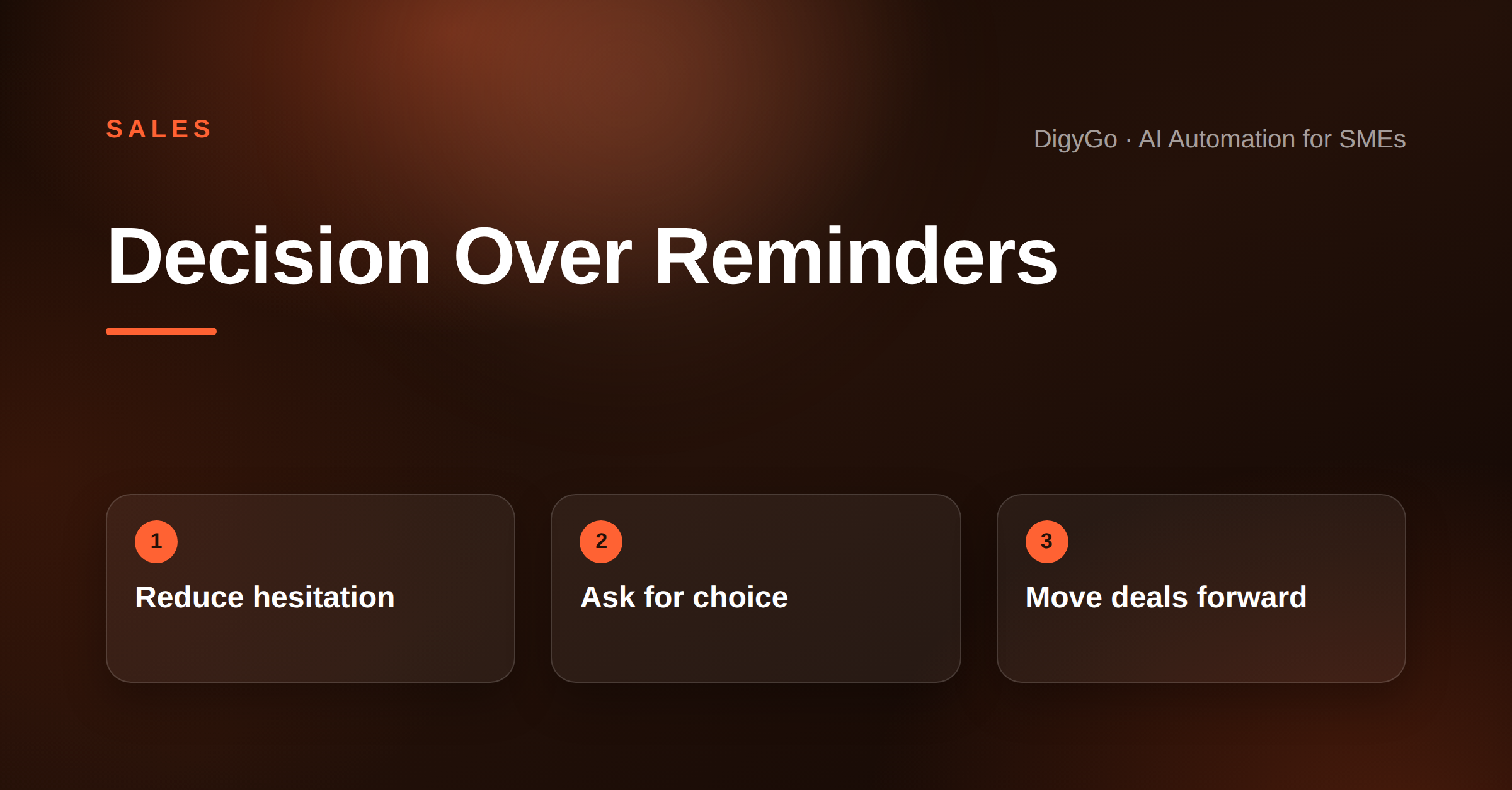
Most sales follow-up fails because it asks for patience instead of progress. If a prospect already knows your offer, the next message should help them decide, not just remind them you are still waiting.
A practical sales playbook for SMEs on turning follow-up into a decision-making conversation that reduces hesitation and moves more deals to a clear next step.
Why follow-up stalls
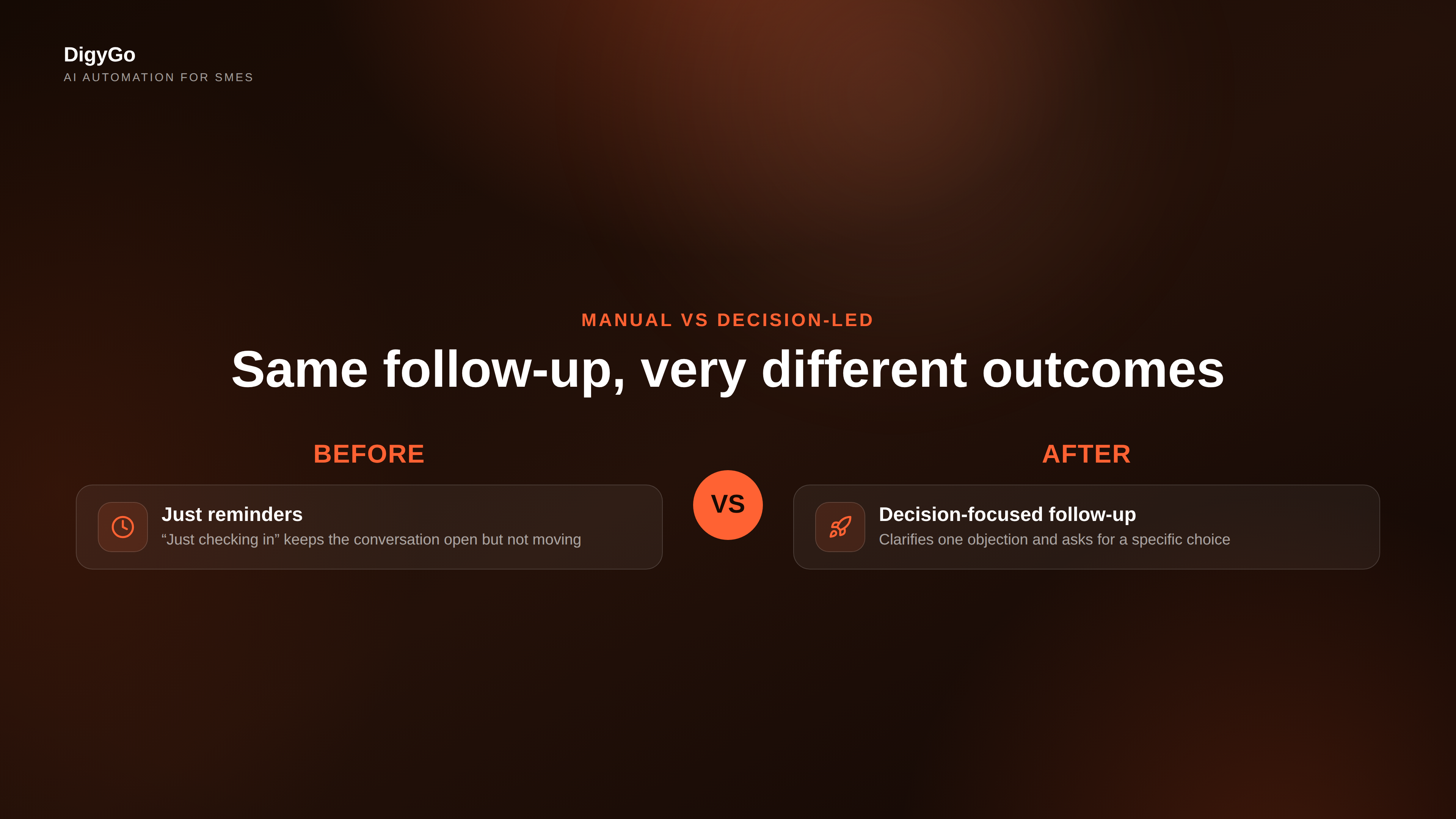
Many SME sales teams send polite reminders, then wait. That approach keeps the conversation open, but it does not reduce uncertainty. The buyer still has the same unanswered questions about fit, price, timing, and next steps.
Good follow-up does something more useful. It removes one decision barrier at a time. That is how you move a deal forward without sounding pushy.
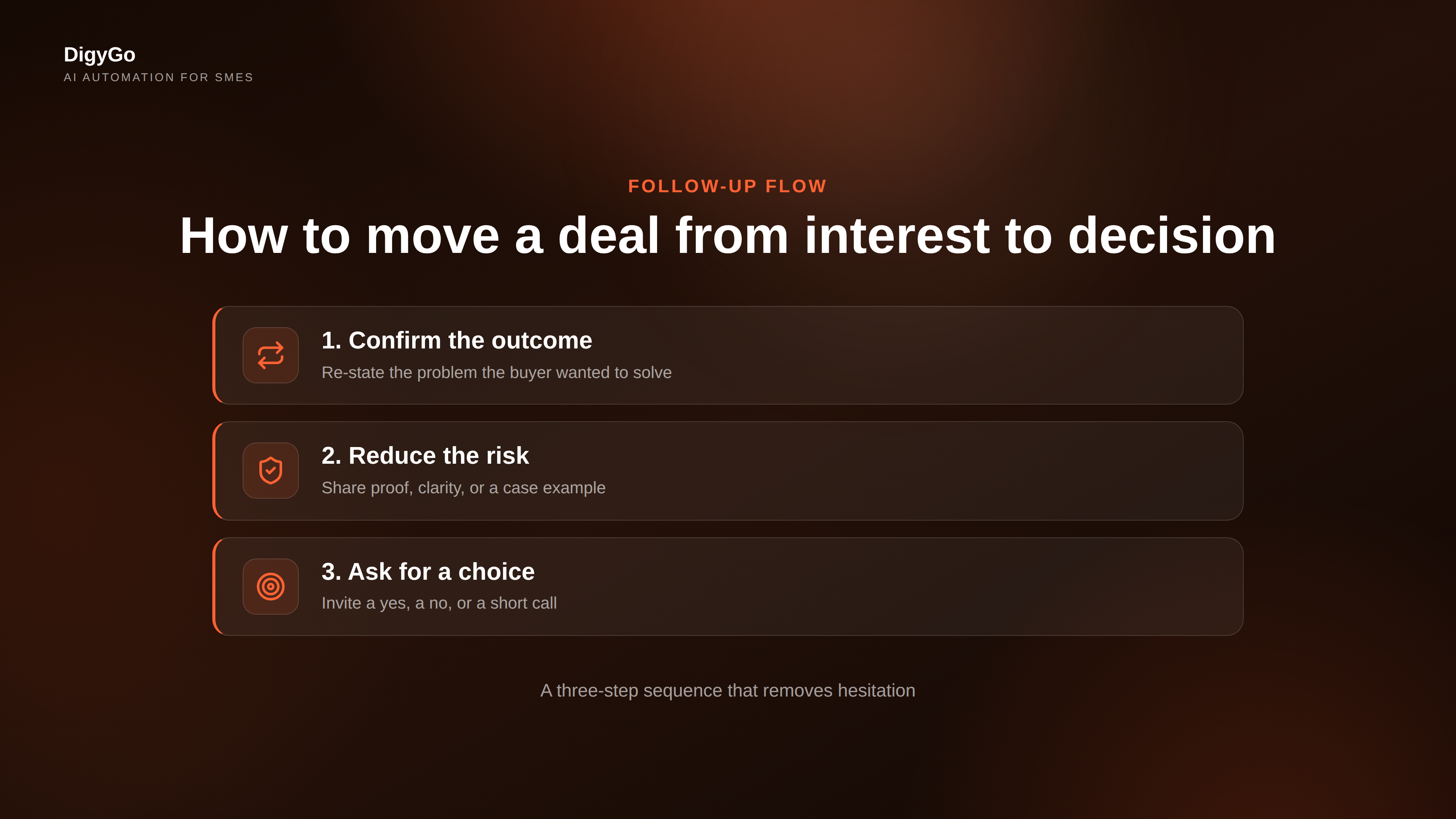
The decision follow-up framework
Use a simple three-step sequence after the proposal or discovery call:
- Confirm the outcome. Re-state the problem the buyer wanted to solve.
- Reduce the risk. Share proof, a case example, or a small clarification that removes hesitation.
- Ask for a choice. Give a clear next step, such as yes, no, or a short call to resolve the last objection.
This makes follow-up feel structured instead of random. It also helps your team stop sending the same “just checking in” message to every lead.
What that looks like in practice
- After a proposal: “You said speed and reporting matter most, so here is the plan that covers both.”
- After a demo: “You asked about onboarding time, so here is the 7-day rollout we discussed.”
- After a pricing objection: “If budget is the only issue, I can show the lean version and the full version side by side.”
Message patterns that move deals
The strongest follow-up messages are short, specific, and easy to answer. They do not restate the whole pitch. They simply help the prospect reach a decision faster.
Sales tip: Keep one follow-up message focused on one objection. If you try to answer every concern in a single email, the prospect usually reads none of it carefully.
Here are three useful patterns:
- Clarify: answer the one thing blocking confidence.
- Compare: show the difference between the current option and the safer option.
- Close: ask for a yes, a no, or a specific time to decide.
Common mistakes to avoid
- Sending the same reminder to every lead.
- Waiting too long to respond after a clear objection.
- Talking about features when the buyer is still trying to compare outcomes.
- Ending with a vague line like “Let me know your thoughts.”
If the next step is obvious, make it obvious. Buyers often appreciate clarity more than pressure.
FAQ
How soon should I follow up after sending a proposal?
Follow up quickly enough that the deal still feels warm. The exact timing depends on your sales cycle, but the message should always add value, not just ask whether they saw the document.
What if the prospect is not ready yet?
Move them to a lighter follow-up path. Share one helpful resource, one reminder of the outcome, and one clear way to re-open the conversation later.
Can automation help with sales follow-up?
Yes. Automation works best when it handles reminders, routing, and logging while a human keeps the message specific and relevant.
Talk to DigyGo about building a sales follow-up system that helps your team close more deals.