Most SMEs do not lose leads because the offer is weak. They lose them because the first missed call, missed DM, or late reply is followed by silence. A simple follow-up flow can turn those near-misses into booked conversations without adding more manual chasing.
A practical guide for SMEs on turning missed calls and silent enquiries into booked conversations with a simple follow-up flow.
Why missed leads happen so often
Most teams are not ignoring leads on purpose. They are busy, the inbox is messy, and follow-up depends on someone remembering to do it later. By the time that later arrives, the lead has already spoken to someone else or lost momentum.
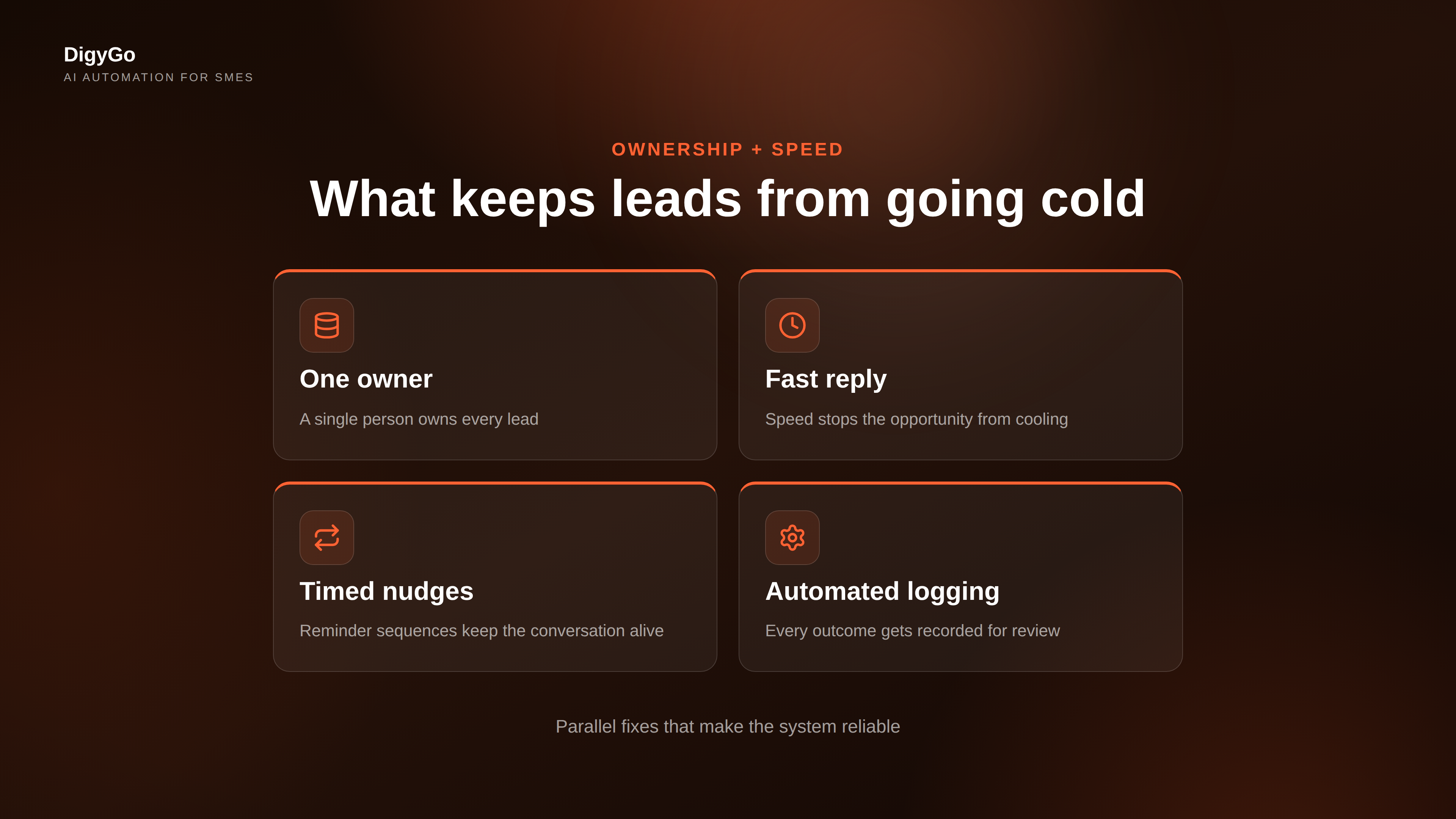
The problem is not only speed. It is also ownership. A lead without a clear owner becomes a lead that nobody follows through on.
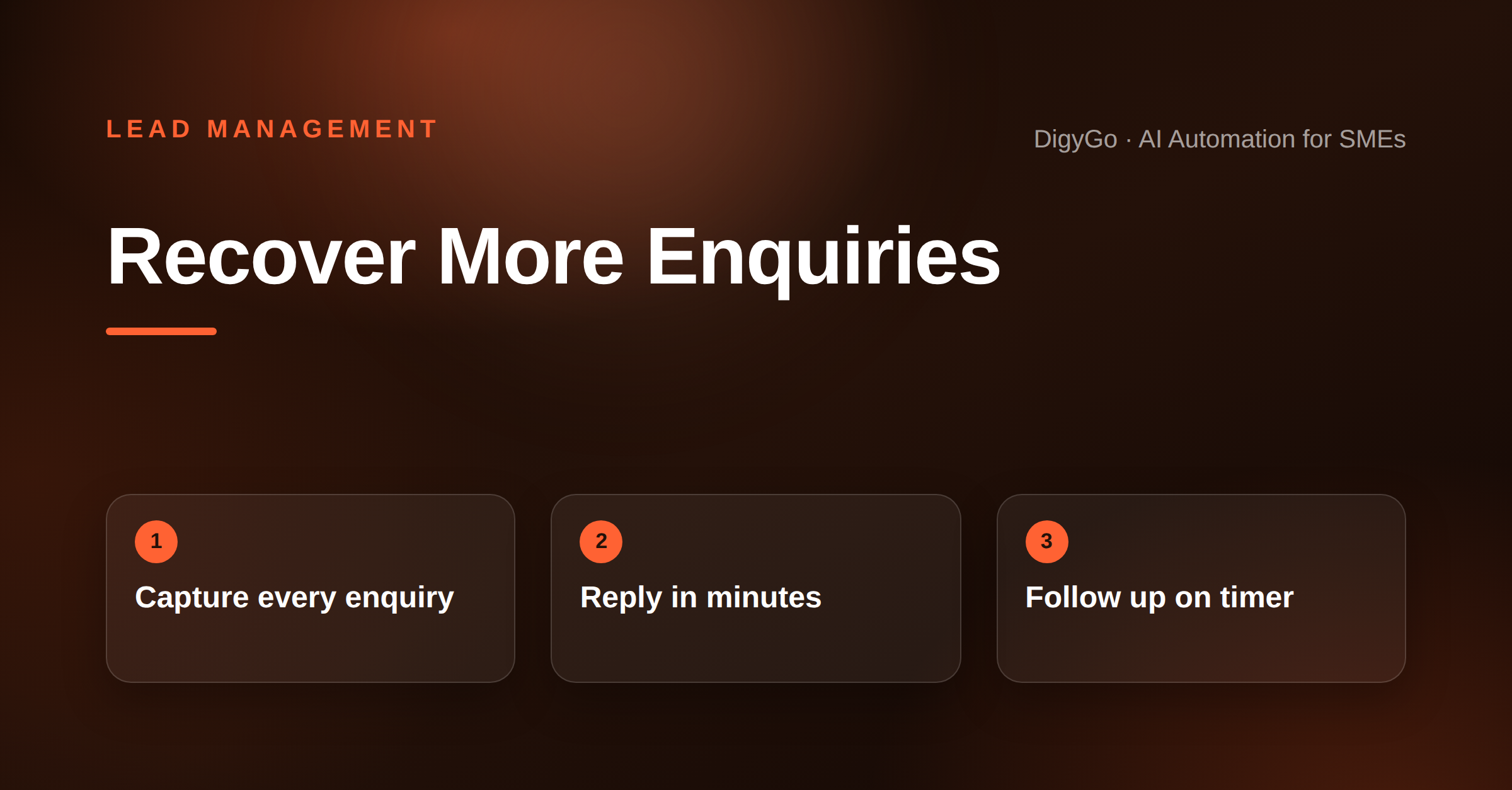
That is why the best lead management systems do three things at once: capture every enquiry, assign responsibility immediately, and keep the conversation moving until the prospect books or clearly opts out.
The 4-step follow-up flow
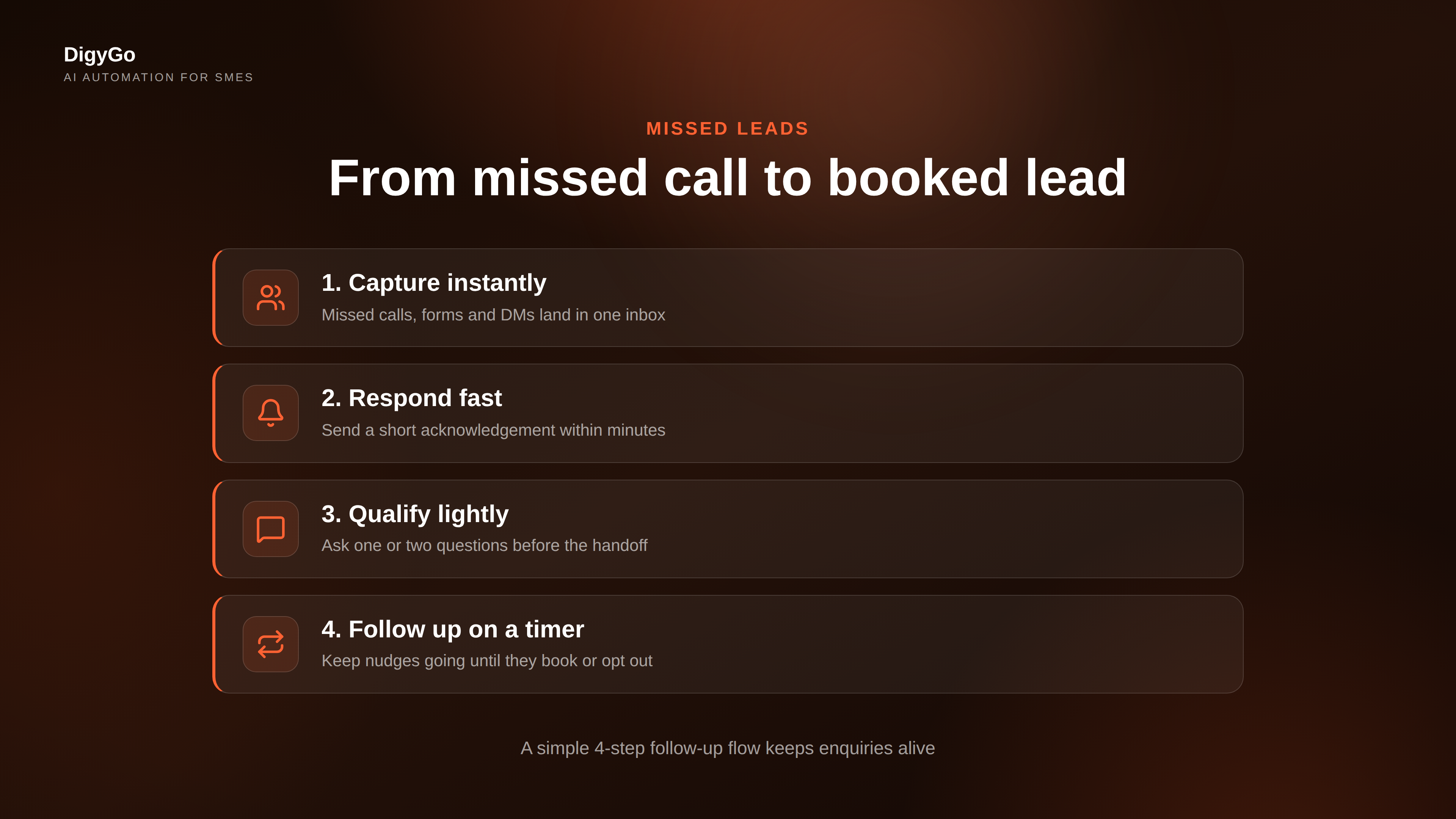
A strong follow-up flow does not need to be complicated. It just needs to be consistent. Think in four steps.
- Capture instantly. Every missed call, form fill, or WhatsApp enquiry should land in one place.
- Respond fast. Send a short first reply that confirms receipt and sets the next step.
- Qualify lightly. Ask one or two simple questions so you know whether the lead is serious and what they need.
- Follow up on a timer. If there is no reply, continue with a small sequence instead of stopping after one message.
This structure works because it removes guesswork. The team knows what to do, the lead knows what happens next, and the opportunity does not depend on memory.
Keep the first message short
The first response should not try to close the sale. It should only reopen the conversation. Something like this is enough: Thanks for reaching out. We missed your call, but we can help. What service do you need and when would you like to discuss it?
Use one owner per lead
If two people are replying from different channels, the lead gets confused. Assign one owner and let automation handle the reminders, not the relationship.
Messages that win back replies
Not every follow-up should sound the same. The most useful sequence is simple, polite, and useful.
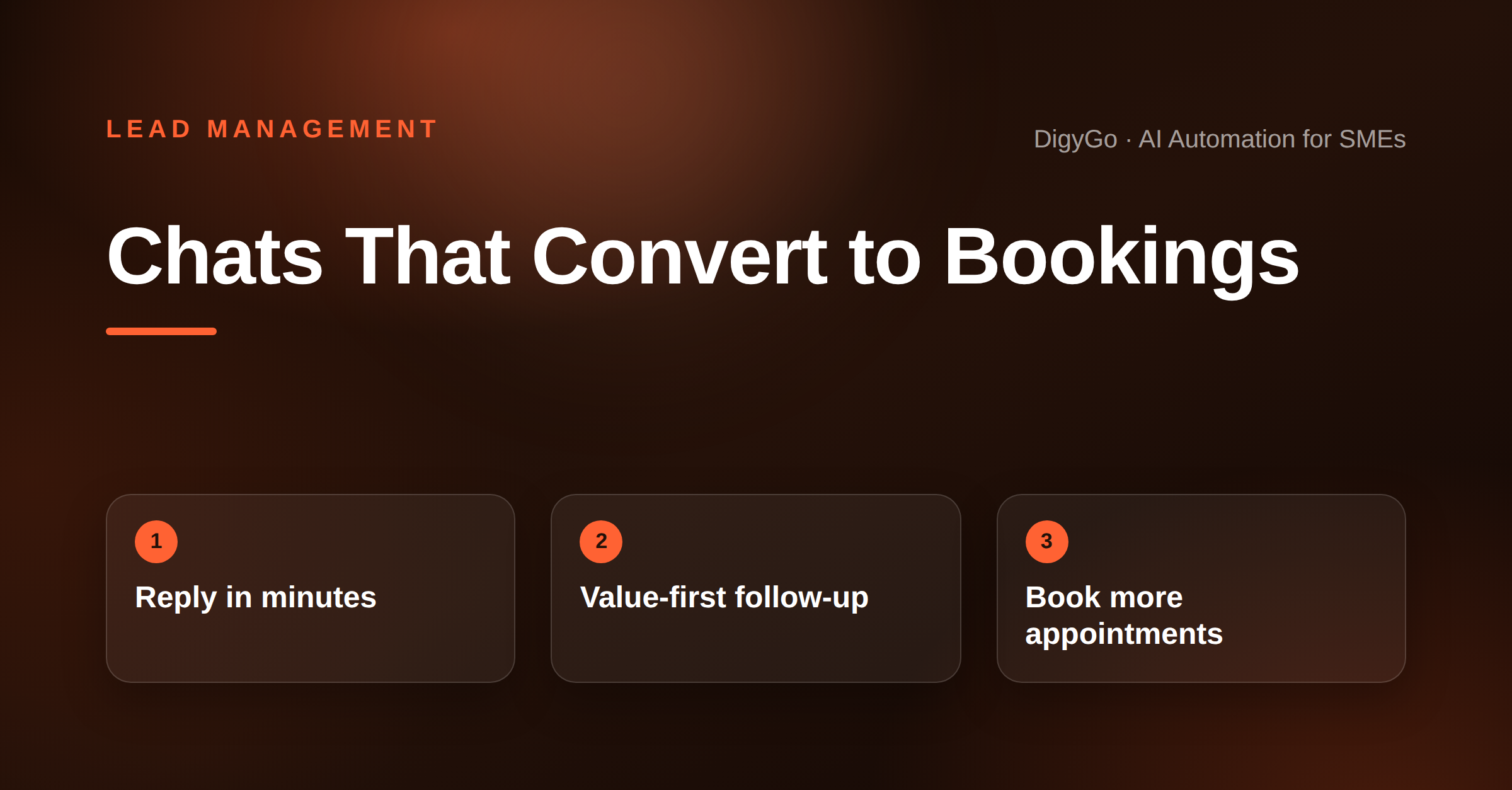
- Message 1: confirm the enquiry and ask one qualifying question.
- Message 2: share a helpful detail, like timings, pricing context, or next steps.
- Message 3: offer a clear booking option or ask if the lead still wants help.
That rhythm keeps the brand professional while still giving the prospect an easy way to continue. It also avoids the aggressive tone that makes many SMEs sound pushy.
The best follow-up feels timely, helpful, and specific. It should look like service, not pressure.
How to keep it running every day
The flow fails when it depends on manual discipline alone. To keep it running, automate the boring parts:
- Send missed calls into one inbox.
- Trigger an instant acknowledgement.
- Assign the lead to one person.
- Create reminders for non-replies.
- Log outcomes so you can see which channel produces real opportunities.
Once the team can see the full path from enquiry to booked conversation, follow-up stops being a memory problem and becomes a repeatable process.
If you want the simplest version, start with one missed-call rule: every missed call gets a reply within minutes and a second touch later the same day. Even that small change can recover leads that would otherwise disappear.
FAQ
What is lead follow-up automation?
It is the use of rules, reminders, and message sequences to make sure every lead gets a response and a next step without relying entirely on manual work.
How many follow-ups should an SME send?
Three to five touches is usually enough for a small sequence, especially when the messages are short and spaced sensibly.
What is the fastest way to improve lead management?
Start by assigning every enquiry to one owner, then set a response SLA, then add a short follow-up sequence for no-replies.
Talk to DigyGo about a lead follow-up system that keeps enquiries moving