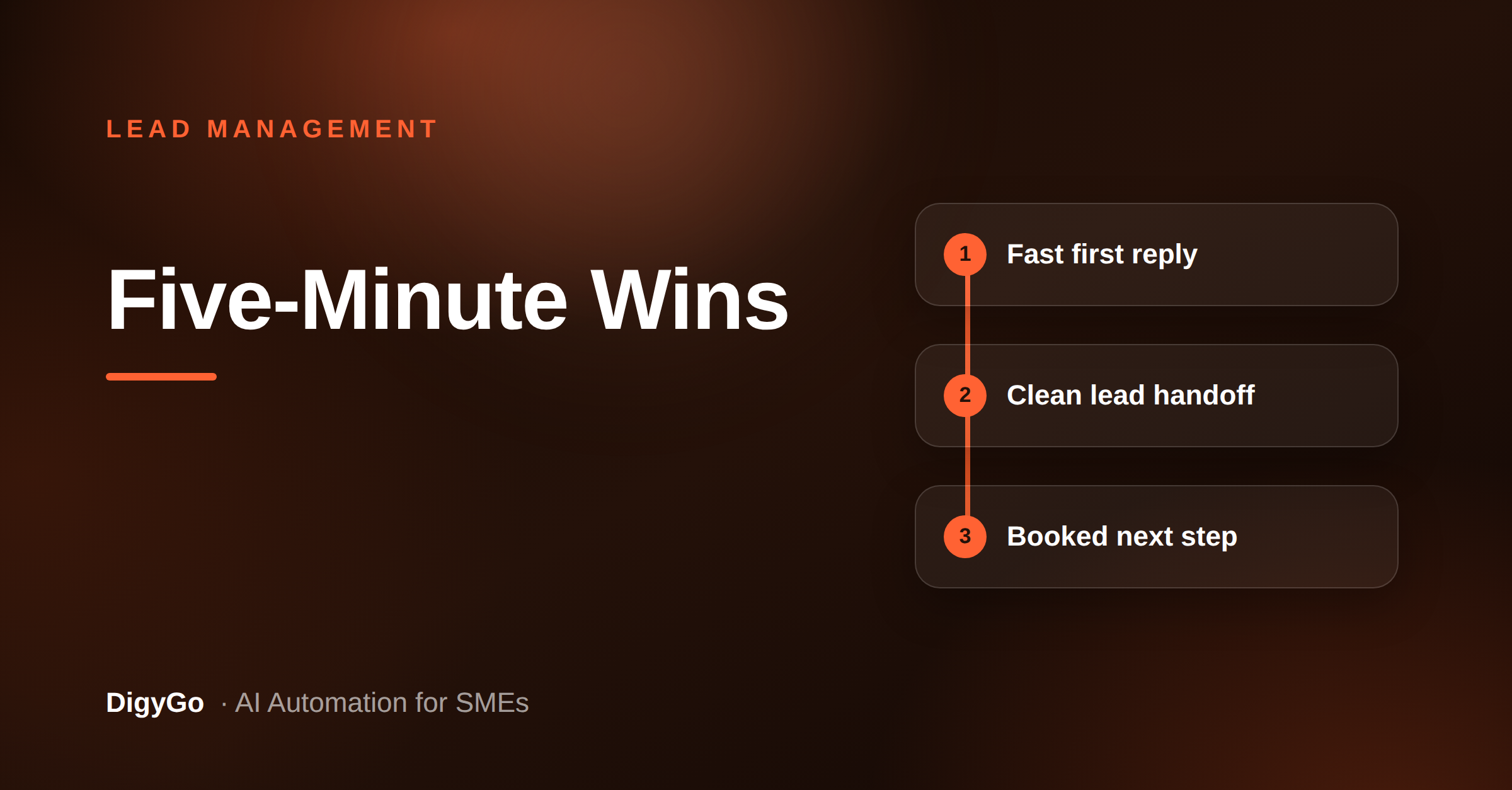
Most SMEs do not lose leads because of weak offers. They lose them because the first reply arrives too late. A simple five-minute follow-up workflow can turn form fills into booked conversations, cleaner handoffs, and a much healthier sales pipeline.
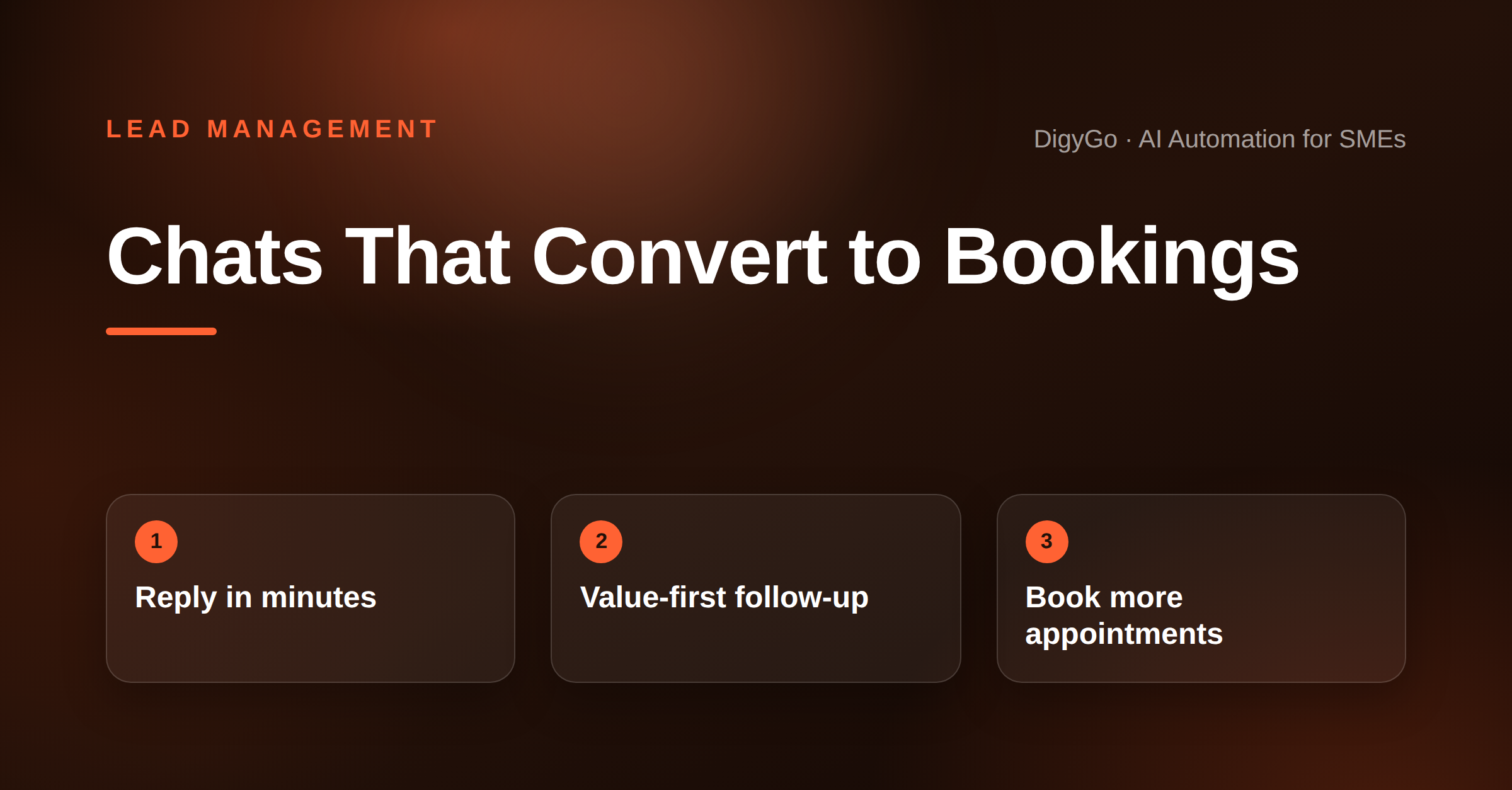
A practical lead response workflow for SMEs that captures every enquiry, replies fast, and keeps handoffs visible until the next step is booked.
Why speed matters more than perfect messaging
When someone fills out a form, replies to a post, or leaves a missed call, they are at their highest intent in that moment. The longer the delay, the more likely the lead forgets, gets distracted, or speaks to a competitor first. That is why lead response speed is not a nice-to-have. It is a revenue lever.
The goal is not to make every response fancy. The goal is to make every response fast, clear, and useful enough to keep the conversation alive.
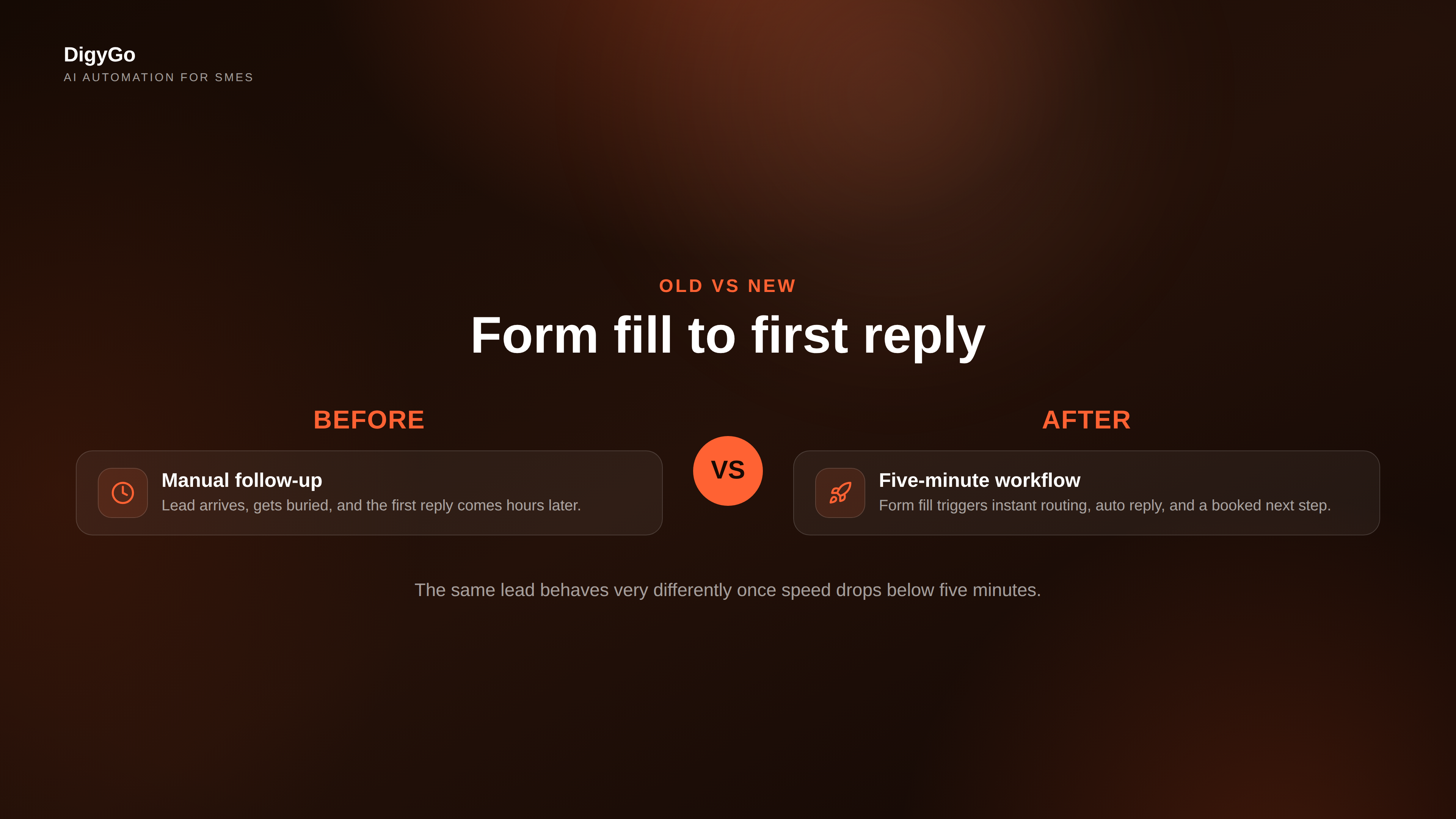
Build a follow-up flow that runs without reminders
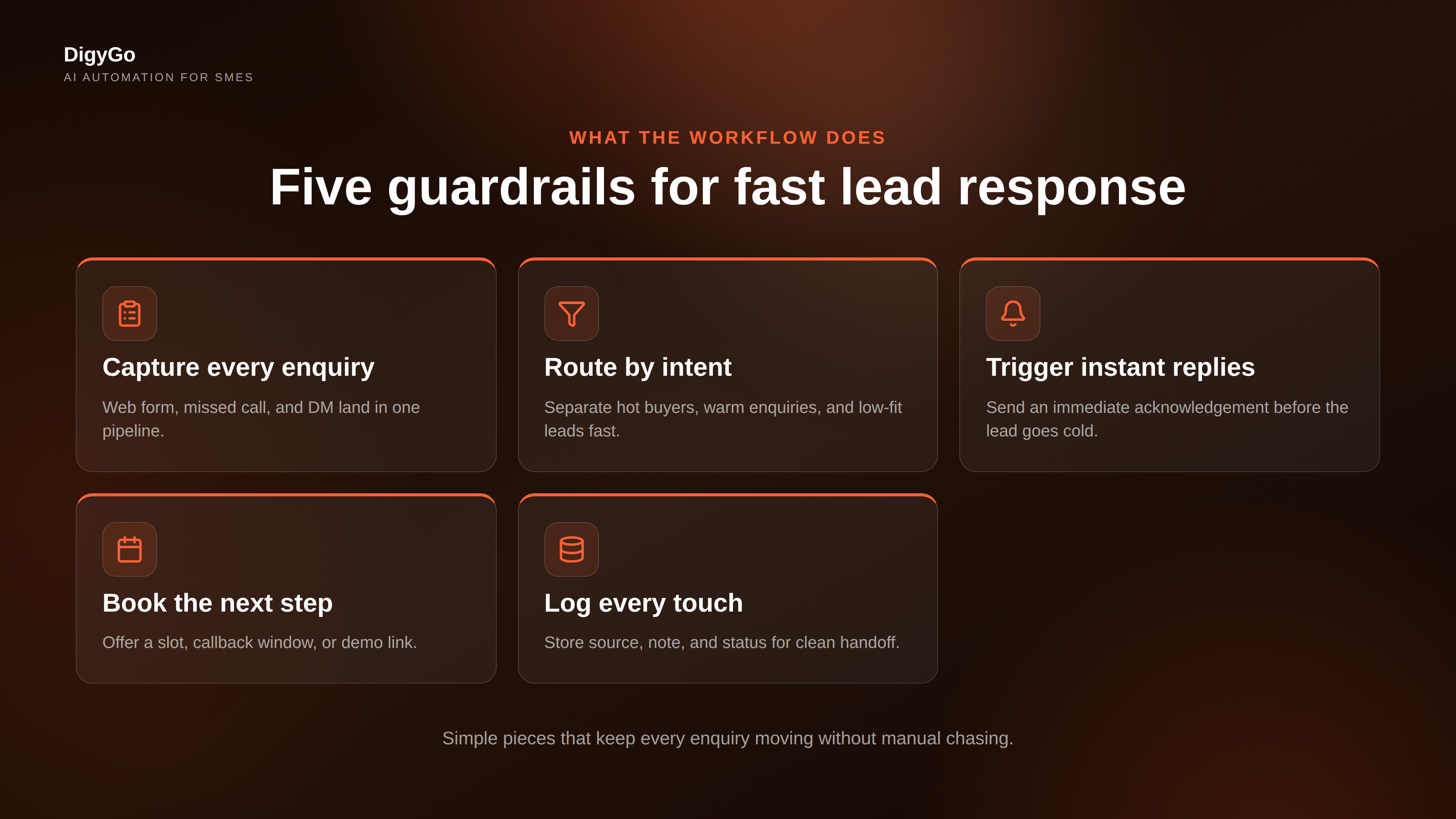
The best lead systems do a few things in a fixed order. First, they capture every enquiry in one place. Then they route it based on intent or source. After that, they send an immediate acknowledgement, book the next action, and log the interaction for handoff.
- Capture every enquiry from forms, WhatsApp, calls, and DMs.
- Route by intent so hot leads do not wait behind low-priority requests.
- Trigger an instant reply that confirms receipt and sets expectations.
- Offer the next step with a slot, callback window, or discovery call.
- Record every touch so the team knows what happened before handoff.
This is where automation pays off. Not because it replaces the team, but because it removes the delay that usually breaks the handoff.
What the five-minute workflow should actually do
A strong workflow does not need ten branches. It needs five dependable guardrails that keep the lead moving from enquiry to action.
1. Capture the lead immediately
The enquiry should never sit in an inbox with no owner. Push it into a CRM, shared sheet, or lead queue the moment it arrives.
2. Respond with a useful first message
The first reply should confirm the request, tell the lead what happens next, and give them a path forward. Even a short acknowledgment builds trust.
3. Qualify before human time is spent
Ask simple questions early. Budget, service type, location, and urgency can help separate serious buyers from general enquiries before anyone manually follows up.
4. Book the next step fast
If the lead is qualified, move them to a call, demo, or site visit quickly. The faster the next step is locked in, the less chance the opportunity drifts away.
5. Keep the handoff visible
If sales, marketing, or operations all touch the lead, every handoff needs a visible status change. That prevents double follow-up, missed context, and silent drop-offs.
Where SMEs usually get stuck
Most teams do not fail because they cannot automate. They fail because they automate the wrong part. If the system sends replies but nobody owns the next action, the lead still dies. If the CRM stores the enquiry but nobody sees it in time, the result is the same.
The fix is simple: define who owns the lead, what the first response says, how quickly the next action must happen, and when a lead becomes stale. Once that rule is written, automation can enforce it every time.
A practical rule for your team
Use this internal rule: every new enquiry must receive a response, a status, and a next step within five minutes during working hours, or an auto-response plus a scheduled callback outside working hours. That one rule alone can change conversion rates without increasing ad spend.
Want DigyGo to design your lead response flow? Talk to us about a fast follow-up system.