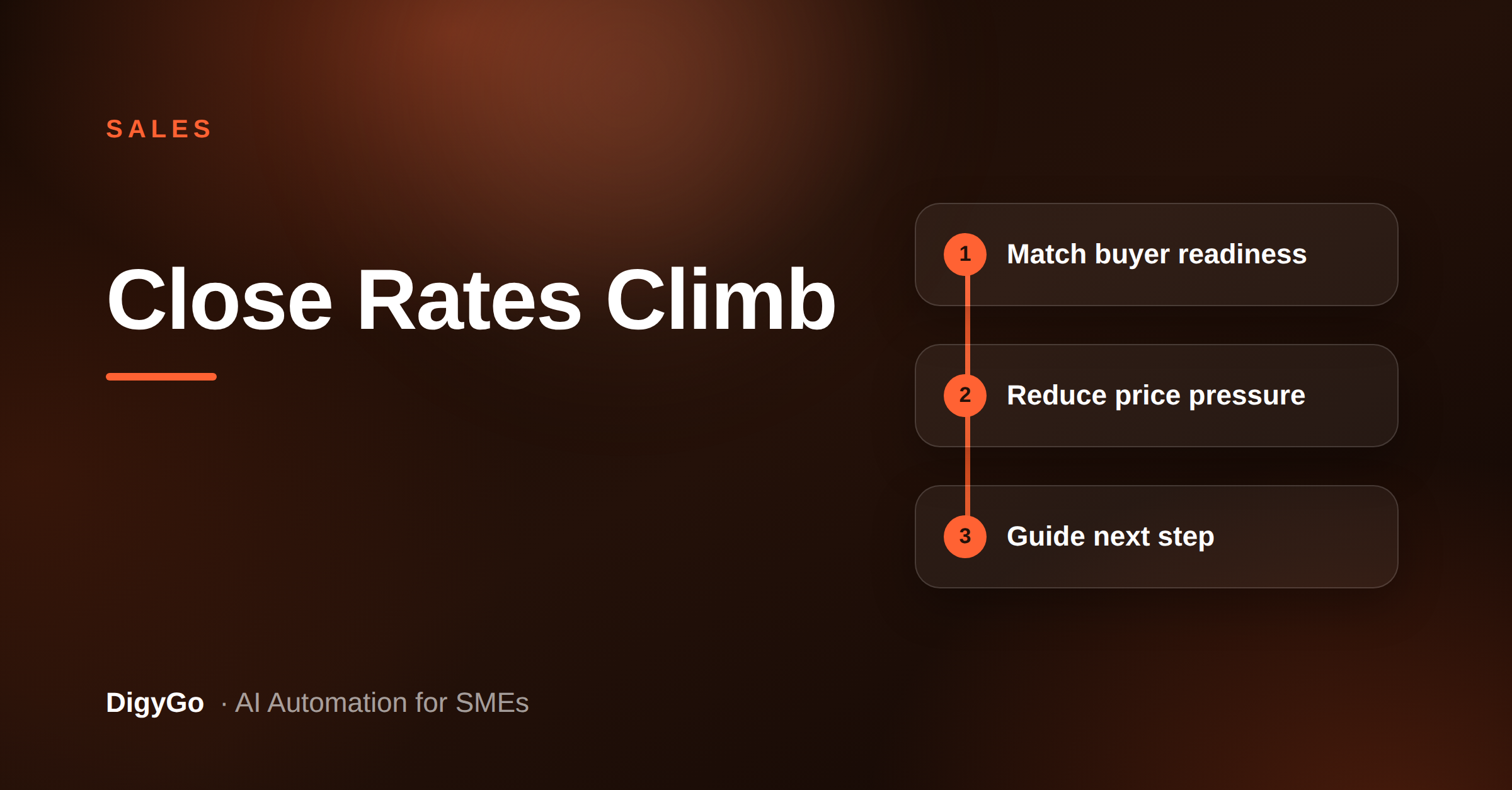
If every lead hears the same pitch, the same price, and the same follow-up, your sales team is forcing one offer to do too many jobs. A simple offer ladder fixes that. It helps SMEs match the right buyer to the right next step, reduce price pressure, and move more qualified prospects toward a clean close.
A practical guide for SMEs on using a simple sales offer ladder to reduce discounting, match buyer readiness, and move more deals toward a clean close.
- Build one clear core offer, then add smaller steps for cautious buyers.
- Use each step to answer a different sales objection before discounting.
- Keep the follow-up sequence tied to the next logical offer, not just reminders.
Table of contents
Why an offer ladder works
Most sales conversations do not fail because the lead is bad. They fail because the offer is too blunt. A founder may want to sell a full package, but the buyer may only be ready for a smaller first step. When you give them a sensible entry point, the conversation stays alive.
An offer ladder gives you three advantages. First, it improves fit by matching readiness. Second, it reduces the need to discount, because you can change the scope instead of the price. Third, it creates a cleaner pipeline, since each stage has a clear purpose.
How to build the ladder
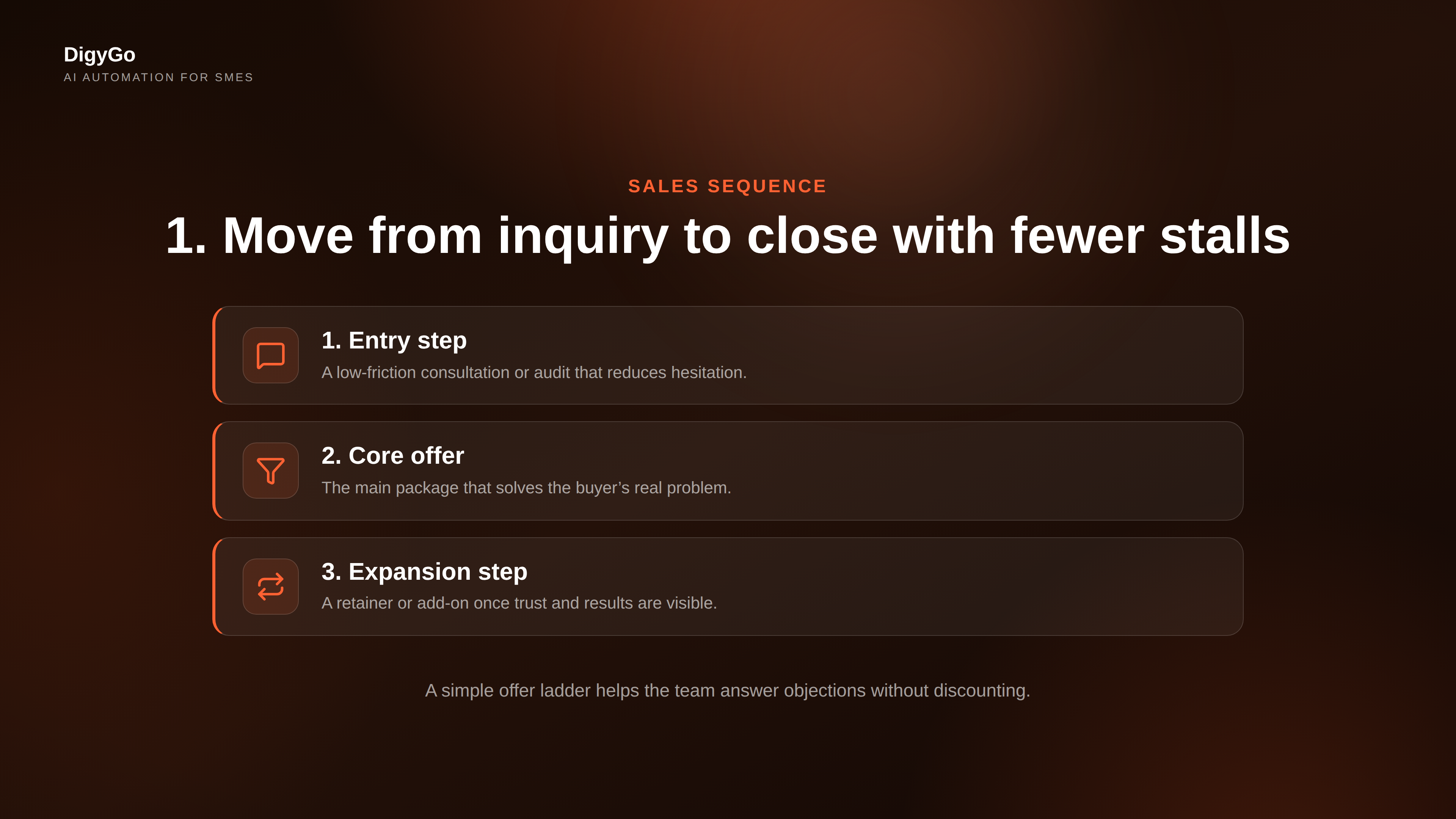
Start with the outcome you sell best. That is your core offer. Then define two supporting steps around it:
- Entry step. A low-friction option that helps the buyer say yes quickly. This could be a consultation, audit, trial, or narrow starter scope.
- Core offer. The main package that solves the real business problem and delivers the strongest margin.
- Expansion step. An upgrade, retainer, or add-on that becomes relevant once trust is built.
Keep the ladder simple. If you build too many branches, the team will hesitate in the call and the buyer will feel the confusion. Three steps are enough for most SMEs.
Each step should answer one question the buyer already has in mind. The entry step answers, “Can I trust you?” The core offer answers, “Will this solve my problem?” The expansion step answers, “What happens after we see results?”
Where follow-up fits
Follow-up works better when it has a next action attached to it. Instead of sending a generic “Just checking in” message, send the message that matches the buyer’s stage.
- If the buyer is unsure, share the smaller entry step.
- If the buyer is comparing options, reinforce the core offer and the business outcome.
- If the buyer has gone silent after interest, re-open the conversation with a narrower scope, not a larger pitch.
This is where many teams lose deals. They keep repeating the same email, the same deck, or the same price. A ladder turns follow-up into guided movement. Each message becomes a handoff to the next level of commitment.
Simple examples for SMEs
A service business might use a diagnostic call as the entry step, a fixed-scope project as the core offer, and a monthly support plan as the expansion step. A software company might use a short demo, then a paid implementation, then an ongoing automation retainer.
The exact structure matters less than the logic behind it. Every step should reduce uncertainty for the buyer while moving revenue closer. If a step only exists to sound more interesting, it will not help the close.
Use these checks when you review your own offer ladder:
- Does each step remove one major objection?
- Can the team explain the next step in one sentence?
- Does the ladder help you sell value instead of trimming price?
- Is the follow-up sequence matched to buyer readiness?
When the answer is yes, your pipeline becomes easier to manage. You will spend less time rescuing deals and more time moving the right prospects forward.
FAQ
Is an offer ladder the same as discounting?
No. Discounting lowers your price. An offer ladder changes the scope or commitment level so the buyer can move forward without forcing a cheaper deal.
How many steps should I have?
Most SMEs do well with three clear steps. More than that usually creates confusion unless your sales motion is highly structured.
What should I improve first?
Start with the core offer, then add one entry step that lowers friction. After that, align your follow-up messages to each stage.
Need help tightening your sales offer and follow-up system? Talk to DigyGo.