Every week, someone from outside Tamil Nadu calls an SME owner in Coimbatore, Tirunelveli, or Salem, opens with a polished pitch, and gets a polite “call me next month.” The owner means it, but nothing happens. The deal dies on a date that never comes.
A practical sales guide for teams selling to SME buyers in Tamil Nadu’s tier-2 and tier-3 markets — where trust matters more than pitch decks, relationships decide who gets the deal, and WhatsApp is the primary business channel.
It is not the offer. It is the approach. Selling to SME buyers in Tamil Nadu’s tier-2 and tier-3 markets works differently from selling in Bangalore, Mumbai, or Chennai. The language is different. The trust signals are different. And the channel that matters most is the one that is not your CRM or email sequence.
After calling on hundreds of SME owners across Coimbatore, Tirupur, Erode, Salem, Madurai, and Trichy, I have seen the same patterns repeat. Here are five things every salesperson — whether inside the team or coming from an external vendor — should know before they dial.
1. Trust Comes Before the Pitch
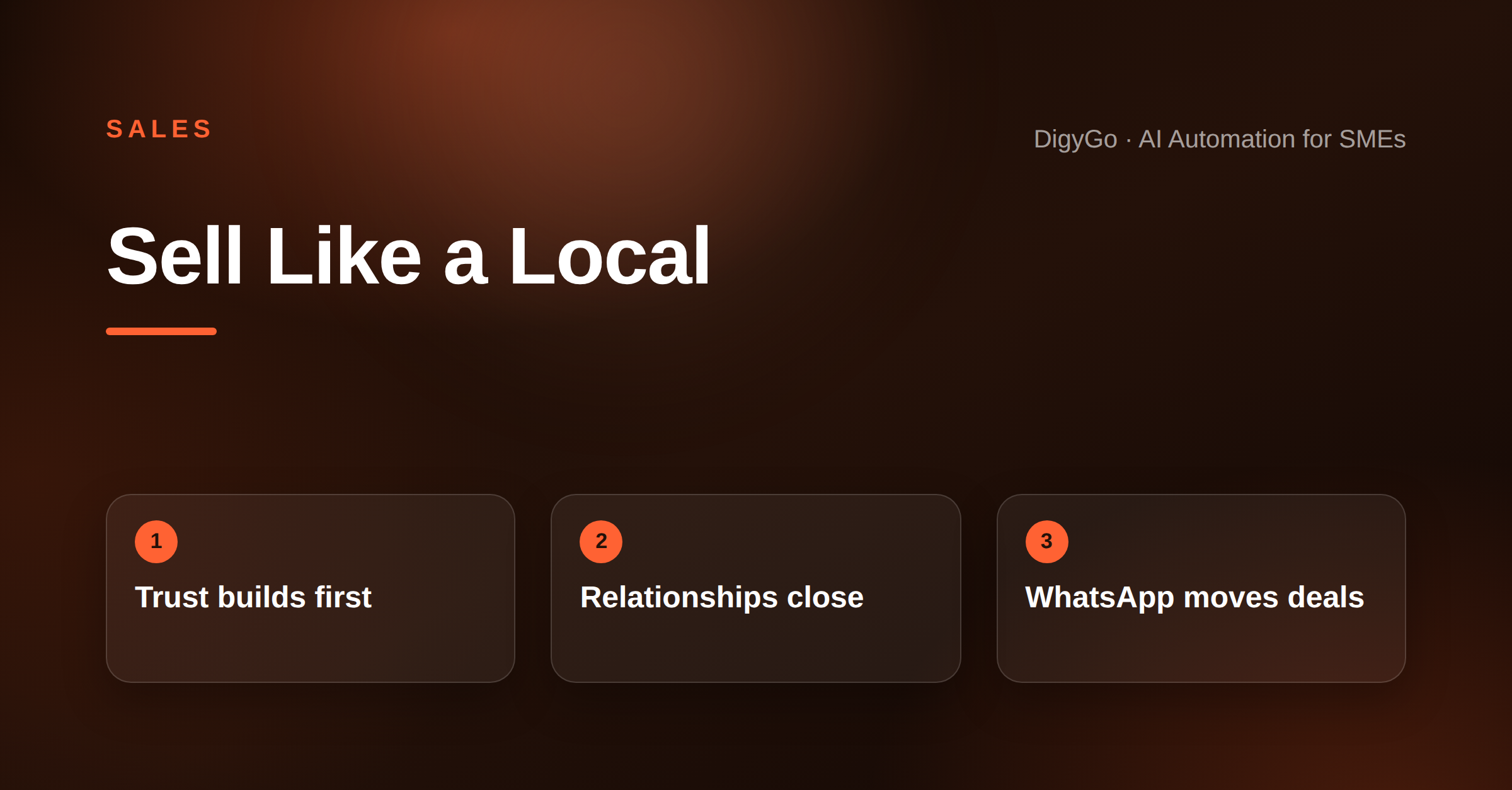
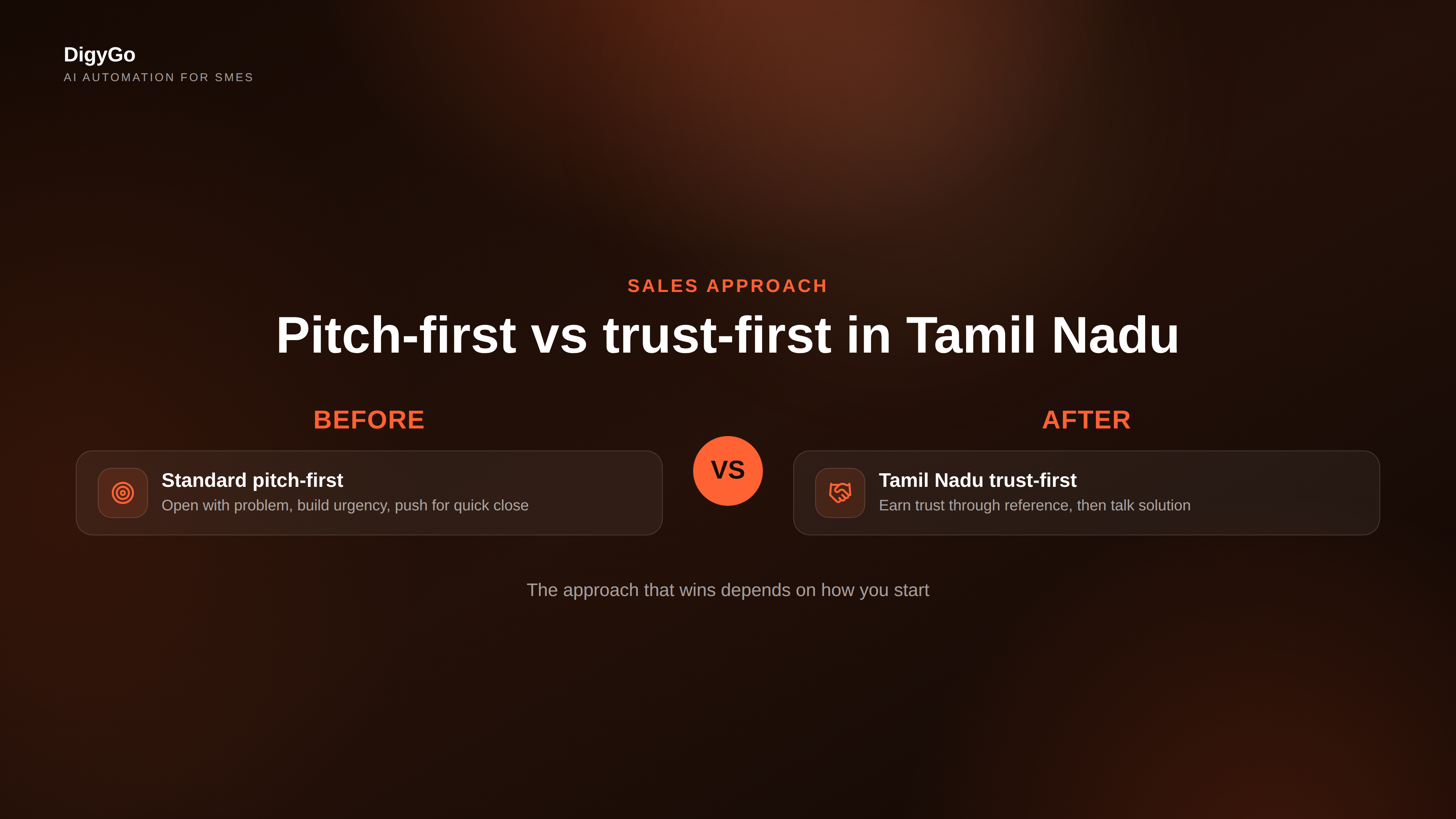
Most sales training says: open with a problem, build urgency, offer a solution. In Tamil Nadu’s smaller cities, the sequence is reversed. You earn the right to talk about the solution by first establishing who you are, who sent you, and what your track record looks like with someone they trust.
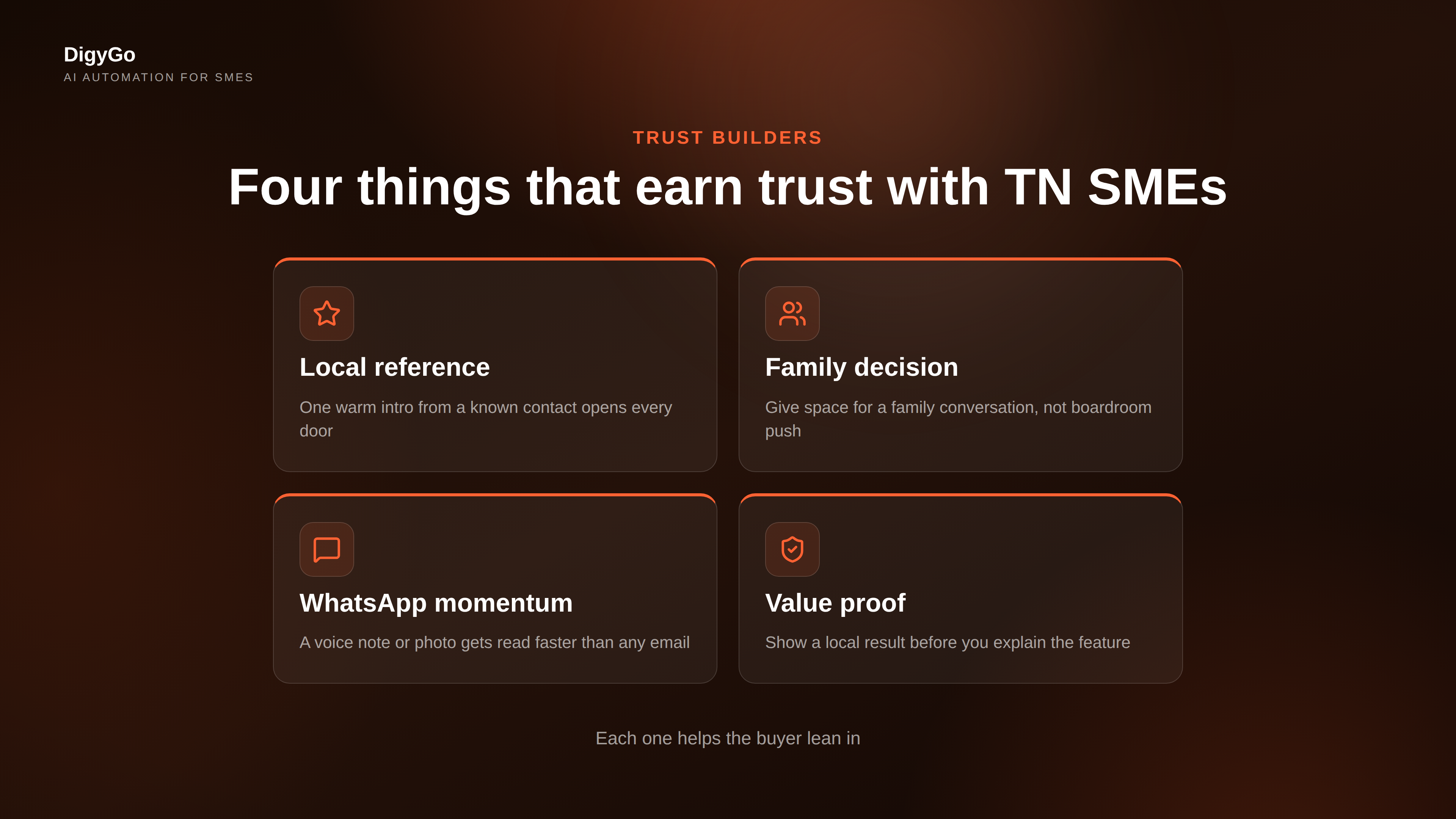
An introduction from a known local reference is worth ten cold emails. If you do not have one, find one. A five-minute warm referral from a supplier, a friend, or a past client in the same town opens doors that a cold call never touches.
Before you talk about ROI, talk about who else in that city uses your service. The question they are asking is not “is this a good deal” but “is this person reliable enough to risk doing business with.”
2. The Decision Lives in the Family, Not a Dashboard
In a corporate account, the decision-maker is a title. In a Tamil Nadu SME, the decision is a family conversation. The owner discusses it with their spouse, their brother, or their cousin who handles finance. That conversation does not happen in a boardroom. It happens at the dinner table, on a weekend call, or during a visit to the family home.
This means you cannot push for a same-day decision after a single presentation. You need to give the buyer space to talk it through with the people who matter. What you can do is make that conversation easy: provide a one-page summary in Tamil if needed, a clear pricing table, and a specific next step that does not feel like a high-pressure close.
3. WhatsApp Is the Channel, Not Email
Email open rates for SME owners in tier-2 and tier-3 Tamil Nadu are low. What gets read within minutes is WhatsApp. The same owner who ignores a proposal PDF in their inbox will respond to a three-line WhatsApp message with a photo of your product or service.
Savvy salespeople mirror this. They send a short voice note after a call (“Thanks for the chat, sending you the two options we discussed”). They share a screenshot of a similar project to prove capability. They use WhatsApp status updates as a subtle way to stay visible without being intrusive.
This is not unprofessional. It is adapting to how business actually moves in these markets. Email remains for documentation. WhatsApp is for momentum.
4. Price Is Always the Second Question
Every SME owner asks about price early. But the price is rarely the real objection. In my experience, when an SME buyer in Tamil Nadu says “too expensive,” they usually mean one of three things:
- I do not see enough value yet. You explained the feature, but not the outcome relevant to their specific business.
- I do not trust the delivery. They have been burned before by a vendor who promised big and delivered small. Price is a polite way to say “prove it first.”
- The cash flow timing is tight. Many SME owners think in working-capital cycles, not monthly budgets. A price that is too high today might be fine after the next billing cycle.
The fix is not to discount. It is to address the hidden objection. A monthly payment option, a proof-of-concept period, or a reference call with a local client who got results can all remove the real barrier without touching the price.
5. The Follow-Up Rhythm Must Feel Personal, Not Automated
Sequenced email drips and generic “just checking in” messages create the opposite effect in Tamil Nadu’s SME context. They feel transactional. The buyers you want most respond to follow-ups that sound like a friend checking in, not a CRM sequence.
A useful follow-up pattern for this market:
- Day 1-2: Send a WhatsApp message referencing something specific from your conversation (a question they asked, a concern they raised). Attach a photo or a short video if relevant.
- Day 5-7: Share a relevant piece of proof. A testimonial from a similar business in the same district works far better than a generic case study.
- Day 10-14: Offer a specific next step with low commitment. “Can I send a one-page summary in Tamil?” or “Our team will be in your area next week — can we do a quick 15-minute demo?”
Start With the Market, Not the Script
A standardised sales script works well when the buyer fits a predictable profile. In Tamil Nadu’s SME market, the buyer profile varies by city, by family structure, by industry, and by the owner’s prior experience with outside vendors.
What works is a principles-based approach instead of a word-for-word script: earn trust first, let the family decision cycle play out, use WhatsApp as the primary channel, address the real objection behind the price question, and follow up with personal, value-added touches.
When you sell the way the market buys, you stop needing to discount, chase, or pitch harder. The deal comes together because the buyer is ready — not because you pushed it through.
Sivaraj is the Founder & CEO of DigyGo. He has spent years working with SME owners across Tamil Nadu’s tier-2 and tier-3 cities, building AI automation systems that match how these businesses actually run.
Ready to sell smarter in Tamil Nadu? Talk to DigyGo about AI-powered sales follow-up →