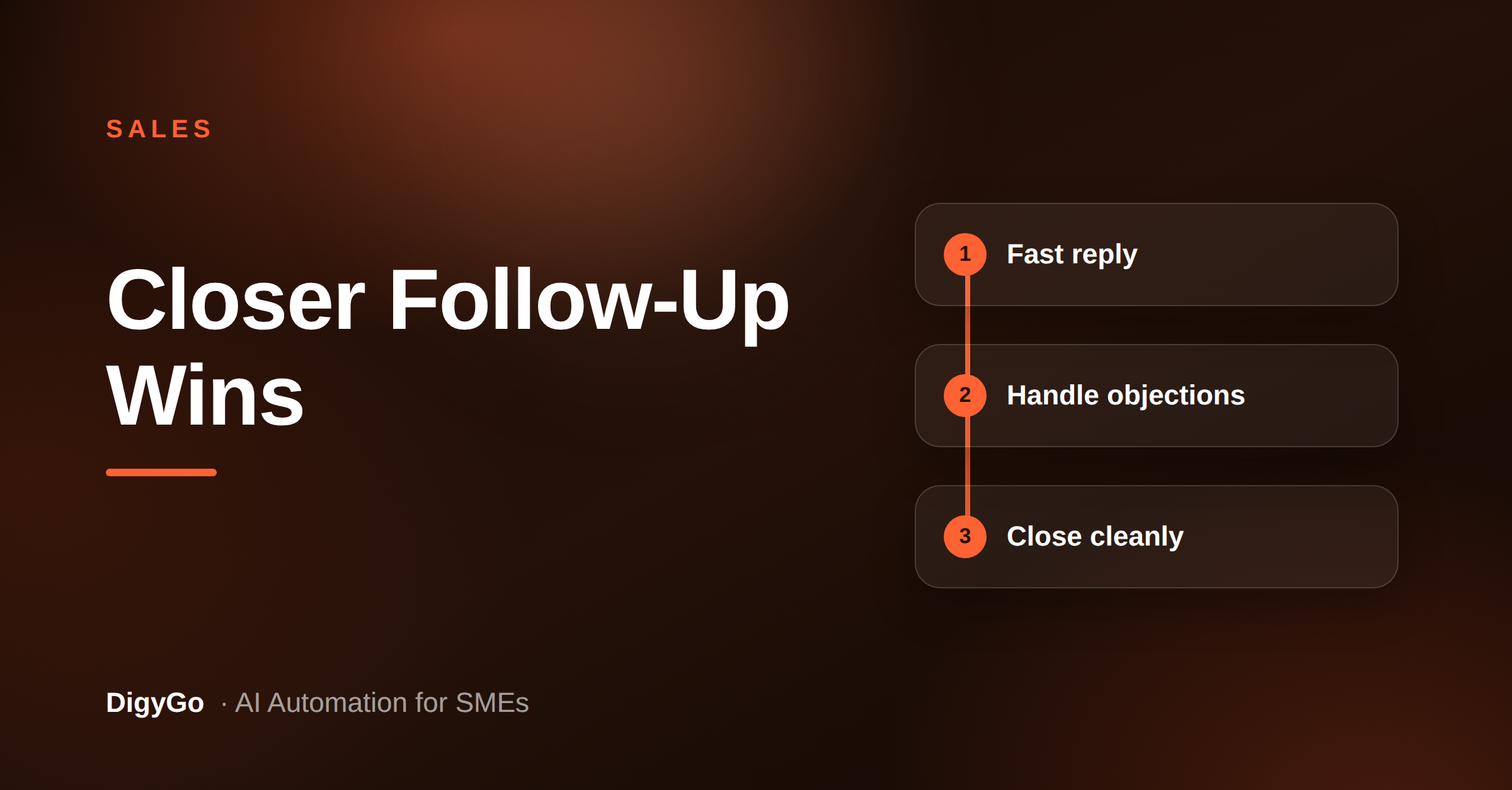
Most sales teams do not lose deals because the offer is weak. They lose because the follow-up is vague, late, or too easy to ignore. A simple sequence that responds fast, answers objections, and gives the buyer a clear next step can change that.
A practical sales playbook for SME founders on using a short follow-up sequence to answer objections, keep momentum, and close more of the right deals.
Why follow-up is the real closing stage
In SME sales, the first conversation rarely closes the deal. The real decision happens across the next few touches: after the proposal, after the comparison, and after the objection lands. If those touches are inconsistent, the lead cools down before it ever reaches a clear yes or no.
Image: the gap between interest and action
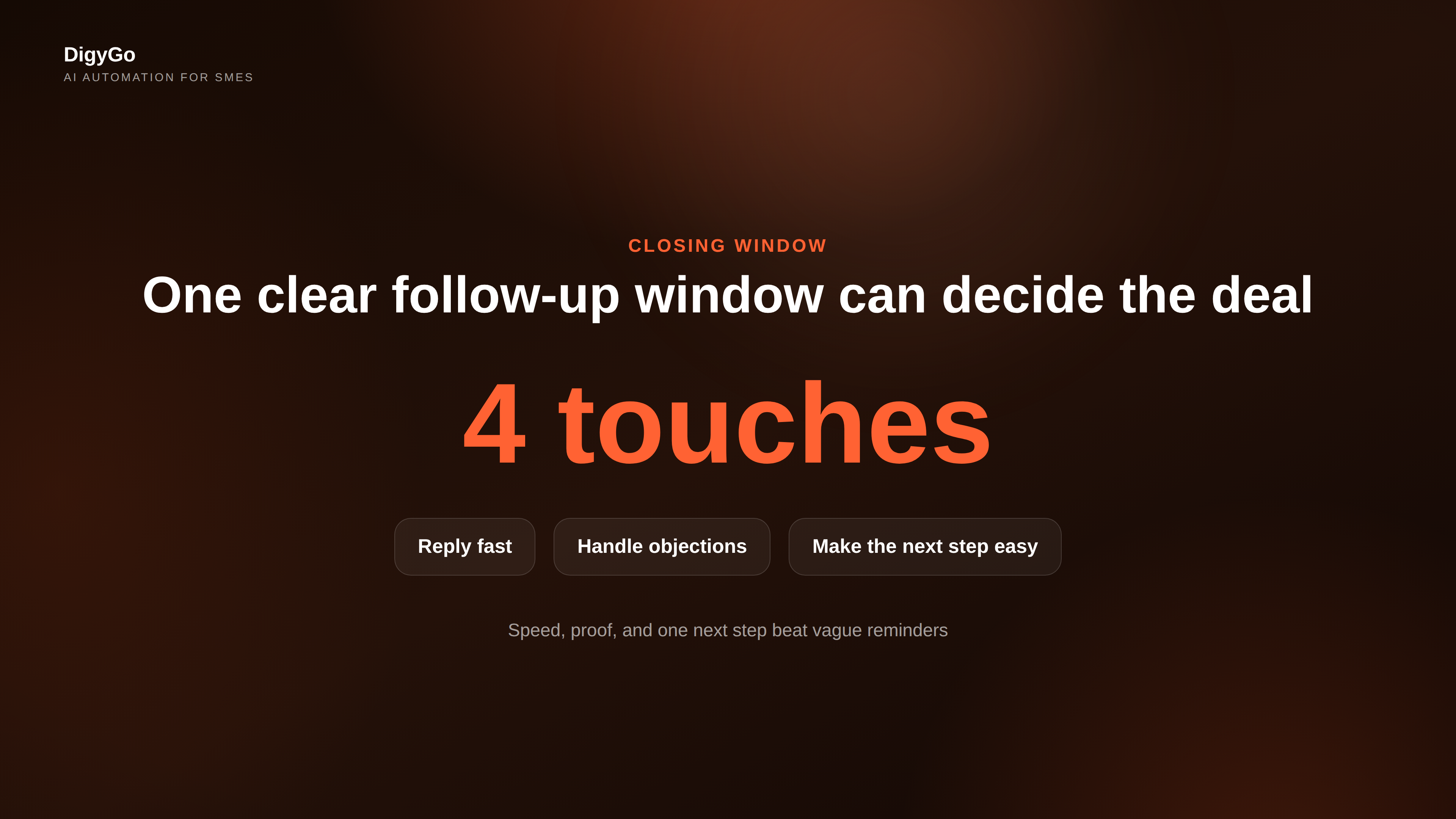
The 4-touch sequence that works better than one big reminder
Instead of sending the same 'just checking in' message again and again, build a sequence with a purpose for each touch.
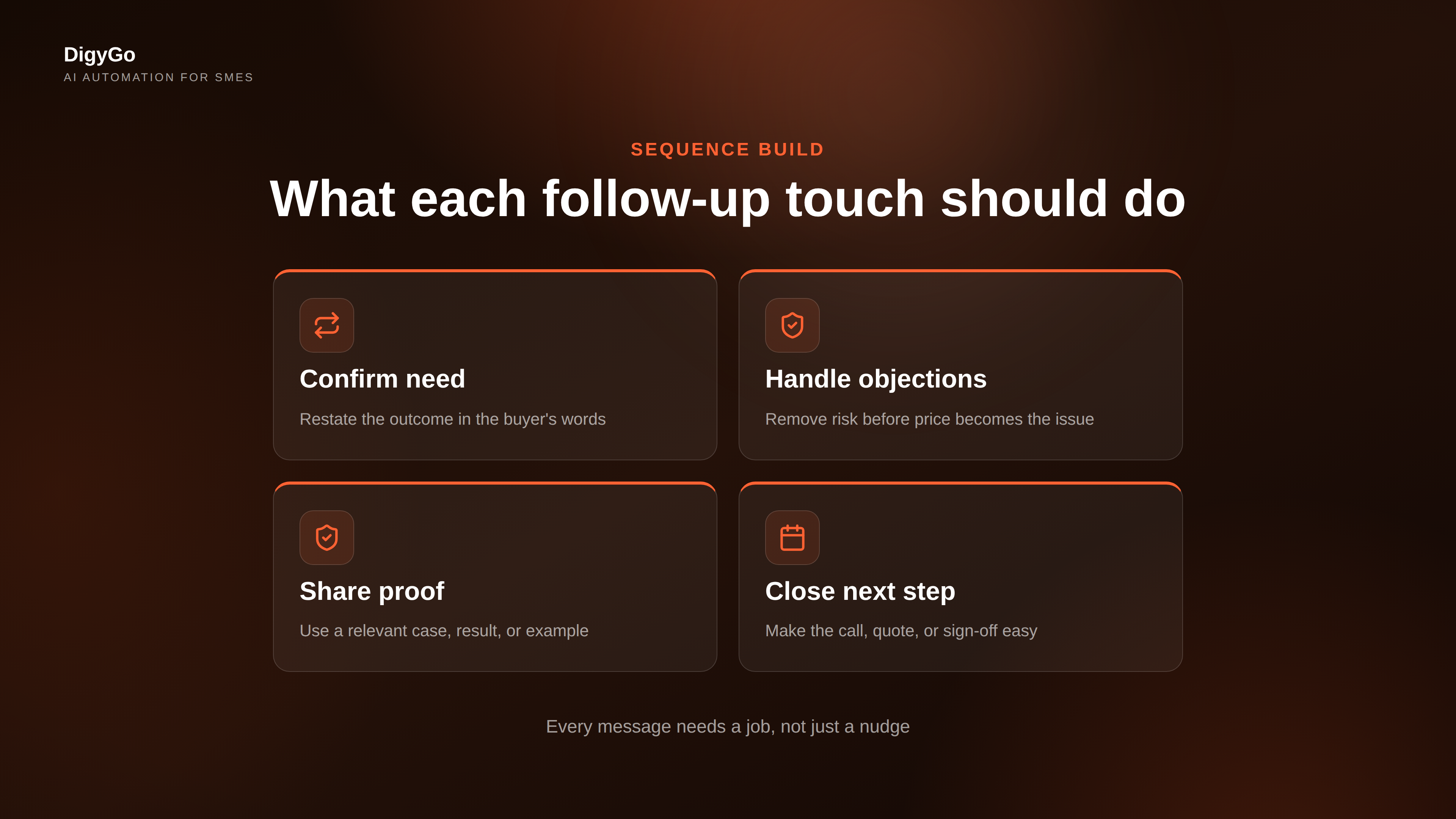
- Touch 1: confirm the need and restate the outcome in the buyer's words.
- Touch 2: answer the biggest objection before the buyer has to ask again.
- Touch 3: share proof, a result, or a relevant case that reduces doubt.
- Touch 4: make the next step easy with one clear choice: call, quote, or close.
Image: what each touch should do
How to handle objections without discounting too early
Price objections are often a signal that the buyer still sees risk. Before dropping the price, check whether the sequence has done enough work. Did you restate the outcome clearly? Did you show why this option is safer, faster, or more reliable? Did you remove the fear of a bad decision?
When the objection is handled properly, the conversation changes from 'why is this expensive?' to 'how soon can we start?' That shift is what closes better deals without training the buyer to wait for a discount.
Make the sequence easier to run every day
The best follow-up systems are simple enough to repeat. Keep a clear owner for each hot lead, use one CRM note for the next action, and set a reminder for every unfinished conversation. If your team depends on memory, leads will slip. If your team depends on a sequence, the pipeline stays moving.
- Assign one owner per lead.
- Write the next action before the call ends.
- Track replies, not just sends.
- Escalate silent leads after a short window.
What SME founders should measure
Do not only measure total follow-up messages. Measure how quickly the first reply goes out, how many leads reach the second touch, and how often the sequence produces a booked call or a signed deal. Those numbers tell you whether your sales process is helping or leaking revenue.
FAQ
How many follow-ups are enough?
Four purposeful touches are usually enough to test whether a lead is serious, interested, or stalled. More than that only works if each message adds new value.
Should every lead get the same sequence?
No. High-intent leads need a faster, more direct path. Lower-intent leads may need more proof and a slower nudge before they are ready.
What is the biggest follow-up mistake?
Sending a reminder without changing the conversation. Good follow-up should answer a question, reduce risk, or make the next step easier.
Want a sales follow-up system that actually closes? Talk to DigyGo.