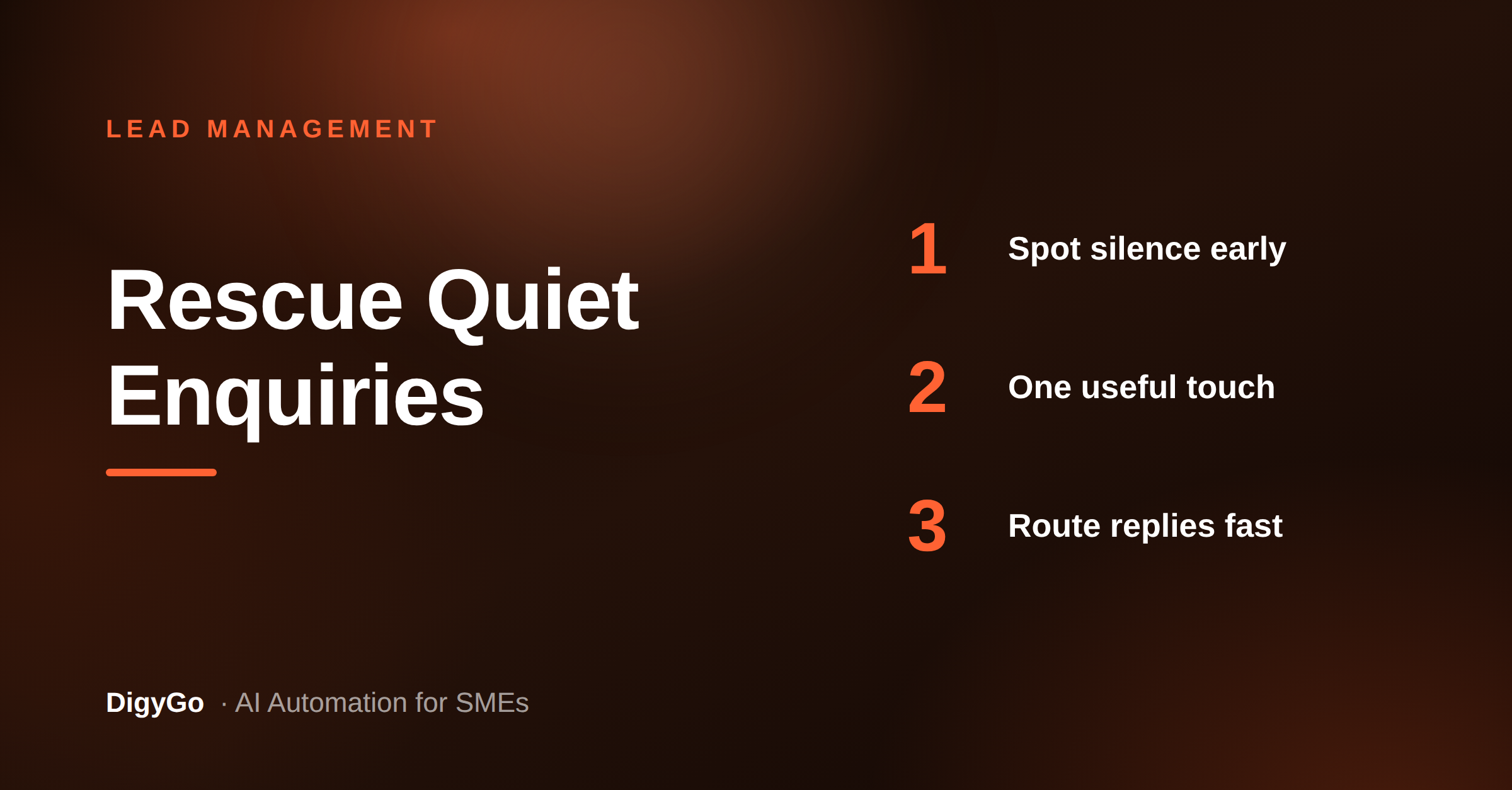
Most leads do not say no. They go quiet. For SMEs, the fastest way to recover that demand is a simple follow-up queue that tells the team who to contact, when to contact them, and what to say next.
A practical lead management guide for SMEs on turning quiet enquiries back into conversations with a simple rescue queue, clearer ownership, and consistent follow-up.
A silent lead is not a dead lead until you treat it like one. With a clear queue, you can rescue warm enquiries before they disappear into "we’ll get back to them later".
In this guide
- Why good leads go silent
- What belongs in a rescue queue
- How to keep follow-up consistent
- What to measure each week
Why leads go silent in the first place
Leads usually vanish for one of three reasons: the first reply was too slow, the next step was unclear, or the conversation never moved beyond a generic “thanks, we’ll call you”. None of those problems require more pressure. They require better structure.
That is why a rescue queue works. It gives every silent lead a next action, so the team can re-open the conversation with context instead of guessing.
The three-part rescue queue
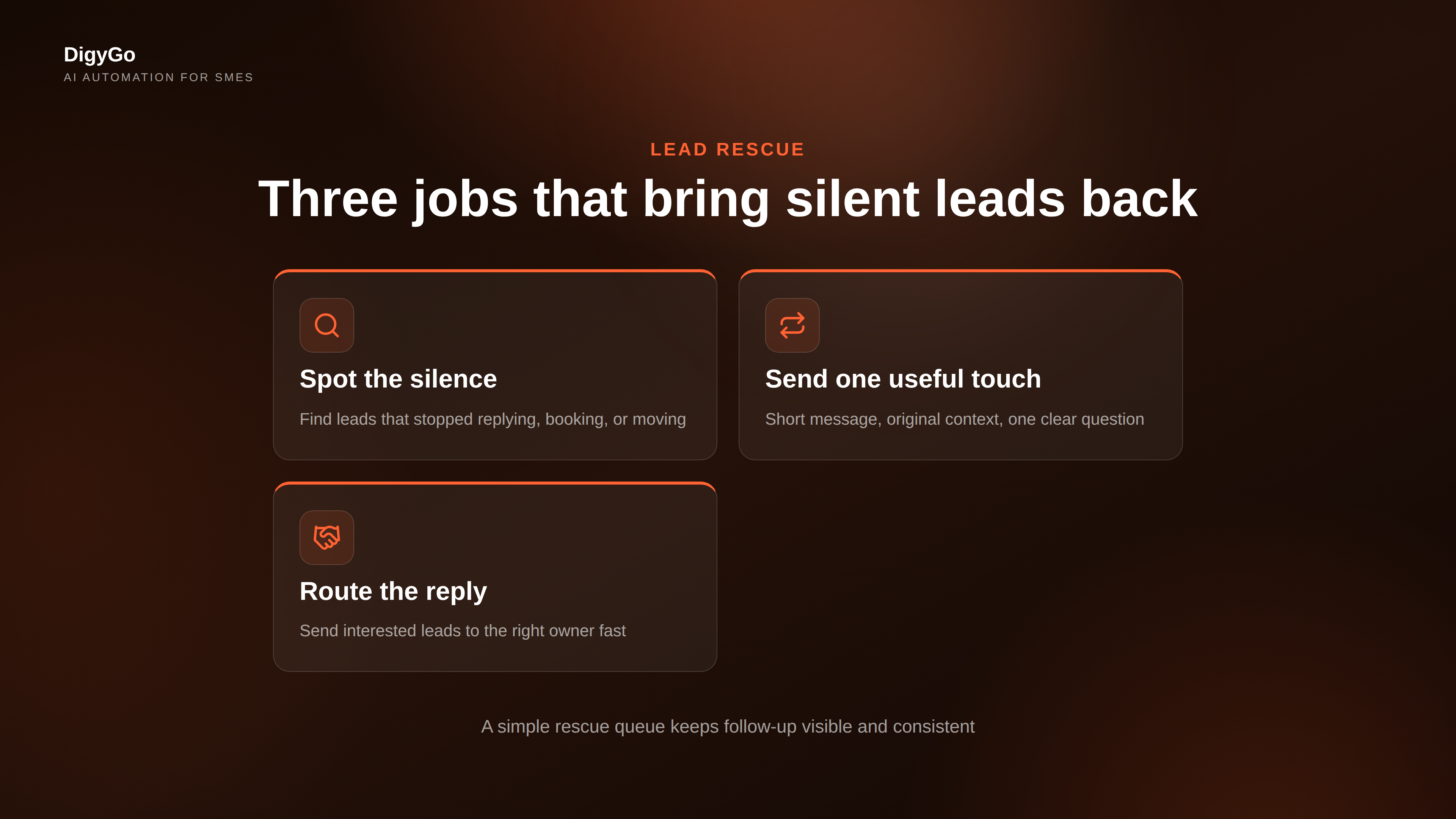
Keep the process simple. If the queue gets complicated, nobody uses it. These three parts are enough for most SME teams.
- Identify the leads that have not replied, booked, or moved forward within your chosen window.
- Re-engage with one useful message that refers to the original enquiry and asks one clear question.
- Route the lead to the right owner if they respond, so follow-up does not stop after the first reply.
Once those steps are defined, the queue can run from a shared sheet, CRM, or inbox view. The tool matters less than the rule set.
What to send when a lead goes quiet
The best rescue message is short, specific, and easy to answer. Avoid long explanations. Use the lead’s original request, one relevant detail, and one next step.
- “Just checking if you still need help with this.”
- “Would you like us to share the next available slot?”
- “Is timing still right, or should we revisit this later?”
That tone keeps the conversation open without sounding pushy. It also makes it easier for a busy prospect to reply in one line.
How to keep the queue from breaking
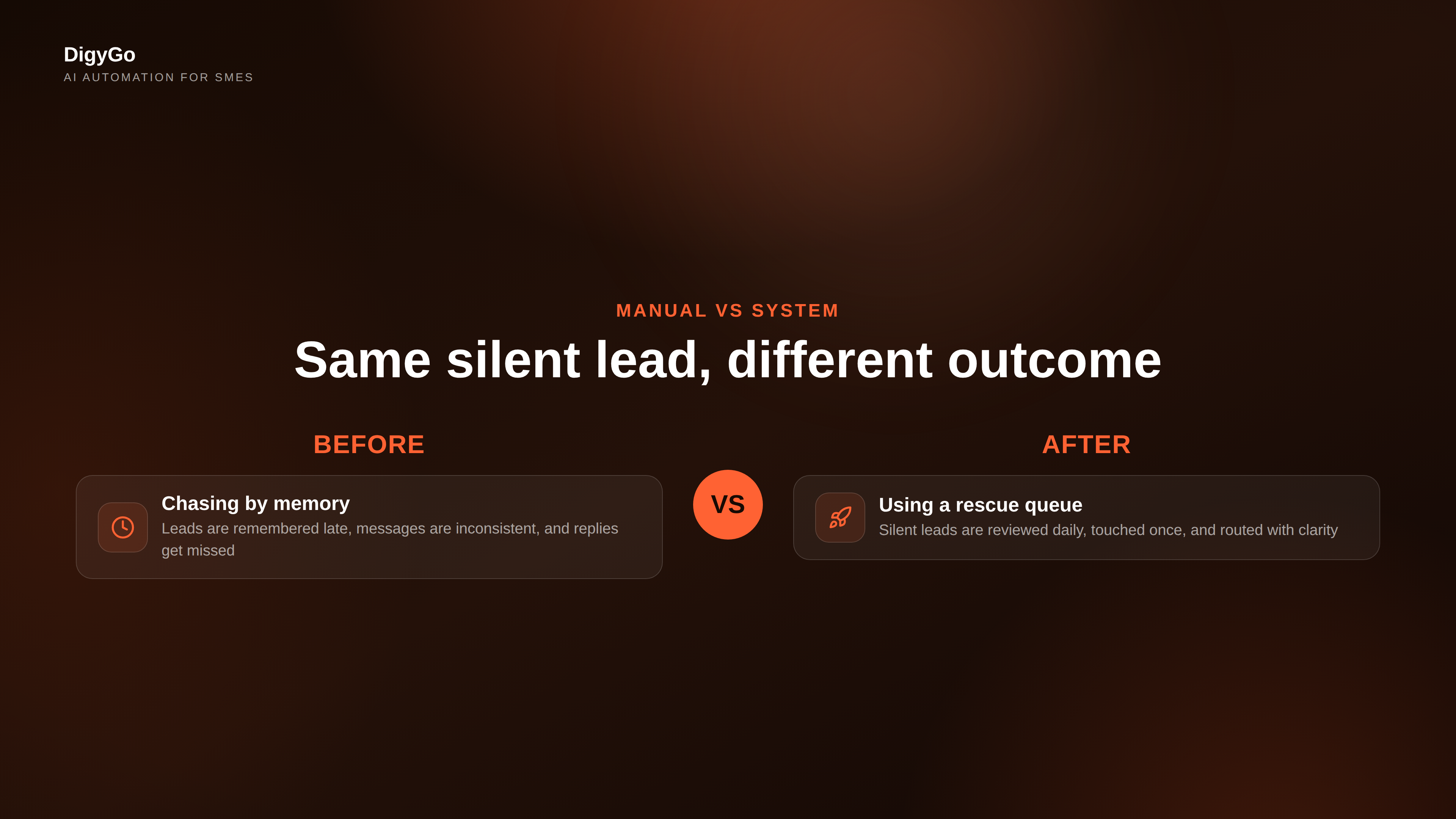
A rescue queue only works if it is reviewed daily. Assign one owner, set a simple time window, and decide what counts as silent. Then make the queue visible to the whole team.
When the next action is visible, follow-up becomes a habit instead of a memory test. That is what protects leads from going cold.
What to track every week
- number of silent leads recovered
- response time to the rescue message
- booked calls or conversions from the queue
- leads that stayed silent after the second touch
If recovery is low, the message is probably too vague. If response is high but bookings are low, the offer or handoff needs work. Either way, the queue gives you a place to improve.
FAQ
Is a rescue queue just another follow-up list?
No. A good rescue queue is tied to timing, ownership, and a clear next action. It turns follow-up into a system, not a reminder dump.
How soon should I re-contact a silent lead?
Use the window that matches your sales cycle. For many SMEs, the first rescue touch should happen within 24 to 48 hours if the lead has not replied.
Can this work without automation software?
Yes. Start with a shared sheet, a clear owner, and a simple daily review. Automation helps later, but the process should exist first.
Want help building a follow-up queue that actually gets used? Talk to DigyGo and we’ll map the flow for your team.