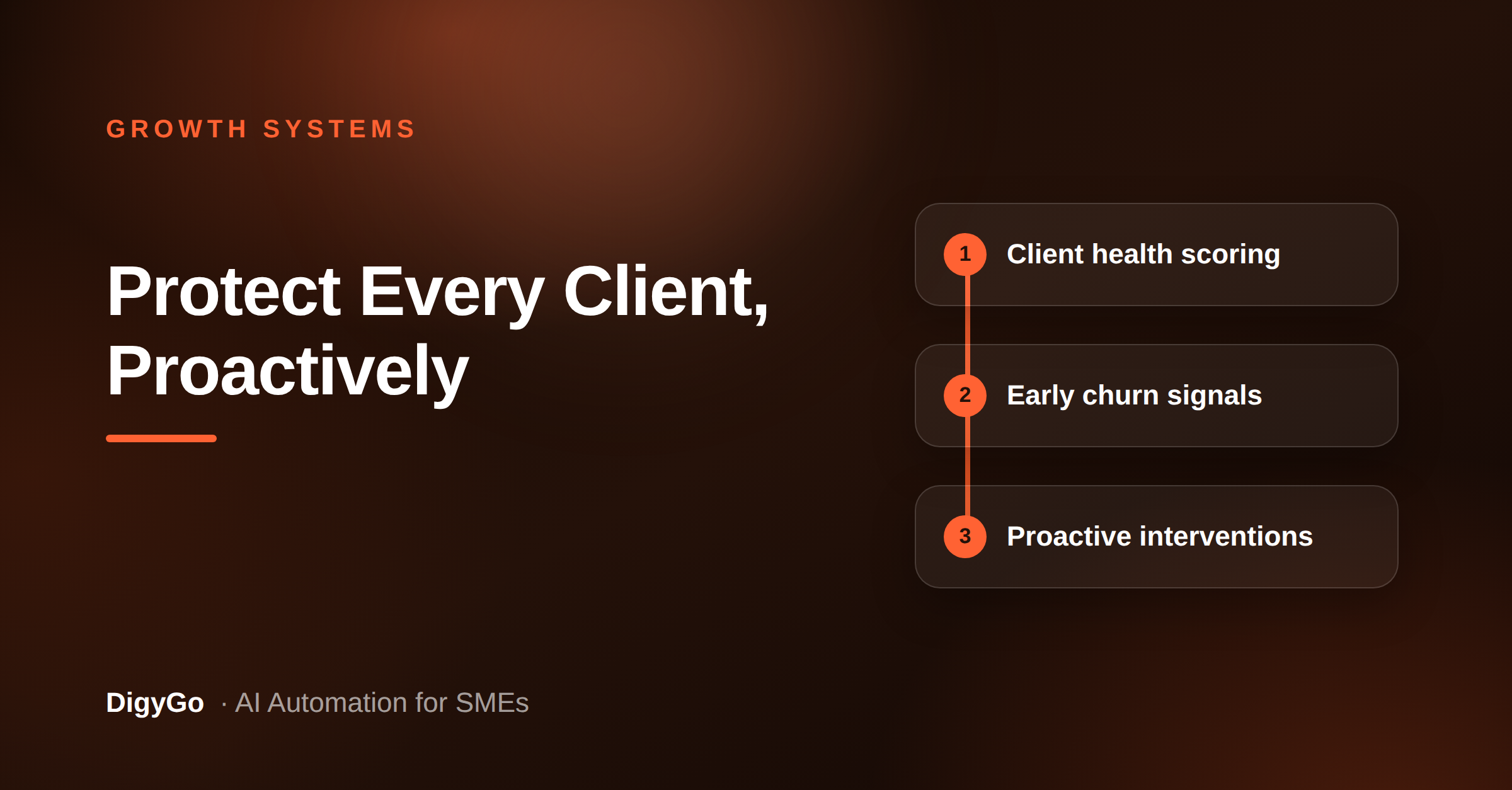
Most SMEs discover churn too late — when a client sends a cancellation notice. By then, the relationship is already cold, and recovery is nearly impossible. A recurring revenue protection system changes that. It flags at-risk clients early, triggers proactive interventions, and gives you a repeatable way to protect the revenue you have already earned.
A practical Growth Systems guide for SME founders on building a recurring revenue protection system that flags at-risk clients before they cancel, assigns proactive owners, and turns retention into a compounding growth driver.
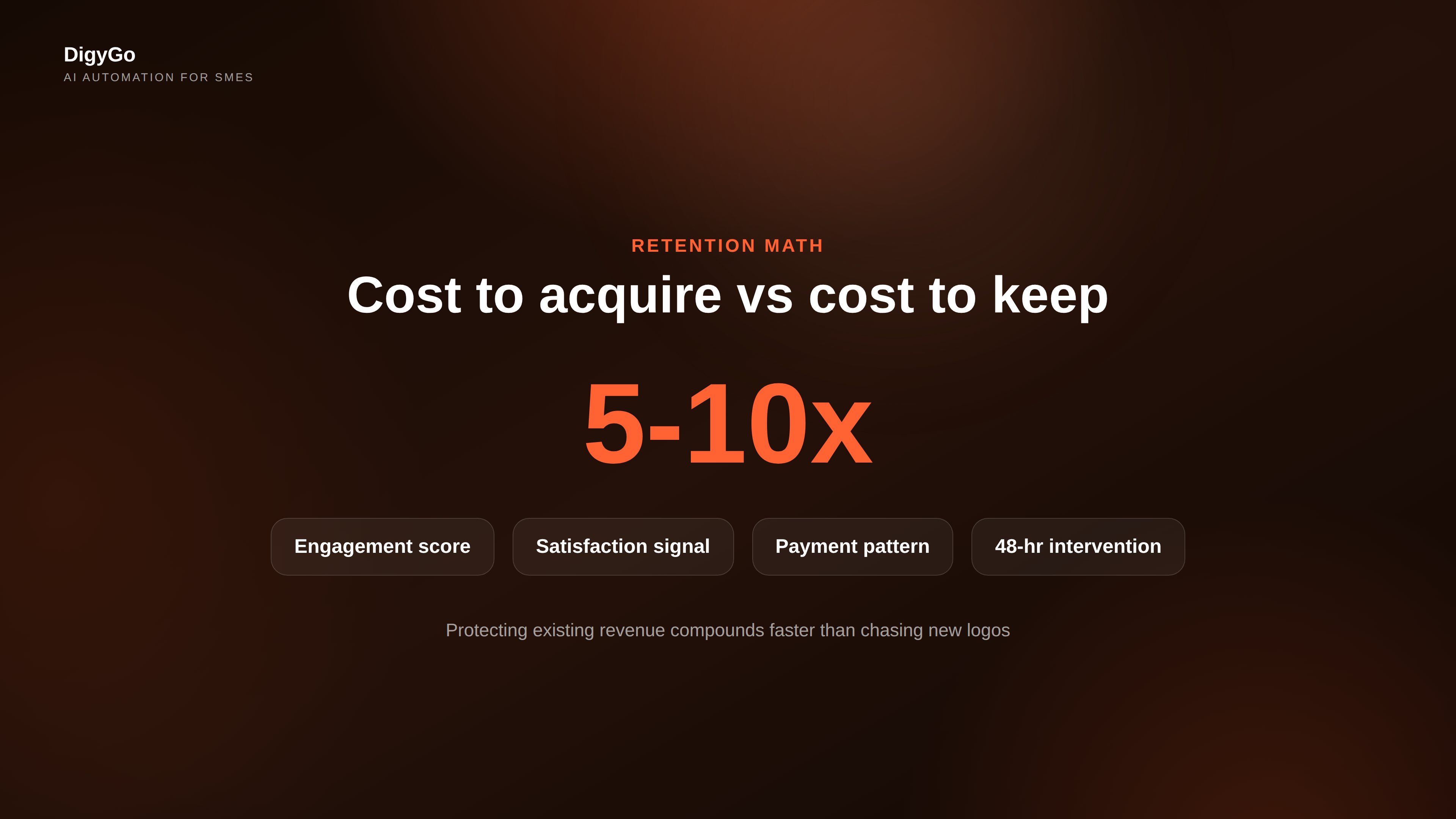
Acquiring a new customer costs 5–10x more than retaining one. Yet most small teams spend nearly all their operational energy on chasing new leads, while the existing client base quietly drifts. The businesses that compound growth are not the ones that win the most new logos — they are the ones that keep the logos they already have engaged, happy, and renewing.
Why Recurring Revenue Leaks Without a Protection System
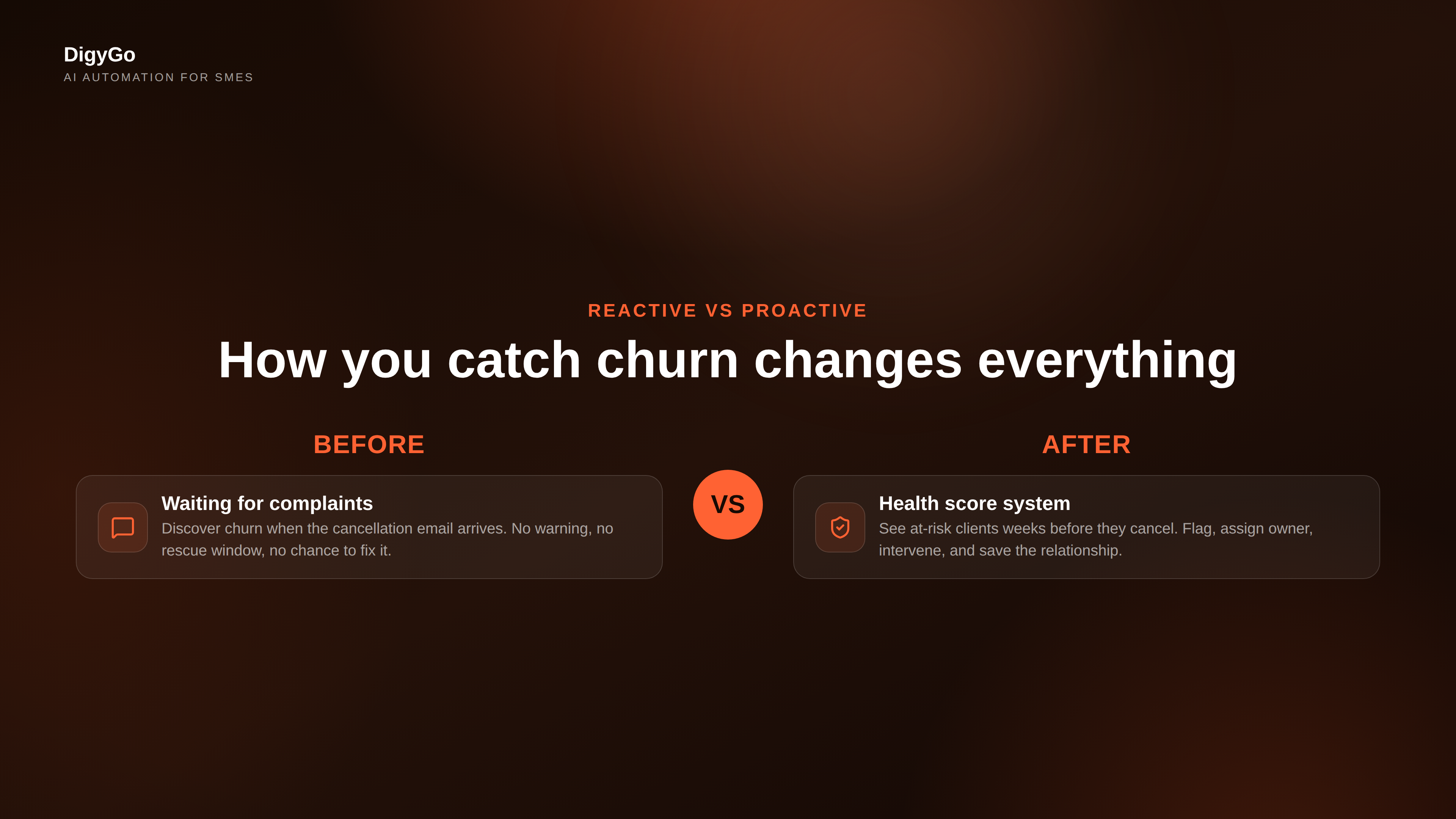
Recurring revenue does not leak because clients are unhappy. It leaks because no one notices the small warning signs. A client stops replying to check-in messages. They skip a monthly review call. They ask the same question three times without getting a clear answer. Individually these signals seem minor. Collectively they form a pattern that ends in a cancellation email.
The problem is not intent — it is visibility. In a busy SME with no dedicated retention system, these signals live in individual inboxes and team members' heads. No one is watching the pattern. No one triggers a rescue action until it is too late.
- A simple client health score that surfaces at-risk accounts every week
- A structured health review rhythm that assigns owners before churn happens
- An escalation flow that rescues clients flagged as high-risk
- A referral capture step that turns saved clients into growth
Step 1: Build a Client Health Score That Surfaces Risk Automatically
A health score does not need software. It needs three signals you already have access to, scored weekly on a simple 0–2 scale:
| Signal | 0 (Green) | 1 (Yellow) | 2 (Red) |
|---|---|---|---|
| Engagement | Replies within 24 hours | Replies take 2–3 days | No reply in 5+ days |
| Deliverable satisfaction | Accepts handoffs without revision | Asks for moderate changes | Rejects or delays approval |
| Payment behaviour | Pays on invoice date | Pays within 7 days late | Overdue 15+ days |
Score every active client every Friday. Any client scoring 4 or higher goes into a "review" queue. Any client scoring 6 or higher is flagged as high-risk and triggers an immediate intervention.
The beauty of this system is that it shifts your retention from reactive to proactive. You stop waiting for cancellation notices and start acting on the signals that precede them.
Step 2: Run a Weekly Health Review That Assigns Owners
A health score is useless without a review rhythm. Block 30 minutes every Monday to go through the flagged accounts:
- Review the high-risk queue. For each client with a score of 6+, ask: what changed? When did engagement drop? Who on your team has the relationship?
- Assign one owner per at-risk client. This person owns the rescue. Not "the team" — one name.
- Define a single next action. A phone call, a face-to-face meeting, a service adjustment, or a check-in with a specific deliverable. One action, not a list.
- Note the deadline. The rescue action must happen within 48 hours. If the deadline passes without completion, escalate to a partner or founder.
This rhythm forces the team to look at retention the same way they look at lead follow-up — as a weekly operational discipline with clear owners and deadlines.
Step 3: Build an Intervention Flow That Rescues High-Risk Clients
When a client flags as high-risk, the rescue cannot be a generic "How are you?" message. That sounds hollow and usually gets ignored. Instead, use a structured intervention flow tailored to the signal:
Signal: Engagement Drops
Schedule a 15-minute "service pulse" call. Do not ask why they stopped replying. Instead, bring one specific update or deliverable that shows you are actively working for them. Most disengaged clients are not angry — they are distracted. A useful nudge re-establishes the connection.
Signal: Deliverable Dissatisfaction
Offer a revision, a scope adjustment, or a new resource at no extra cost. The cost of a small concession is trivial compared to losing the client. Frame it as "We noticed the last deliverable did not land the way we expected — here is what we would like to do differently."
Signal: Payment Delays
Do not send an automated reminder. Call directly. Payment delays often surface a deeper problem — the client is unhappy but has not said so. A direct call lets you uncover the real issue and fix it before it becomes a cancellation.
The intervention is not the end of the process. Log the issue, the action taken, and the outcome in a shared document. That pattern data helps the team spot recurring issues across the client base.
Step 4: Close the Loop — Turn Saved Clients Into Referrals
A client you successfully rescued from churn is your strongest advocate. They saw you care enough to intervene. That trust is hard to earn and even harder to replicate through marketing.
After the rescue, add one step: ask for a referral. Not immediately — wait until the next successful deliverable or milestone. Then frame it simply: "We are glad we could turn this around. If you know another business that could benefit from this approach, we would appreciate an introduction."
This turns retention from a defensive activity into a growth driver. Every client you save becomes a source of new business.
The Weekly Rhythm That Protects Recurring Revenue
Here is the complete weekly rhythm for the entire system:
| Day | Activity | Duration |
|---|---|---|
| Friday | Score every active client on the three-signal health grid | 20 min |
| Monday | Review flagged accounts, assign owners, define next action | 30 min |
| Mon–Wed | Owners execute rescue actions (within 48-hour window) | — |
| Wednesday | Escalate any missed deadlines to the founder | 10 min |
Two hours a week. That is all it takes to stop recurring revenue from leaking away while the team chases new leads.
FAQ
How many clients should I score this way?
Every client on a recurring agreement. One-off or project-based clients can be scored at the end of each engagement. Start with the clients who generate the most monthly revenue.
What if a client scores high but we have no capacity to intervene?
That is a signal the system is working — it surfaced a problem. Even a 15-minute call is better than doing nothing. If the team genuinely cannot rescue a client, the system at least lets you make a deliberate decision rather than discovering the loss after it happens.
Can this work with 50+ clients?
Yes, but you need a shared tracker. A simple Google Sheet or Trello board with the three signals, the weekly score, and the owner works for up to 100 clients. Beyond that, a lightweight CRM or operations tool with health score fields becomes useful.
How do I measure if the system is working?
Track monthly churn rate before and after implementing the system. A reduction of even 2–3 percentage points in monthly churn can double your recurring revenue over 12 months through compounding alone.
Need help building a recurring revenue protection system for your SME? Let's talk →