Many SMEs lose deals long before the buyer says no. The real leak is quoting too early, before you know whether the opportunity is real, who can approve it, and what next step will keep the conversation moving.
A practical sales playbook for SMEs on qualifying budget, authority, and next steps before sending a quote so more of the right deals keep moving.
Why a quote should come after qualification
A quote is not just a price sheet. It is a decision document. If you send it too soon, you invite comparison shopping, endless clarification, and slow replies that drain momentum.
When the basics are clear first, the quote does a better job: it matches the buyer’s need, speaks to the right person, and gives your team a cleaner path to close.
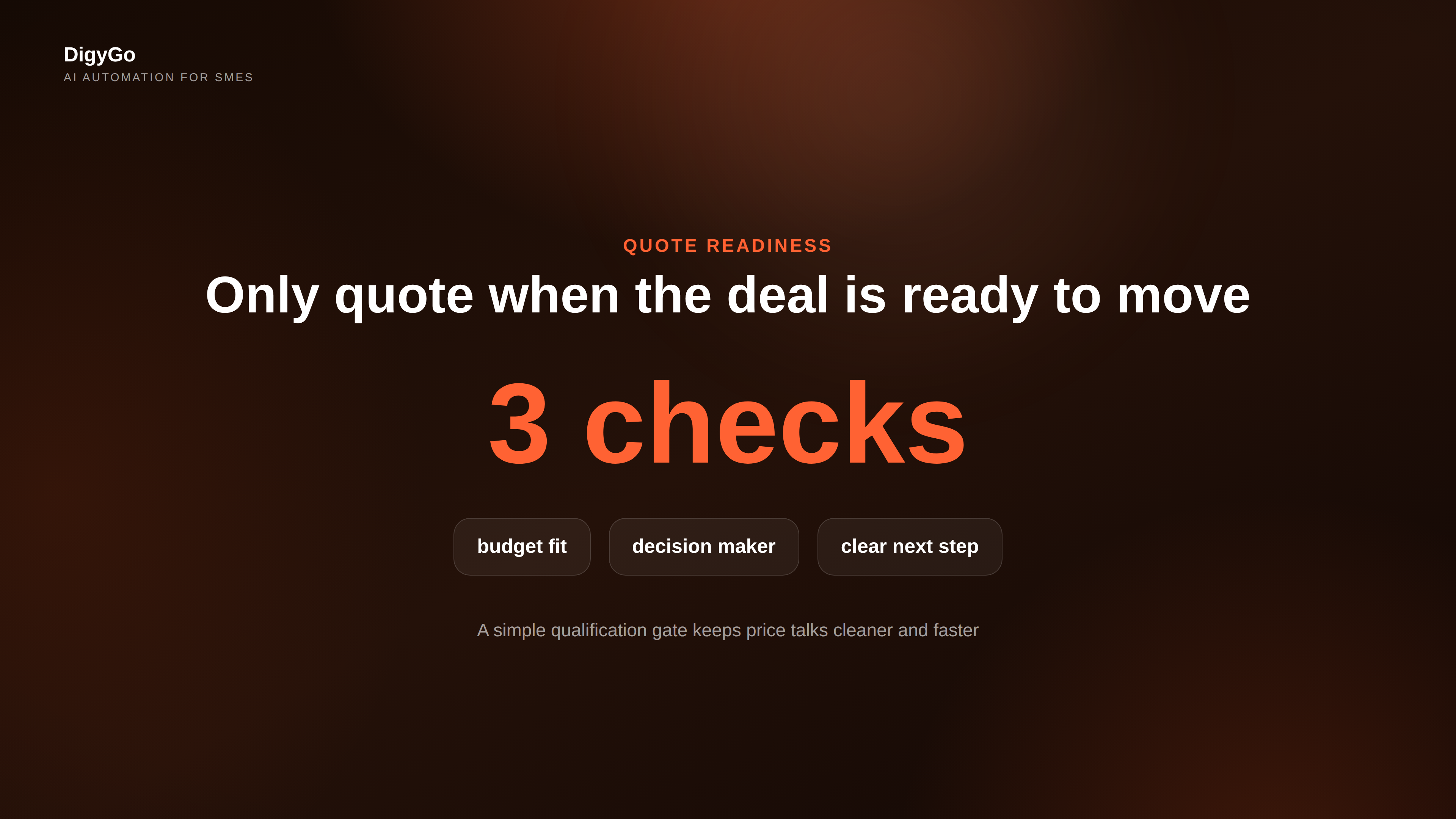
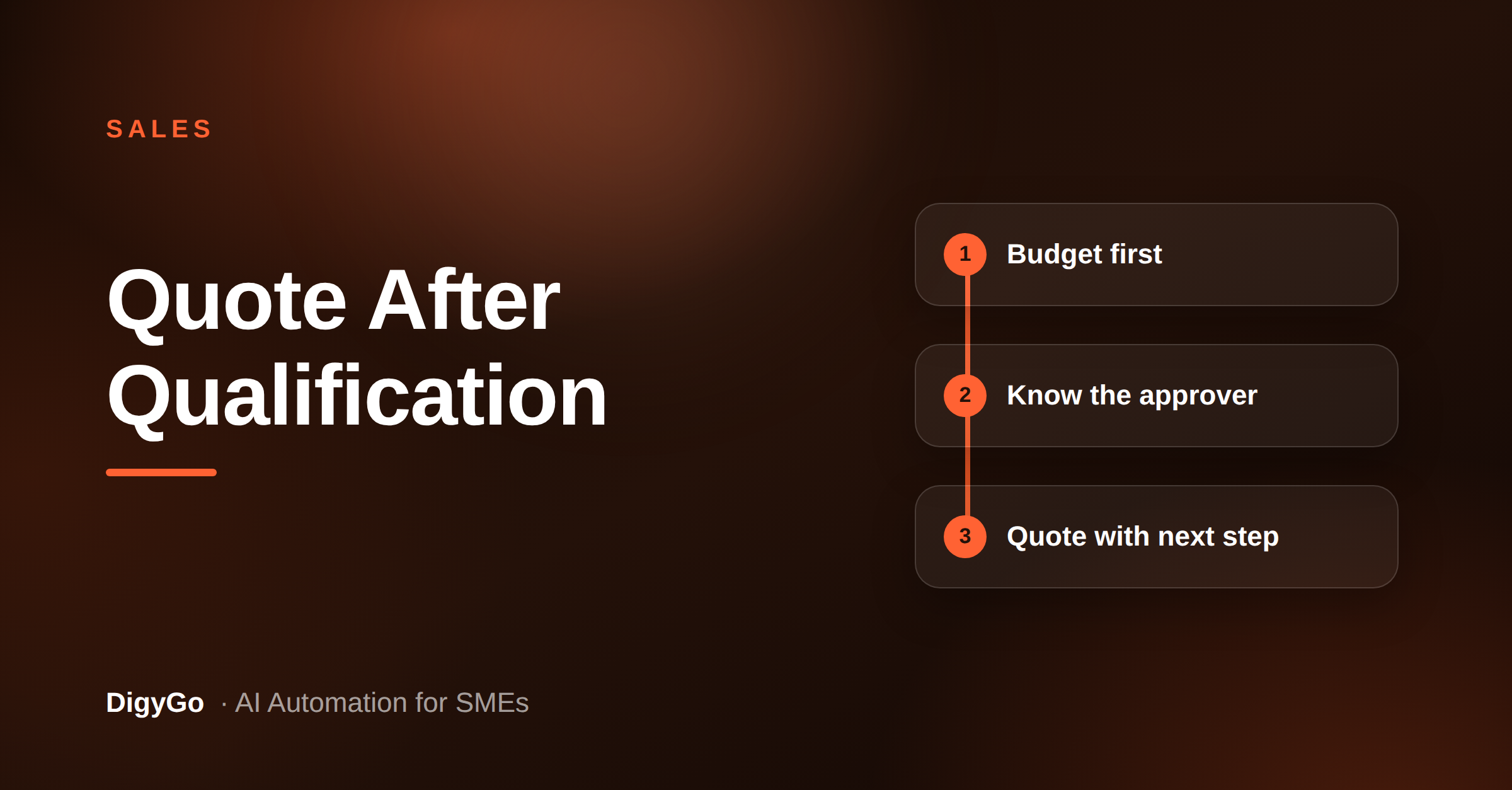
The three checks before you send pricing
- Budget fit: confirm the buyer can realistically afford the range before you invest time in a formal quote.
- Decision maker: know who signs off, who influences the decision, and who will actually read the proposal.
- Clear next step: end the call with a review, demo, or approval date so the quote does not sit untouched.
Budget fit protects your time
If the buyer has not shared a budget range, you are guessing. A quick budget question is not pushy; it is efficient. It helps you shape the offer at the right level instead of pricing your way into a dead-end conversation.
Authority keeps the deal honest
Many quotes go nowhere because the person who asked for pricing was not the person who could approve it. Before you send anything, make sure you know who is involved and what each person cares about.
A simple 4-step qualification flow
Use this sequence every time you are about to send a quote. It keeps the process tight and stops your team from over-serving weak opportunities.
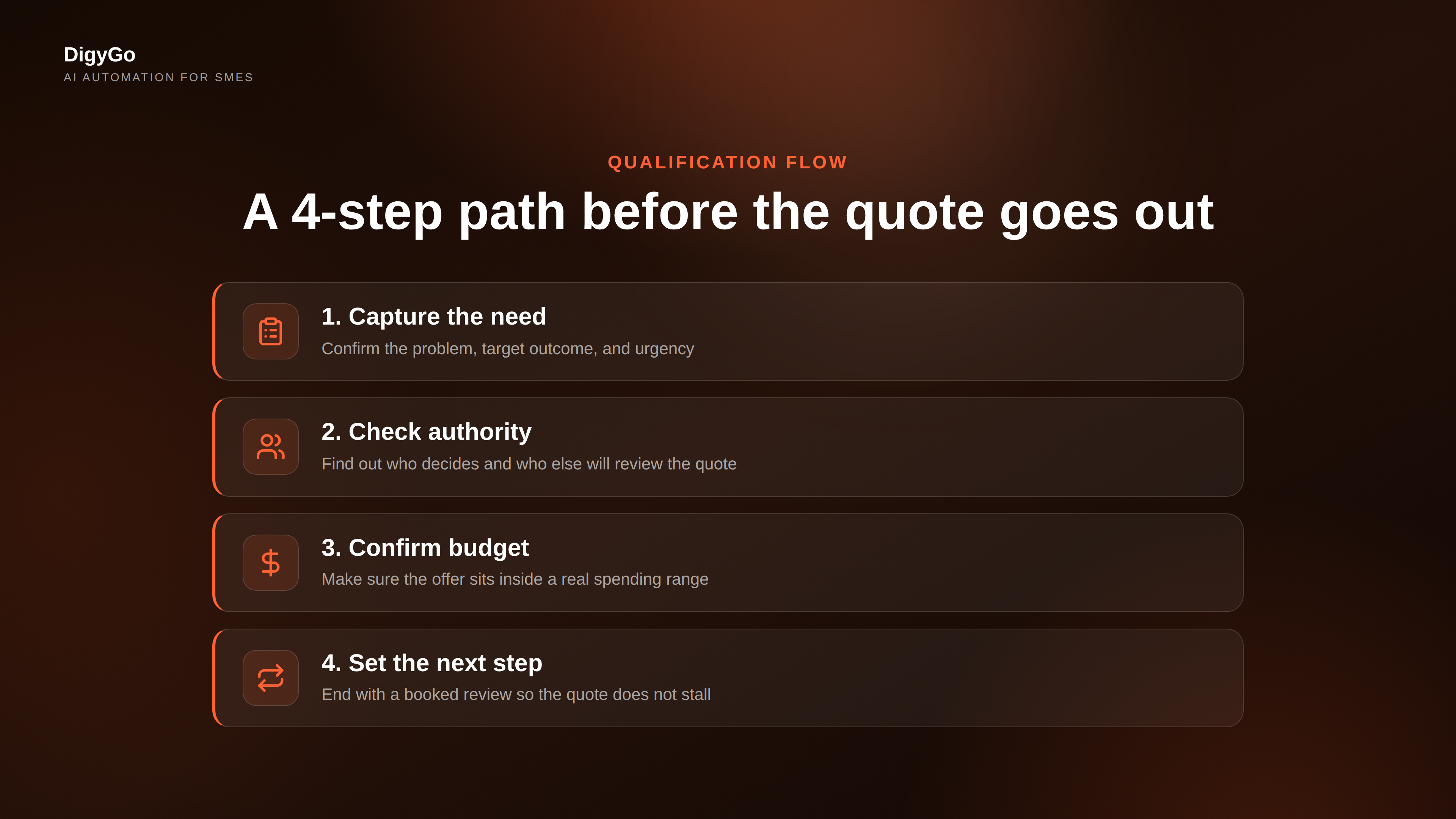
- Capture the need: restate the problem, the outcome they want, and why it matters now.
- Check authority: confirm who decides and whether anyone else reviews the quote.
- Confirm budget: make sure your offer sits inside a real spending range.
- Set the next step: leave the conversation with a booked follow-up so the deal keeps moving.
What to say before you quote
Keep it short and clear: "Based on what you shared, I can put together the right option. Before I send pricing, can I confirm your budget range and who will review this with you?"
That one line does two important things. It filters out noise and tells the buyer you are serious about fit, not just volume.
When to pause instead of quoting
Do not send pricing if the buyer is still vague on scope, cannot name the decision process, or has not agreed to a next step. A pause is often better than a rushed quote that creates more work later.
If the deal is worth pursuing, go back, qualify properly, and then quote with confidence.
FAQ
Should every enquiry get a quote?
No. A quote should follow a basic qualification check so your team spends time on real opportunities, not casual browsers.
What if the buyer asks for pricing immediately?
Share a range if needed, then ask a qualifying question before you prepare the final quote. That keeps momentum without giving away the whole proposal too early.
How do I stop quotes going cold?
Always attach a next step. A quote without a follow-up date is easy to ignore.
Want a faster quote process? Talk to DigyGo about automating qualification and follow-up.