Not every lead says yes the first time. In many SME funnels, the real money is sitting inside the enquiries that went quiet after the first reply, the first quote, or the first follow-up message. A simple re-engagement sequence gives those leads a second chance without asking your team to chase manually all day.
A practical follow-up playbook for SMEs that want to revive silent enquiries with timing, context, and light automation instead of manual chasing.
Key takeaways:
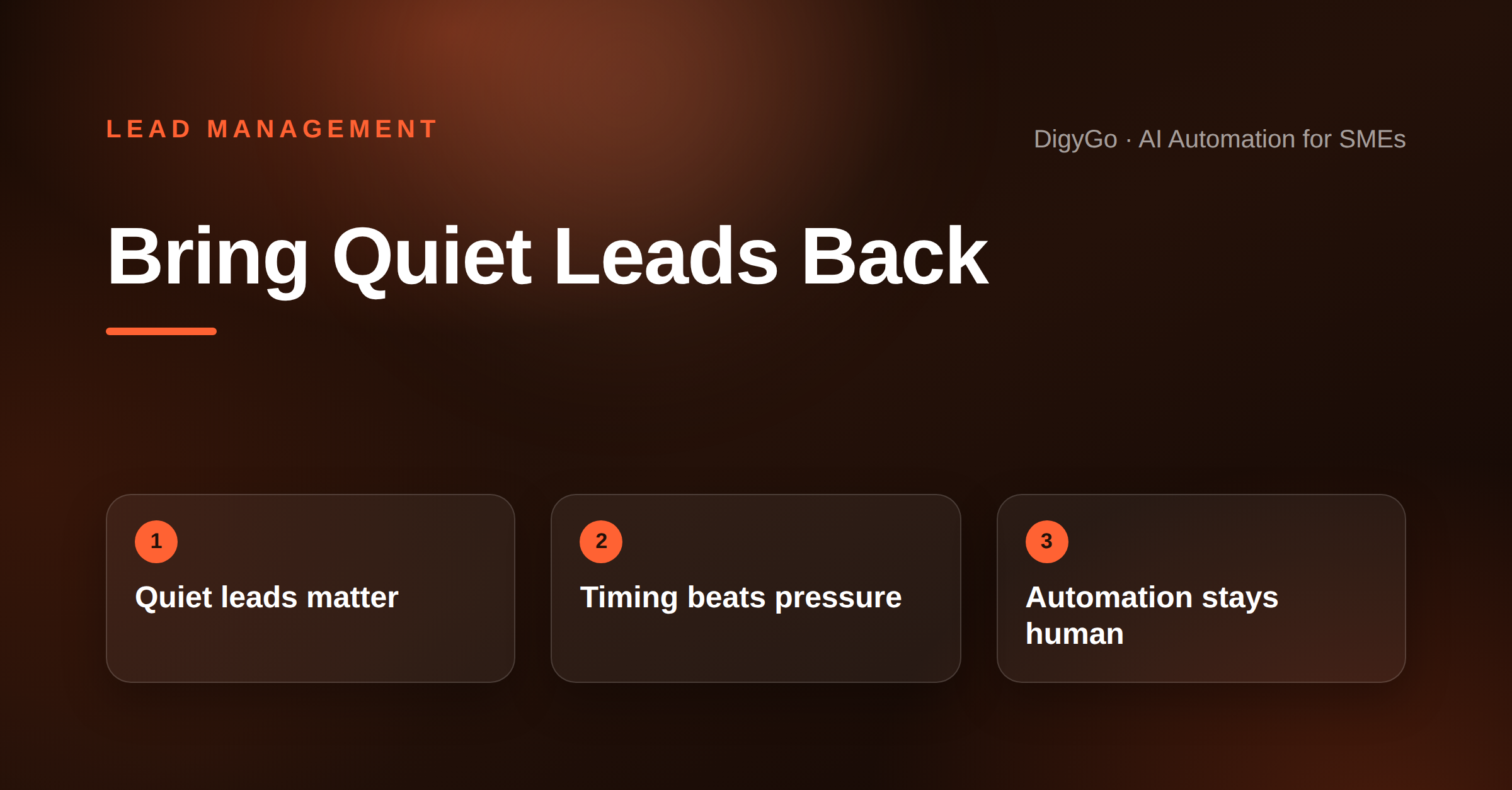
- Quiet leads are not dead leads; they are delayed decisions.
- Re-engagement works best when it is fast, relevant, and low-pressure.
- Automation helps you keep the follow-up consistent without sounding robotic.
Why enquiries go quiet after the first reply
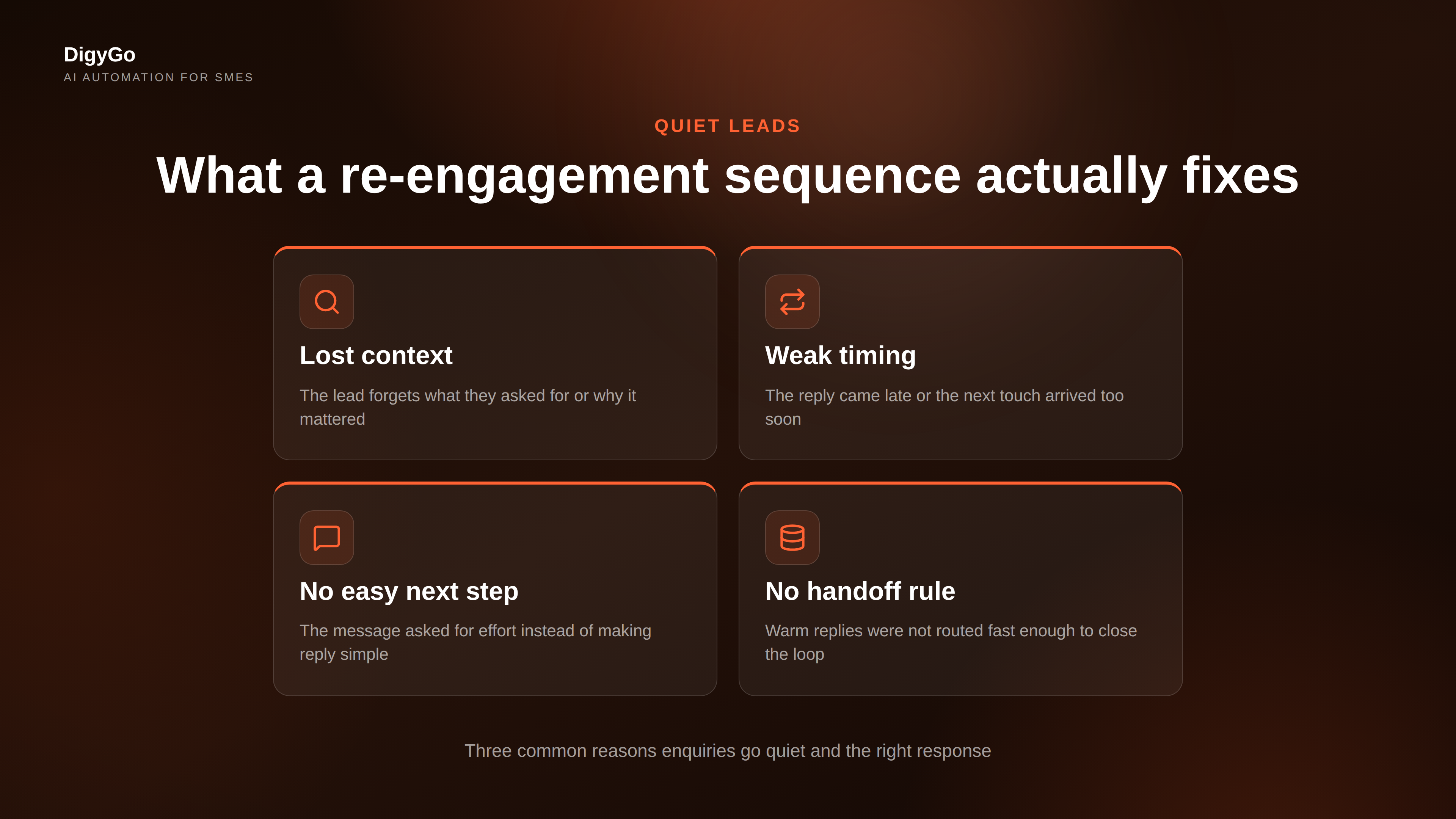
Most businesses assume silence means rejection. In reality, many prospects are juggling timing, price checks, internal approvals, or competing vendors. If your first response is the last meaningful touch, you are leaving the decision up to memory, and memory is a terrible sales process.
The fix is not more generic chasing. It is a structured sequence that brings the conversation back with context: a reminder of what they asked for, a useful next step, and a clear way to reply when the timing is right.
Build the re-engagement sequence around real buyer behavior
A good sequence does three jobs: it reminds, it reassures, and it reduces friction. Instead of sending the same message again, each touch should do a different job.
- Reminder: reference the original enquiry so the lead instantly recognises the thread.
- Reassurance: remove pressure with a simple line like “no rush if the timing is not right.”
- Friction reduction: make the next step easy, whether that is a reply, a call, or a booking link.
For most SMEs, the sequence can stay short. Three to four touches is enough if the messages are useful and spaced sensibly. The goal is not to harass the lead into replying. It is to stay visible until they are ready to act.
What to send after the first quiet period
The first follow-up should be warm and specific. Mention the service they asked about, the problem they were trying to solve, or the estimate you already shared. Then give them one simple prompt.
Example: “Checking whether you still want a quote for the monthly maintenance plan. If it helps, I can resend the options in a shorter format.”
Use automation to keep the tone human
Automation is most useful when it handles the timing and the reminders, not the personality. That means the system should detect silence, assign the lead to a follow-up path, and send the next message at the right interval. Your team still controls the wording, the offer, and the handoff when the lead reopens the conversation.
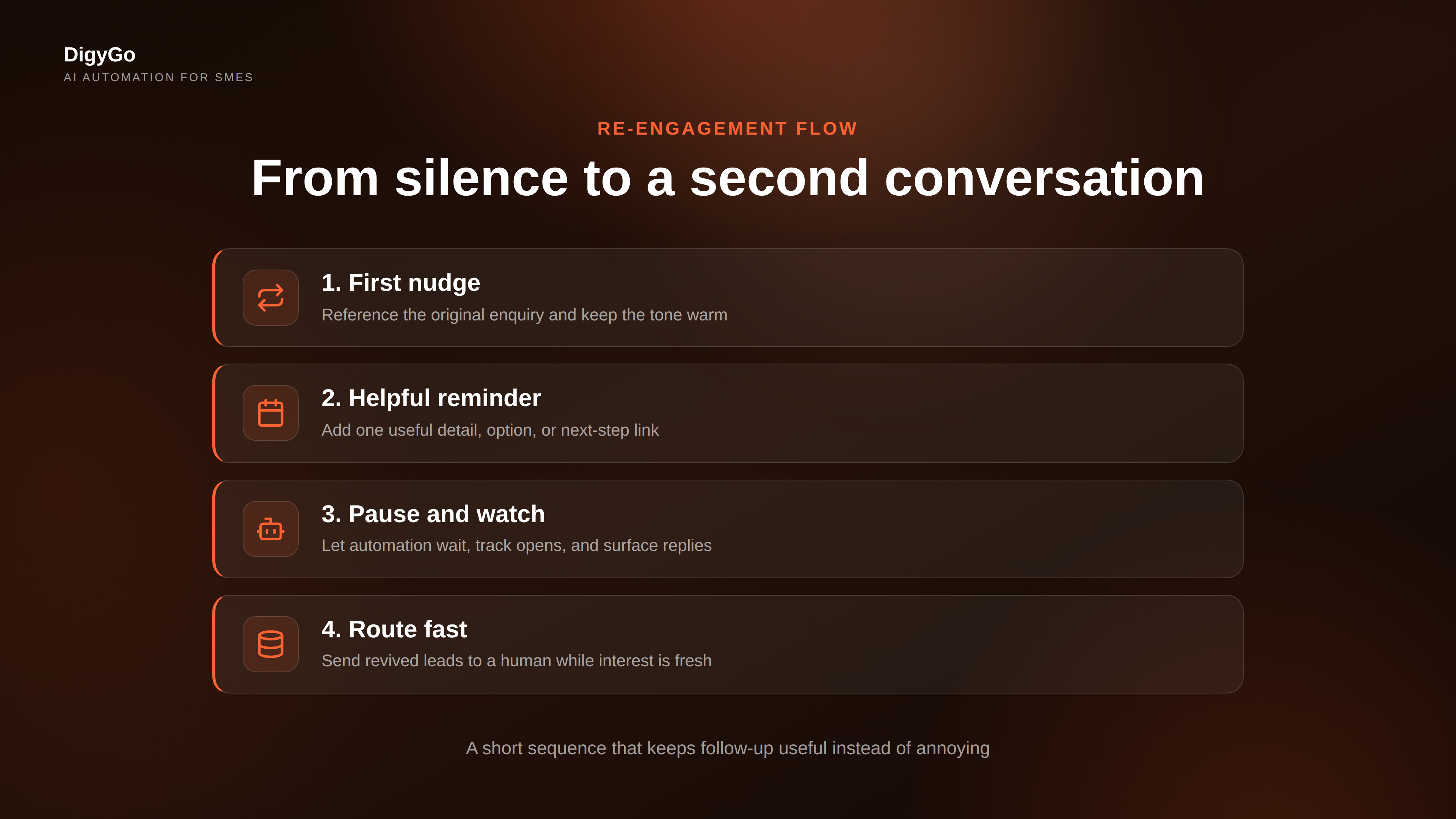
When this works properly, sales people stop wasting time checking who has been ignored. They only step in when the lead is active again, which makes the whole pipeline feel calmer and faster.
Simple rules that improve response rates
- Keep the subject clear. Use the original service or job name so the thread feels familiar.
- Send at useful intervals. Space the touches enough that you are persistent, not pushy.
- Offer one next step. Do not ask for three things at once.
- Route replies quickly. A revived lead is usually hottest in the first hour after they respond.
Practical tip: If a lead has gone quiet twice, move them into a lighter nurture path instead of keeping them in an aggressive sales chase. You preserve trust and still stay in the running.
What to measure so the sequence keeps improving
Track the metrics that show whether the sequence is actually reviving conversations: reopen rate, reply rate, booked-call rate, and time-to-response after a comeback. If a message gets opens but no replies, the copy is probably too vague. If replies happen but no bookings follow, the handoff is too slow or the next step is too hard.
The best re-engagement system is not the one that sends the most messages. It is the one that turns the most silent leads back into live conversations with the least manual effort.
Talk to DigyGo about building a quieter, smarter follow-up system