Most SMEs lose deals after sending a proposal, not before. The prospect was interested, the call went well, and the quote was approved in principle. Then the follow-up becomes vague, slow, or inconsistent.
A practical sales follow-up system for SMEs that keeps proposals moving, handles objections faster, and closes more of the right deals.
Why proposal follow-up matters
A strong proposal does two jobs. It explains the offer and it creates momentum. If the buyer has to think too hard after receiving it, the deal cools down. If the next action is obvious, the deal keeps moving.
For SMEs, that means proposal follow-up should feel less like chasing and more like guiding. You are helping the buyer compare options, confirm scope, and get internal approval faster.
The simple follow-up sequence that works
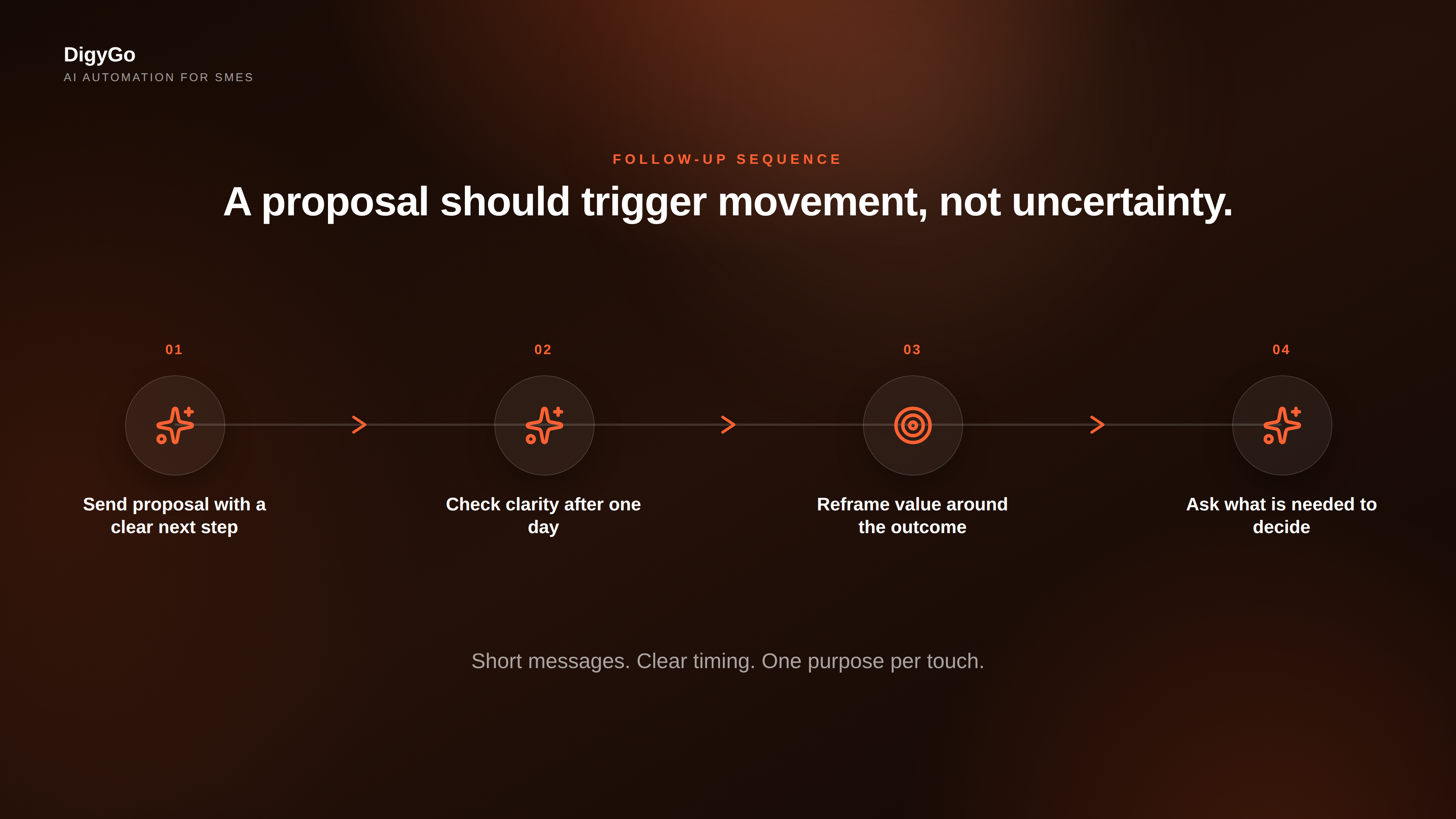
Keep the sequence short. Each message should have one job only.
- Day 0: Send the proposal with a clear closing question.
- Day 1: Ask if anything is unclear and offer a quick walk-through.
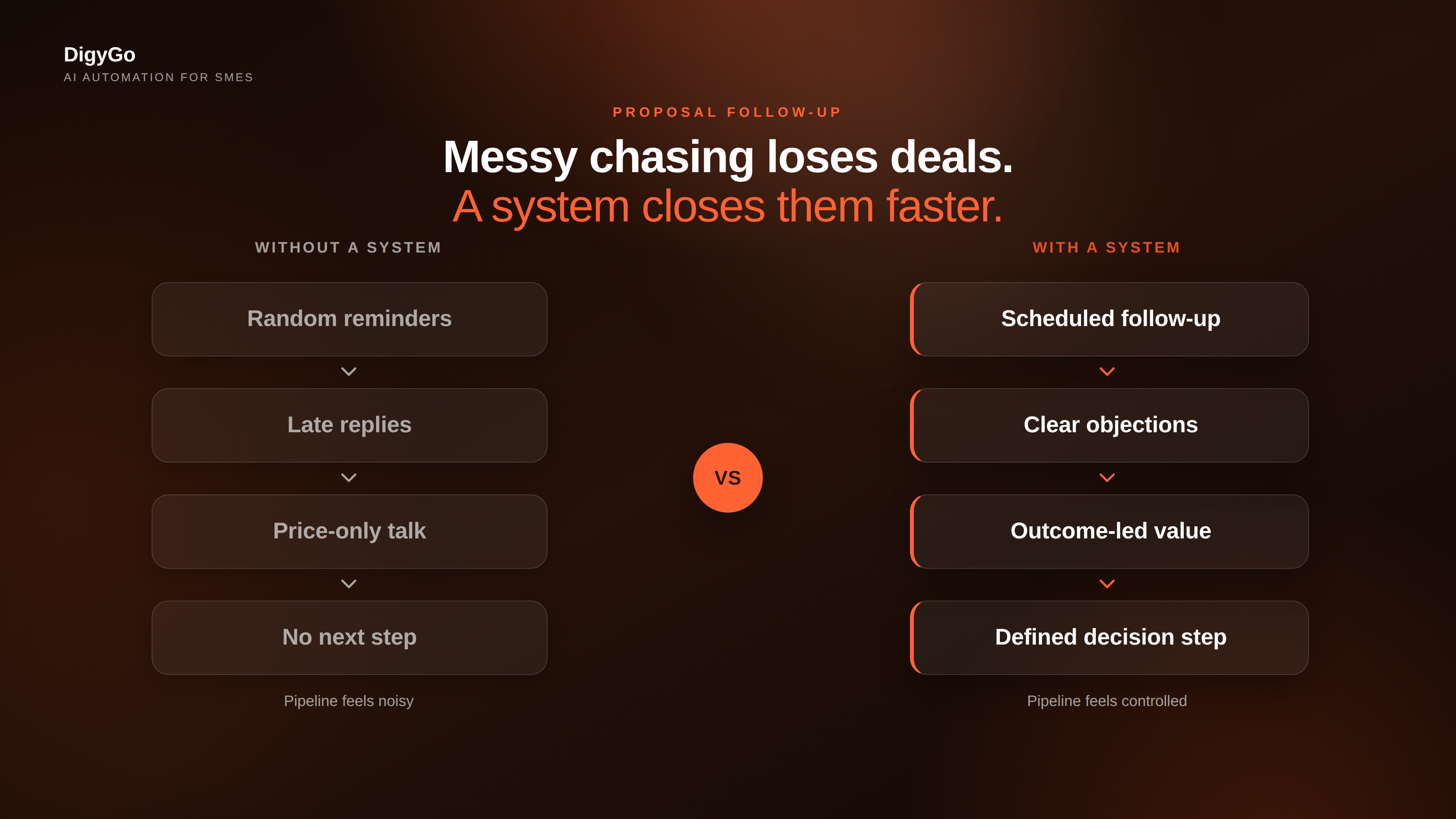
- Day 3: Reframe the value around the buyer's outcome, not just the price.
- Day 5: Ask what needs to happen for a decision to be made.
If there is no reply after that, pause. A disciplined sequence protects your time and keeps your pipeline clean.
What to say in each follow-up
The best follow-up messages are short and specific. They do not repeat the whole proposal. They make replying easy.
- Clarify scope: "I want to make sure the quoted scope matches what your team expects."
- Reduce friction: "If helpful, I can do a 10 minute walkthrough and answer any questions."
- Protect value: "The main benefit here is faster turnaround and fewer manual handoffs."
- Ask for action: "Should we move ahead with this version, or do you want one revision first?"
Common mistakes that slow closes
Most follow-up systems fail because they rely on memory instead of process.
- Sending the same message to every prospect.
- Waiting too long after the proposal is shared.
- Talking only about price and not the outcome.
- Not using a CRM or reminder system.
- Ending every message with a weak "just checking in" line.
Instead, make every follow-up purposeful. If the message does not move the deal forward, rewrite it.
Build a proposal system, not just a proposal
The fastest way to close more deals is to treat proposals as part of a system. The system should track who received the quote, when they were contacted, what objections came up, and what happens next.
That is where CRM notes, automated reminders, and a clear sales owner make the difference. With the right process, follow-up stops feeling awkward and starts feeling predictable.