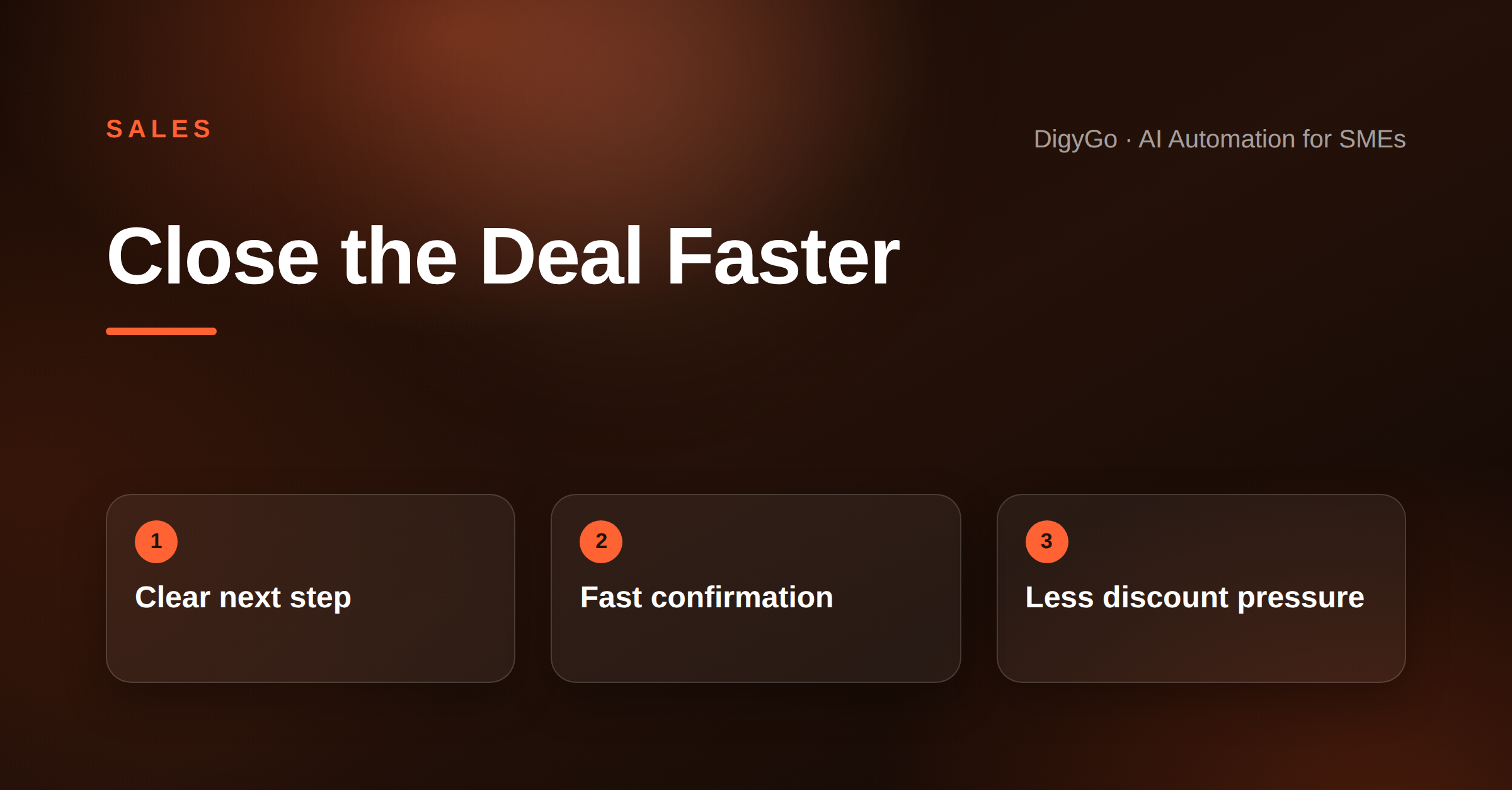
A good proposal should move the deal forward, not leave it parked in a WhatsApp thread. For SMEs, the difference between a maybe and a yes is often the follow-up structure around the proposal, not the proposal itself.
A practical sales guide for SMEs on turning proposal follow-up into a simple decision path that keeps deals moving without unnecessary discounting.
Key takeaways
- Proposals stall when the next step is unclear.
- A simple 3-step follow-up sequence keeps the deal moving.
- Use price only after you have confirmed fit, urgency, and decision process.
- Every follow-up should reduce friction, not add more text.
Why proposals stall
Most deals do not die because the offer is weak. They stall because the buyer has to do too much work after receiving the proposal. They need to compare options, explain the quote internally, and decide what to do next without a clear nudge from your side.
That is where many SMEs lose momentum. The sales team sends a detailed proposal, then waits too long, follows up too vaguely, or jumps straight to a discount. A better approach is to make the next step obvious.
The 3-step follow-up sequence
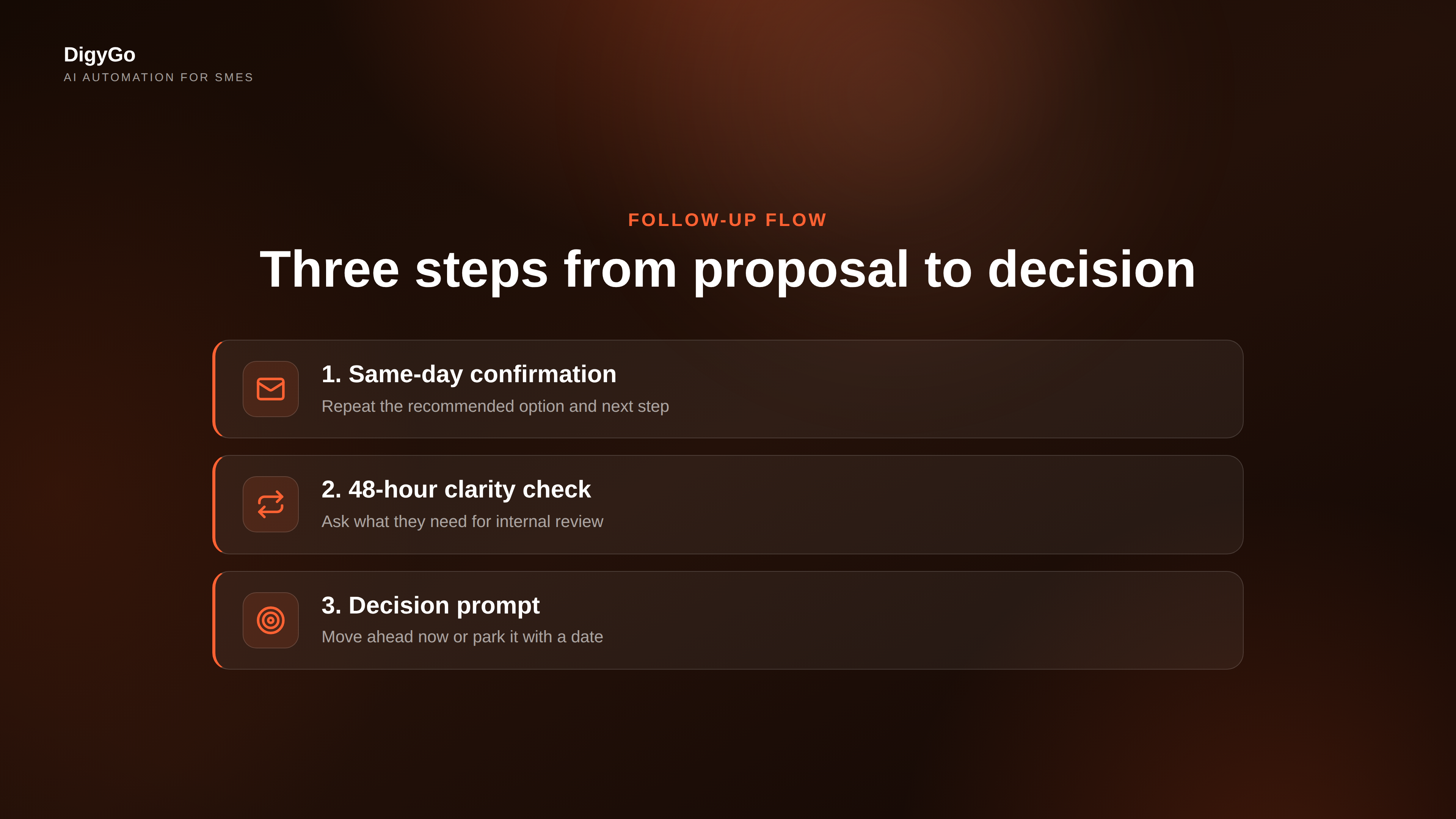
Use a simple sequence after every proposal. It keeps the conversation professional and gives the buyer a reason to respond without feeling chased.
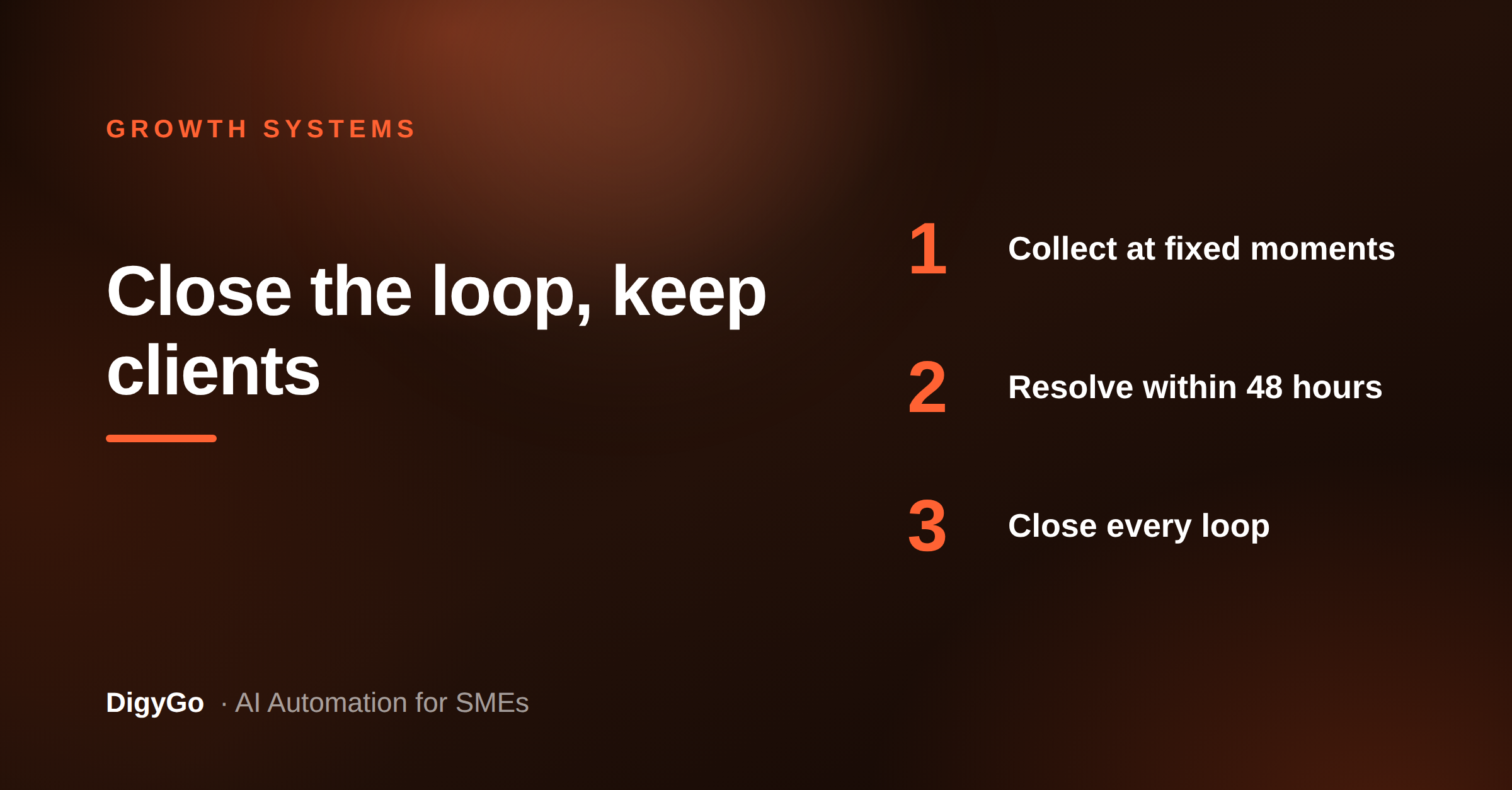
- Same-day confirmation: Send a short message that repeats the outcome you are aiming for.
- 48-hour clarity check: Ask whether they need anything to review the proposal internally.
- Decision prompt: Offer two clear paths - move ahead or park it with a date to revisit.
This works because it respects the buyer’s process while keeping your deal visible. You are not “following up for the sake of it”. You are guiding the decision.
What to send at each step
Keep each message short and specific. Long paragraphs create more delay, not more trust.
- Step 1: “Thanks for the conversation. I have sent the proposal and highlighted the recommended option.”
- Step 2: “Do you need any clarification on scope, timeline, or implementation before you review this internally?”
- Step 3: “If this looks right, we can move ahead. If timing is the issue, I can check back next week.”
Notice the pattern. Each message reduces one layer of friction. Scope, timeline, and internal review are usually the real blockers, not the price line alone.
How to avoid discount traps
If a buyer says the quote is expensive, do not rush into a cut. First check whether the buyer sees the value, whether the scope is too wide, or whether the timing is wrong. A discount usually solves the wrong problem.
Instead, use questions that uncover the real issue:
- What part of this feels out of range?
- Would a smaller starting scope make this easier to approve?
- What needs to happen internally before this can move forward?
That approach protects margin and improves qualification. If the deal still needs a lower entry point, you can adjust the offer without teaching the buyer to negotiate every time.
Simple rule: never discount before you have earned a clear reason.
Build a proposal that is easy to say yes to
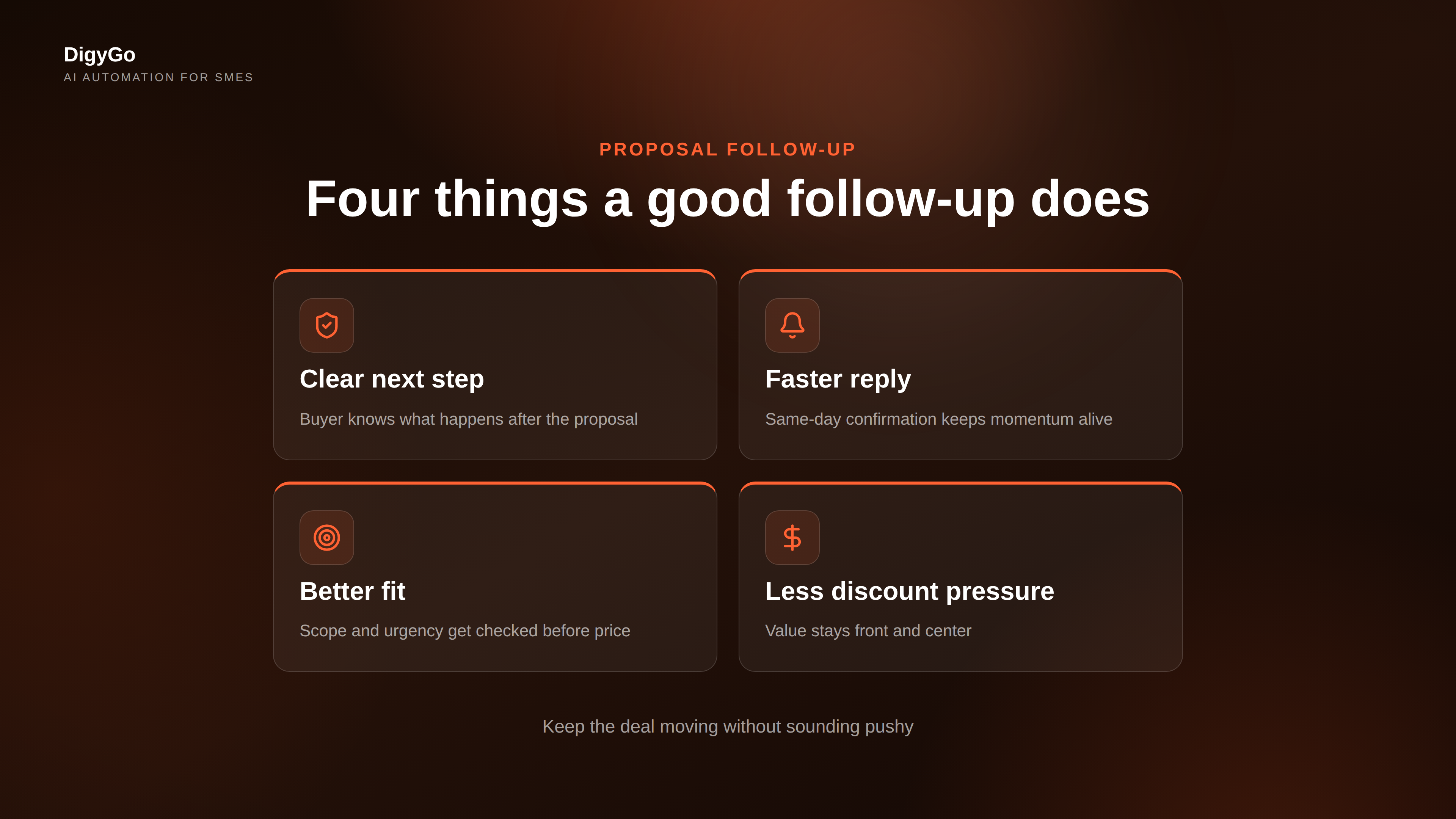
A strong proposal is not just a price sheet. It should restate the problem, the recommended solution, the expected outcome, and the next step. When the buyer can quickly see the value and the path forward, follow-up becomes easier.
If you want a practical checklist, make sure every proposal answers these four points:
- What problem are we solving?
- What exactly is included?
- What happens after approval?
- What is the simplest way to move ahead?
That clarity helps your sales team close more of the right deals without sounding pushy.
FAQ
How soon should I follow up after sending a proposal?
Same day for confirmation, then again after 48 hours if there is no response. Keep the tone helpful, not impatient.
Should I send the full proposal again in the follow-up?
Usually no. Send the specific part that helps the buyer decide, such as scope summary, timeline, or a short recap of the recommendation.
What if the lead keeps asking for a lower price?
Ask what they want to change in scope or outcome before offering a discount. That keeps the conversation focused on value instead of just price.
Need help building a sales follow-up system that closes more deals? Talk to DigyGo.