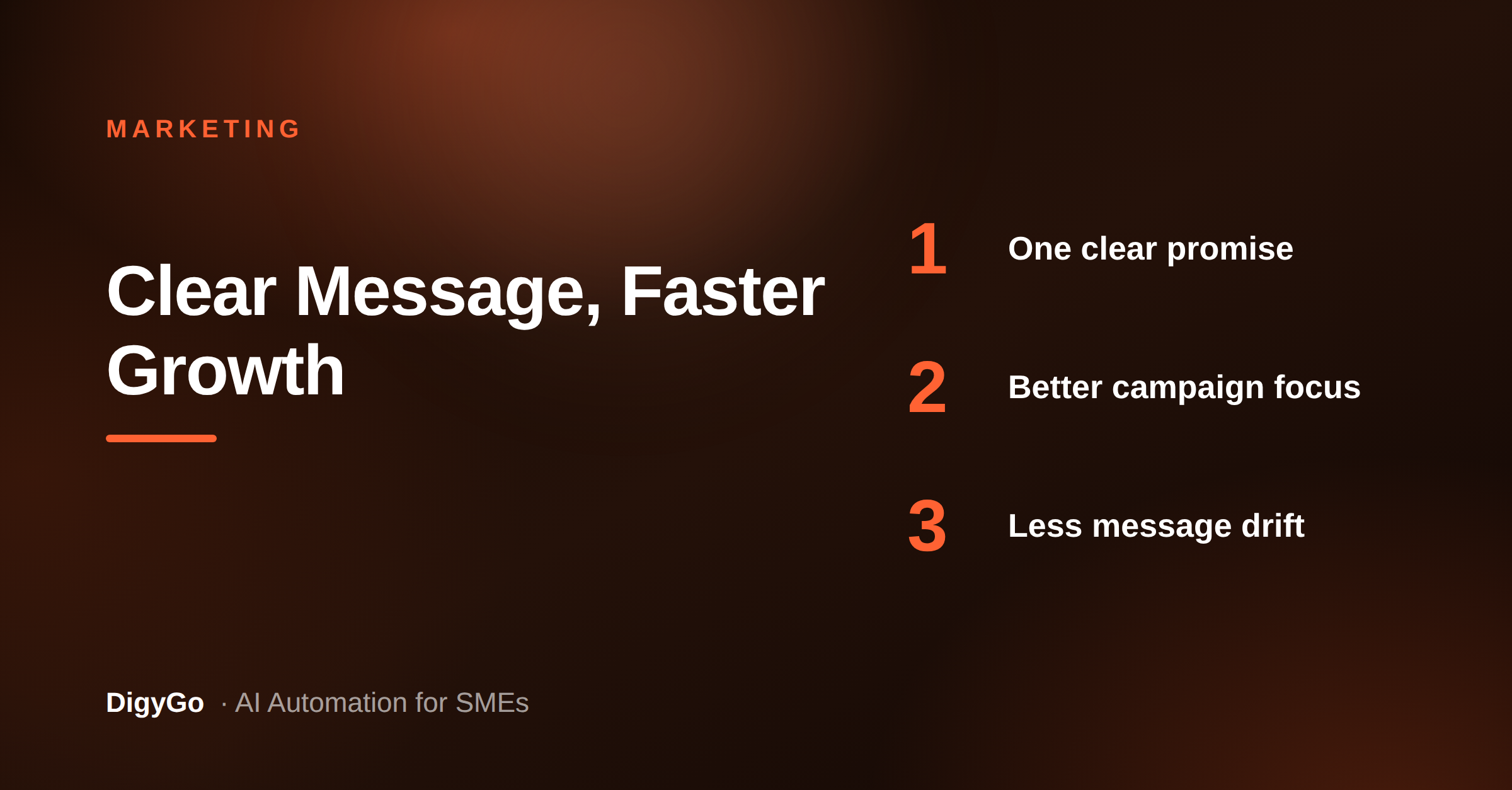
Most SME marketing looks inconsistent for one simple reason: the business is trying to say too many things at once. A clear positioning statement fixes that. It gives your team one shared answer to three questions — who you help, what problem you solve, and why you are the better choice.
A clear positioning statement helps SMEs keep content, ads, and sales aligned so marketing becomes easier to run and more effective over time.
Why positioning makes marketing easier
When positioning is fuzzy, every campaign has to do extra work. Ads attract the wrong clicks. Content drifts. Sales calls start with explanation instead of trust. A positioning statement removes that friction by turning your offer into a repeatable message your team can use everywhere.
- It gives content a single direction.
- It helps ads speak to the right buyer faster.
- It makes sales conversations shorter and clearer.
What a useful positioning statement should say
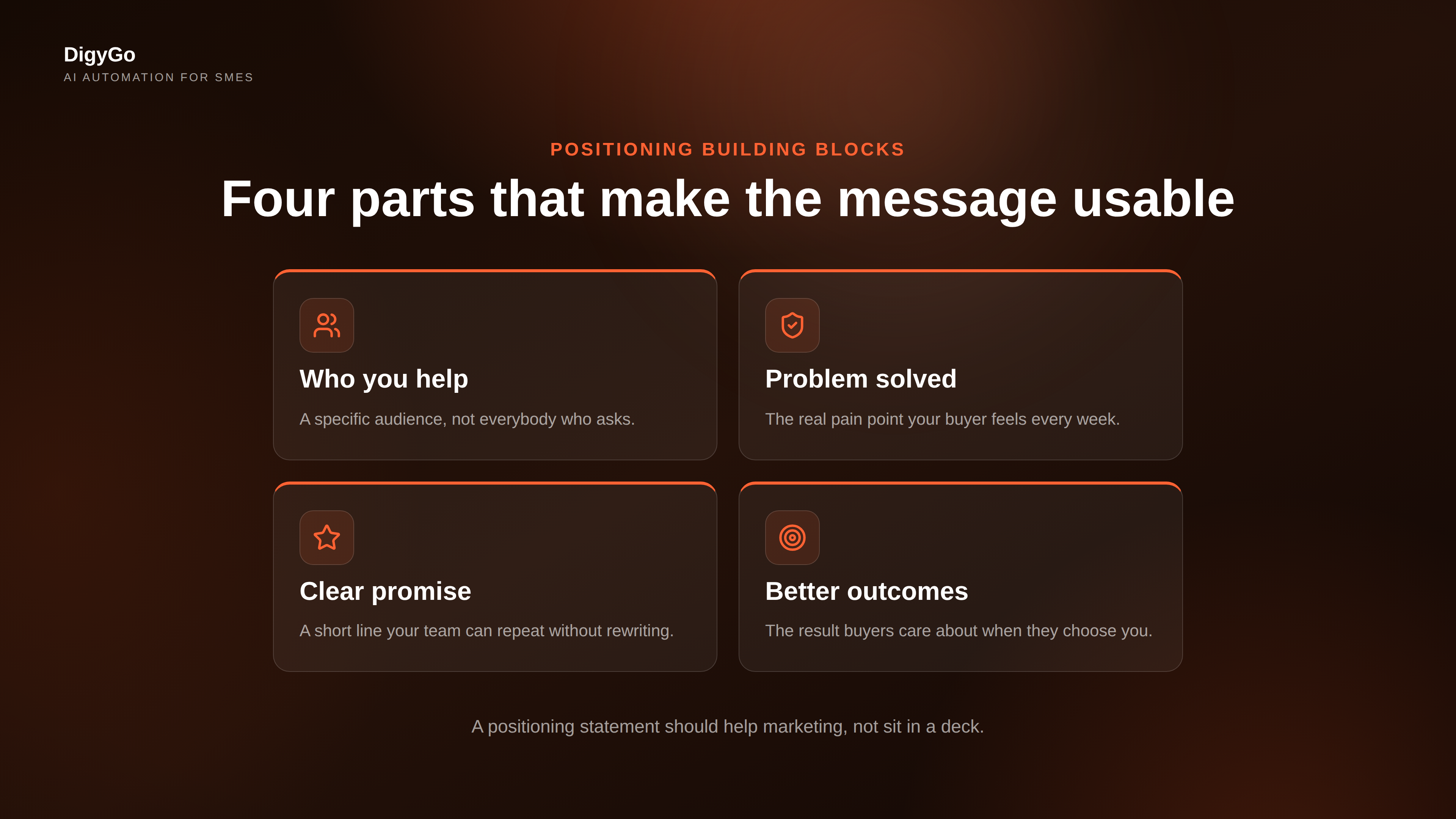
Keep it short enough that your team can remember it. A practical version usually answers four things: the audience, the pain point, the offer, and the outcome. That structure keeps the statement useful for marketing, not just internal branding slides.
Use this working formula
- We help a specific type of customer.
- Who struggle with a real, expensive problem.
- By providing a clear service or system.
- So they get a measurable result or business advantage.
For example, instead of saying you "do marketing," say something closer to: we help SMEs turn unclear offers into focused messaging that attracts better enquiries. That is easier to build content around, easier to explain in a pitch, and easier to test in ads.
How to use the statement across campaigns
Once the positioning is clear, the rest of your marketing becomes a set of decisions instead of a guessing game. Each campaign should pull the same thread, even if the format changes.
That consistency does not make marketing boring. It makes it believable. Buyers notice when the message feels familiar from one touchpoint to the next.
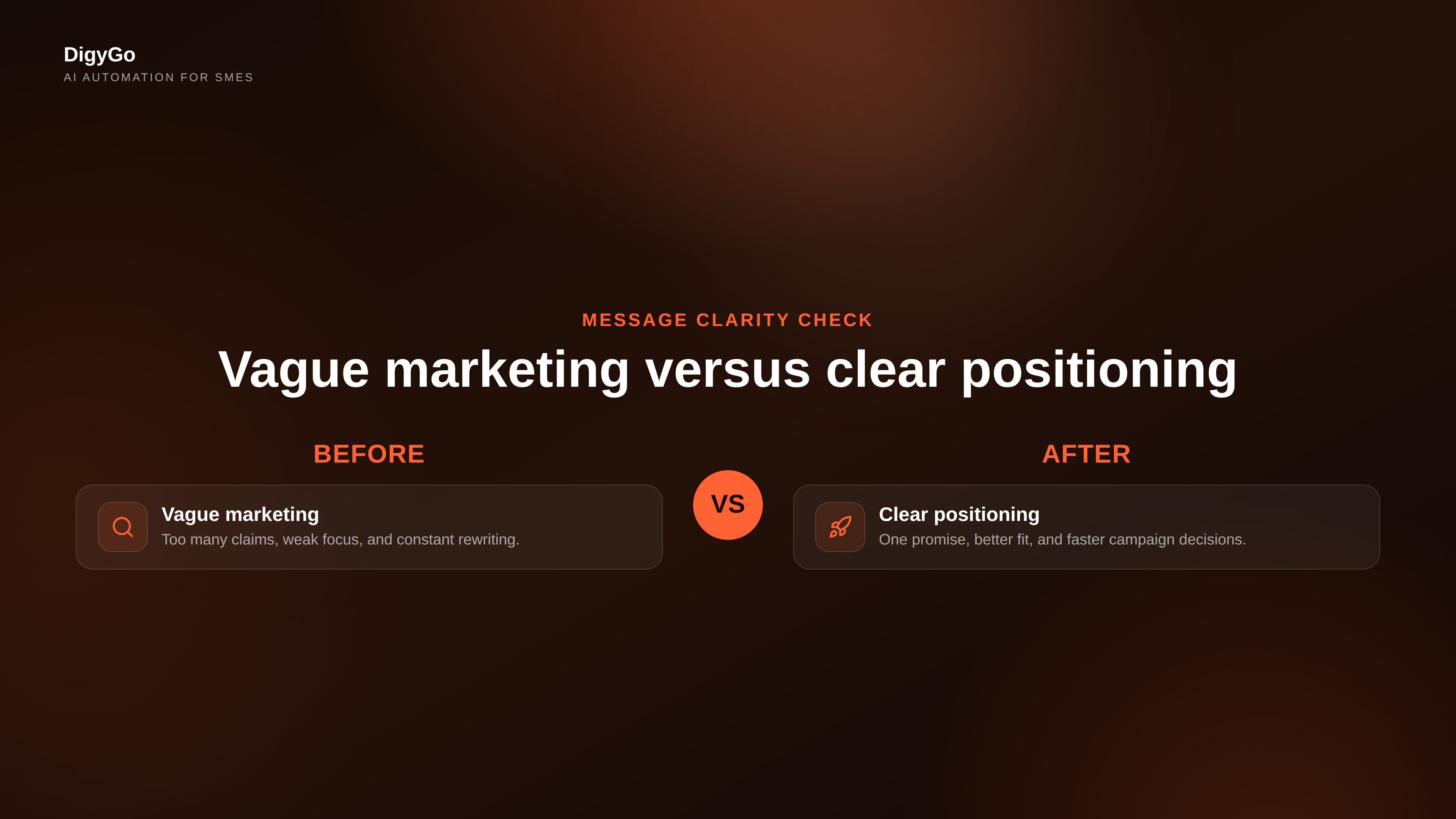
What happens when positioning is weak
Weak positioning usually shows up as marketing that feels busy but underperforms. The team posts often, but the posts do not connect. The ad budget rises, but lead quality stays uneven. Sales spends time explaining the basics instead of closing fit.
- More time spent rewriting the same message.
- More leads with weak intent.
- More pressure on sales to qualify from scratch.
That is why positioning is not a branding luxury. It is operational leverage for the whole revenue engine.
How SMEs can tighten positioning this week
You do not need a long workshop to improve this. Start with the words customers already use. Pull out the phrases they repeat when they explain why they chose you. Then compare those phrases against your homepage, your brochure, and your social content.
- List the three customer types you want more of.
- Write the main problem each group is trying to solve.
- Choose one core promise you can prove.
- Update the website and content to match that promise.
If your current message still sounds broad after that exercise, keep narrowing. Good positioning is specific enough to attract the right people and repel the wrong ones.
FAQ
Is a positioning statement the same as a slogan?
No. A slogan is often catchy and public-facing. A positioning statement is a working tool that helps your team decide what to say and what to leave out.
How long should it be?
Usually one or two sentences is enough. If it needs a paragraph, it is probably trying to do too many jobs.
Can small businesses really use this?
Yes — especially small businesses. The smaller the team, the more valuable a shared message becomes because it reduces rework across marketing and sales.
Talk to DigyGo about tightening your positioning and making your marketing easier to run.