When a promising deal starts wobbling, the team often wastes time hunting for the right answer, the right proof, or the right next step. A one-page close plan fixes that. It gives sales a clear path for handling objections, keeping the conversation moving, and closing the deal without falling back on discounting.
A practical sales playbook for SMEs on using one page to handle objections, keep follow-up consistent, and move the right deals forward faster.
Why a close plan works when deals stall
Most deals do not die because the prospect says no immediately. They slow down because the buyer wants clarity, the salesperson is unsure what to say next, and the follow-up becomes inconsistent. A close plan reduces that friction by putting the offer, proof, objections, and next actions in one place.
For SMEs, that matters because the sales team rarely has the luxury of long deal cycles or endless internal meetings. If the answer is not obvious, the lead cools off. A simple plan keeps the team aligned on the same story so the buyer hears confidence instead of hesitation.
- It shortens response time on common objections.
- It keeps the offer position consistent across the team.
- It helps sales move from explaining to closing.
What belongs on the one-page close plan
The goal is not to create a long sales playbook. The goal is to create a practical sheet that a rep can open in seconds before a call or after a buyer pushes back.
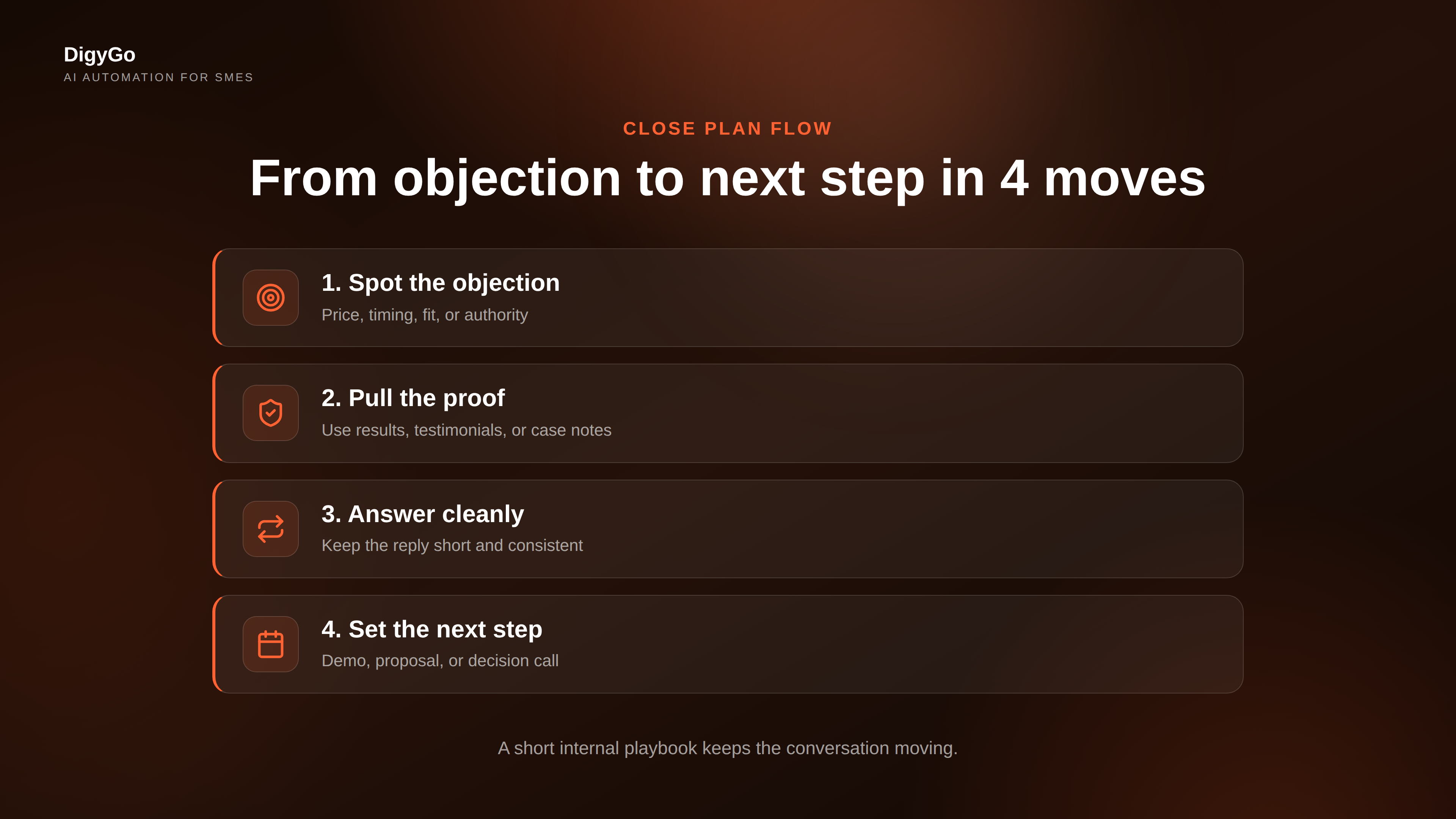
Start with the offer itself, then add the proof that supports it, the top objections you hear, and the exact next step you want the buyer to take. If the team keeps winning and losing on the same five questions, those are the questions the page should answer first.
The four blocks that matter most
- Offer summary: one short explanation of what you sell and who it is for.
- Proof points: results, testimonials, case snippets, or operational wins.
- Objection answers: short replies for price, timing, fit, and authority.
- Close action: demo, proposal review, trial, deposit, or next meeting.
How it helps with price, timing, and fit objections
Good objection handling is not about sounding clever. It is about staying useful. A close plan gives the rep a cleaner path: acknowledge the concern, answer it with proof, and bring the buyer back to the business outcome.
That approach works better than arguing. It also makes the team more consistent. The prospect hears the same logic from every rep, which builds trust and prevents mixed messages.
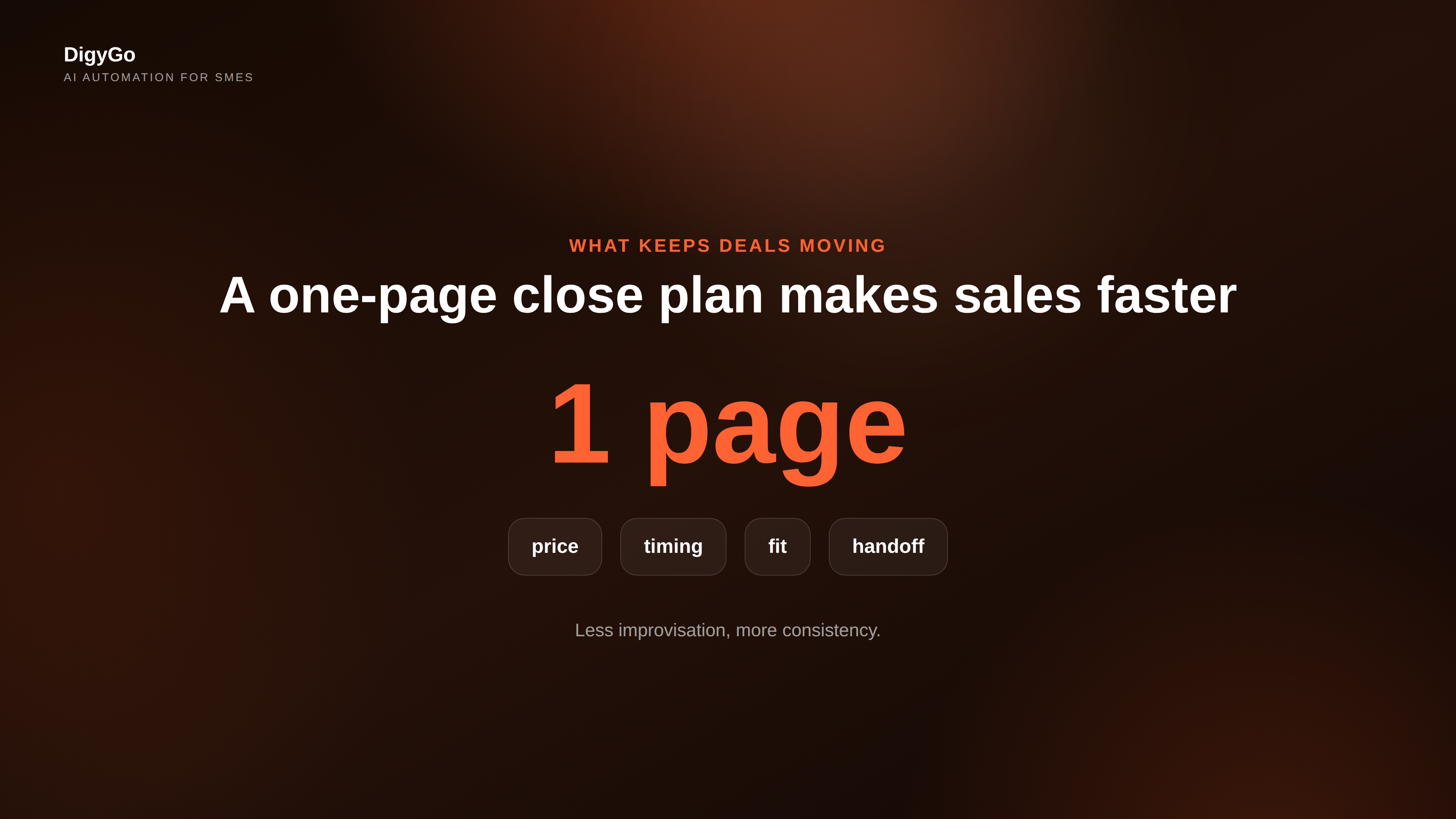
- Price: explain the cost in relation to the result, not just the monthly fee.
- Timing: show what happens if the buyer waits another month.
- Fit: narrow the use case so the buyer can see themselves in the offer.
- Authority: give the buyer a clean summary they can share internally.
How the sales team should use it every day
The best close plans are used before calls, not after losses. Reps should open the page before a follow-up, update it after a lost deal, and review it in team meetings so the playbook improves over time.
When the plan is living and visible, the team stops improvising on every deal. That creates faster answers, cleaner handoffs, and better conversion on the right opportunities.
Simple habit: after each discovery call, note the strongest objection, the best proof used, and the next action. Over time, the one-page plan becomes a sharper sales asset than a long deck nobody reads.
FAQ
Is a close plan the same as a proposal?
No. A proposal is usually the formal commercial document. A close plan is the internal sales guide that helps the team answer objections and choose the right next step.
Should every sales rep use the same plan?
Yes, with room for deal-specific notes. The core answers should be consistent so the buyer gets a clear story every time.
Does this replace objection handling training?
No. It supports training by giving reps a practical reference they can use during real conversations.
Want DigyGo to build a sales system that helps your team close faster? Talk to us.