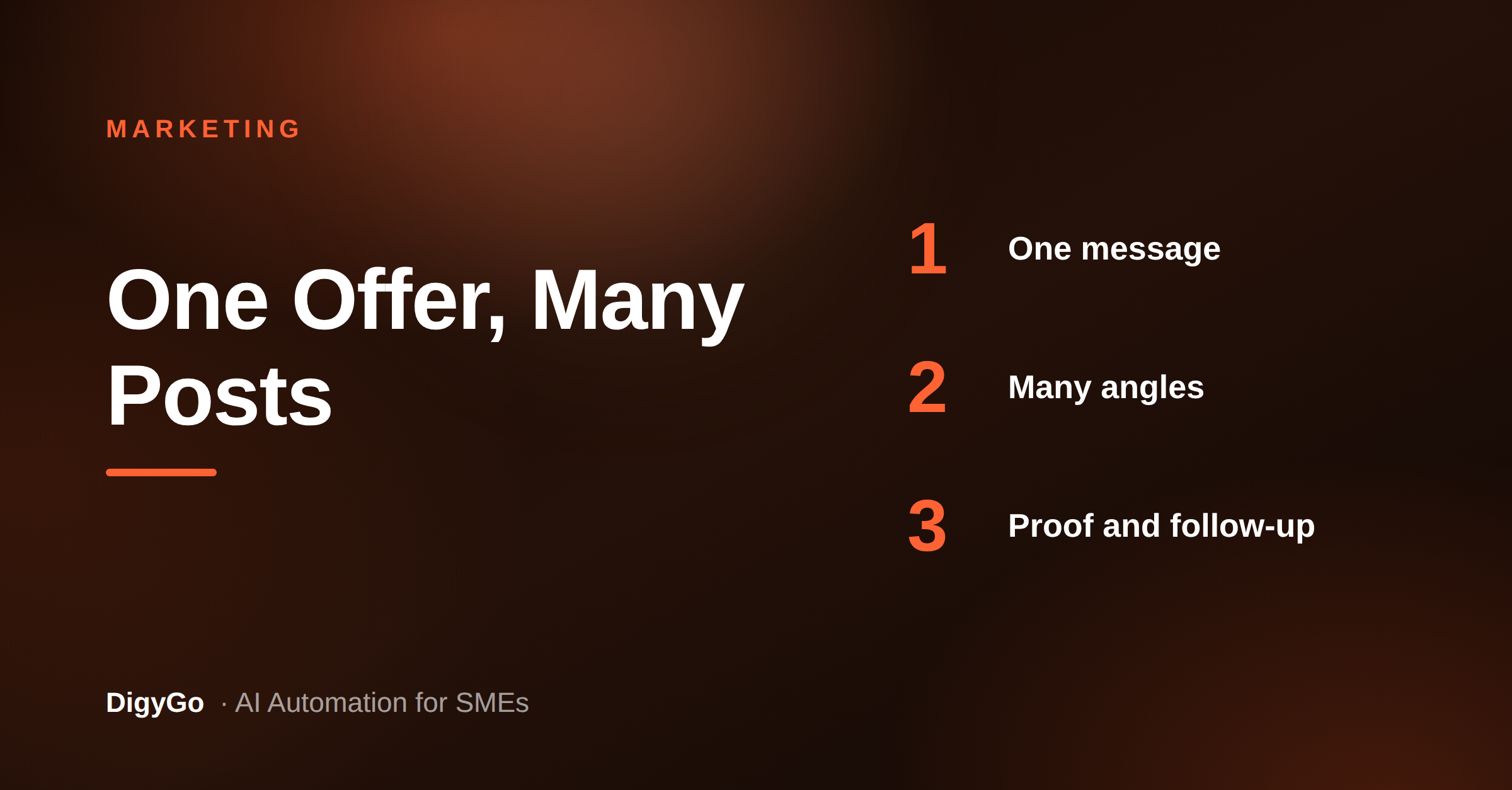
Most SMEs do not need more ideas. They need a better way to stretch one good offer into enough useful content to stay visible for a month. When the offer is clear, the content becomes easier: one message, many angles, less wasted effort.
A practical marketing system for SMEs: use one strong offer to create a month of posts, proof points, and follow-up content without sounding repetitive.
Key takeaways
- One offer gives your marketing a clear message to repeat.
- Proof, objections, and outcomes are enough to fill a month of posts.
- Content works better when it supports one buying decision at a time.
Why one offer works better than random content
Random posting usually fails because every post asks the audience to learn something new before they trust you. A single offer creates a repeatable story. You can explain the problem, show the result, answer objections, and share proof without changing the core message.
That matters for SMEs because time is limited. A founder or small marketing team can only create so much content each week. If every post starts from zero, the work feels heavy and the message gets blurry. If the offer stays fixed, the angles multiply naturally.
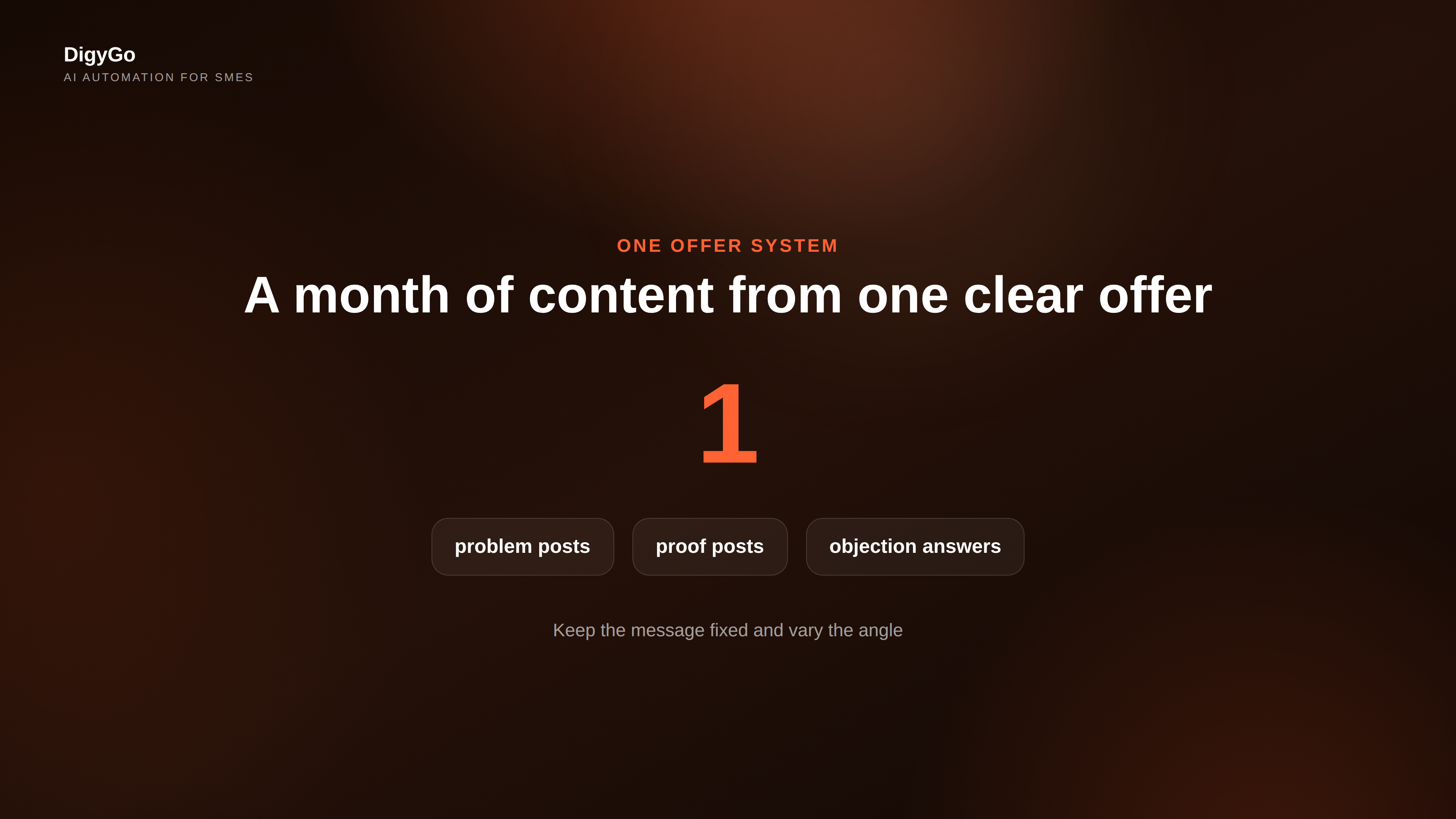
Build a content spine before you write posts
Think of the offer as the spine and the posts as the ribs. The spine is simple: who the offer is for, what problem it solves, and why the outcome matters. Once that is clear, you can create supporting posts that all point back to the same buying decision.
- Problem posts: explain the pain your buyer already feels.
- Process posts: show how your approach works in plain language.
- Proof posts: share results, examples, and customer situations.
- Objection posts: answer doubts before the sales call.
- Outcome posts: paint the before-and-after picture.
This structure keeps your content from drifting. Instead of chasing trends, you keep returning to the same commercial story from a different angle.
Example: one offer, five post angles
If your offer is AI lead follow-up, a month of content can easily cover missed calls, slow replies, hot leads going cold, simple automation, and what happens after the first response. The offer does not change. The perspective does.
Turn proof into posts, not just testimonials
Proof is the easiest content to overlook. Most businesses treat it as a final sales asset and leave it on the website. That is a mistake. Proof can become content in its own right.
A customer result can be broken into a few useful posts: the problem before the fix, what changed, why the result happened, and what a similar business should do next. One strong result can fuel a carousel, a short article, a case study summary, and a follow-up email.
Use these proof formats whenever possible:
- A before-and-after story
- A short number with context
- A customer objection you solved
- A simple lesson from the implementation
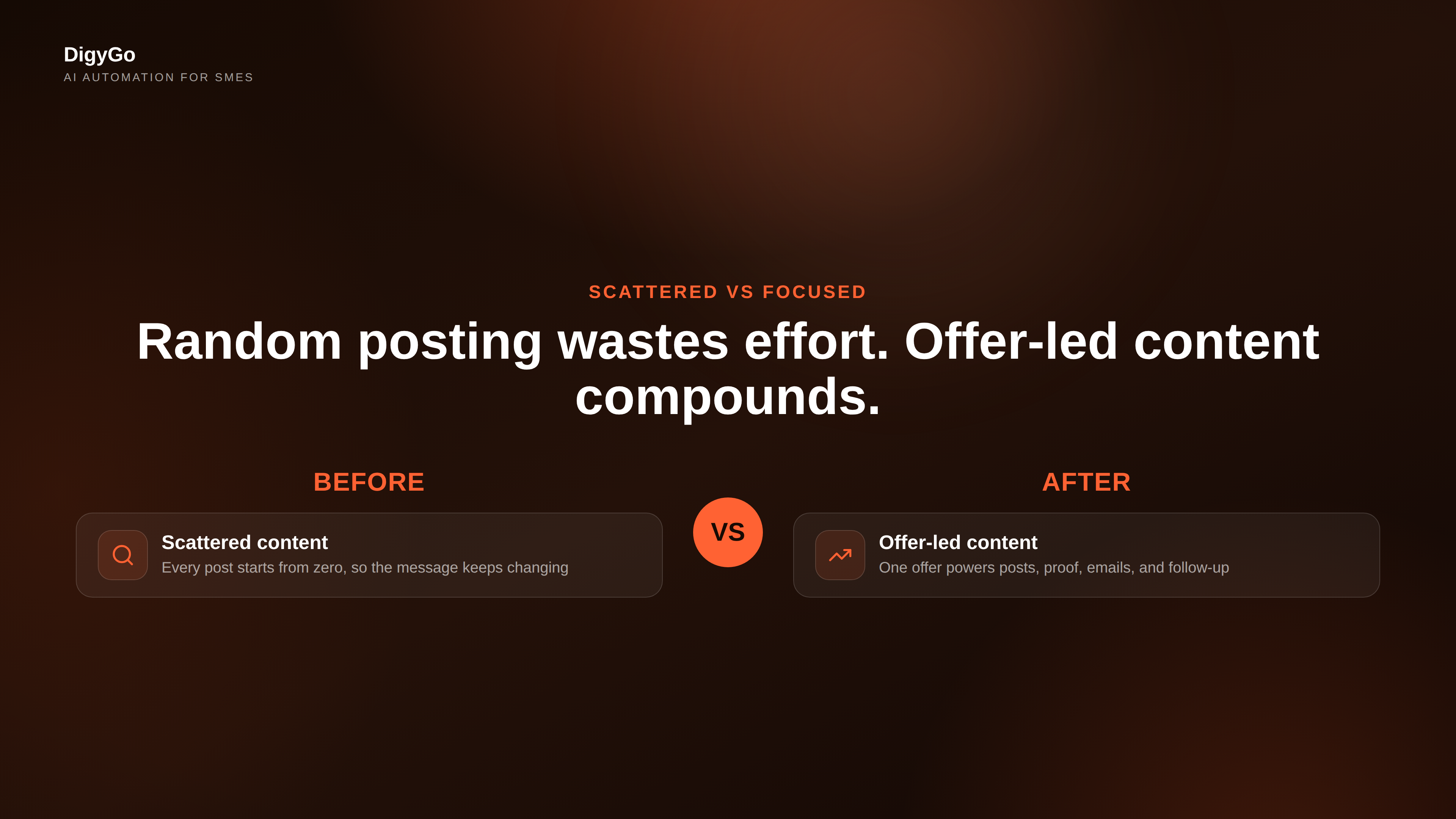
Map a 30-day content plan from one offer
A practical 30-day plan does not need 30 different ideas. It needs a sequence that repeats the message in a smart order. Start with attention, move to understanding, then build trust, and end with a direct next step.
- Week 1: explain the problem and the cost of doing nothing.
- Week 2: break down the method and show how it works.
- Week 3: share proof, examples, and lessons learned.
- Week 4: answer objections and invite a conversation.
If you want the month to feel coherent, keep the same core message, the same buyer, and the same outcome across every post. The formats can change, but the story should not.
FAQ
How many content pieces can one offer support?
Usually far more than teams expect. A single offer can support problem posts, proof posts, process posts, objection posts, and follow-up emails if you keep the message focused.
What if the offer is too broad?
Then narrow the audience or the outcome first. The best content systems are built on a sharp promise, not a wide one.
Can this work for service businesses?
Yes. In fact, service businesses often benefit the most because one clear offer can be reused across articles, social posts, sales follow-up, and proposal language.
Talk to DigyGo about building a content system that keeps one offer working harder.