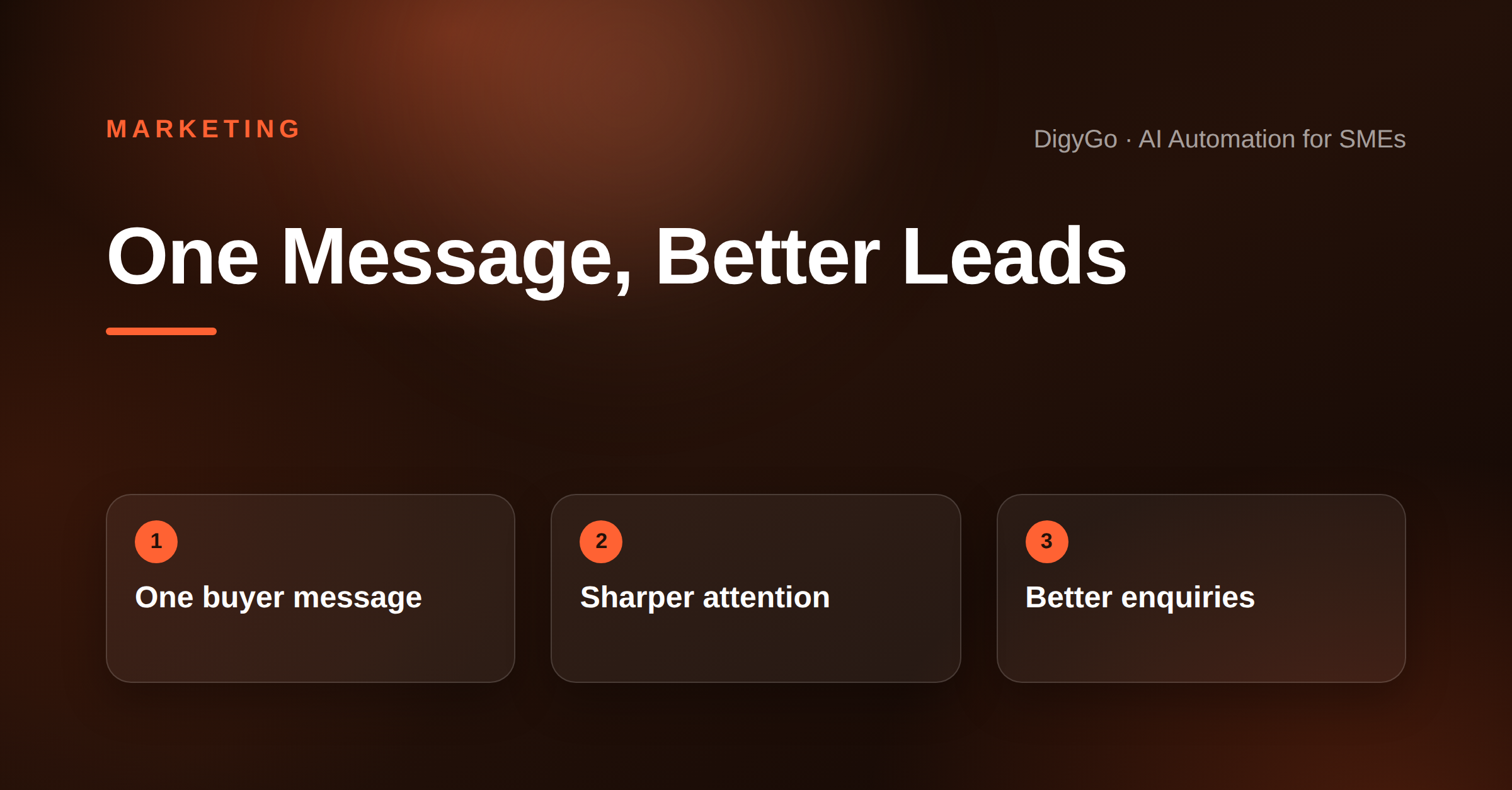
Most SME marketing fails for a simple reason: it speaks to too many people at once. The result is polite attention, low trust, and enquiries that are harder to close than they should be.
SMEs do not need louder marketing; they need one clear buyer message that makes the right people pay attention, trust the offer, and respond faster.
If you want better demand generation, start with one buyer message. A clear message does not make your brand smaller; it makes your marketing easier to notice, easier to remember, and easier to act on.
Why one buyer message works better than broad positioning
When a business tries to sound useful to everyone, it usually becomes too vague for anyone to care. The strongest SME brands usually do the opposite: they choose a clear buyer, a clear problem, and a clear outcome.
- Specific beats general. The right prospect should feel the message was written for them.
- Trust grows faster. Clear positioning reduces the mental effort needed to understand what you do.
- Content becomes easier. One message can power posts, ads, emails, sales calls, and landing pages.
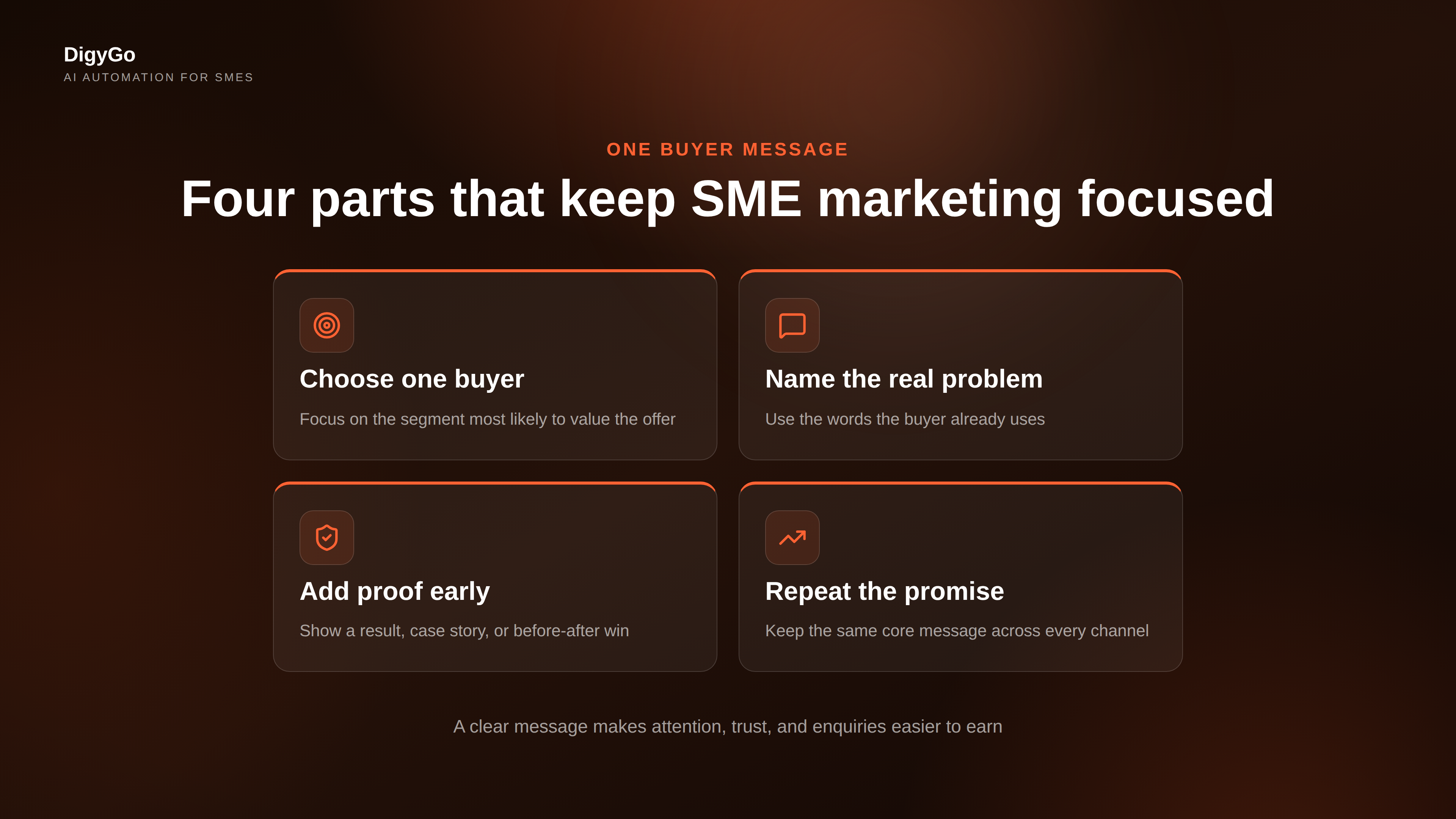
The message structure that keeps marketing focused
A practical buyer message does not need clever copy. It needs four parts working together: who it is for, what problem it solves, why it matters now, and what result the buyer can expect.
| Message part | What to decide | Why it matters |
|---|---|---|
| Buyer | Which customer you want more of | Stops the message from getting diluted |
| Problem | The pain they already feel | Makes the message relevant fast |
| Outcome | The result they want | Shows why the offer is worth attention |
| Proof | Evidence you can deliver | Turns interest into belief |
If your marketing feels expensive, the issue may not be ad spend. It may be that the message is too broad to earn attention efficiently.
How to turn one message into daily marketing output
Once the buyer message is clear, it becomes much easier to produce content that sounds consistent across channels. Instead of inventing a new angle every day, you create one central idea and express it in different formats.
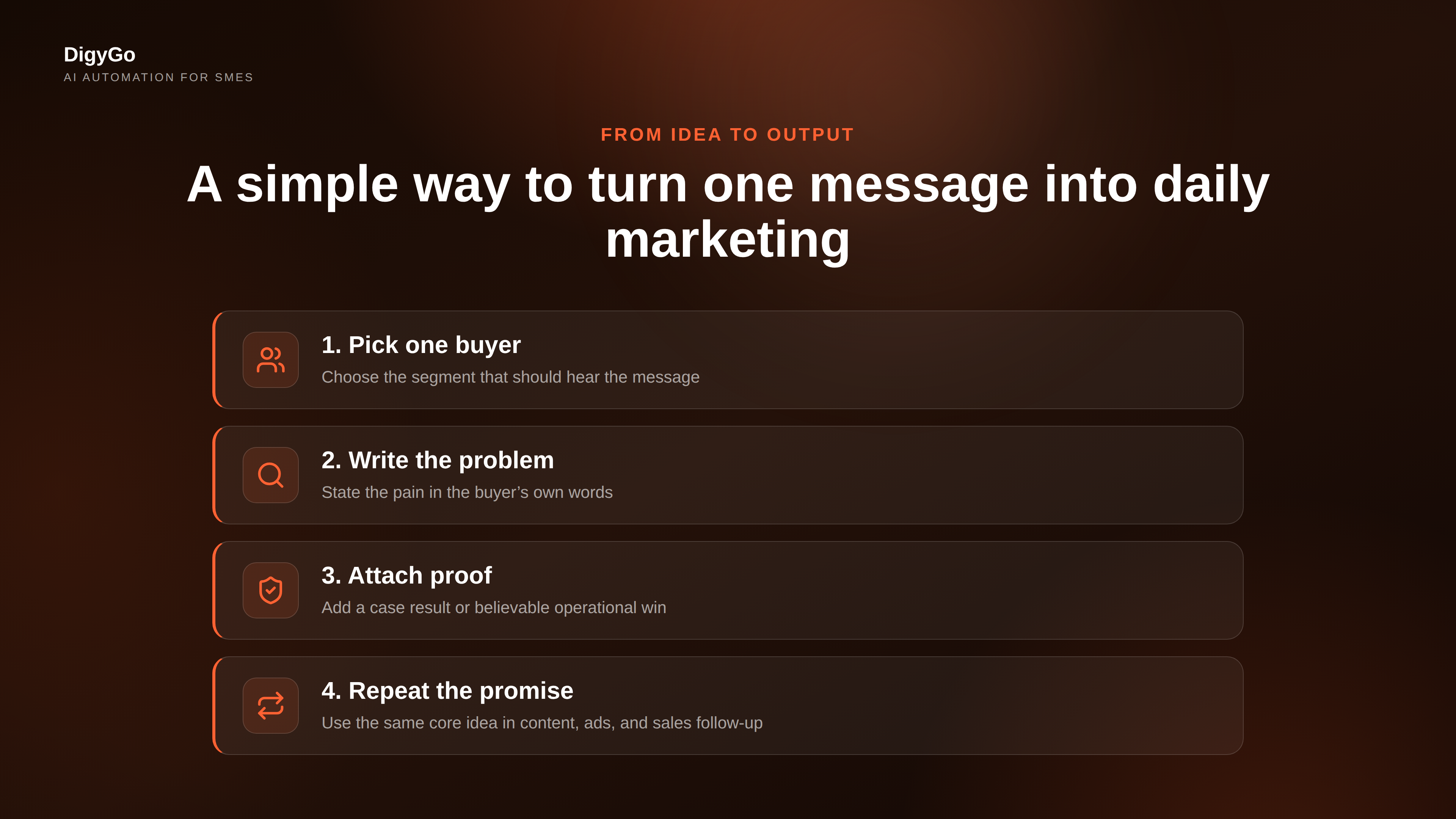
- Pick one buyer. Choose the segment that is most likely to value your offer and act on it.
- Write the problem in their words. Use the phrases they already use when they describe the pain.
- Attach proof. Add a case result, a before-after story, or a believable operational win.
- Repeat the same promise. Use the same core message across content, ads, sales follow-up, and your website.
That repetition is not boring. It is what creates recall. SMEs often need more consistency, not more ideas. When the message is stable, the audience starts recognising the brand faster.
Common mistakes that make SME marketing noisy
Many founders try to sound bigger, broader, or more impressive than they are. Unfortunately, that often creates the opposite effect.
- Writing for industries instead of buying situations
- Using feature-heavy language before the customer understands the value
- Changing the promise every time a new post is written
- Posting without a clear link to the same business outcome
What better looks like
Better marketing sounds like a repeatable point of view. It tells the right buyer, "This business understands my problem, has a way to solve it, and can prove it." That is the kind of message that earns stronger attention and better enquiries.
Final thought
SME marketing gets easier when you stop trying to speak to every possible buyer. One strong buyer message gives your content, ads, website, and follow-up the same centre of gravity — and that usually leads to better attention, better trust, and better leads.
Want help turning your marketing message into a clearer lead engine? Talk to DigyGo.