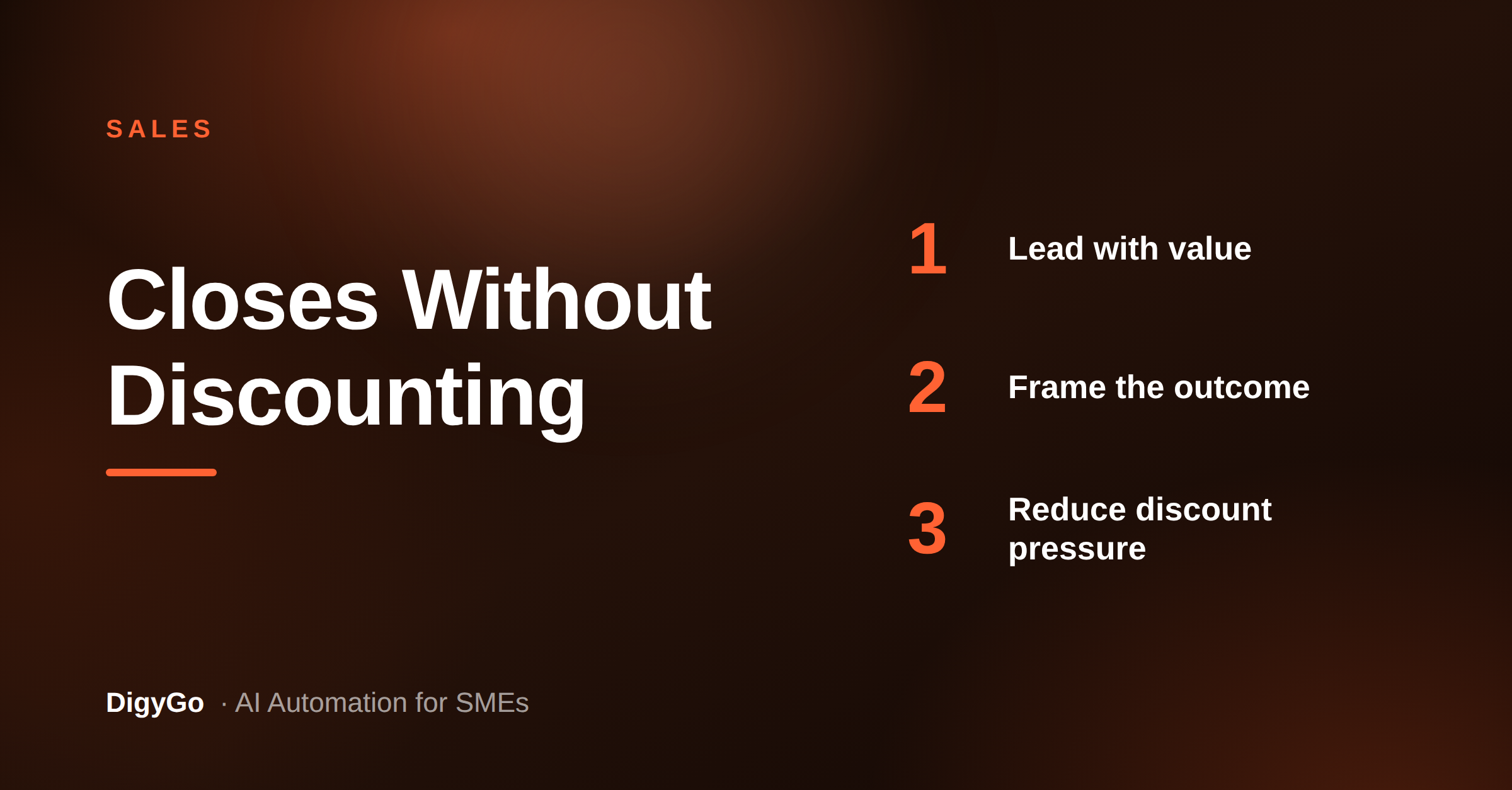
Most SMEs do not lose deals because the product is weak. They lose because the offer feels unclear, the value is not framed tightly, and the buyer uses price as the easiest excuse to pause. A stronger offer structure fixes that before the discount conversation even starts.
A practical sales playbook for SMEs on shaping the offer, framing value, and reducing discount pressure so the right buyers say yes faster.
Why offer structure matters more than the discount itself
When a buyer hears a vague pitch, they start filling in the blanks on their own. That is where price objections grow. But when the offer is specific, outcome-led, and easy to compare, the conversation shifts from “How much?” to “Does this solve my problem?”
For SME founders, that shift is important. It protects margin, shortens sales cycles, and helps your team spend more time on serious buyers instead of haggling with people who were never a fit.
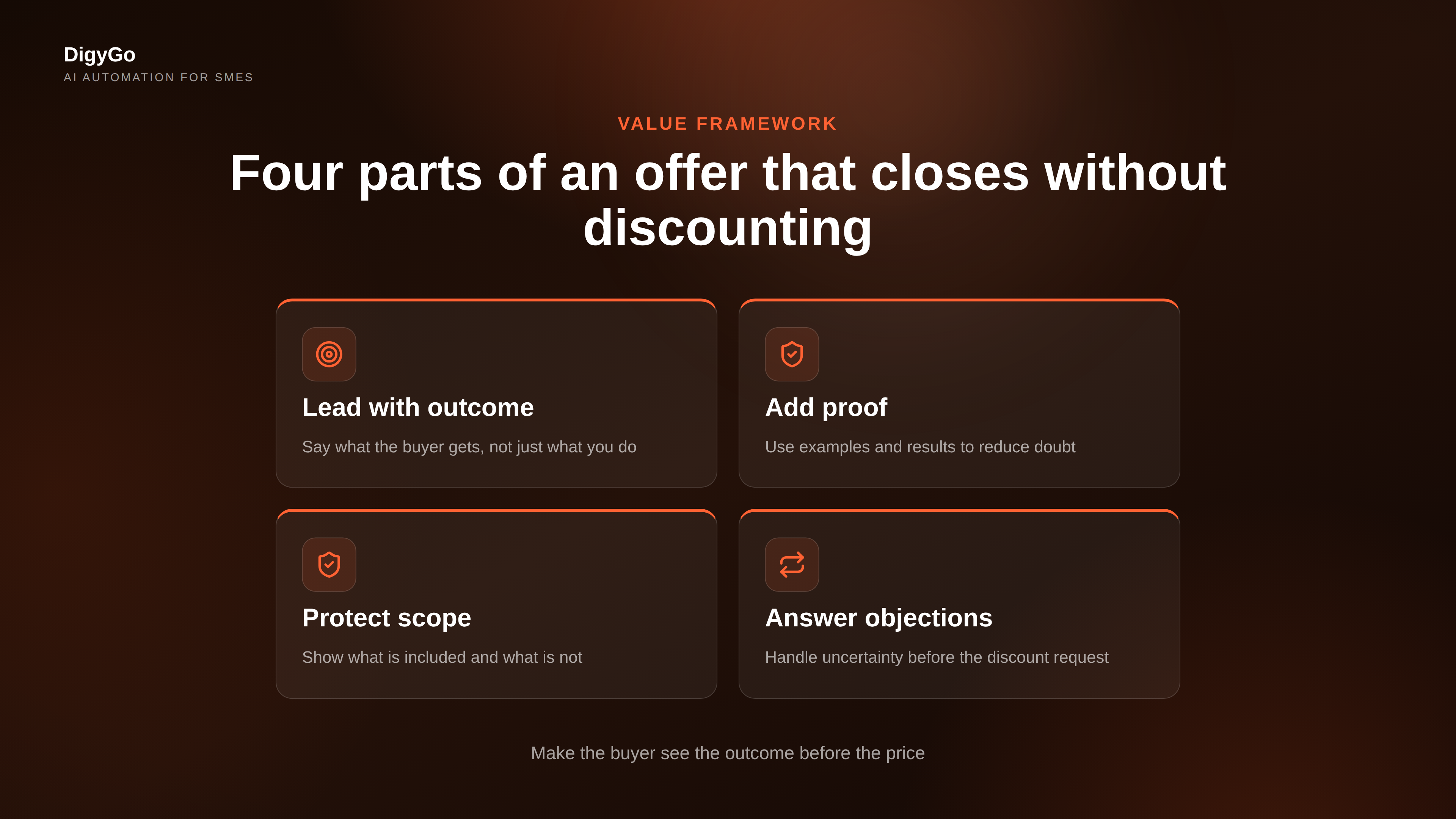
- Clear offer: Buyers understand what they are getting.
- Proof first: Evidence reduces hesitation before price comes up.
- Better fit: Strong positioning filters out weak leads.
Build an offer around the outcome, not the task list
One of the fastest ways to attract discount requests is to sell a long list of activities. Buyers compare activity lists across vendors and immediately look for the cheapest option. Instead, frame the offer around the result they want and the risk they want removed.
For example, do not sell “weekly follow-up and lead handling.” Sell “a lead response system that keeps enquiries warm until they book.” That wording makes the outcome obvious and makes the price easier to justify.
Use three layers in every sales offer
- Outcome: What the buyer gets.
- Mechanism: How you deliver it.
- Proof: Why the buyer should trust it.
When all three are present, the buyer has less room to reduce your work to a commodity. That is how you protect price without becoming defensive.
Handle price pressure before it turns into a discount request
Most discount requests are not really about money. They are about uncertainty. The buyer is asking, “Can I trust this?” or “Will this really work for me?” Your job is to answer those concerns before they become objections.
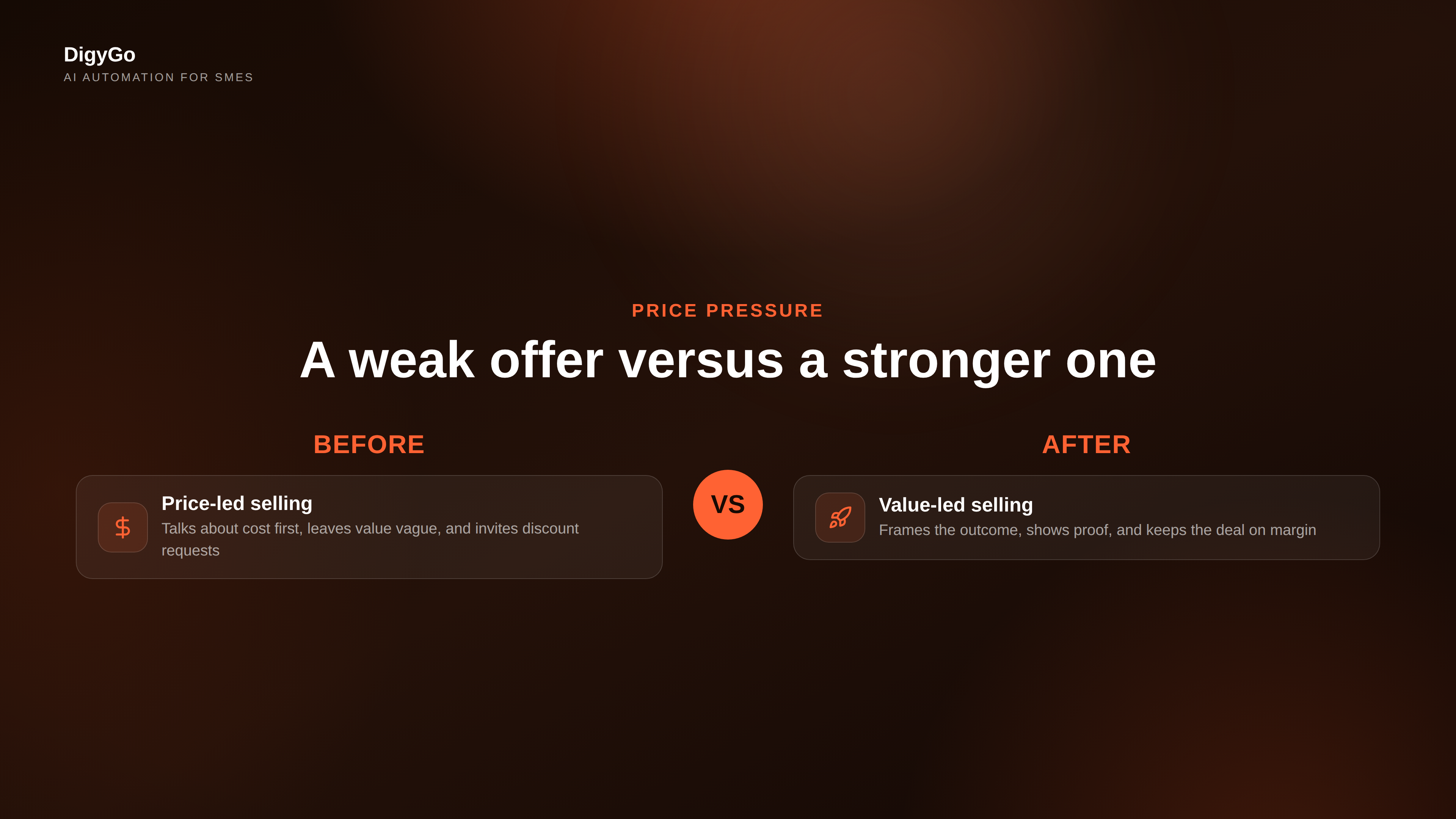
Use proof blocks, before-and-after examples, and clear scope boundaries. When a buyer sees what is included, what is not included, and what result the offer is designed to create, they stop assuming the price is arbitrary.
| Weak offer | Strong offer |
|---|---|
| Feature-heavy and vague | Outcome-led and specific |
| Price discussed first | Value discussed first |
| No proof or examples | Proof blocks and case context |
| Discounts to save the deal | Scope is clarified instead |
Package value clearly so the buyer can compare properly
Many SMEs lose margin because their offer is hard to evaluate. They hide the value inside scattered explanations instead of making it visible. A better structure makes the decision easier by showing the buyer exactly what they are paying for.
Try packaging your offer into a simple three-part format:
- Core deliverable: the main outcome.
- Support layer: onboarding, follow-up, and guidance.
- Assurance layer: timelines, reporting, and proof.
This gives your sales team a clean way to explain the price without sounding apologetic. It also helps the buyer compare your offer on value instead of just comparing the headline number.
Questions to ask when a buyer pushes back on price
Before you discount, ask questions that reveal whether the issue is budget, timing, trust, or scope. The goal is to understand the real blocker and respond to that specifically.
- What part of the offer feels unclear?
- Which outcome matters most to you right now?
- Are you comparing this with a cheaper option, or with doing nothing?
- If we remove or adjust scope, would that help more than lowering price?
These questions keep the conversation professional and useful. They also help you protect the deal without giving away margin too early.
FAQ
Should I ever discount?
Sometimes, yes, but only when the scope is reduced or the deal structure changes. Discounting without changing the offer usually trains buyers to wait for a lower number.
What if competitors are cheaper?
Do not chase every cheaper competitor. Make the value clearer, narrow the scope, and show why your process creates a better business result. The cheapest option is not always the best fit.
How do I know my offer is too generic?
If your prospects ask for price before they ask about results, your offer may be too broad. Tighten the outcome, add proof, and make the buying decision easier to understand.
Talk to DigyGo about building a sales offer that closes without discount pressure