Every SME wants more enquiries — but when those enquiries arrive through WhatsApp, Instagram, the website form, Facebook, phone calls, and walk-ins simultaneously, some of them inevitably disappear into the gaps between channels. The fix is not a bigger team or a more complicated CRM. It is a multi-channel lead capture system that pulls every inbound message into one visible place before it can slip away.
A practical guide for SMEs on building a multi-channel lead capture system that pulls WhatsApp messages, web forms, social DMs, missed calls and walk-in enquiries into one shared inbox — so no lead gets lost because it arrived through a channel nobody was watching.
What you will learn
- Why scattered enquiry channels quietly cost you leads you already paid for
- How to map every channel where a lead can reach you today
- A simple automation flow that captures WhatsApp, web form, social DM, and call-back requests into one inbox
- How enrichment and status tracking make each captured lead immediately actionable
The Real Cost of Scattered Channels
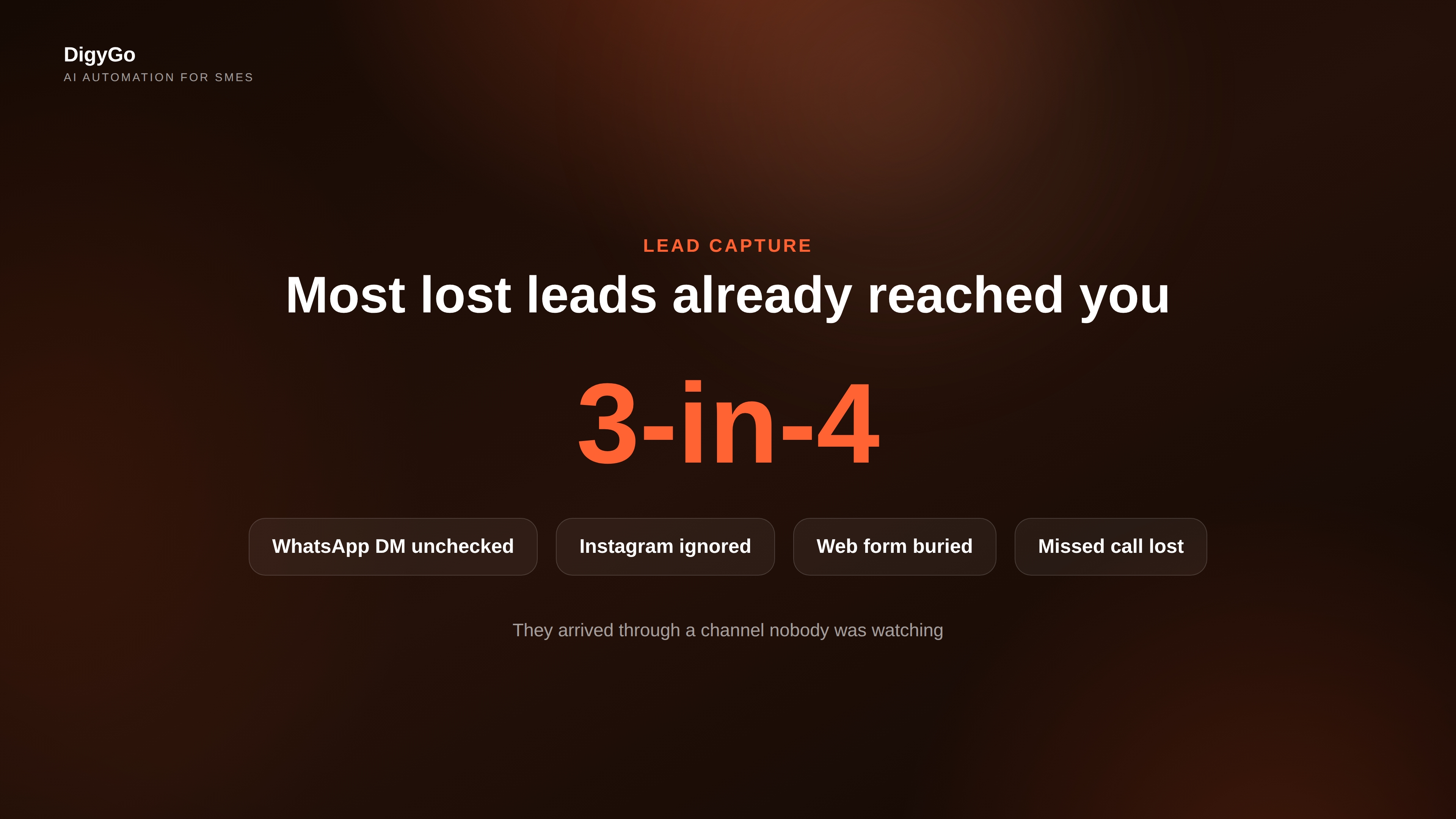
Most SME founders can name four or five places where enquiries currently arrive. WhatsApp business. The website contact form. Instagram DMs. An occasional Facebook message. A missed call that gets a text back. And someone at the front desk who writes things on a notepad.
None of these channels talk to each other. A lead that sends a WhatsApp message in the morning, fills the website form at lunch, and calls in the afternoon looks like three separate people — none of whom get followed up properly because the team cannot see the full picture.
This is not a lack of effort. It is a structural problem. When channels are not unified, the default state is lost leads — not because they stopped being interested, but because nobody saw the message in time, or because the message arrived in a thread that nobody was assigned to watch that day.
Step 1: Map Every Enquiry Channel You Already Own
Before you build a capture system, you need a complete inventory of every place a lead can reach you. Most SME teams discover channels they forgot they had.
Common channels for Tamil Nadu SMEs
- WhatsApp Business — the most used channel. Messages arrive to one or two phones, and if that person is busy, the lead waits.
- Website contact form — typically lands in an email inbox that gets checked once a day, or worse, once a week.
- Instagram DMs — often checked by a junior team member who forwards screenshots when they remember.
- Phone calls — missed calls get a text-back or nothing at all.
- Google Business Profile messages — a growing channel that most SMEs check irregularly.
- Walk-in enquiries — written on paper and entered into the system later, if at all.
The goal of this mapping is not to feel overwhelmed. It is to see, for the first time, how many entry points your business already has — and how many of them operate without a capture guarantee.
Step 2: Centralise Every Channel Into One Inbox
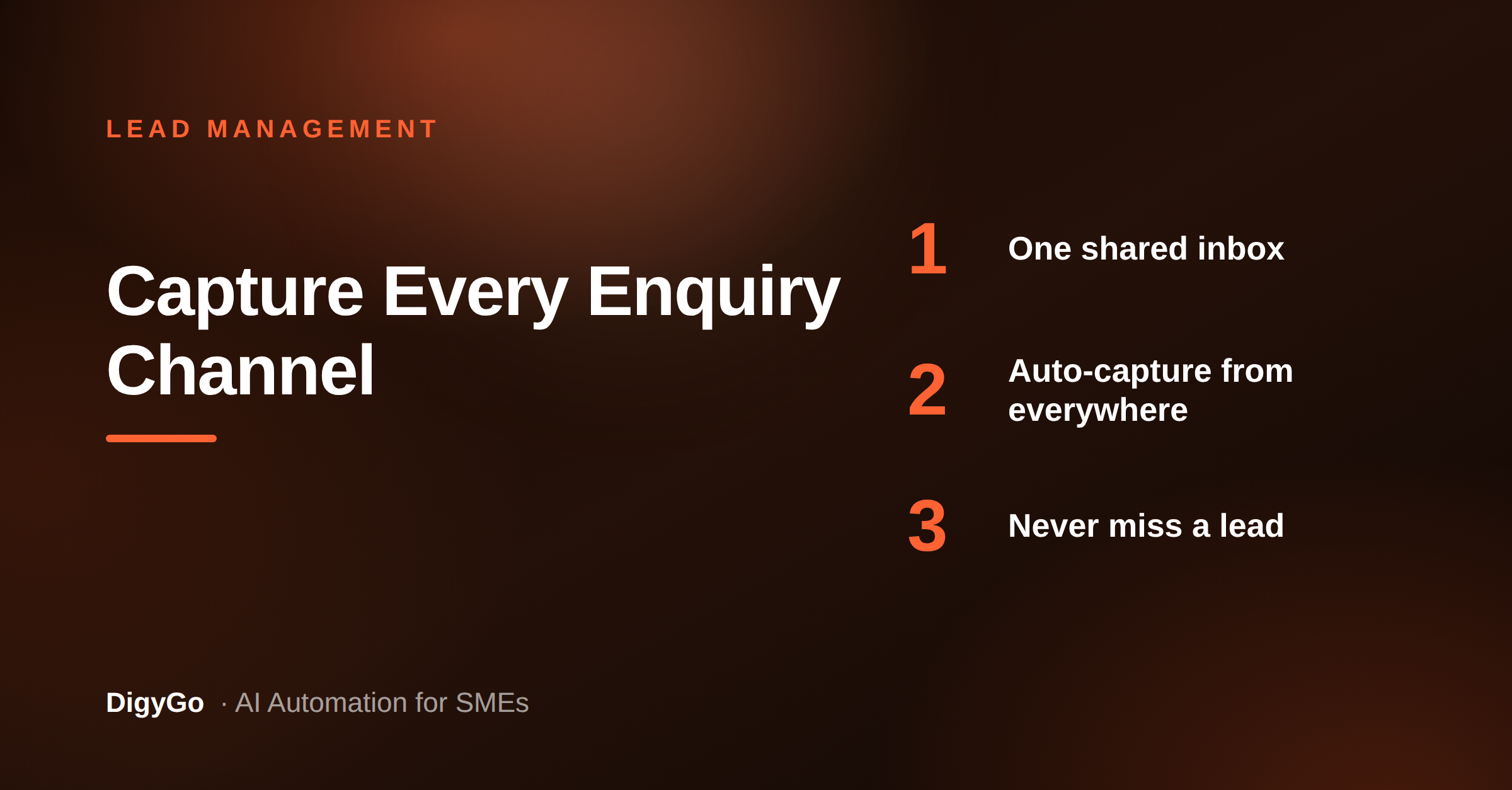
Once you know where leads arrive, the next step is routing every single channel into one shared inbox that your team monitors actively — not a personal WhatsApp number, not a rarely-checked email folder, not a paper pad. One place where every new enquiry lands, regardless of source.
This is where automation does the heavy lifting. You do not need your team to watch six different tabs or phones. You need a single lead inbox that:
- Captures WhatsApp messages — via the Business API or a connected inbox that mirrors WhatsApp conversations
- Ingests web form submissions — the form POST goes directly to the lead inbox, not to someone's personal Gmail
- Pulls social DMs — Instagram and Facebook messages forward into the same inbox via a lightweight integration
- Catches missed calls — the phone system sends a text-back link that captures the lead's details and opens a thread in the inbox
- Logs walk-in enquiries — a simple shared form that the front desk fills in sixty seconds, which creates a lead record instantly
The result: every single enquiry, from every source, appears as a unified lead record in one chronological feed. Nobody is forgotten because nobody arrived in an unchecked channel.
Step 3: Enrich Every Lead With Context Automatically
A captured lead is only useful if the team knows what to do with it. Enrichment is the layer that turns a raw message into an actionable lead brief — before the first reply goes out.
Automated enrichment happens in the moment the lead arrives:
- Source tag — the system stamps the channel (WhatsApp, Web, Instagram, Phone) so the team knows where this lead came from
- Intent extraction — if the lead mentioned a service, location, or timeline in their message, that context is pulled out and attached to the record
- History check — if this phone number or email has enquired before, the system flags the previous interaction so the team does not start from scratch
- Priority score — leads that match high-intent signals (specific service named, urgent language, budget mentioned) get a higher score so they appear first in the queue
Without enrichment, every lead looks the same. With it, the team can triage visually: high-scoring leads get a faster response, returning enquiries get continuity, and cold-fit leads get a nurturing sequence instead of an urgent callback that wastes everyone's time.
How a Unified Capture System Changes the Team's Day
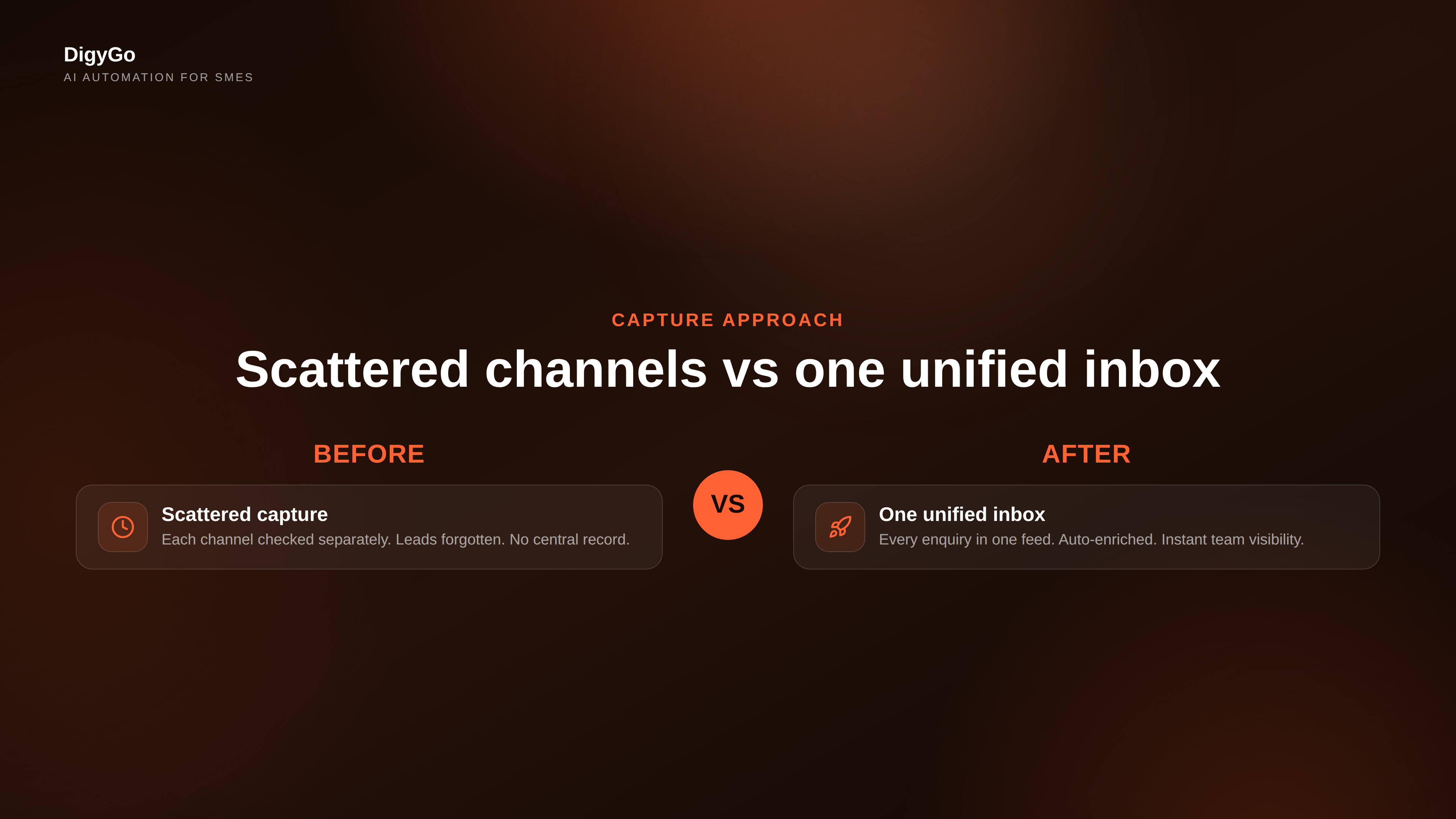
Here is what the morning looks like before vs after a multi-channel capture system:
Before: The owner checks WhatsApp — three messages from last night. Opens email — two web form submissions from yesterday. Asks the front desk — one walk-in was written on a post-it. Someone mentions an Instagram DM from two days ago that nobody replied to. Three different conversations in three different places. One lead already cooled off.
After: The team opens one shared inbox. Everything is there — WhatsApp messages, form fills, missed-call callbacks, Instagram DMs, walk-in logs — sorted by time and scored by priority. Each record shows the source, the key context, and whether this person has contacted the business before. The team replies to the top five in ten minutes. Every channel is covered in a single pass.
The change is not about working harder. It is about removing the structural scatter that makes lead loss the default outcome, not the exception.
Common Questions About Multi-Channel Lead Capture
Does this mean my team needs to watch the inbox all day?
Not necessarily. The inbox can be checked in two or three scheduled blocks per day. What matters is that every channel is covered in each block — not that WhatsApp has ten unread messages while the web form sits unseen. The system guarantees one pass covers everything.
What if a lead messages WhatsApp after hours?
An automated first reply can acknowledge the message, set expectations, and capture the lead's details so the record is ready for the team in the morning. The lead gets an instant response; the team gets a pre-enriched lead when they log in.
Is this expensive to set up?
For most SMEs, the cost is lower than hiring a person to watch scattered channels. The tools — shared inbox platforms, WhatsApp integrations, web form connectors — are available at modest monthly rates. The real investment is in mapping the channels and committing to the new workflow for two weeks until it becomes routine.
What about leads who already have a preferred channel?
The system does not replace their preferred channel. It feeds the same conversation into the shared inbox. The lead still messages WhatsApp the way they always have. The difference is that the WhatsApp message is now visible to the whole team, not just one person's phone.
Do I need a CRM first?
A CRM helps, but it is not a prerequisite. A lightweight shared inbox with channel integrations is enough to start. Capture first, organise later. Many SMEs move to a fuller CRM only after the capture habit is solid.
Start With One Channel, Then Expand
You do not need to unify every channel on day one. Pick the channel where you lose the most leads today — it is often the website form or social DMs — and route that into the shared inbox first. Once that capture is reliable, add the next channel. Within a few weeks, every lead arrives in one place.
The goal is not perfection from the start. It is to make sure that the next enquiry your business earns — through ads, referrals, or reputation — actually stays visible long enough for your team to act on it.
Stop losing leads to scattered channels. Talk to DigyGo about setting up a multi-channel lead capture flow for your business →