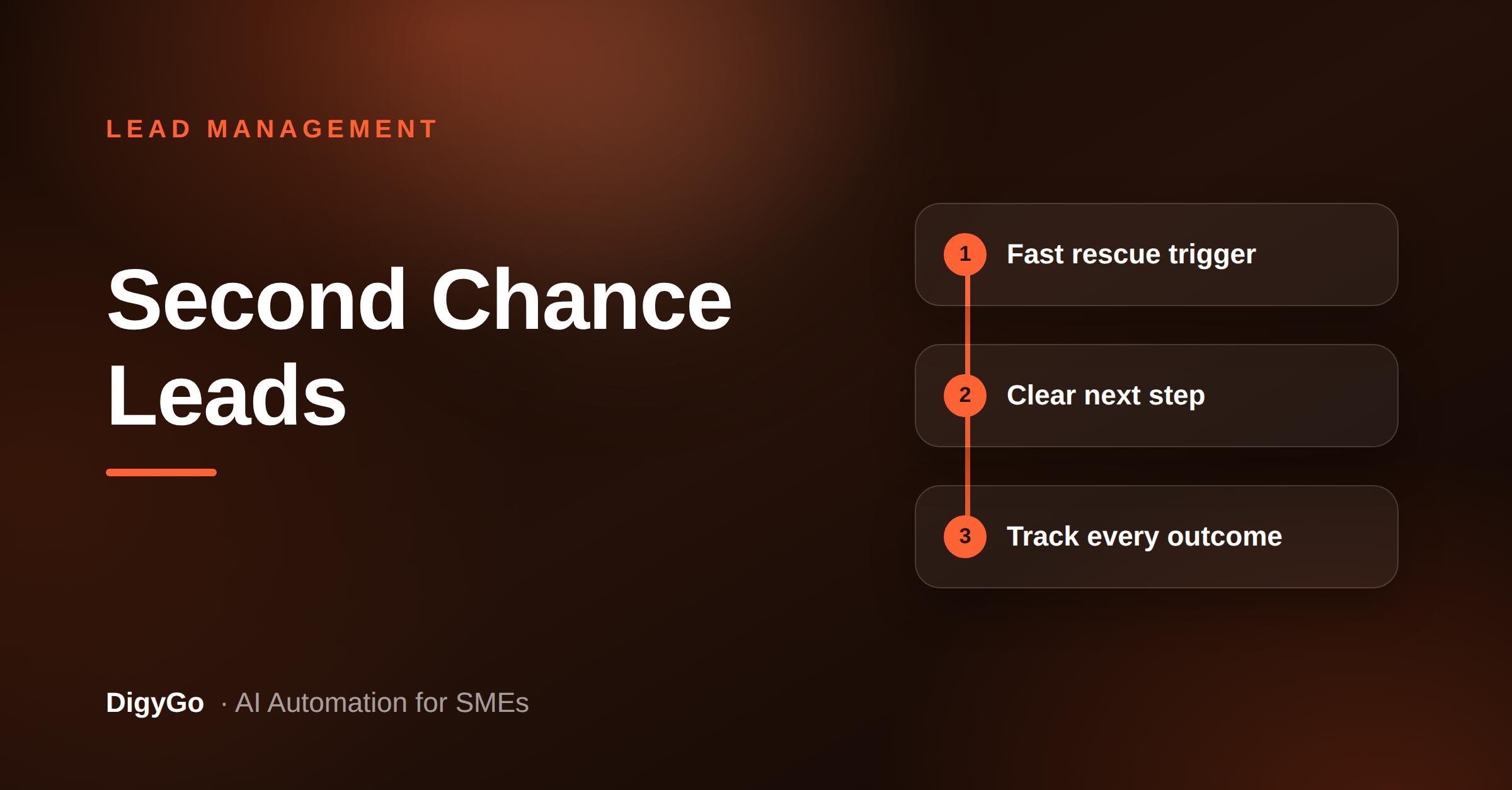
A lot of SME enquiries do not disappear because the lead was weak. They fade because the team was busy, the reply was late, or the follow-up had no clear next step. A missed-lead rescue workflow gives every hot enquiry one fast second chance before the opportunity goes cold.
A practical lead-management playbook for SMEs on rescuing stalled enquiries with a fast, structured follow-up flow that brings hot leads back into motion.
- Not every missed lead is lost — many just need a structured re-entry.
- The rescue flow should trigger within minutes, not days.
- Use one clear reason for contact, one action, and one owner.
- Track outcomes so the team learns which leads deserve a manual save.
Why missed leads deserve their own workflow
Most teams already have a lead capture process. The gap is what happens after the first reply fails, the prospect stops responding, or the team forgets to close the loop. Without a rescue system, those enquiries sit in inboxes, WhatsApp threads, or CRM stages with no follow-up path.
The fix is not more reminders. It is a small operational flow that identifies a stalled lead, assigns the right response, and nudges the team toward one of three outcomes: book a call, qualify out, or park the lead with a clear reason.
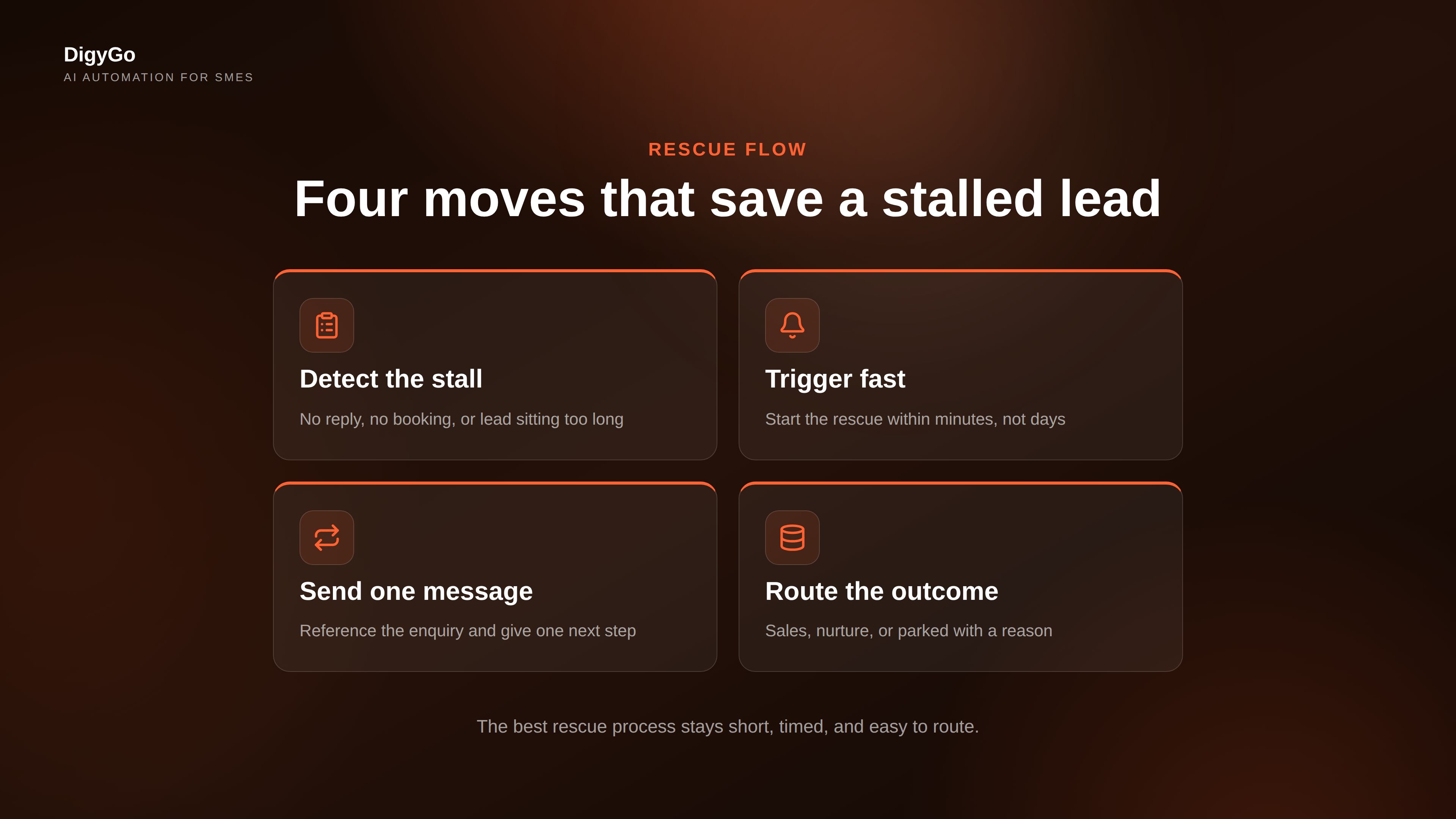
Build the rescue flow in four steps
Keep the system simple enough that the team will actually use it. A good rescue workflow starts the moment a lead goes quiet.
1. Detect the stall
Define what counts as a missed lead: no reply after the first response, no call booked within the agreed window, or a lead that has sat unanswered for a set number of hours. The trigger should be automatic so the team is not hunting manually.
2. Add a reason tag
Tag the lead with a simple reason such as no response, wrong time, budget gap, or needs approval. This helps the next message feel relevant instead of generic.
3. Send one rescue message
The rescue message should be short and specific. Mention the original enquiry, restate the value, and make the next step obvious. If the lead is genuinely interested, remove friction with a direct booking link or a one-question reply.
4. Route the outcome
Every rescue attempt needs a status. If the lead replies, hand it to sales. If they do not, move it to a nurture list. If they are not ready, schedule the next check-in. That way the CRM stays clean and the team sees which leads are worth another manual touch.
What a good rescue message sounds like
A rescue message should feel helpful, not desperate. The strongest version usually does three things:
- reminds the prospect what they asked about
- offers a low-friction next step
- gives them an easy way to say no or ask for later
For example: “Hi, you had asked about automating lead replies for your enquiry page. If this is still useful, I can share a simple setup and a rough timeline. Reply with yes and I’ll send the details.”

Measure the workflow so it improves
If you cannot measure the rescue path, it becomes another invisible process. Track four numbers:
- how many leads enter the rescue flow
- how many respond after the rescue message
- how many become booked calls or qualified opportunities
- how long it takes the team to act on the stall
Over time, you will see patterns. Some lead sources need faster response. Some need a different message. Some need a better qualification step before they ever reach the sales team. That is where the system starts paying back.
Where SMEs usually get stuck
The most common mistake is treating all missed leads the same. A warm inbound enquiry needs a different rescue from a slow referral or a price-shopping prospect. The second mistake is leaving the rescue to memory. If someone has to remember to chase, the workflow is not really a workflow.
The goal is not to chase harder. The goal is to make sure a promising enquiry gets one clear, timely, and measurable second chance.
If you want help setting up a lead rescue workflow for your business, talk to DigyGo.