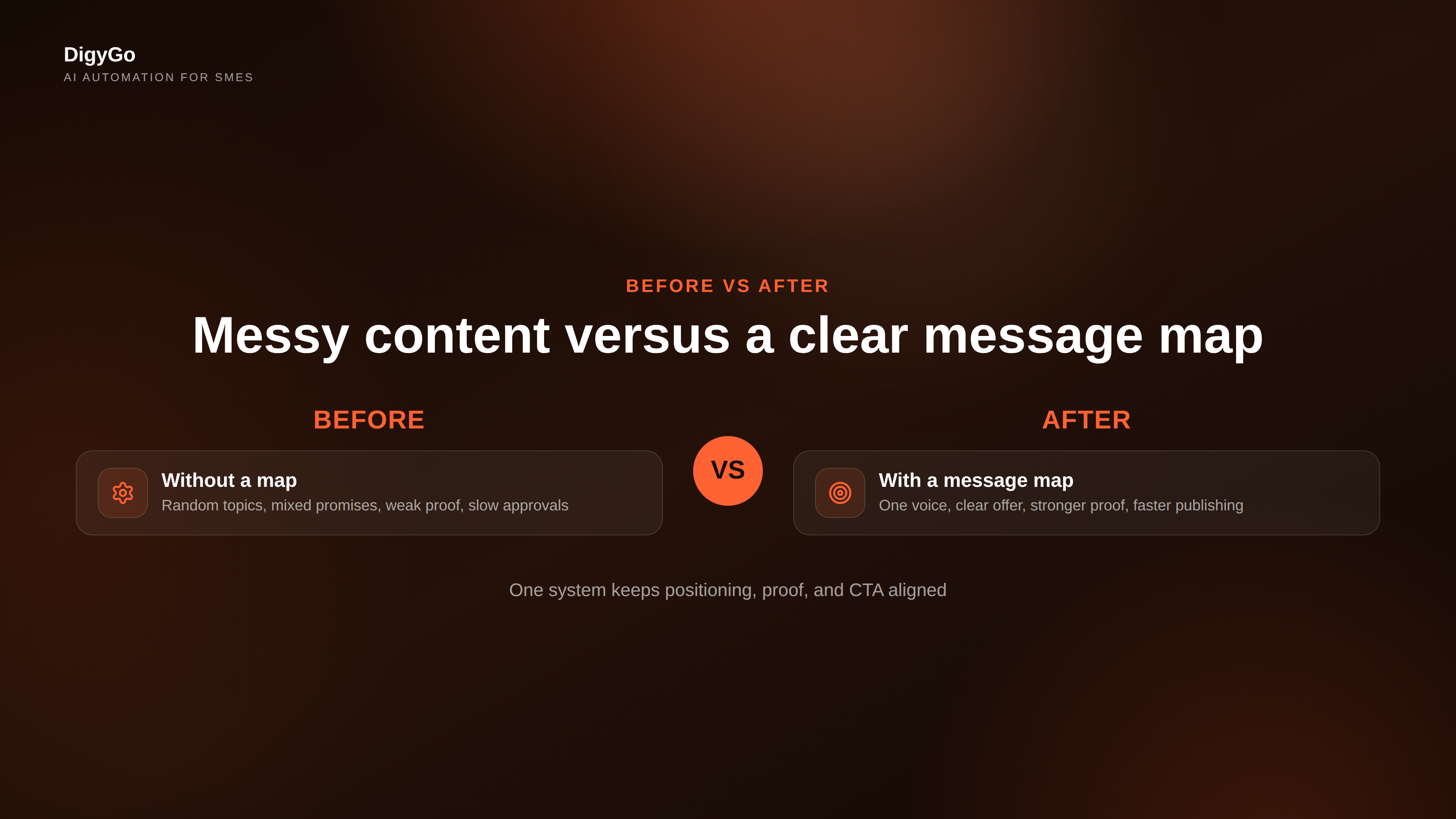
Most SMEs do not have a content problem. They have a clarity problem. If every post, ad, and sales message says something slightly different, the market cannot tell what you stand for — and your spend gets diluted.
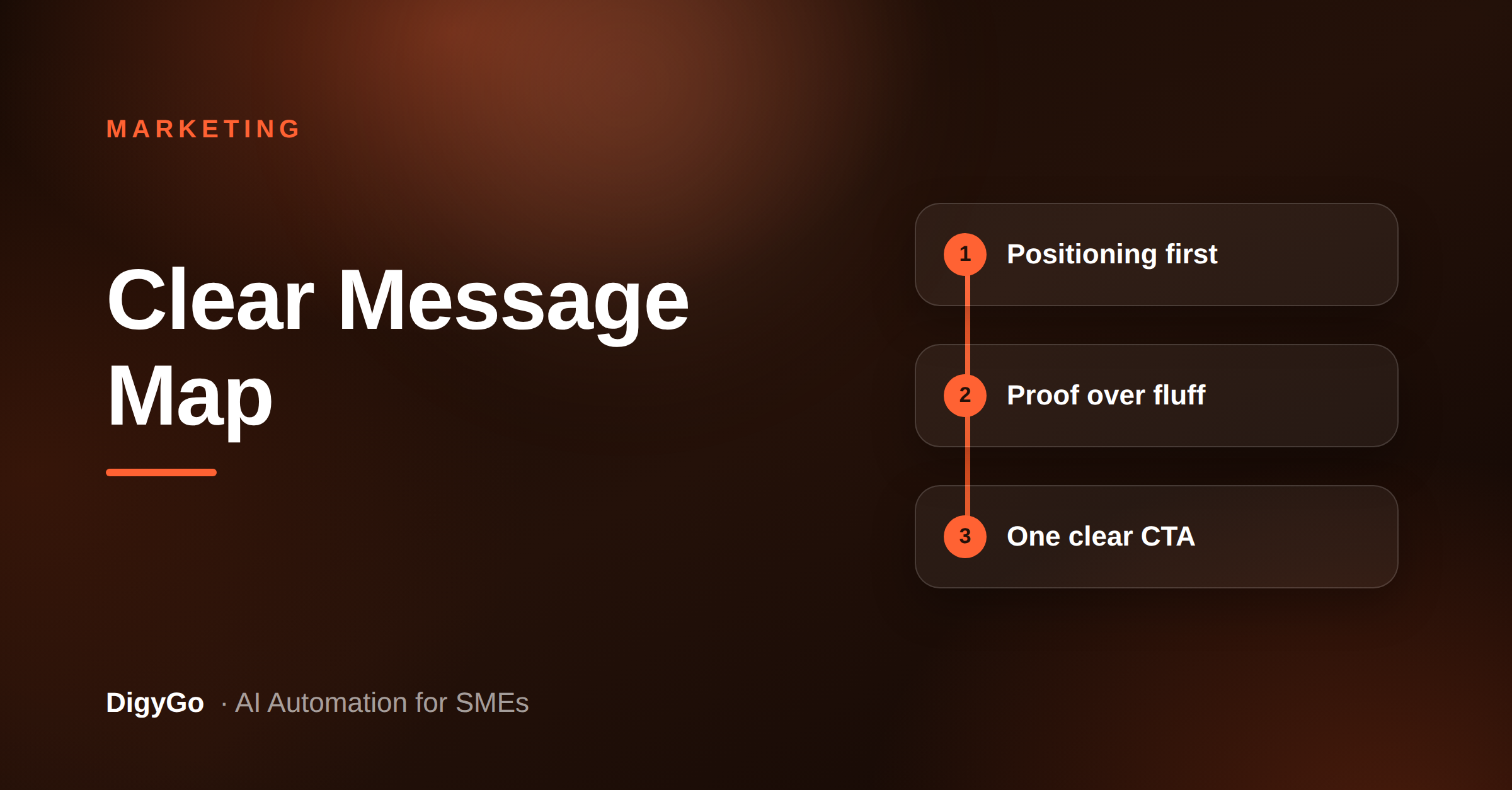
A one-page message map helps SMEs align positioning, proof, and calls to action so every post, ad, and sales reply works harder.
Why a message map matters before you spend on content
A one-page message map keeps your positioning, proof, and offers aligned. It gives marketing one source of truth, helps sales speak with the same language, and stops founders from approving random posts that look active but do not build demand.
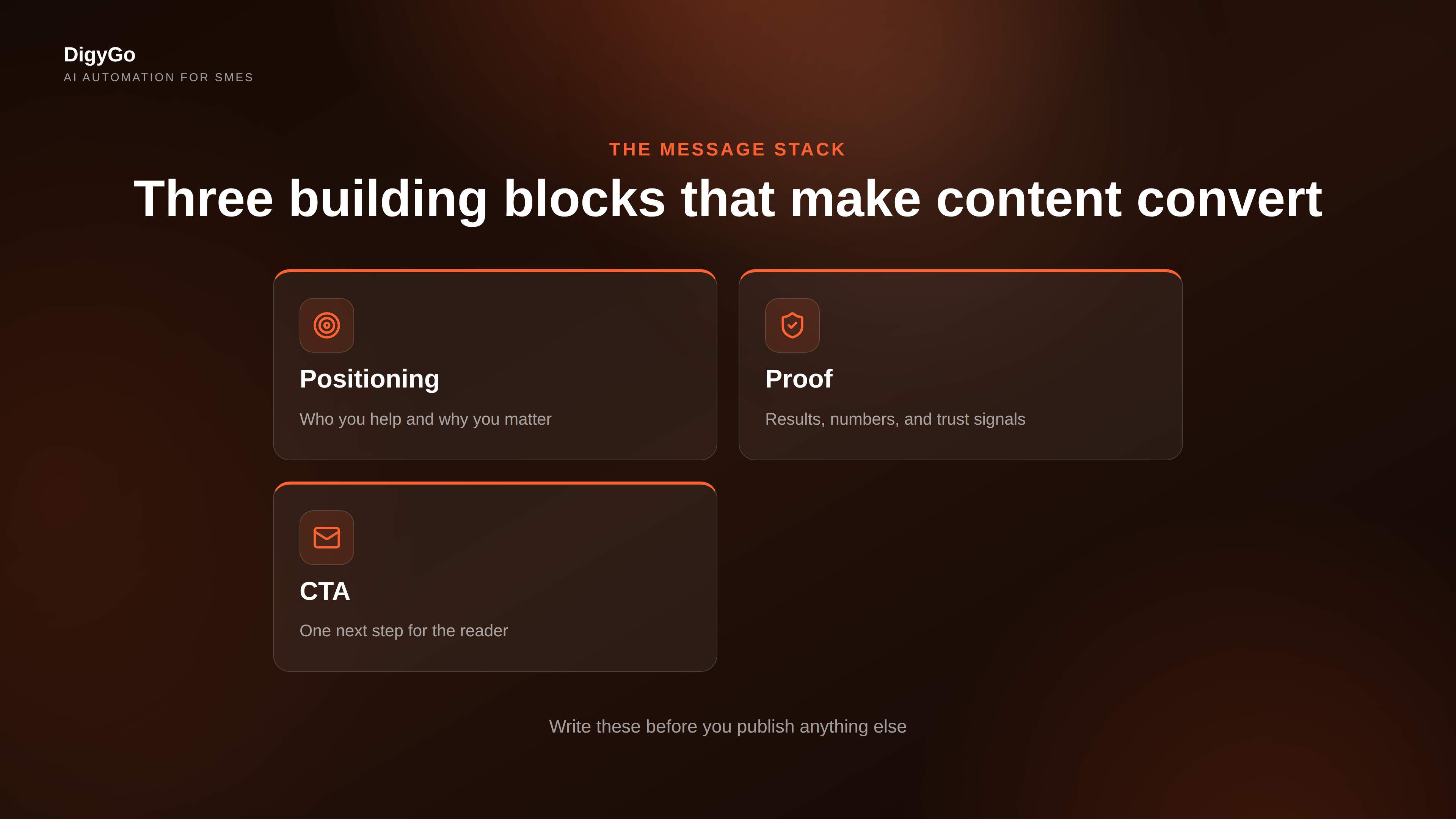
- Positioning: what you do, who it is for, and why you are the better fit.
- Proof: results, numbers, customer outcomes, and trust signals.
- Promise: the business outcome your audience can expect.
- CTA: the one action you want readers to take next.
What to write first on the message map
Start with the customer problem in plain language. Then write the transformation you deliver, the proof that makes it believable, and the objection you most often hear. This sequence is enough to turn a vague brand voice into a usable marketing system.
1. Customer problem
Describe the pain in the words your buyer already uses. Do not begin with your service name. Begin with the situation that makes them search, compare, or ask for help.
2. Core promise
Say what changes after working with DigyGo or any similar provider. Keep it measurable, specific, and believable. A strong promise is simple enough to repeat in a sales call.
3. Proof points
Use case studies, process wins, before-and-after examples, or simple operational outcomes. Proof converts better than adjectives because it reduces risk.
How to use the same map across channels
Once the message map is ready, reuse it in social posts, landing pages, ad hooks, WhatsApp follow-ups, and sales replies. The goal is not to sound repetitive. The goal is to sound consistent enough that the buyer remembers you.
- Marketing: turn one promise into many angles.
- Sales: keep objections and proof ready.
- Operations: keep the team from inventing new wording every week.
Common mistakes SMEs make
The biggest mistake is writing content before choosing a clear point of view. The second is trying to appeal to everyone. The third is using weak proof, such as generic claims and vague testimonials, which makes every campaign harder to convert.
A message map fixes that by forcing decisions early. It reduces rework, improves content speed, and gives every campaign a better chance to convert.
A simple next step
If your team has been posting without a clear content spine, pause and draft a one-page message map before the next campaign. You will get better content, cleaner sales conversations, and a stronger brand memory in the market.