Most SMEs do not lose leads because they have no demand. They lose them because every enquiry enters the same bucket, no one knows what to do first, and the fastest opportunity sits behind a slower one.
A practical guide for SMEs on sorting incoming leads by urgency and intent so the right enquiries get the fastest reply and the right owner.
Why lead triage matters more than lead volume
A simple lead triage workflow is the difference between a busy inbox and a sales-ready pipeline. When every call, form fill, WhatsApp message, and referral is treated the same, teams waste time on low-fit leads while hot enquiries wait too long for a reply.
For founders, the goal is not to respond to everything equally. The goal is to respond to the right enquiry first, with the right message, and hand it to the right person without manual chasing.
What a good triage flow should do
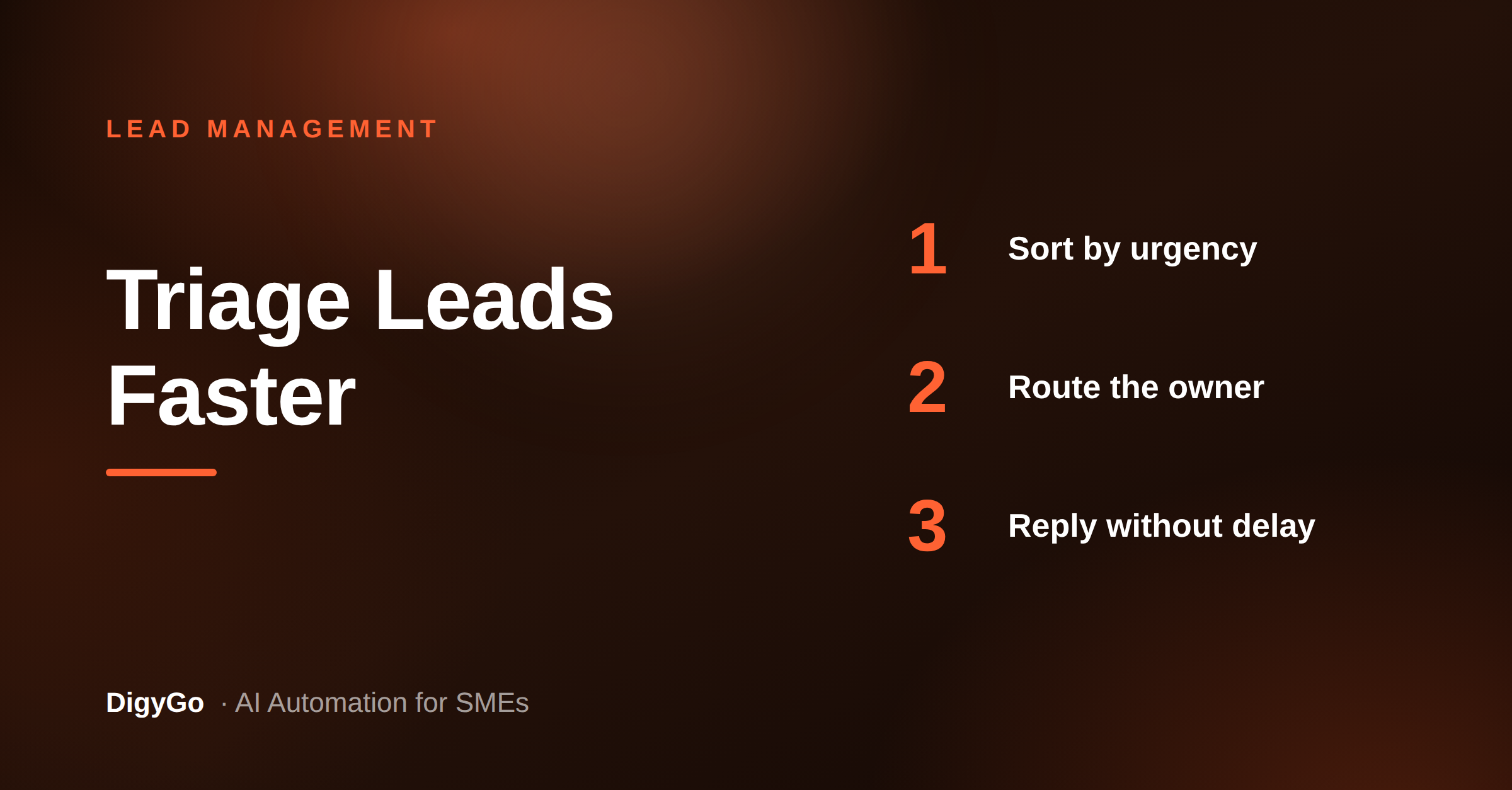
A practical workflow only needs four decisions:
- Identify the source: form, missed call, WhatsApp, referral, or ad.
- Score the intent: urgent request, pricing question, callback, or general enquiry.
- Assign ownership: sales, support, operations, or founder.
- Trigger the next step: instant reply, booking link, callback task, or nurture follow-up.
That sequence keeps the team focused on action instead of inbox sorting.
The triage rule that prevents bottlenecks
Use one simple rule: every enquiry must have an owner within minutes. If the lead is not ready for a human call, it should still receive an automated acknowledgement and a clear next step. That stops the silent gap where prospects lose confidence and move on.
Manual inbox vs structured triage
Most teams already know the pain. The problem is not lack of effort. The problem is that the effort is scattered.
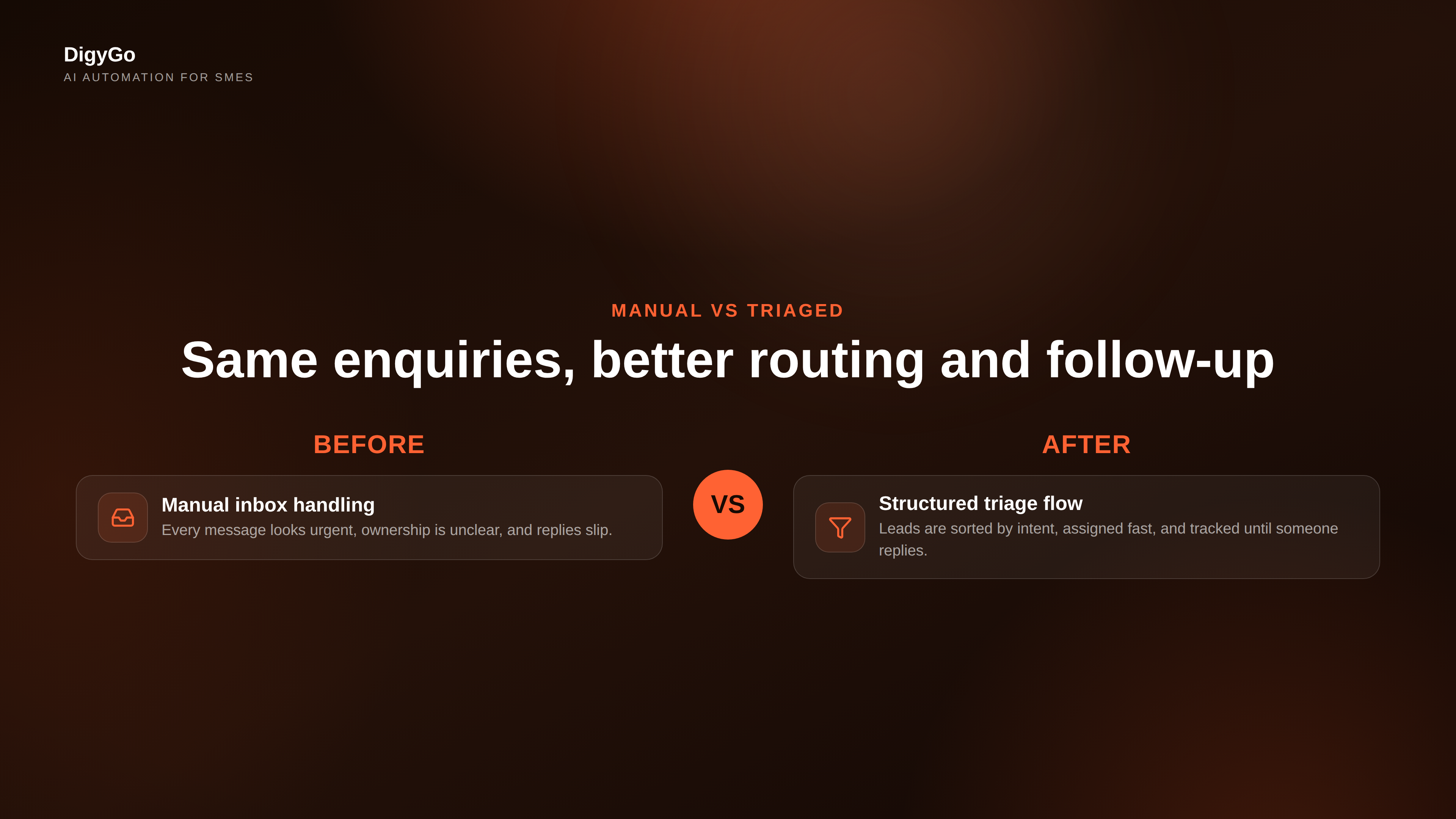
- Manual inbox: every message looks urgent, follow-up depends on memory, and ownership is unclear.
- Structured triage: leads are sorted by intent, routed automatically, and tracked until a response is sent.
The second version is not just cleaner. It is faster to operate, easier to monitor, and simpler to improve.
How SMEs can build it without overengineering
You do not need a complex CRM setup on day one. Start with a basic flow:
- Capture every lead in one place.
- Tag the enquiry by source and urgency.
- Send an instant acknowledgement.
- Assign the lead to one owner.
- Escalate unanswered high-intent leads after a fixed time.
Once that works, add automation for missed calls, after-hours enquiries, and follow-up reminders. The idea is to reduce delay, not to create more tools for the team to manage.
Where AI helps most
AI is most useful in the sorting layer. It can read the enquiry, detect urgency, identify repeat questions, and suggest routing before a human touches the lead. That means the team spends less time guessing and more time closing.
For SMEs, this is especially useful during peak hours, after hours, and on days when the owner is already in back-to-back meetings.
What to measure every week
If you want the workflow to improve, track these numbers:
- time to first response
- lead-to-owner assignment time
- number of unassigned enquiries
- follow-up completion rate
- booked-call conversion from urgent leads
Those five metrics show whether the triage system is actually protecting revenue.
FAQ
Is lead triage only for large teams?
No. Small teams benefit even more because they cannot afford to waste time on the wrong enquiry first.
Can triage be automated fully?
Not fully. The best setup uses automation for sorting, acknowledgements, and reminders, while humans handle the high-value conversation.
What is the first step to start?
Centralise incoming leads into one inbox and define who owns each enquiry type.
If you want help setting up a lead triage workflow that routes enquiries faster and keeps follow-up tight, talk to DigyGo.