Most SMEs do not lose leads because the offer is weak. They lose them because every new enquiry enters the same pile and waits for a human to sort it out. A simple lead routing scorecard fixes that by deciding, in seconds, who should reply first, what should happen next, and when automation should take over.
A practical scorecard for SMEs that ranks enquiries by fit, urgency, source, and intent so the right person responds first and the lead keeps moving.
Key takeaways
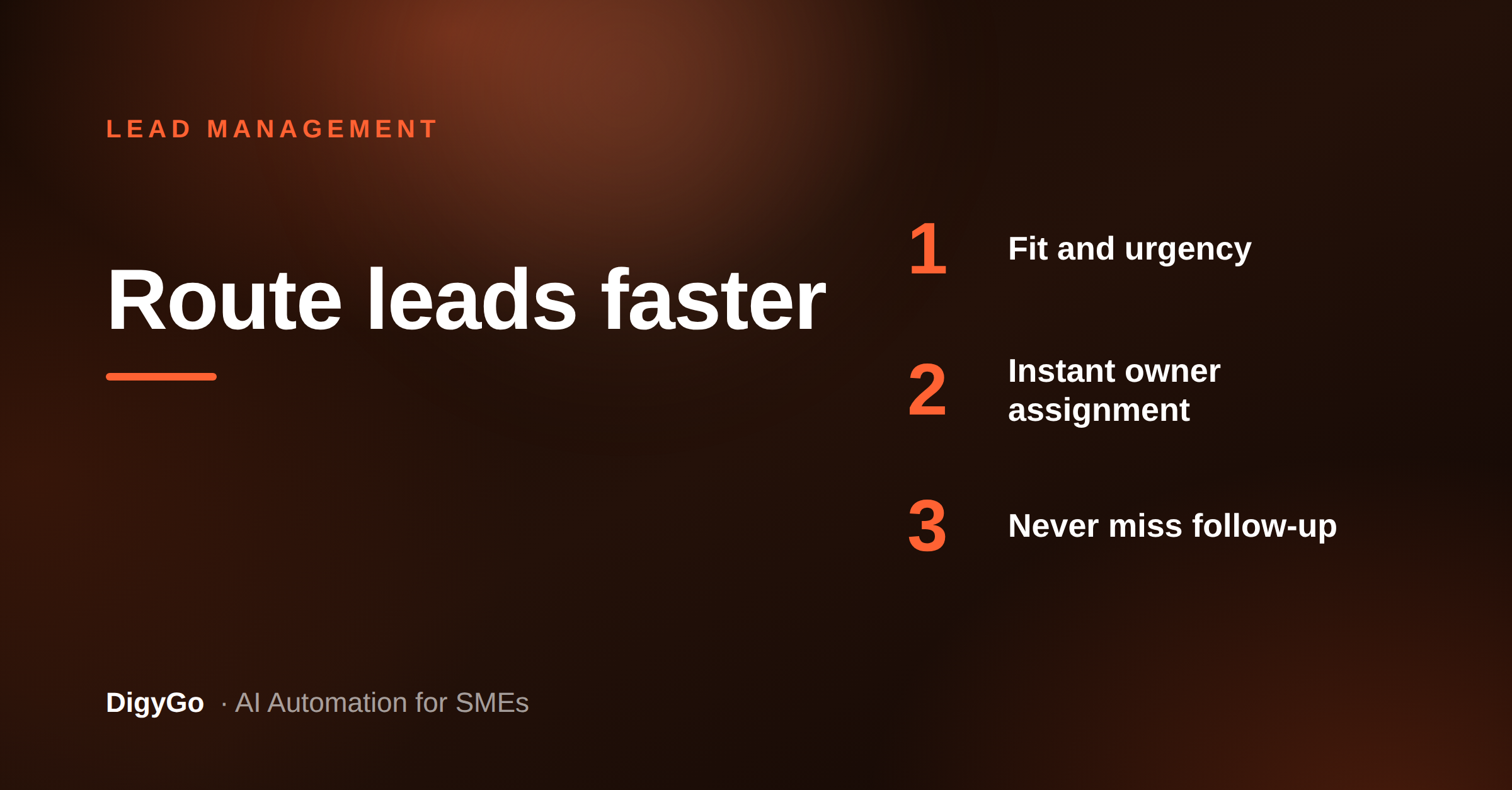
- Score every lead on fit, urgency, source, and intent before a person replies.
- Route high-value leads to sales, medium-fit leads to nurturing, and poor-fit leads to a polite hold.
- Use automation to assign owners, send the first response, and log the next step instantly.
Why lead routing matters before follow-up starts
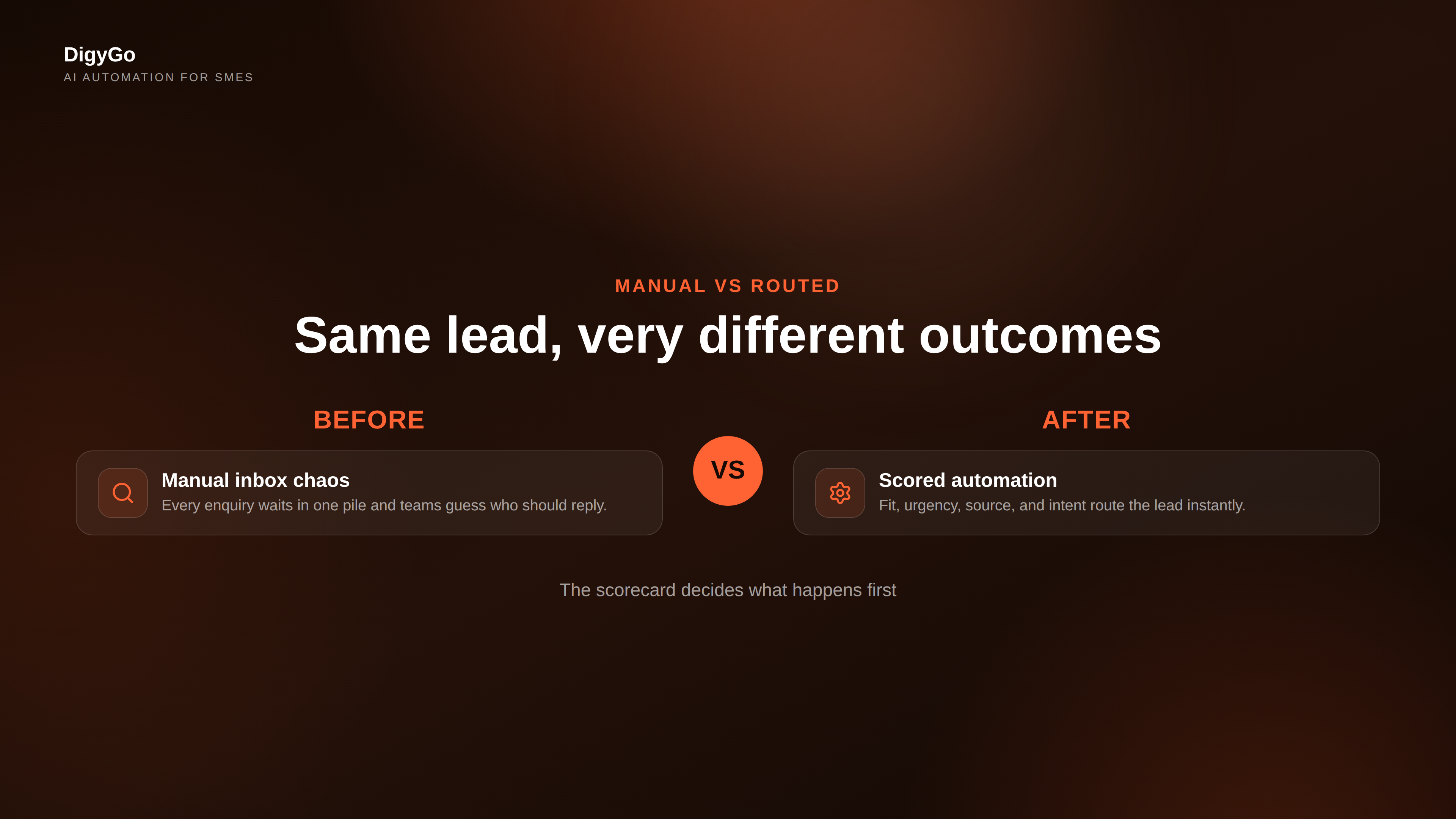
Fast replies matter, but speed without routing creates chaos. A founder, sales rep, or marketing assistant can only respond well if the lead has already been sorted. Otherwise, the team wastes time asking the same questions, chasing the wrong people, and forgetting the leads that deserved attention first.
That is why the first job is not “reply to everyone.” The first job is to decide which enquiry is worth an immediate call, which one should get a structured nurture sequence, and which one should be tagged for later. When the routing logic is clear, follow-up becomes consistent instead of reactive.
Build a scorecard with four simple signals
A useful scorecard does not need a complicated CRM setup. Start with four signals that tell you whether the lead is ready, relevant, and likely to convert.
- Fit: Does the lead match your target industry, location, budget, or company size?
- Urgency: Is the buyer asking to start now, this month, or “someday”?
- Source: Did the enquiry come from a high-intent channel like Google, referral, or a booked form?
- Intent: Did they ask for pricing, a demo, a call, or a specific service?
Give each signal a simple score. You do not need perfect math. You need a repeatable way to separate hot leads from casual browsers. Once the numbers are in place, your team stops guessing and starts acting on priority.
Example scoring bands
| Score | Meaning | Action |
|---|---|---|
| 80-100 | High-fit, high-intent lead | Instant owner assignment and same-day call |
| 50-79 | Possible fit, needs context | Auto-reply, qualification questions, nurture |
| 0-49 | Low-fit or low-urgency lead | Polite response, archived into drip list |
Turn the scorecard into an automation flow
This is where the system starts doing the work for you. When a lead arrives, automation should capture the enquiry, assign the score, and trigger the next action without waiting for someone to open a spreadsheet.
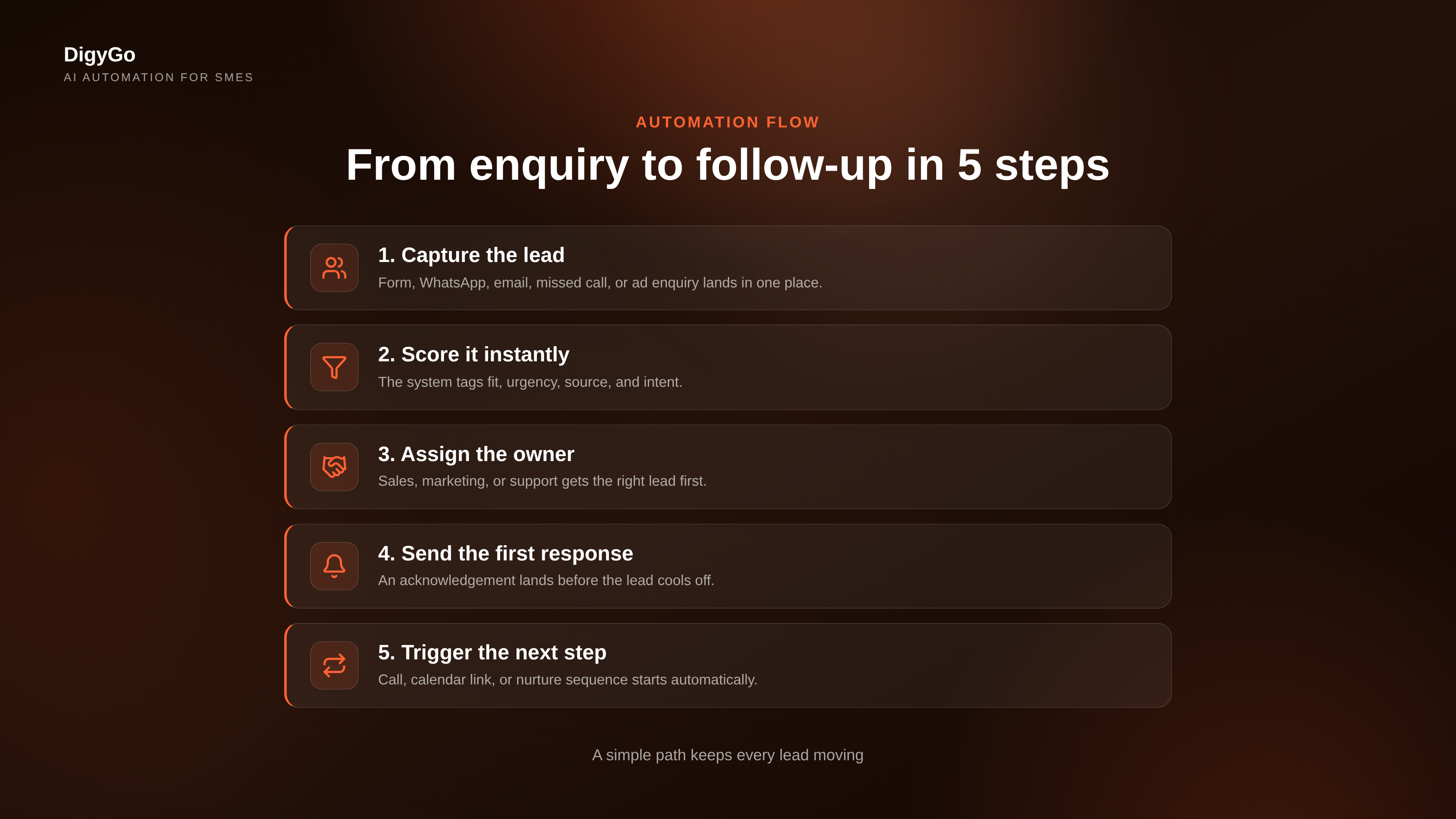
Use the flow below as your starting point:
- Capture the lead: Form, WhatsApp, email, missed call, or ad enquiry lands in one place.
- Score it instantly: The system tags the lead based on fit, urgency, source, and intent.
- Assign the owner: Sales gets hot leads, marketing gets nurture-ready leads, support gets service issues.
- Send the first response: A fast acknowledgement tells the lead they were heard.
- Set the next step: Call, calendar link, or follow-up sequence is triggered automatically.
For SMEs, this removes the most common delay: “Who should handle this?” When the answer is automatic, the lead feels movement immediately and the team works from the same playbook.
Set handoff rules so leads do not fall between teams
Routing works best when every team knows where their responsibility begins and ends. A hot lead should not sit in marketing. A long-term nurture lead should not be forced into a hard sales call. And a support request should never be treated like a sales opportunity.
Good handoff rules are simple and visible. For example:
- Sales owns leads with clear buying intent and immediate need.
- Marketing owns education-stage leads and reactivation campaigns.
- Operations or support owns service issues, delivery questions, and account help.
Once those rules are written down, the team spends less time arguing over ownership and more time moving the lead forward. That alone improves response time, accountability, and conversion quality.
Track the numbers that prove the system is working
If you want the routing scorecard to stay useful, track a few practical metrics instead of a long vanity dashboard. The goal is to see whether the system is getting faster, cleaner, and more profitable.
- Time to first reply: How quickly the lead gets a human or automated response.
- Lead-to-owner match rate: How often the lead reaches the right person first time.
- Qualified lead rate: How many leads score high enough for sales attention.
- Follow-up completion: How many leads actually receive the next scheduled action.
If these numbers improve, the system is working. If they stay flat, the scorecard is probably too vague or the handoff rules are too loose. Tighten the logic, simplify the steps, and test again.
Practical rule: If a lead cannot be routed in one minute, the process is too complicated for a busy SME team.
FAQ
Do SMEs need a CRM to use lead routing?
Not necessarily. A spreadsheet can prove the logic first. A CRM becomes useful once you want automation, assignment rules, and reporting in one place.
What if every lead looks different?
Start with just four scoring signals and create exceptions later. A simple system that is used daily is better than a perfect system that no one follows.
How often should the scorecard be reviewed?
Review it monthly at first. Look for leads that were scored incorrectly, leads that were missed, and patterns in which sources convert best.