If your team is answering leads at different speeds, you do not have a lead problem — you have a response system problem. A simple SLA turns every enquiry into a timed workflow with ownership, escalation, and follow-up rules that stop hot leads from cooling off.
A practical guide for SMEs on setting a clear lead response SLA so every enquiry gets owned, answered, and escalated before it goes cold.
What a lead response SLA should do
A lead response SLA is not a document for operations to admire. It is a practical agreement that says who replies, how fast they reply, what happens if they miss the window, and where the lead goes next. For SME teams, that usually means the sales team, marketing, and whoever owns the inbox all work from the same clock.
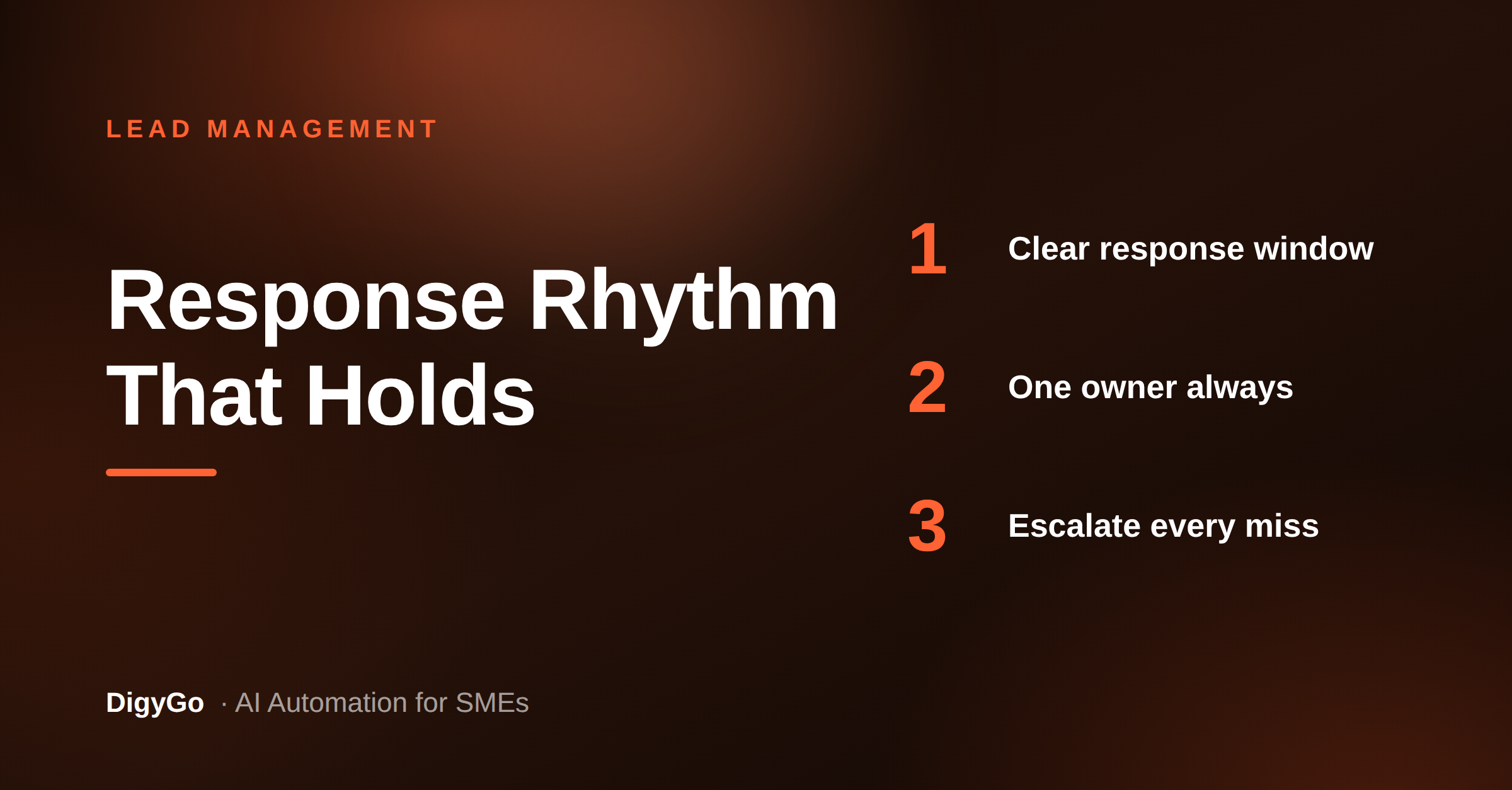
- One first response target: every enquiry gets a clear time limit.
- One owner: no lead sits in a shared inbox with no name against it.
- One escalation path: missed leads automatically move to the next step.
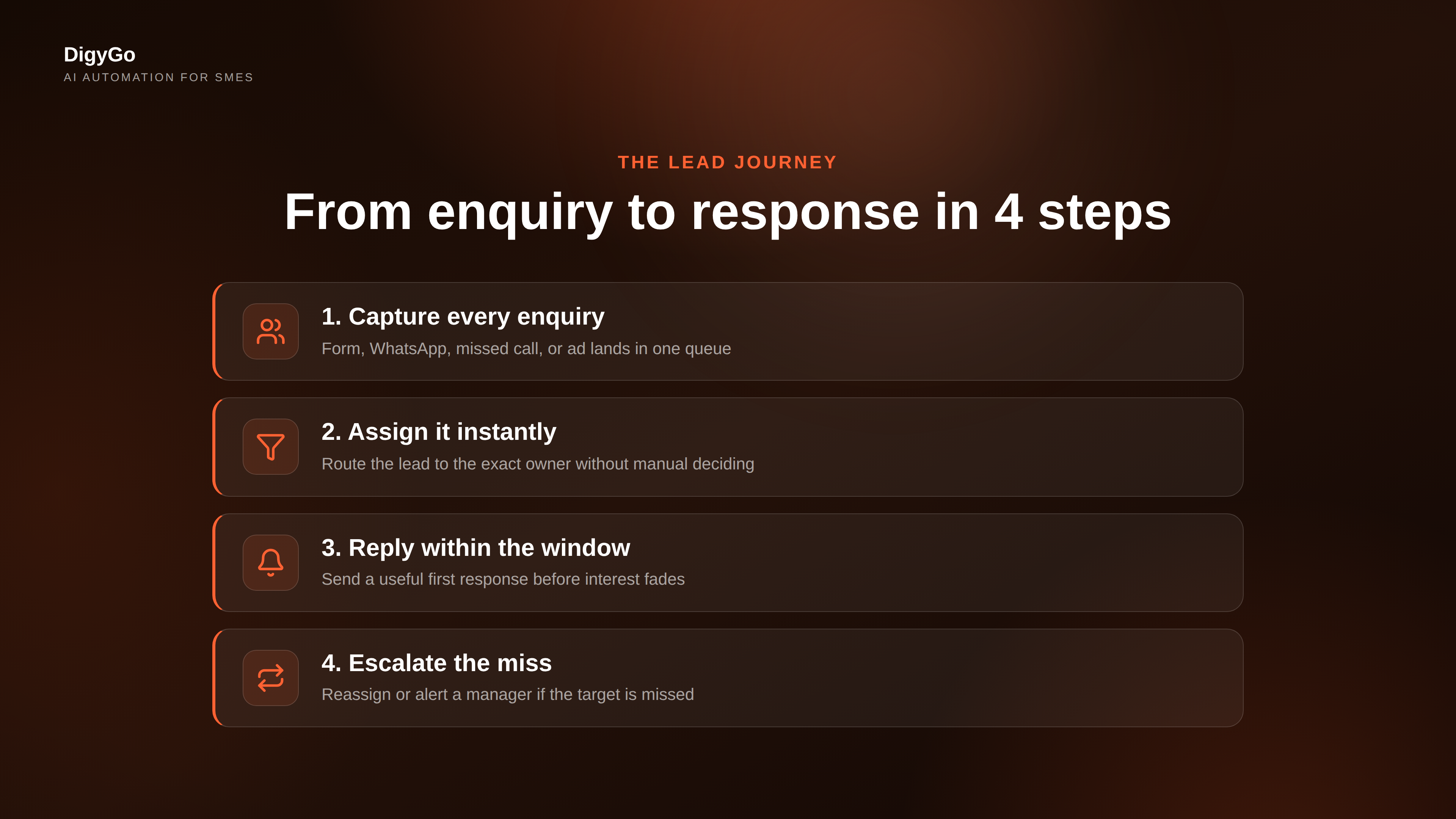
The 4 steps that make the SLA work
The best SLA is short enough that people actually use it. Build it around four visible steps: capture, assign, respond, and escalate. If any one of those is unclear, leads will slip through the cracks even when the team is busy and well-intentioned.
1. Capture every enquiry in one place
Start by removing the excuse of “I never saw it.” Whether the lead comes from a form, WhatsApp, a missed call, or an ad campaign, it should land in one queue with the source attached. That gives you a clean starting point for timing and ownership.
2. Assign it instantly
The SLA should name the exact owner for each lead type. New enquiry, pricing request, repeat customer, high-value deal — each one should route to the right person without someone having to decide manually every time.
3. Reply within the agreed window
Fast response matters because intent fades fast. Even a short acknowledgement is better than silence, but the SLA should push for a useful first reply: confirm the enquiry, set expectation, and ask for the next detail needed to move forward.
4. Escalate the misses
If the first owner does not respond, the system should not wait politely. Escalation rules should reassign the lead or alert a manager so the enquiry still gets handled while interest is fresh.
Where most SMEs break the system
Many teams write the SLA and then leave it buried in a folder. The real problem is not the rule — it is visibility. If the rule is not built into the workflow, the response time becomes a best-effort habit instead of a reliable process.
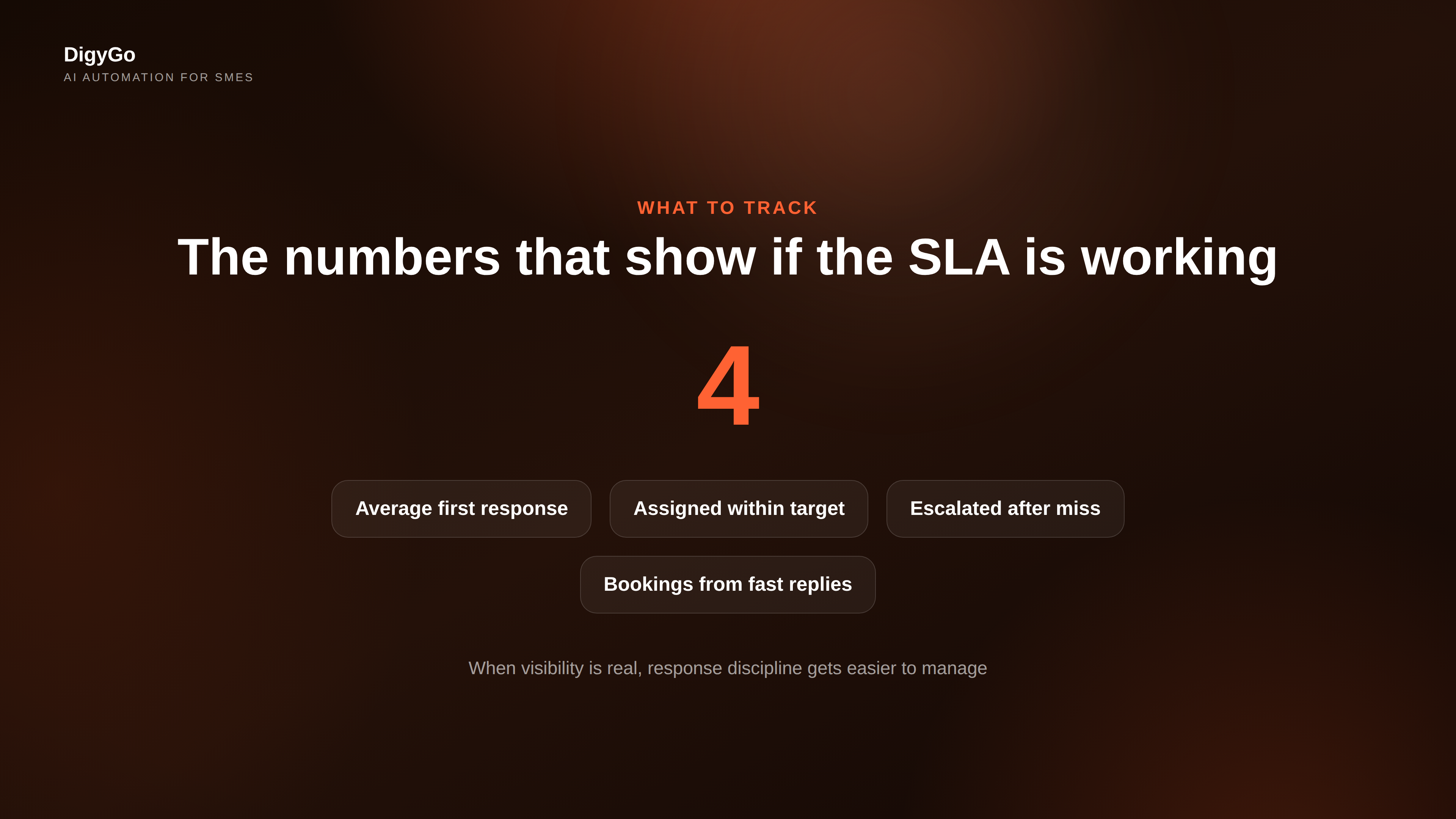
What to track every week
You do not need a giant dashboard to manage response discipline. Track a few numbers every week and the pattern becomes obvious.
- Average first response time
- Leads assigned within target
- Leads escalated after miss
- Bookings created from fast replies
When these numbers are visible, managers can spot bottlenecks early. If first response is fine but handoff is weak, the fix is different from a slow inbox. If speed is good but conversions are poor, the issue may be qualification, not timing.
How to roll it out without creating friction
Do not launch the SLA as a new policy memo. Roll it out as a working agreement with a short trial period. Show the team the lead journey, explain why speed matters, and make the escalation rules simple enough that nobody needs a manual to follow them.
The goal is not pressure for its own sake. The goal is to make sure every enquiry gets a timely human response, every time, without depending on memory or goodwill.
FAQ
How fast should a lead response SLA be?
As fast as your team can keep consistently. For most SMEs, the important part is not a heroic promise — it is a realistic target that the team can actually hit every day.
Should every lead get the same SLA?
No. High-intent leads often need a shorter response target than general enquiries. Segment by lead type and urgency so the workflow matches the value of the enquiry.
Do we need software to do this?
Not necessarily, but software makes the SLA easier to enforce. The key is automatic assignment, visible ownership, and escalation when the target is missed.
If you want help building a lead response SLA that your team will actually follow, talk to DigyGo.