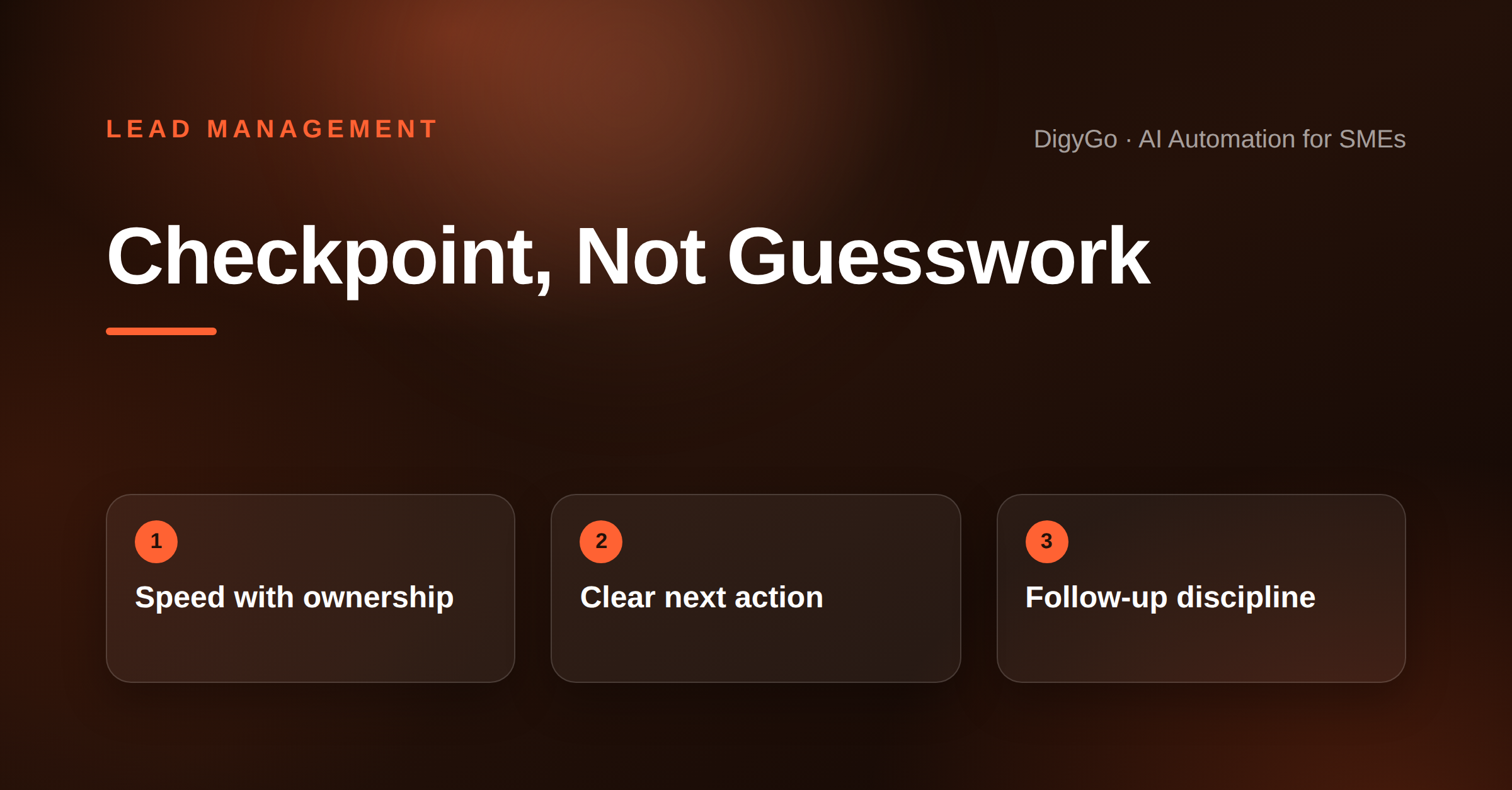
Speed matters, but speed alone does not close the loop. Many SMEs reply quickly, then lose the lead because no one checks whether the conversation actually moved to the next step. A lead response checkpoint fixes that by confirming ownership, intent, and follow-up before the enquiry goes quiet.
A practical guide for SMEs on adding a lead response checkpoint after the first reply so hot enquiries keep moving instead of fading out.
Why the first reply is not the finish line
The first response earns attention. The checkpoint earns momentum. Without it, teams often assume the lead is “handled” because a reply was sent, even when the prospect still has questions, the next step is unclear, or the handoff to sales never happened.
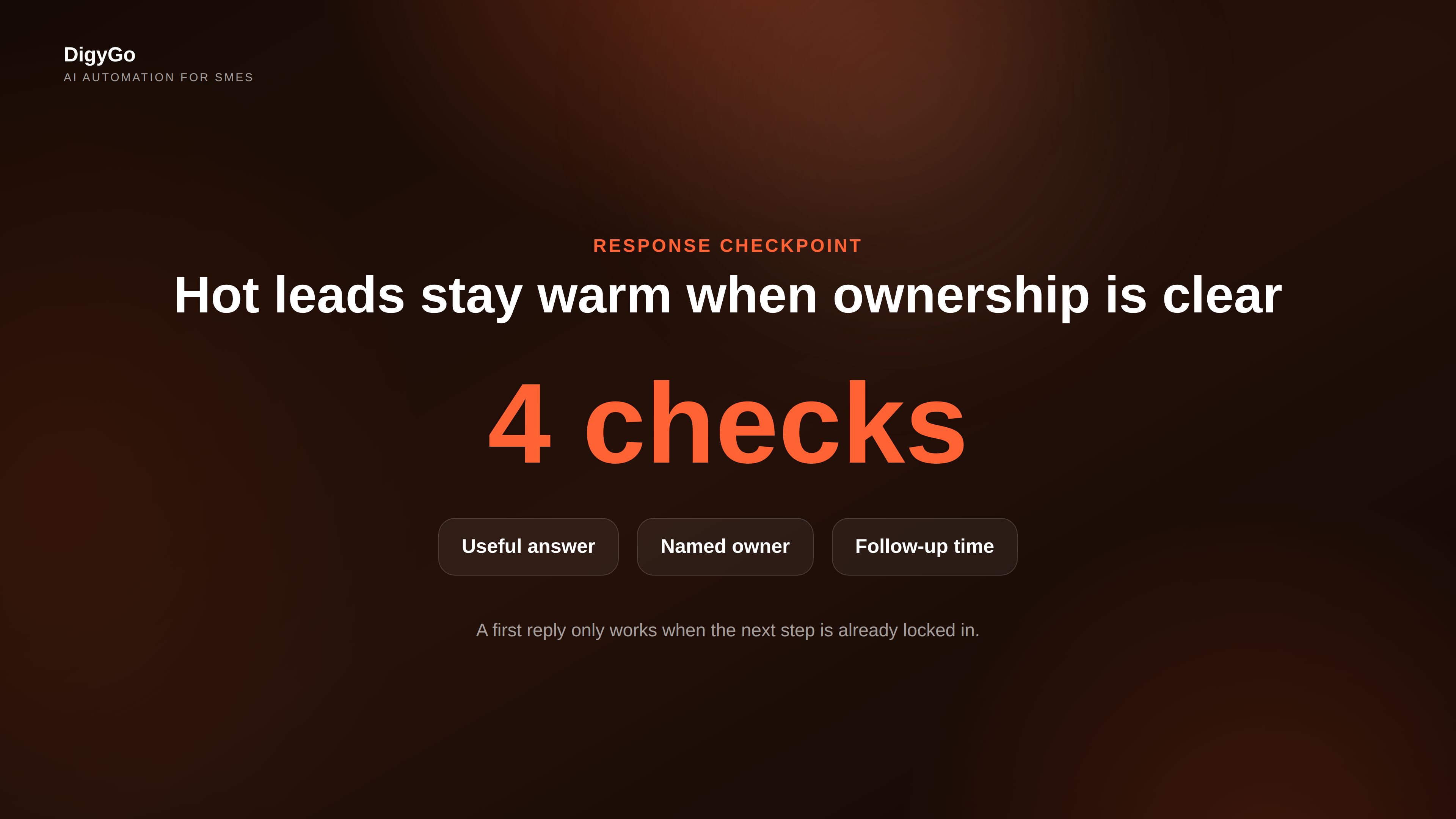
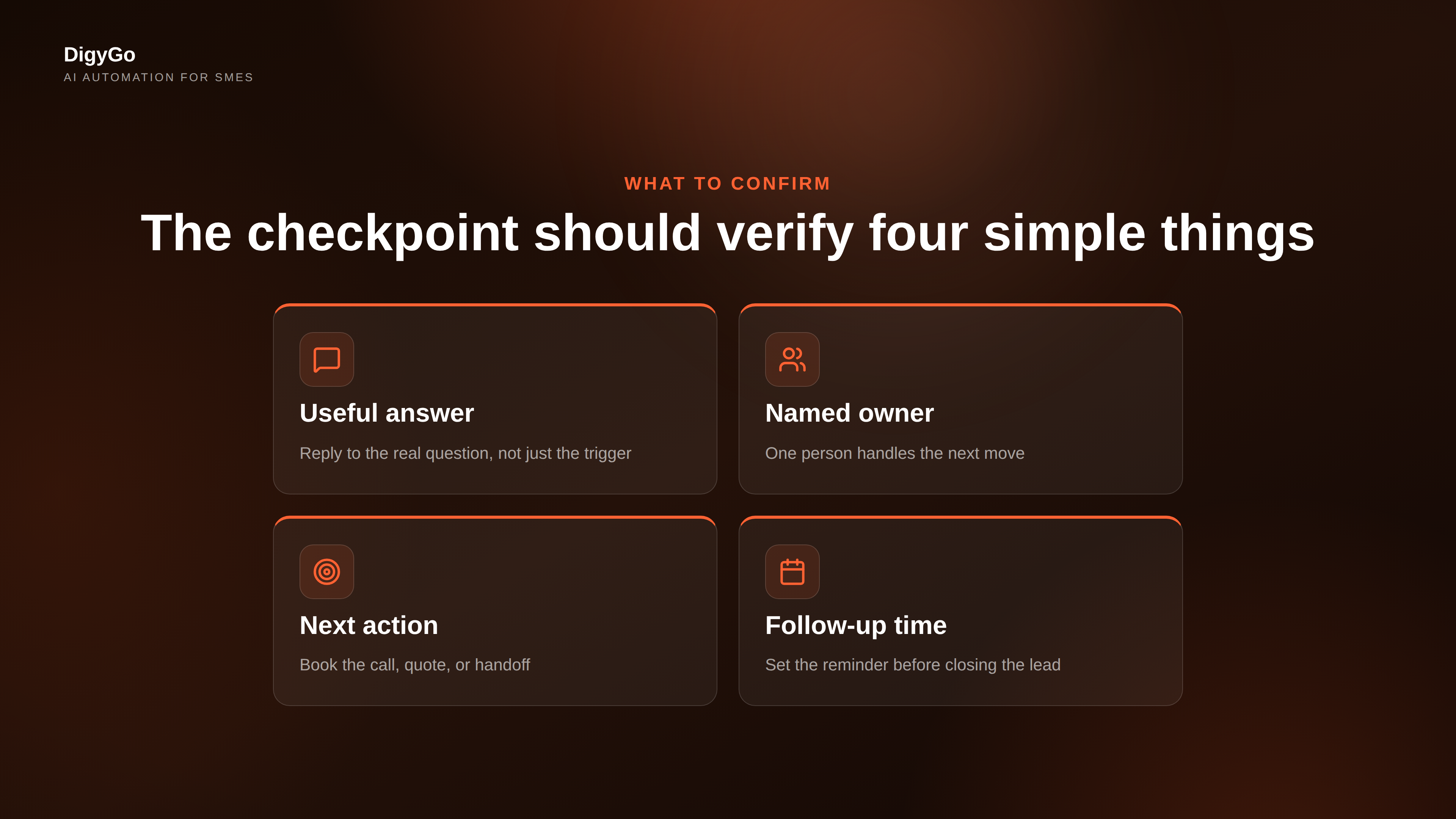
A checkpoint is a short operational pause after the first response. It asks three things: did the lead get a useful answer, did someone own the next action, and is there a clear follow-up time already set? That tiny discipline removes the gap where hot enquiries usually disappear.
What the checkpoint should confirm
- Useful first answer: the message addresses the actual question, not just the inbox trigger.
- Named owner: one person is responsible for the next reply or handoff.
- Next action: there is a call, form, quote, or WhatsApp step already agreed.
- Follow-up time: the next touch is scheduled before the lead cools off.
When these four checks are visible, the team stops treating lead response as a single event and starts treating it like a managed sequence. That is what keeps the enquiry warm long enough to convert.
The 10-minute checkpoint routine
For SMEs, the checkpoint does not need a heavy CRM workflow. A simple routine is enough if it is followed every time.
- Send the first reply within the target window.
- Log the source, need, and owner immediately.
- Confirm the next step in plain language.
- Set the follow-up reminder before closing the ticket.
- Escalate any lead that has not moved within the agreed window.
The point is not to add process for its own sake. The point is to stop accidental drop-offs. A short checkpoint creates accountability without slowing the team down.
Where most teams lose the lead
Hot enquiries usually fade in one of four places: nobody owns the next step, the reply answers the wrong question, follow-up waits until tomorrow, or the lead is split across too many people. The checkpoint is designed to catch all four.
If your team already uses a shared inbox, the checkpoint can sit right after the first reply. If you use a CRM, make the checkpoint a required status before the lead is marked active. If you rely on WhatsApp or phone calls, use a short checklist so the rep knows what must be captured before moving on.
A simple checkpoint question set
- Did we answer the real request?
- Who owns the next touch?
- What is the next action?
- When do we follow up?
These questions take less than a minute, but they force clarity. And clarity is what prevents the lead from turning into an unread thread, a forgotten call, or a vague “we’ll get back to them.”
Turn the checkpoint into a repeatable habit
The best lead systems do not depend on memory. They depend on repeatable checks. Make the checkpoint part of your team’s closing routine for every enquiry that matters. Over time, you will see fewer silent leads, cleaner ownership, and better conversion from the same inbound volume.
If your team wants more replies to turn into real conversations, the next win is not just faster response. It is tighter response discipline.
Talk to DigyGo about building a lead response system that keeps hot enquiries moving.