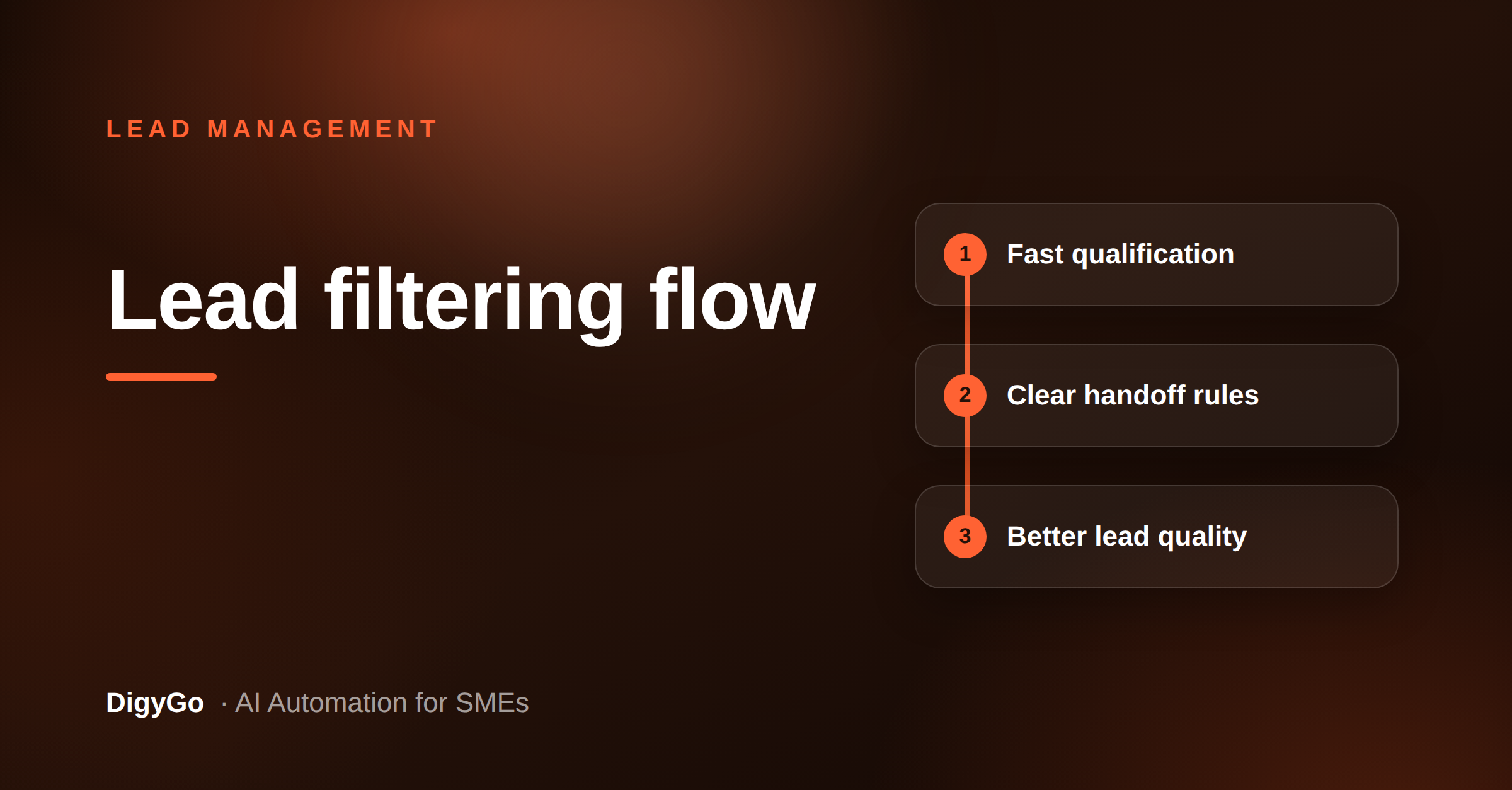
If your team is getting enquiries but the handoff is messy, the problem is often not lead volume — it is poor qualification. Before a lead reaches a person, the system should already know enough to route it, prioritize it, and avoid wasting sales time.
A practical guide for SMEs on qualifying leads before they reach sales, so the team spends time on real opportunities instead of noisy enquiries.
For SMEs, this is a practical way to stop good enquiries from getting buried. A simple qualification layer can capture the basics, filter out noise, and push only the right leads to the right person.
In this guide
- Why qualification should happen before handoff
- What fields to capture automatically
- How to score and route leads
- What your team should review weekly
Why qualification should happen before handoff
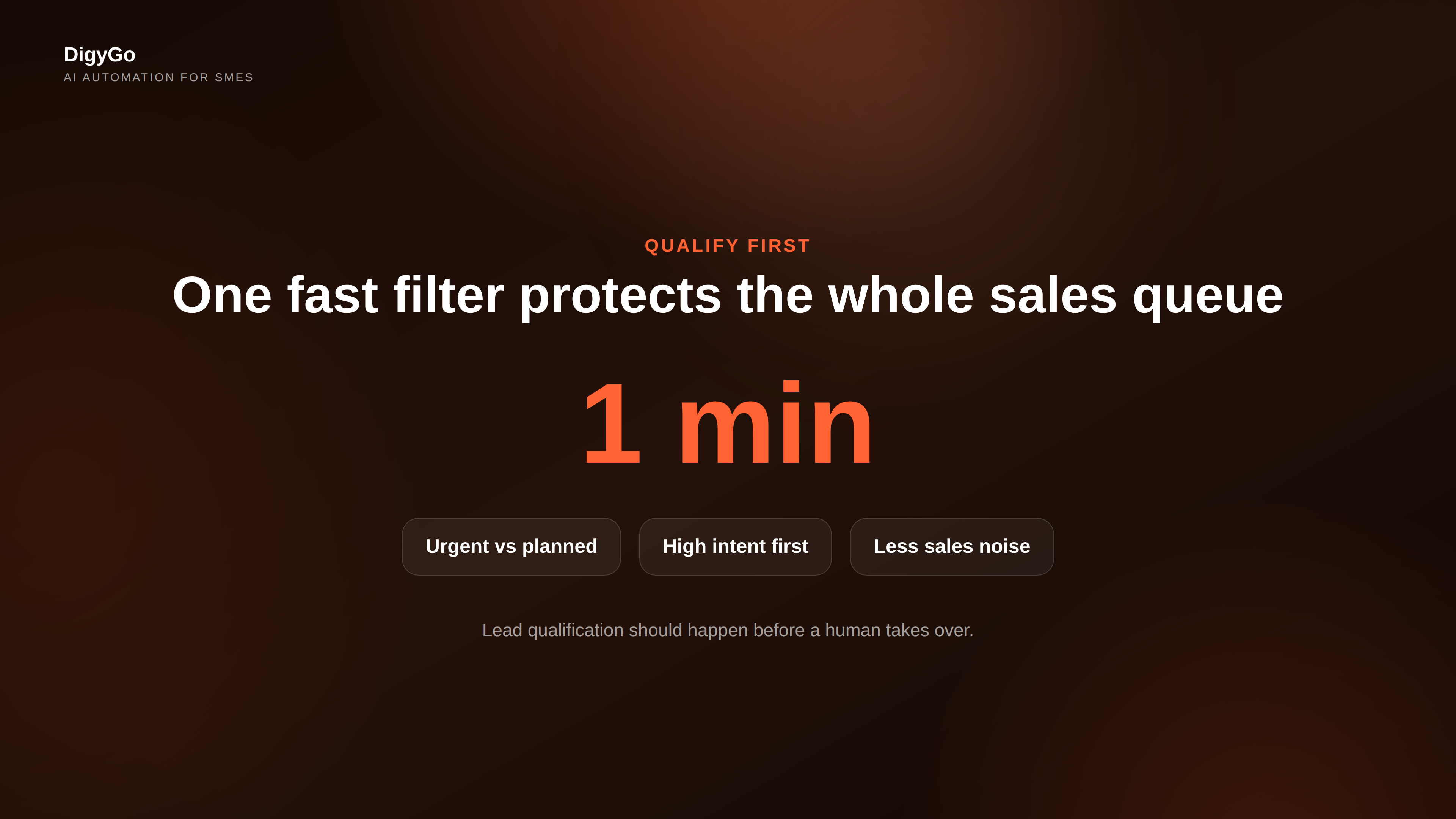
Most teams try to qualify after the lead has already reached sales. That creates delays, duplicated work, and inconsistent notes. If the first reply is also the qualification step, the team gets more context without adding another manual task.
The goal is not to interrogate every lead. The goal is to collect just enough detail to decide whether the enquiry is urgent, high intent, or still early-stage.
What to collect before a human steps in
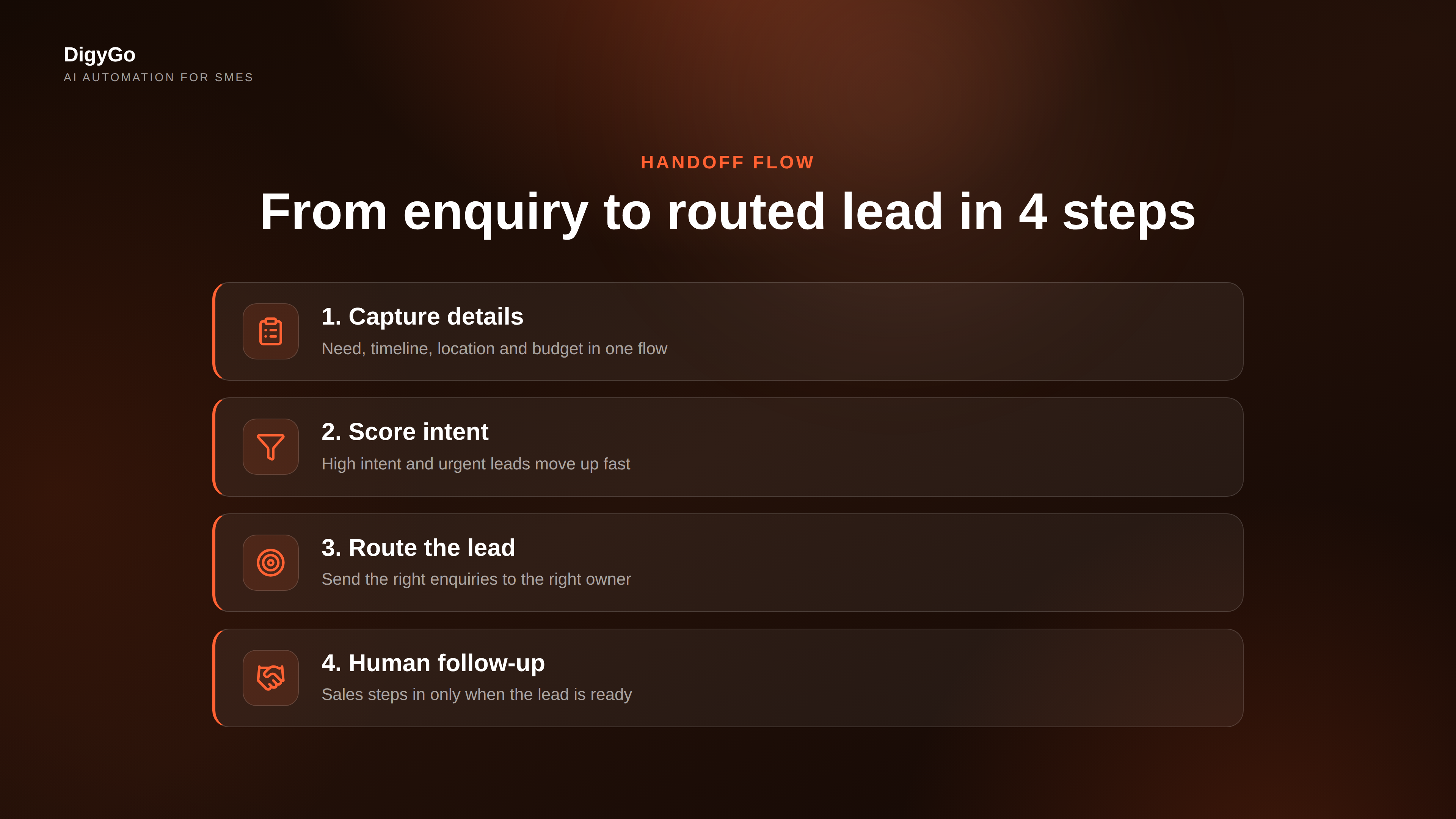
Keep the qualifying questions short. In most cases, four data points are enough to route a lead properly:
- What they need — the service, product, or outcome they want.
- How soon they need it — urgent, planned, or just exploring.
- Where they are — important for location-based delivery or visits.
- How serious they are — budget, timeline, or size of the request.
Once those details are captured, automation can decide whether to send a booking link, a follow-up sequence, or an immediate human alert.
A simple lead scoring rule that works
You do not need a complicated scoring model to get value. Start with a basic rule set:
- high intent + urgent timeline = notify sales immediately
- high intent + later timeline = put into nurture
- low detail + unclear budget = request one more qualifying reply
- spam or irrelevant = filter out automatically
This keeps the pipeline clean. More importantly, it prevents the sales team from treating every enquiry the same way.
What to review every week
A qualification system should get easier to run over time. Review these four numbers every week:
- qualified lead rate — how many enquiries meet the bar for handoff
- first-response time — how quickly the system replies
- handoff rate — how often a lead reaches a human
- booking or conversion rate — whether qualified leads actually move forward
If the qualified rate is too low, the questions may be too strict. If the team still feels overloaded, the filter may be too loose. Tune the rules until the system protects time and keeps the good leads moving.
Common mistakes to avoid
Do not ask five or six questions just because software allows it. Do not hand every lead to the same person. And do not force automation to make a final decision when the lead still needs a human conversation.
A good qualification flow removes friction, not opportunity. It gives your team a clear starting point so they can focus on the conversations that matter most.
FAQ
Should every lead be scored automatically?
No. Start with a few simple rules. If the rule set is clear and consistent, you can add more nuance later.
What if the lead refuses to answer questions?
Route them into a lighter nurture path and keep the door open. Some buyers just need more time before they share details.
Is qualification only useful for sales teams?
No. Marketing benefits too, because qualification data shows which campaigns bring real enquiries and which ones bring noise.
If you want help building a qualification flow that sorts leads before they waste time, talk to DigyGo and we’ll map the handoff for your business.