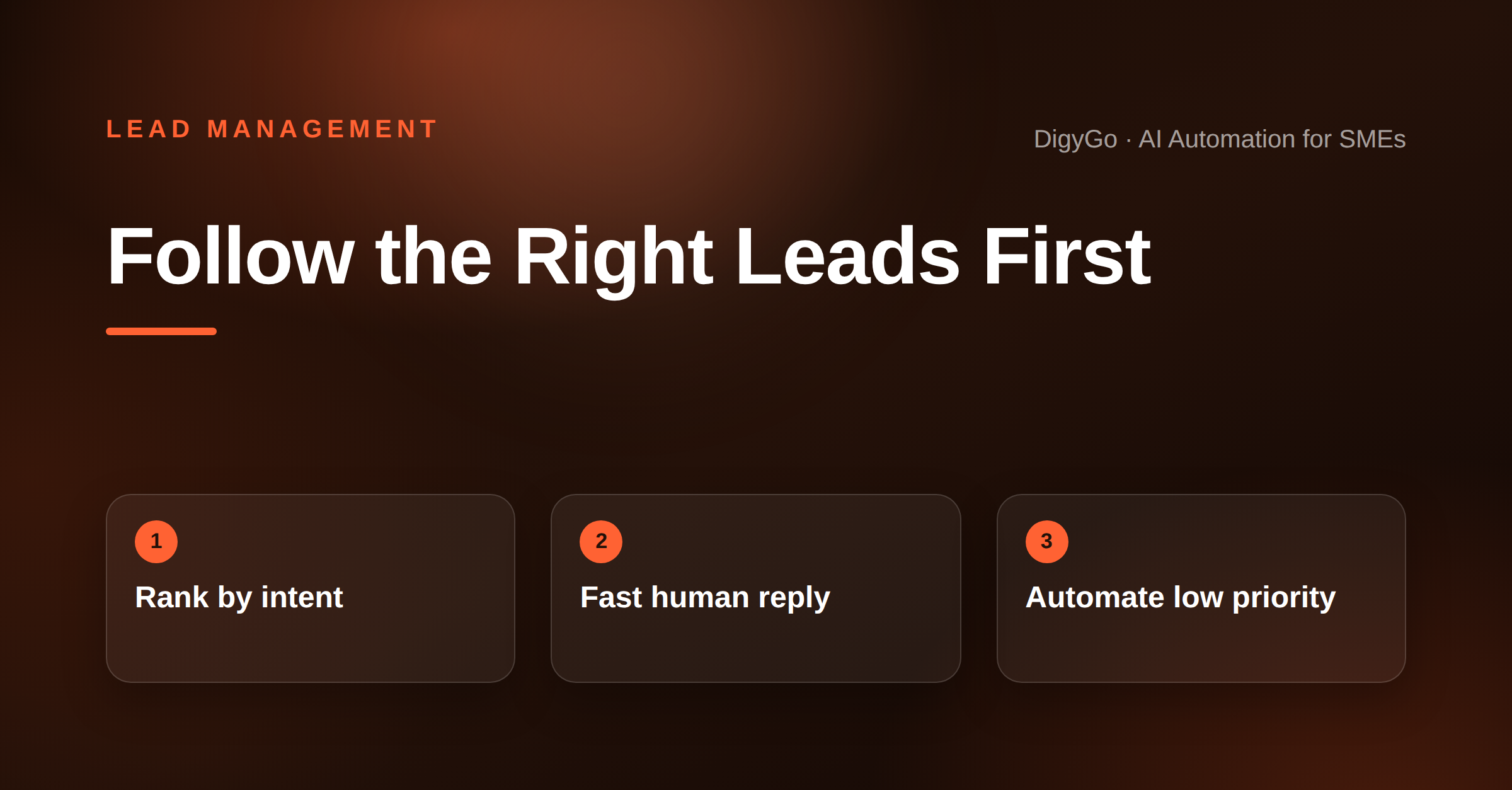
Most SMEs do not lose leads because they never reply. They lose them because every enquiry gets treated the same. A clear lead priority system helps your team decide who to call first, what to automate, and which prospects need a human conversation before they go cold.
A practical guide for SMEs on ranking enquiries by intent, fit, and urgency so the team knows which leads need a human reply first and which can be automated.
Why every lead should not get the same treatment
When a WhatsApp enquiry, a website form, a missed call, and a referral all land in the same place, the temptation is to work through them in order. That feels fair, but it is rarely smart. The buyer who asked for pricing five minutes ago should not wait behind someone who is only browsing.
A lead priority system gives your team a simple rulebook. It turns a messy inbox into a sequence of decisions:
- Who is most likely to buy soon?
- Who needs a fast human response?
- Who can be handled by automation first?
- Who should be parked for later nurture?
That shift matters because response speed is only one part of the equation. Relevance matters too. The more clearly you sort leads, the less time your team wastes on low-intent follow-up.
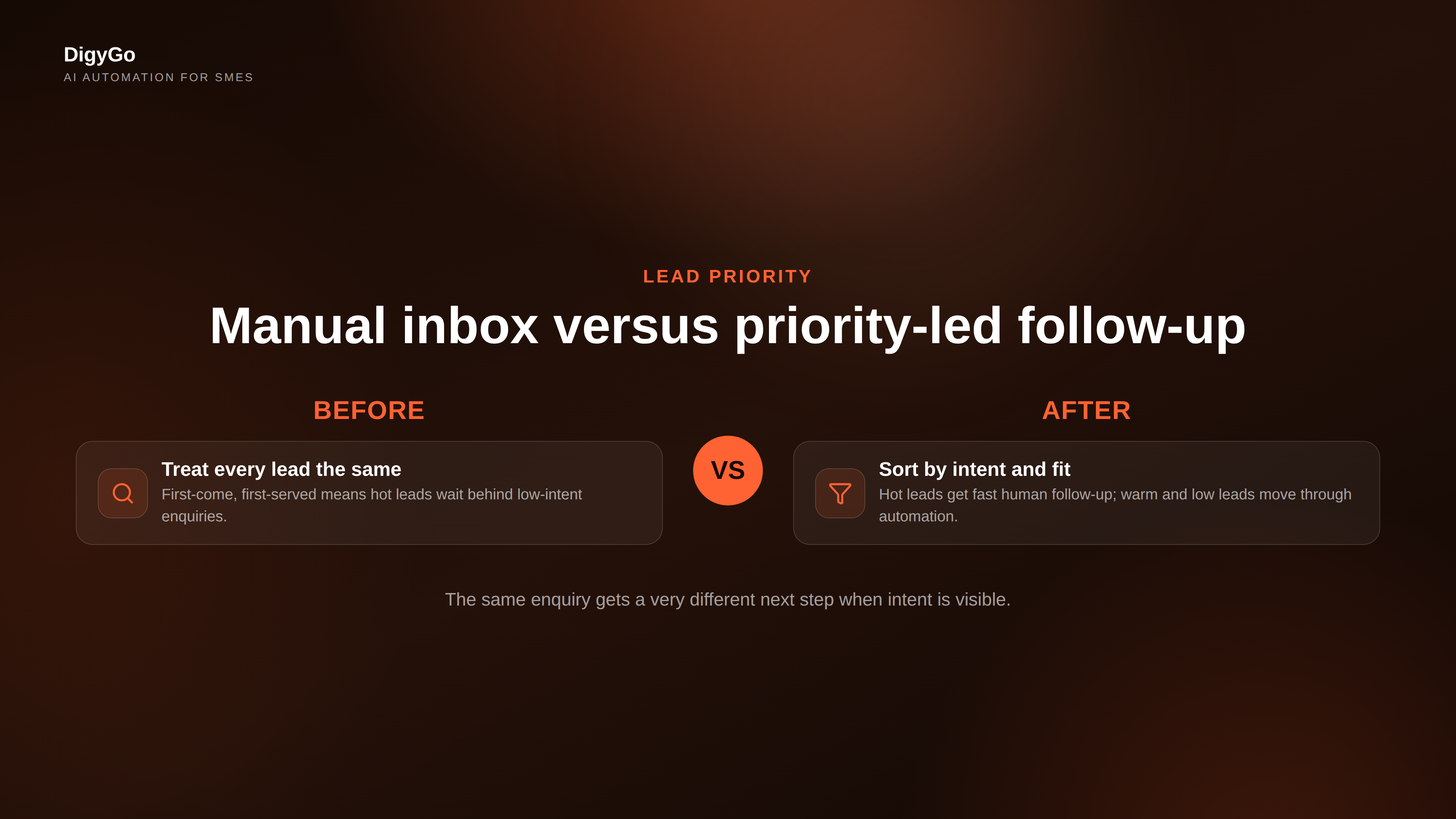
What a practical lead priority system looks like
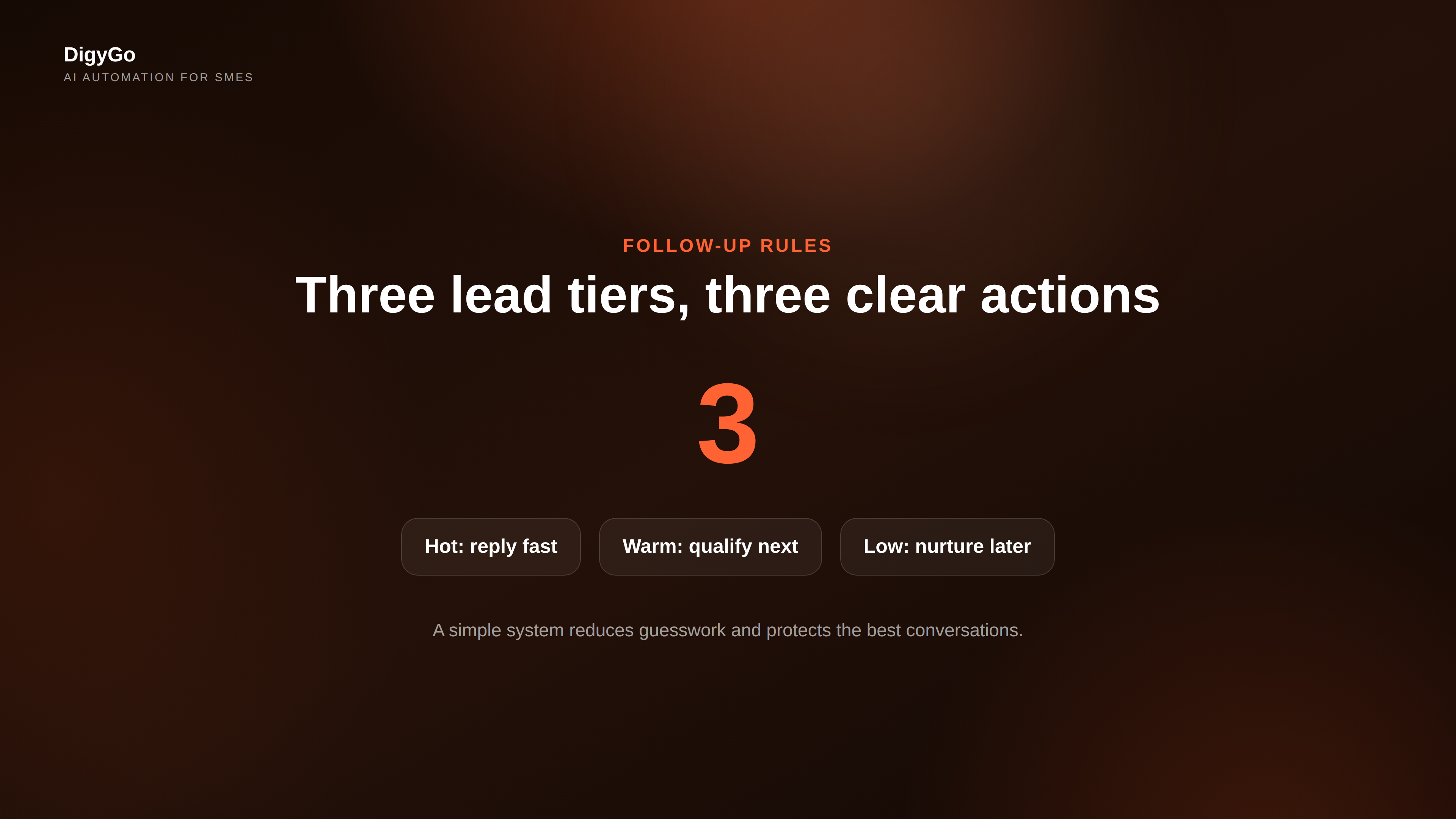
You do not need a complex scoring model to start. For most SMEs, a simple three-tier system works well: hot, warm, and low priority. The goal is not perfection. The goal is making sure the right lead gets the right next step.
From there, assign one action for each tier:
- Hot leads: call, voice note, or personal reply within minutes.
- Warm leads: send proof, case studies, or a short qualification flow.
- Low leads: automate the first response and move them into nurture.
This is where the system starts saving time. Your team stops guessing and starts working from rules.
Use four signals to decide priority
If you want the system to stay simple, score every new enquiry using four signals. You only need the basics: intent, fit, urgency, and source.
| Signal | What to look for | Priority hint |
|---|---|---|
| Intent | Asked for price, demo, or timeline | High |
| Fit | Matches your ideal customer profile | High |
| Urgency | Needs a solution this week or month | High |
| Source | Referral, repeat buyer, or cold enquiry | Referral and repeat buyers move up |
For example, a founder who fills a quote form from a referral is usually more valuable than a student asking broad questions on Instagram. A lead priority system makes that difference visible before the team wastes energy.
Automate the first touch, not the relationship
Automation should remove delay, not remove trust. Use it to acknowledge the enquiry, collect key details, and route the lead to the right person. Then let a human step in when the lead has enough intent to deserve a real conversation.
A good setup usually includes:
- instant confirmation on form submission
- basic qualification questions
- owner assignment by service or geography
- follow-up reminders for stalled leads
The mistake many SMEs make is automating everything equally. A lead priority system lets you automate the low-risk steps and protect the high-value conversations.
How to keep the system from drifting
The system only works if the team uses it consistently. That means naming one owner, reviewing lost leads, and checking whether the rules still match how buyers behave.
Keep the review short and repeatable:
- look at the last 20 enquiries
- check which ones converted fastest
- find leads that were delayed too long
- adjust the rules if the pattern changes
If your team keeps saying, “We were busy, so we replied later,” the system is not yet strong enough. The point is to reduce judgment calls in the moment.
FAQs
Is a lead priority system the same as lead scoring?
Not exactly. Lead scoring usually assigns numbers. A lead priority system is more practical: it tells the team what to do next, in what order, and which leads need manual attention first.
Can small teams use this without CRM complexity?
Yes. You can start with a shared inbox, a spreadsheet, or a simple CRM pipeline. The system matters more than the software.
What is the simplest way to begin?
Start with three buckets: hot, warm, and low. Then define one response rule for each bucket and review it every week.
Want this built for your lead flow? Talk to DigyGo about a lead priority system that fits your team.