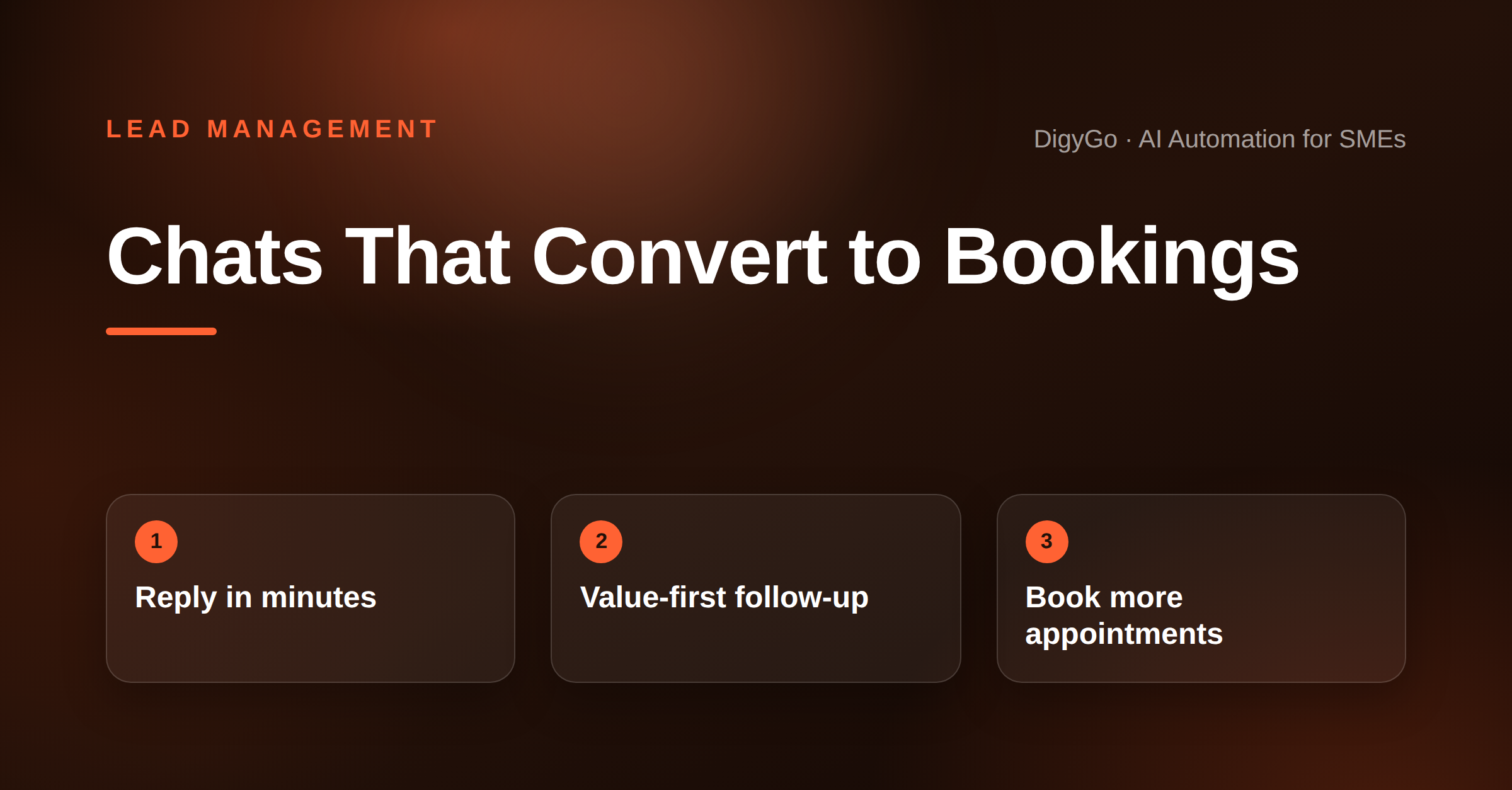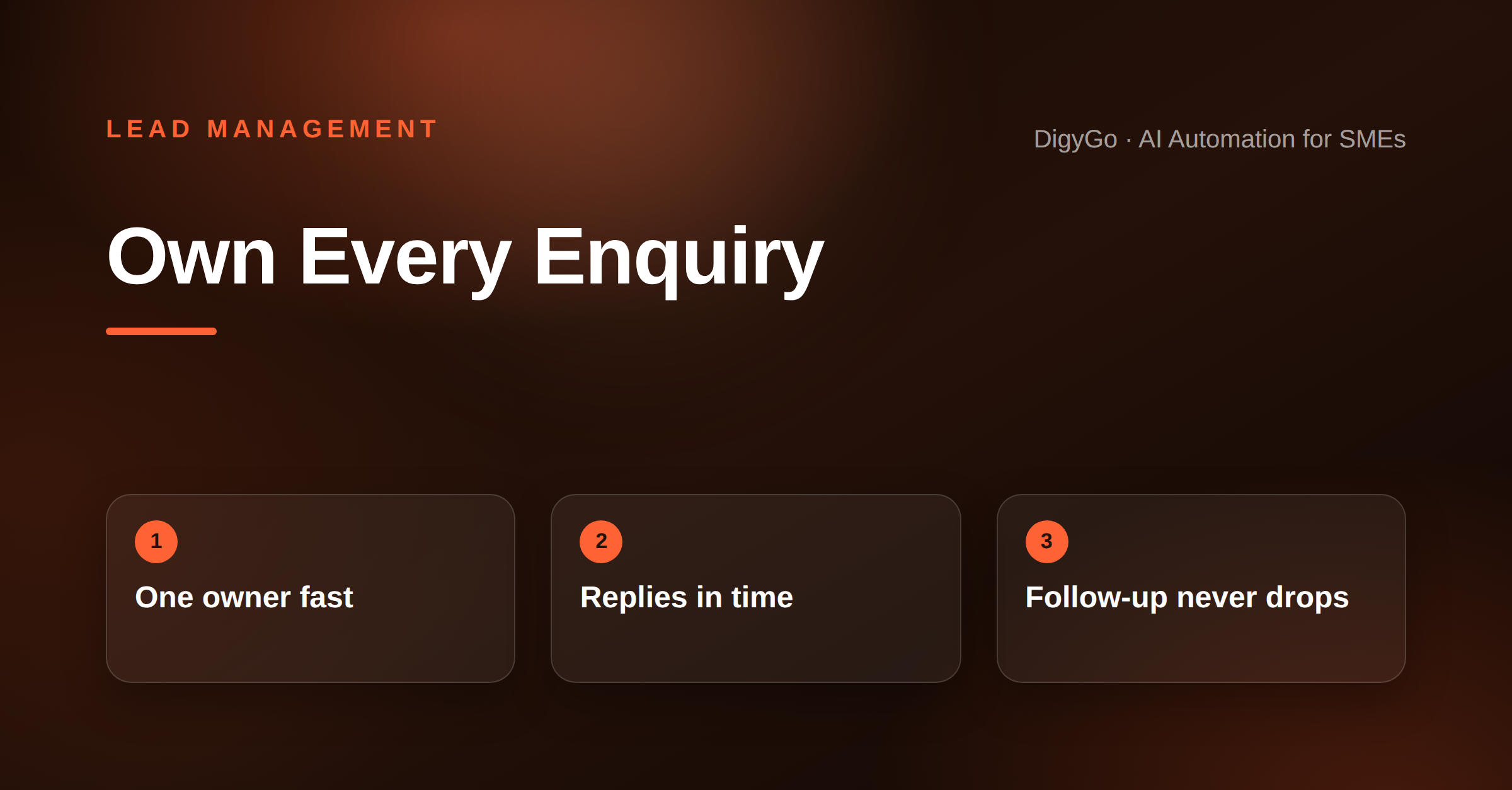
A shared inbox looks tidy on paper, but leads do not convert by being seen. They convert when one person owns the next action, one reply goes out fast, and every enquiry has a clear path to the next step.
A practical guide for SMEs on replacing shared inbox chaos with clear ownership, fast response SLAs, and reliable follow-up automation.
- Shared inboxes slow lead response because nobody feels ownership.
- Lead management improves when every enquiry has one owner, one SLA, and one follow-up path.
- Simple automation can log, assign, and remind without creating more admin.
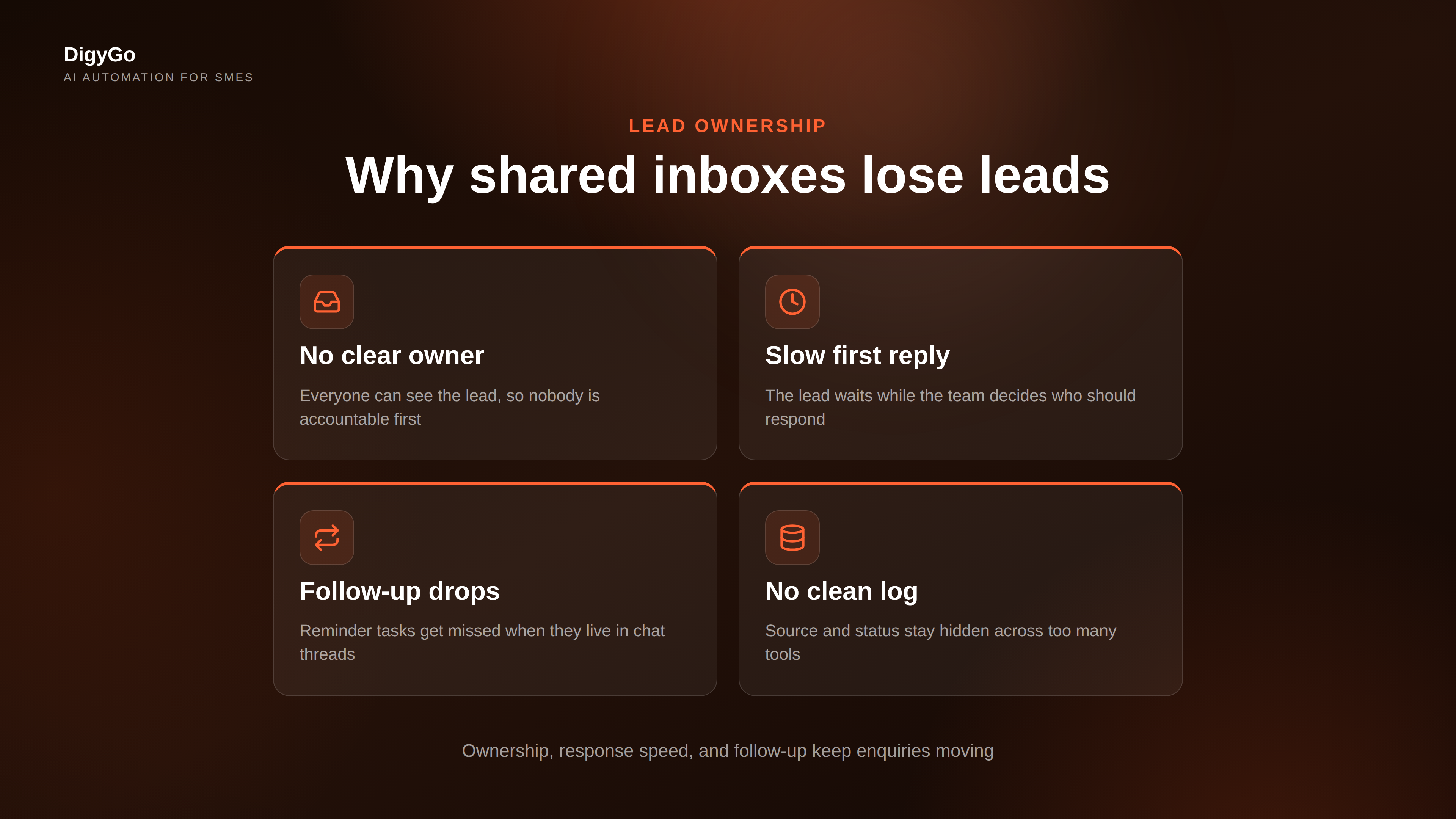
Why shared inboxes lose leads
Most SMEs start with a single inbox because it feels convenient. Sales, marketing, and operations can all see the messages, so nobody worries about missing anything. The problem is that visibility is not the same as ownership. When everyone can answer, nobody is clearly responsible for answering first.
That is where leads slip away. A prospect sends an enquiry, the team assumes someone else replied, and the conversation goes quiet for hours. By the time the right person reacts, the lead has already moved on to the business that answered sooner.
What strong lead ownership actually looks like
Lead ownership does not mean one person does everything. It means one person is accountable for the next move. The owner can hand off to sales, support, or the field team later, but the enquiry never sits in a grey zone.
A simple ownership model usually has four parts:
- One owner: a single person is assigned to the lead as soon as it arrives.
- One SLA: the team agrees how fast the first response must go out.
- One status: every lead has a visible stage, such as new, contacted, qualified, or booked.
- One follow-up path: unanswered leads move into a reminder sequence instead of being forgotten.
That structure matters because it turns lead handling from a memory test into a process. People can still work fast during busy days, but the system prevents the most common failure: nobody knows who owns the next step.
A simple lead management workflow for SMEs
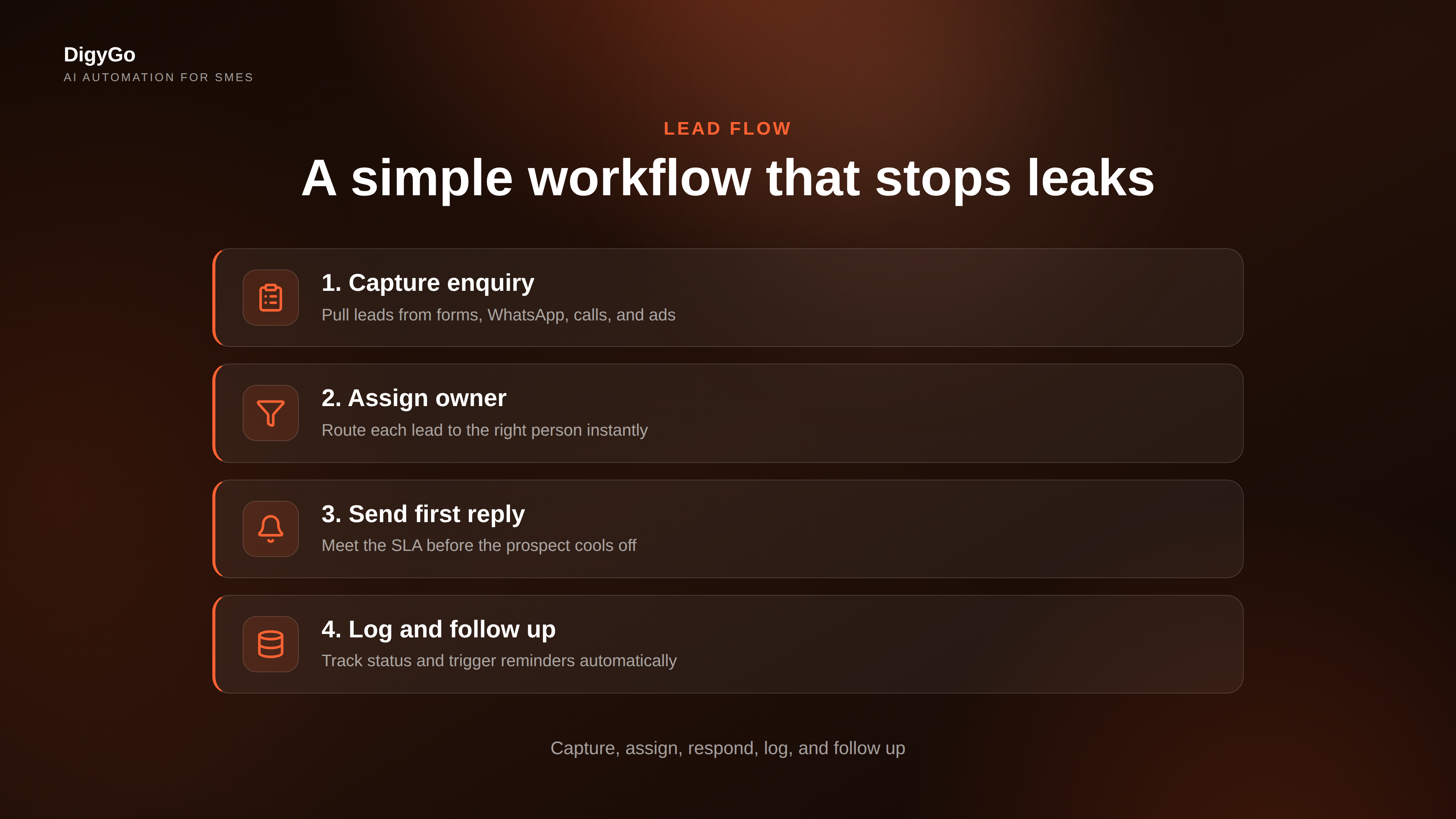
The best lead systems are boring in the right way. They make it easy to do the right thing every time. Here is a practical workflow any SME can use:
- Capture the enquiry from website forms, WhatsApp, calls, or ads.
- Assign the lead automatically to the right owner or queue.
- Send the first reply within the agreed SLA.
- Log the lead source, need, and priority in one place.
- Trigger follow-up if the prospect does not reply.
Once this loop is in place, the team spends less time asking who replied and more time moving qualified prospects forward.
Where automation saves the most time
Automation should remove delay, not replace judgment. In lead management, the most useful automations are the ones that handle the repetitive admin around response and ownership.
For example, an enquiry can be tagged by source, routed by service type, and assigned to the right person in seconds. A missed response can trigger a reminder. A stale lead can move into a follow-up sequence. None of that changes the sales conversation itself, but it keeps the conversation alive long enough to happen.
Signs your lead process needs fixing
If any of these feel familiar, your lead flow is probably leaking revenue:
- New enquiries sit in the inbox without a named owner.
- The first reply depends on who happens to be online.
- Follow-up happens only when someone remembers.
- No one can say which lead source produces the fastest conversions.
- The team keeps asking for updates instead of seeing them in the system.
Those are not sales problems alone. They are process problems. And process problems are easier to fix than pipeline problems because the missing piece is usually clarity, not effort.
How to improve lead management this week
If you want a quick win, start with one rule: every lead gets one owner immediately. Then add a response SLA, a follow-up rule, and a simple status label. That alone will improve accountability and reduce the number of enquiries that vanish between teams.
From there, automate the handoff points that cause the most delay. The goal is not to create a complicated CRM setup. The goal is to make sure every genuine enquiry gets a fast response and a clear next step.