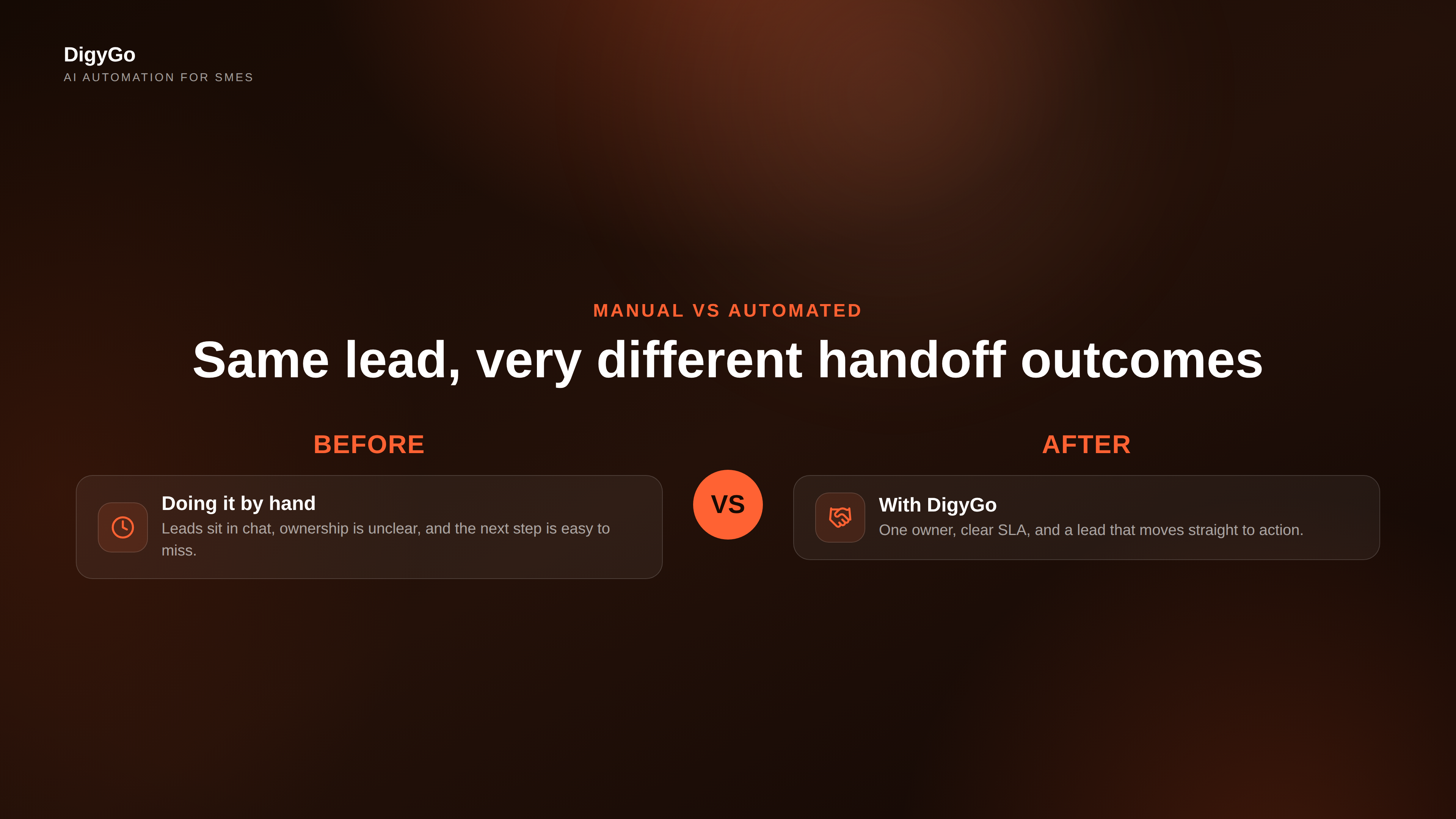
A lead handoff system is what keeps a fast enquiry from turning into a slow internal mess. When marketing, sales, and ops all touch the same lead, the handoff has to be clear, timed, and owned. Otherwise, the first reply happens quickly, but the deal still dies in the gap between teams.
A practical guide for SMEs on building a lead handoff system that assigns ownership, keeps response times tight, and stops hot enquiries from slipping between teams.
Why lead handoffs break even when response time looks good
Many SMEs think they have a lead problem when they actually have a handoff problem. The enquiry lands, someone replies, and then the record gets lost in WhatsApp, a spreadsheet, or a manager's head. The lead is still warm, but nobody owns the next step.
That is why a lead management system has to do more than send alerts. It needs to define who picks up the lead, what qualifies it, and what happens if the lead is not ready to buy yet.
Build the handoff rules before you build the follow-up
Start with four simple rules:
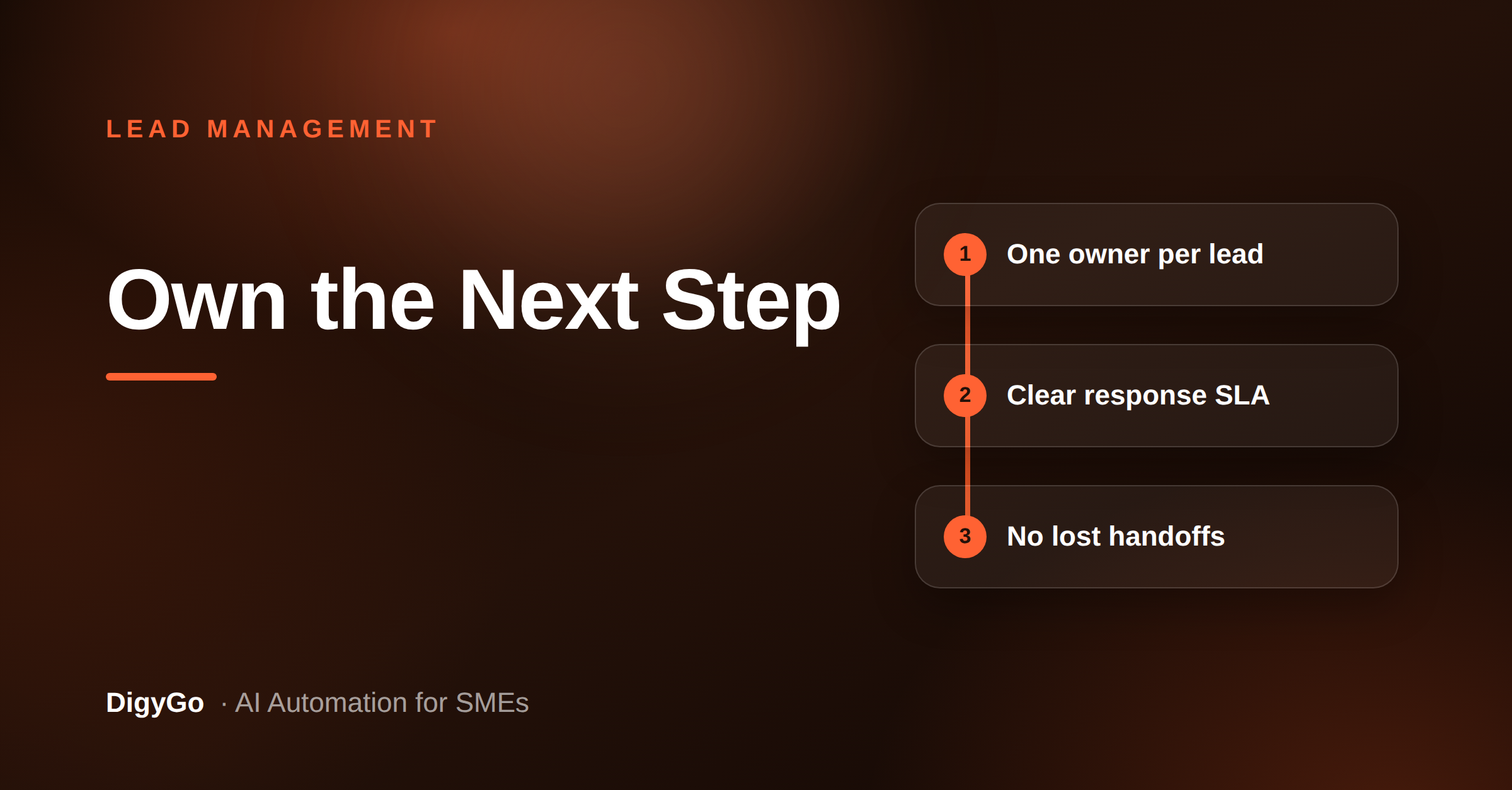
- One owner per lead. Every lead should have one person responsible for the next action.
- One response SLA. Set a clear window for the first reply and make it visible to the team.
- One qualification path. Decide which questions must be answered before sales takes over.
- One next action. Every handoff should end with a booked call, a callback time, or a nurture step.
When those rules are missing, the handoff becomes a relay race with no baton. When they are clear, the enquiry moves from capture to action with far less friction.
What to capture at handoff
Do not send a lead forward with only a name and phone number. Capture the source, need, urgency, service interest, and preferred contact time. That information helps the next person answer well instead of starting from zero.
Turn the handoff into a repeatable workflow
Once the rules are set, automate the movement. A clean workflow usually looks like this:
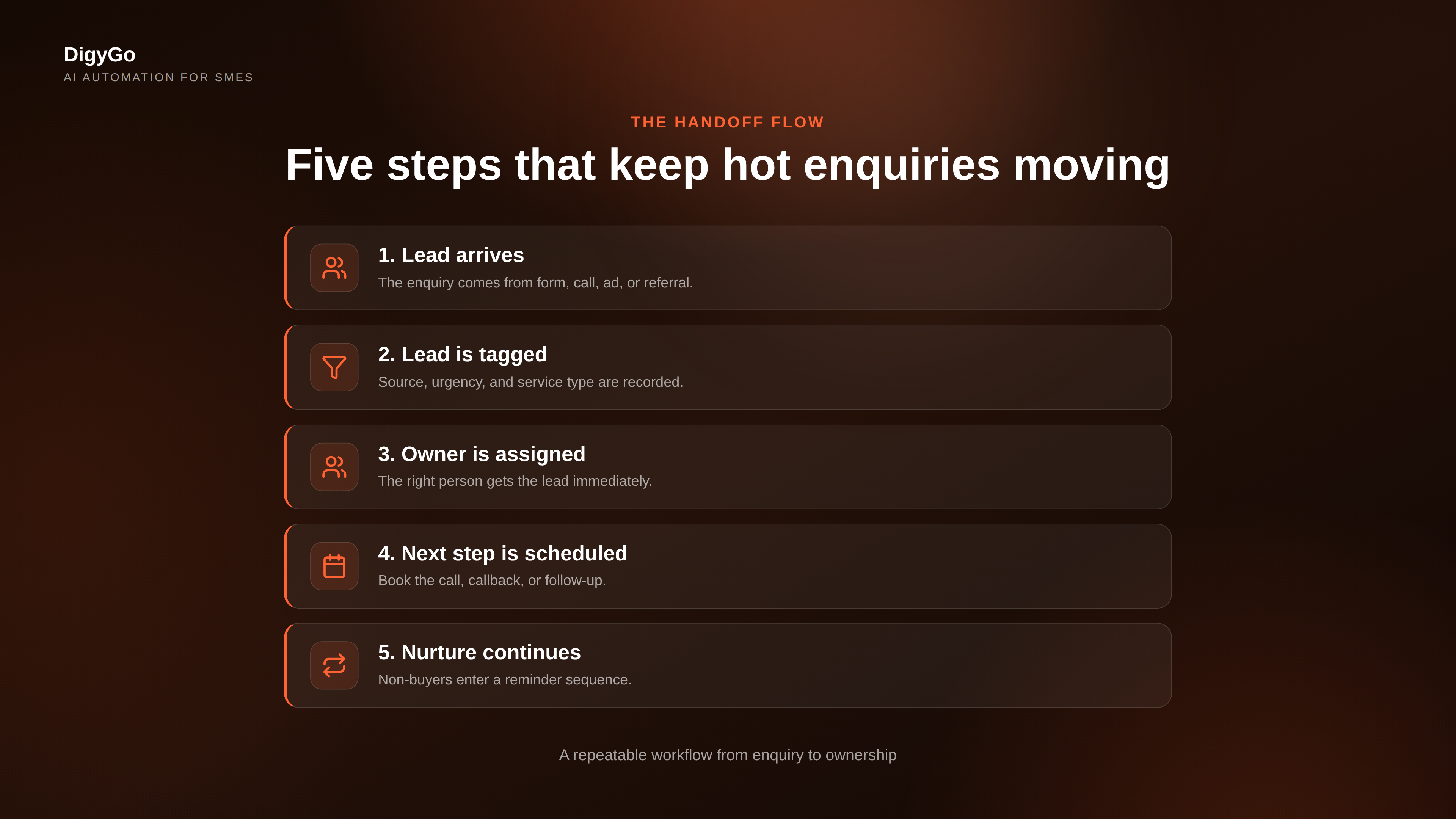
- Lead arrives. The enquiry comes from a form, call, ad, or referral.
- Lead is tagged. The system marks the source, urgency, and service type.
- Owner is assigned. The right person gets the lead immediately.
- Next step is scheduled. Sales books the call, callback, or follow-up.
- Non-buyers are nurtured. If the lead is not ready, it enters a reminder sequence.
This is where automation creates consistency. Instead of asking the team to remember every follow-up, the system keeps the lead moving until it reaches a decision.
FAQ
Is a lead handoff system only useful for bigger teams?
No. Smaller teams often need it more because every missed lead hurts faster. Even a two-person business benefits from having clear ownership and next steps.
What is the biggest mistake in lead handoff?
Sending the lead to the next person without context. If the owner has to ask basic questions again, the handoff is already broken.
Should every lead be passed to sales immediately?
Not always. Some leads need qualification or nurture first. The goal is not to rush every enquiry. The goal is to route each one to the right next action.