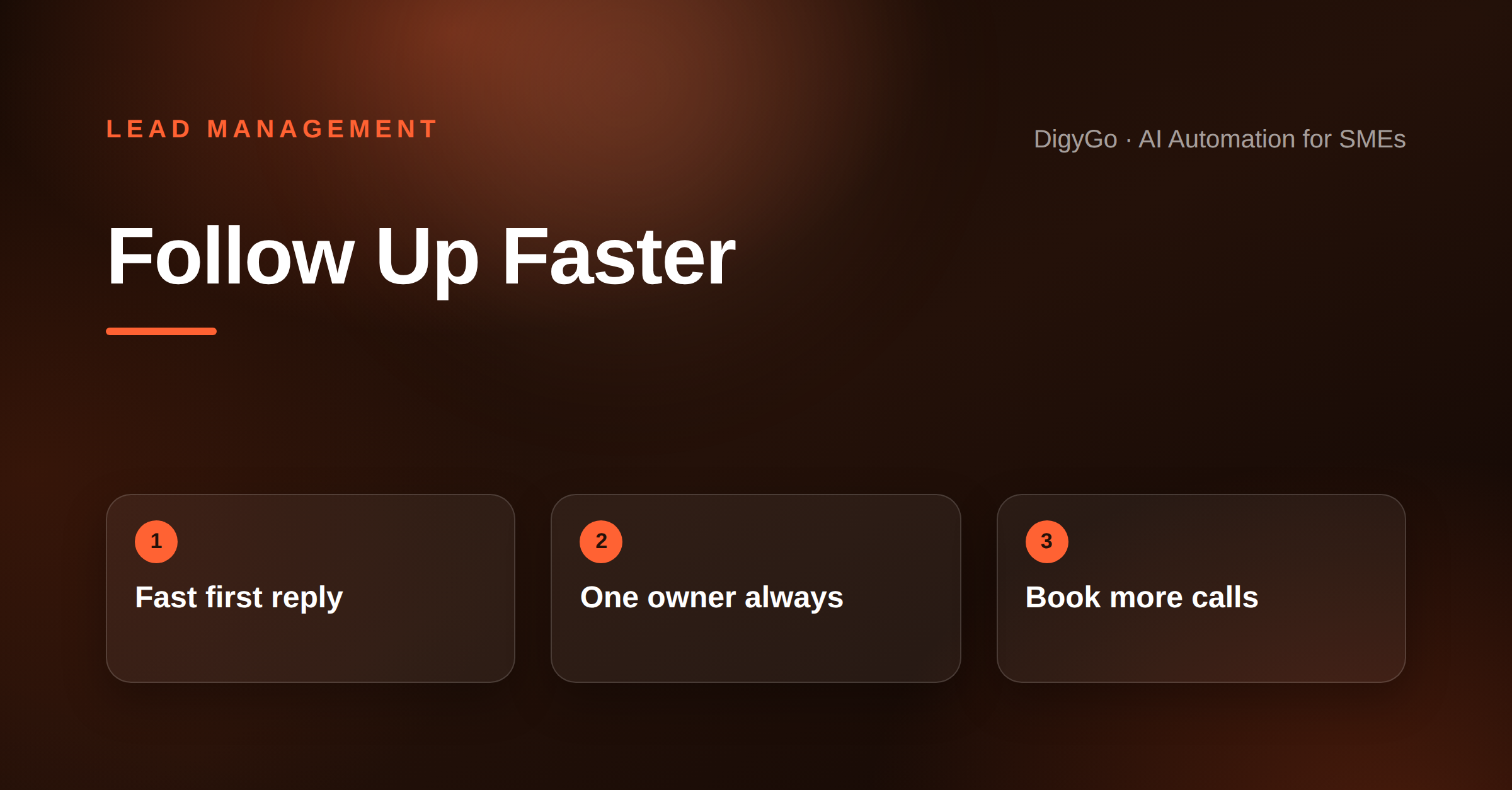
Most SMEs lose good enquiries for one simple reason: nobody owns the next follow-up. A strong lead follow-up system closes that gap by responding fast, qualifying the enquiry, and keeping the conversation alive until the prospect is ready to book.
A practical guide for SMEs on building a reliable lead follow-up system that responds fast, assigns ownership, and keeps hot enquiries from going cold.
Key takeaways
- Speed matters, but structured follow-up matters more.
- Every lead needs an owner, a next step, and a deadline.
- Automation should support the conversation, not replace it.
Why hot enquiries go cold
When a lead fills a form, sends a WhatsApp message, or asks for a quote, the clock starts immediately. If the first reply is slow, vague, or inconsistent, the lead moves on. In many SMEs, the problem is not lead volume. It is broken handoff.
A reliable follow-up system fixes three things at once: response time, accountability, and message quality. That is why it usually converts better than simply spending more on ads.
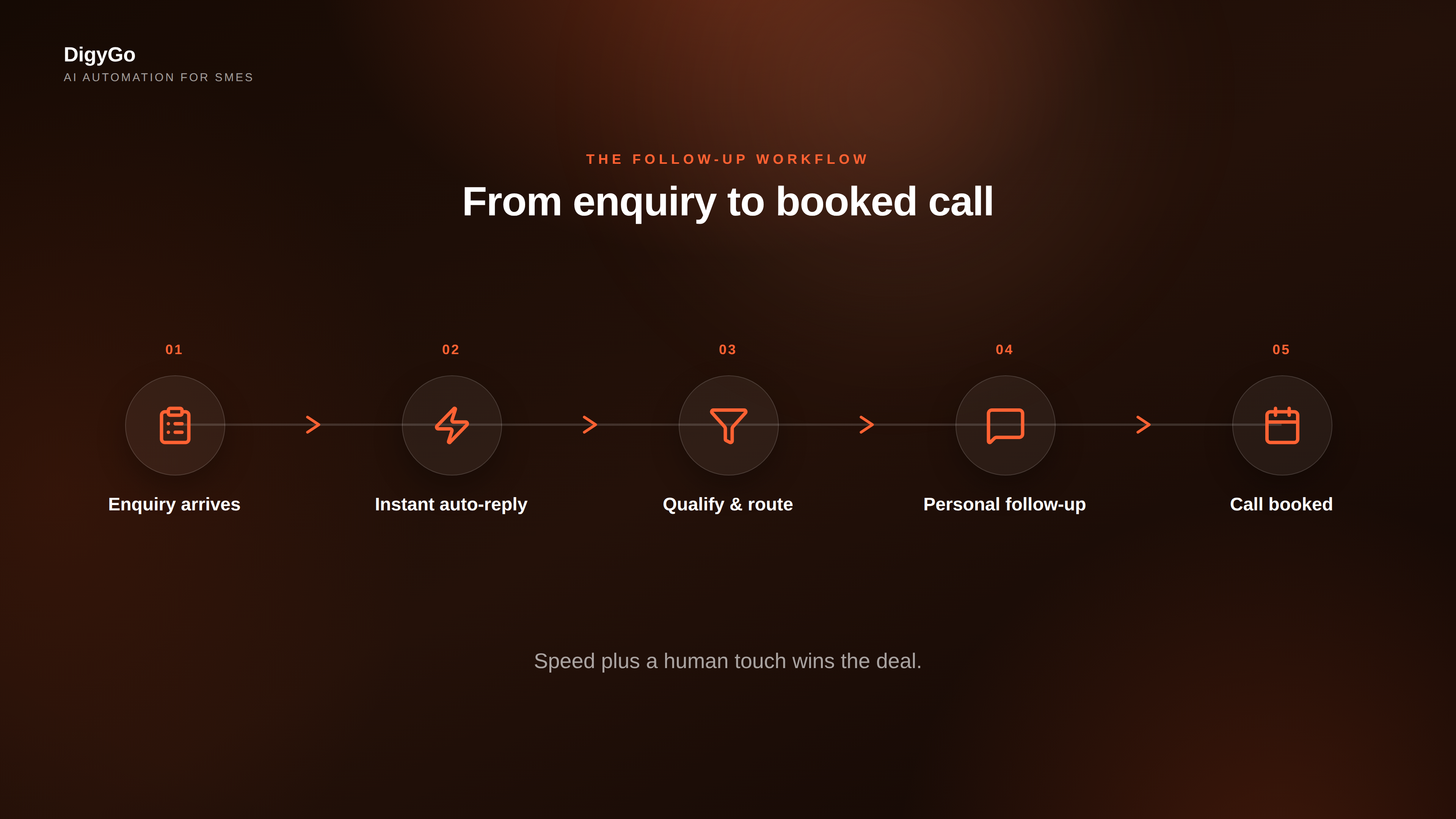
The follow-up workflow that works
Keep the process simple enough for the team to use every day. A good system follows the same path for every enquiry, whether it comes from a website form, social ad, or referral.
- Capture instantly: send the lead into one inbox or CRM the moment it arrives.
- Respond with context: reply with the exact next step, not a generic thanks message.
- Qualify quickly: ask only the questions needed to decide fit, budget, and urgency.
- Assign ownership: one person owns the lead until it is booked, won, or closed out.
- Automate reminders: if the lead does not reply, trigger a follow-up sequence automatically.
Simple rule: every lead should always have one owner and one next action.
What to automate and what to keep human
Automation should handle the repeatable parts of the process. Humans should handle the parts that build trust.
| Automate | Keep human |
|---|---|
| Instant acknowledgement | Detailed discovery questions |
| Lead assignment | Pricing conversations |
| Follow-up reminders | Objection handling |
| No-reply nudges | Proposal discussion |
A practical follow-up sequence for SMEs
If you want a starting point, use a simple three-touch sequence. It is enough to recover missed replies without overwhelming the prospect.
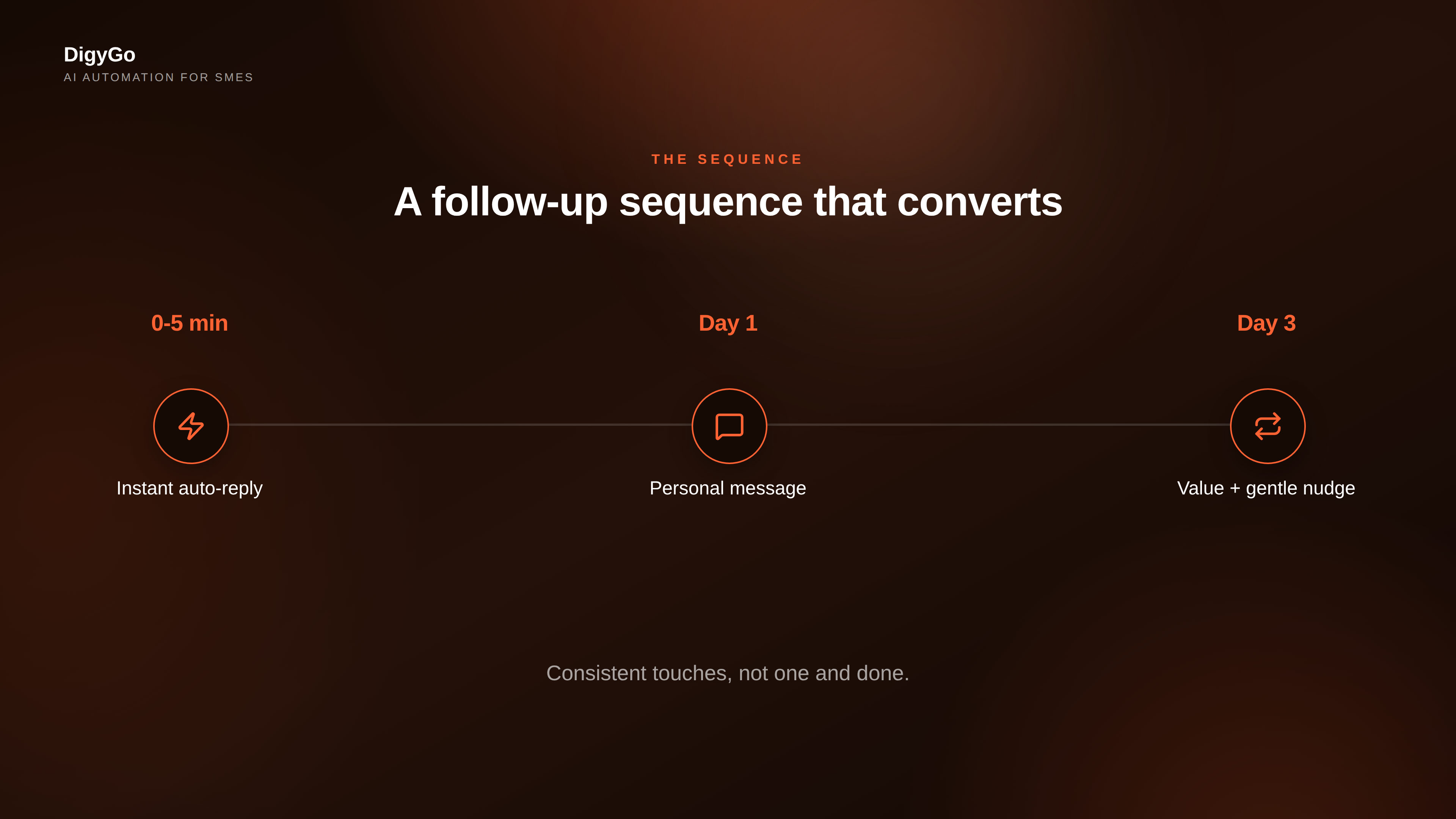
- Touch 1: instant response with the promise of the next step.
- Touch 2: a helpful reminder with one proof point or relevant example.
- Touch 3: a clear close-the-loop message asking if they still need help.
This sequence works because it respects the buyer’s time while keeping your business visible. It also gives your team a standard playbook instead of improvising every reply.
Common mistakes that kill conversion
Most lead systems fail because of small, repeated mistakes. Fix these first before adding more tools.
- Sending the same generic reply to every enquiry.
- Leaving the lead with no named owner.
- Waiting until the end of the day to respond.
- Following up without a clear next step.
Once these basics are fixed, you can improve the system with routing rules, lead scoring, and CRM automation.
What good looks like
A strong lead follow-up system does not feel complicated to the team. It feels calm. Leads arrive in one place, the right person responds quickly, reminders fire automatically, and every conversation moves toward a decision.
That is how SMEs stop letting hot enquiries cool off before sales even gets a chance.
FAQ
How fast should SMEs reply to a new lead?
As fast as possible, ideally within minutes during working hours. The first reply should confirm receipt and tell the lead what happens next.
Do follow-up sequences annoy prospects?
Not when they are relevant, spaced properly, and easy to opt out of. Useful follow-up feels like service, not pressure.
What tool is enough to start?
Start with a shared inbox, WhatsApp, or a simple CRM workflow. The process matters more than the platform.
Need help building a lead follow-up system for your SME? Talk to DigyGo.