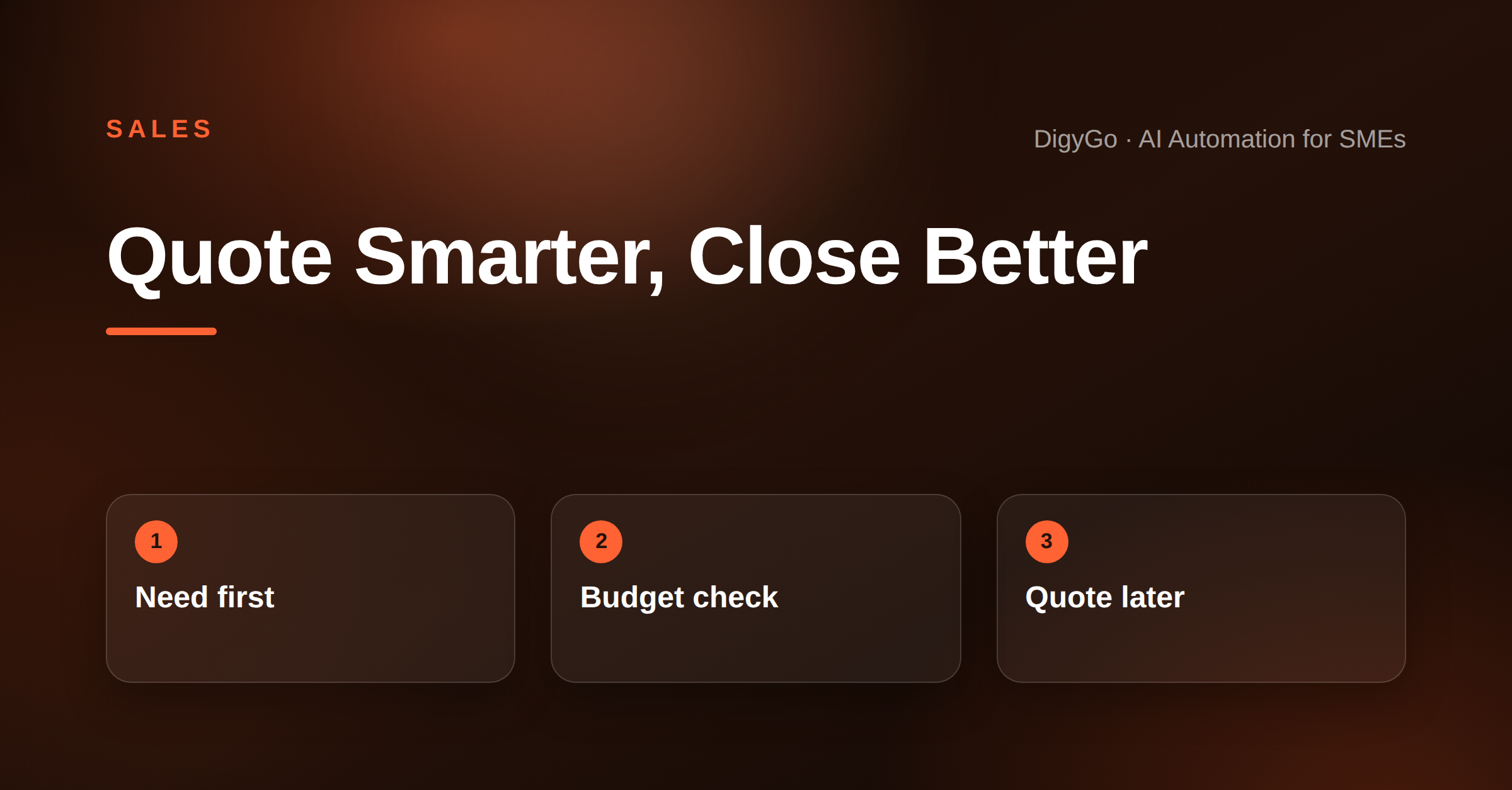
Many SMEs lose good deals because they quote too early. A fast quote feels responsive, but if the fit is weak, the buyer only uses your number to compare you with cheaper alternatives. The better move is to qualify the lead first, then send a quote that matches the real problem, budget, and timeline.
A practical sales playbook for SMEs on qualifying leads before quoting so teams protect time, reduce discounting, and send offers that actually fit.
Why qualification matters more than speed
In many sales teams, the habit is simple: if someone asks for pricing, send the proposal and hope for the best. That approach creates busy work, not better close rates. A quote only helps when the lead has a real need, enough budget, and a decision path you can influence.
When you qualify properly, you do three things at once. You protect your time, you make the quote more relevant, and you reduce awkward discounting later. Instead of racing to the bottom, you position the offer around outcomes, scope, and next steps.
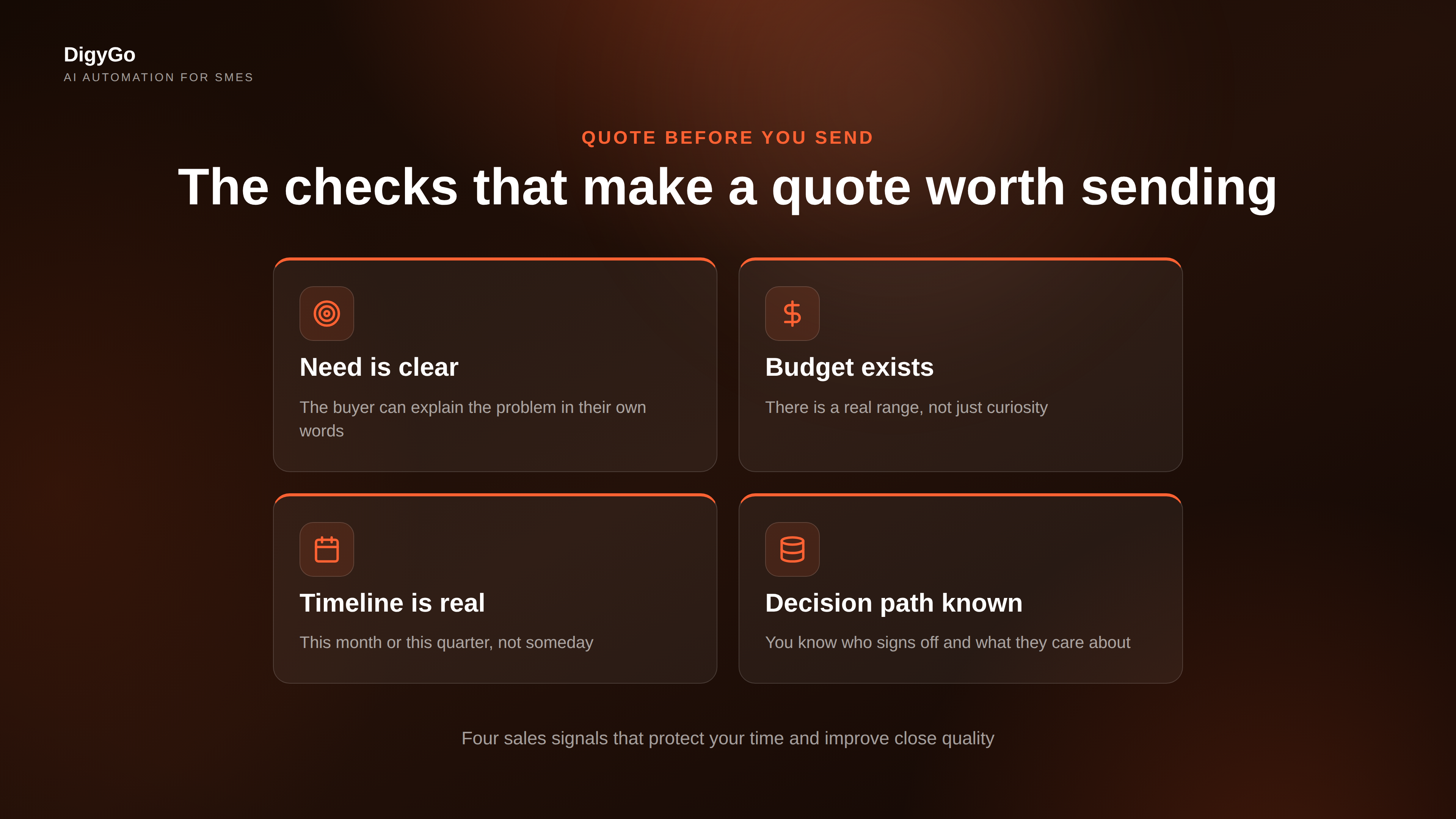
Ask whether the lead is ready to buy
A ready-to-buy lead usually has a current problem, a clear owner, and some urgency. If any of those are missing, the conversation should stay in discovery mode. You can still be helpful, but a formal quote should wait until the buyer can actually act on it.
What to check before you quote
- Problem clarity: Can the buyer explain the issue in their own words?
- Budget range: Do they have a real spending band, even if it is rough?
- Decision maker: Who approves the purchase and what do they care about?
- Timeline: Is this for this month, this quarter, or just research?
- Success criteria: What result would make them say yes?
If you can confirm at least three of those five items, the lead is usually worth quoting. If not, your job is to ask better questions before sending numbers that cannot close.
Build a simple quote filter for your team
You do not need a complex sales stack to improve qualification. A short checklist inside your CRM or WhatsApp follow-up process is often enough. The goal is to force one decision: quote now, nurture later, or disqualify politely.
Use a three-step filter. First, confirm the business problem. Second, confirm that the lead can buy within a reasonable time. Third, confirm that your service is a fit for the scope they described. If one step fails, hold the quote and keep the lead warm with a specific follow-up.
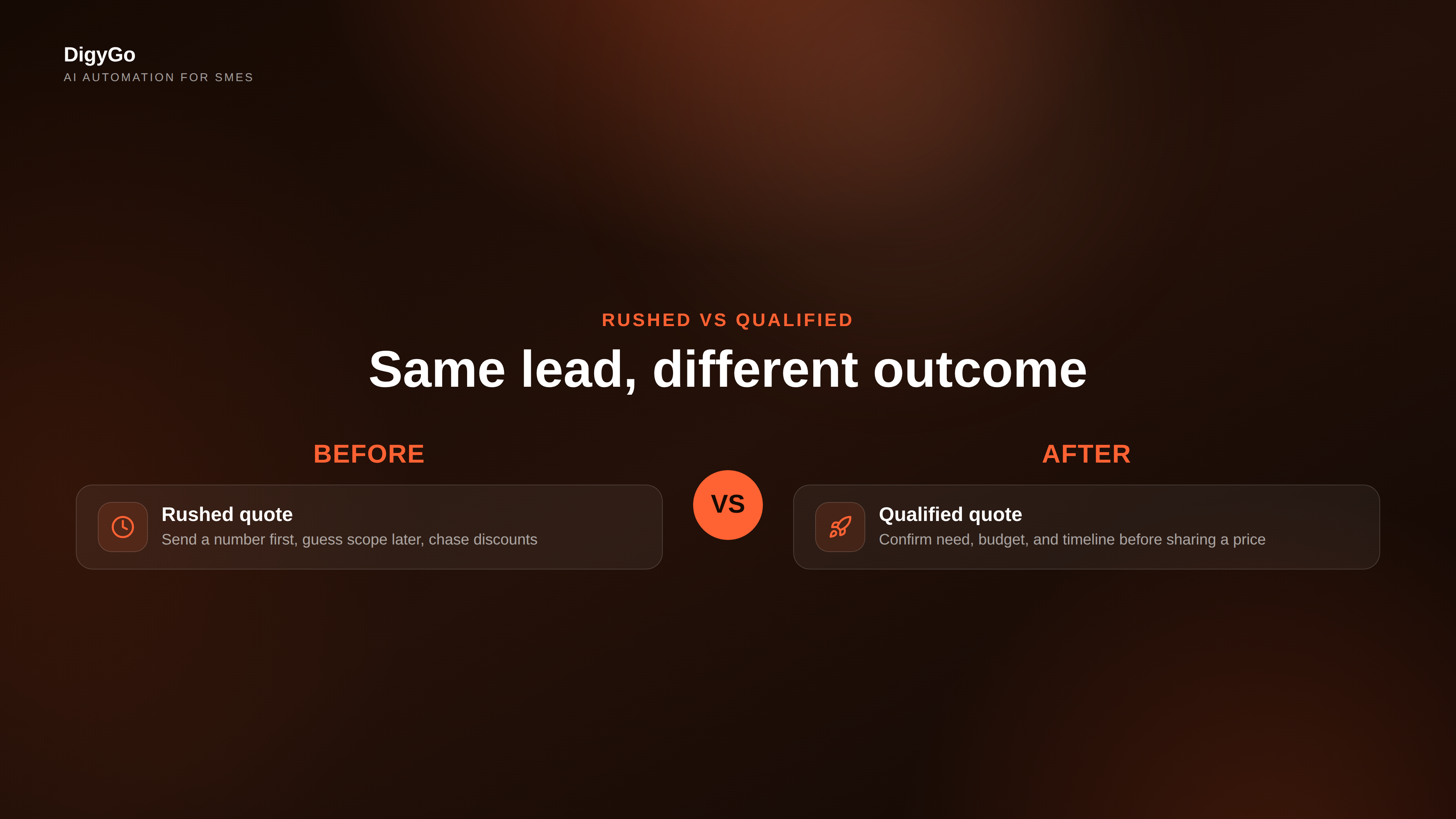
What changes when you filter first
Your proposals become shorter, sharper, and easier to approve. You stop sending generic price sheets and start sending offers tied to the buyer's actual situation. That usually improves response quality because the lead feels understood instead of processed.
It also gives your sales team a cleaner pipeline. Fewer bad quotes means fewer dead-end follow-ups, fewer discount requests, and more time for deals that can genuinely close.
Quote templates that convert better
A strong quote should do more than list numbers. It should remind the buyer why the offer exists, what outcome it supports, and what happens next if they approve it. That turns the quote into a decision document, not just a price attachment.
- State the problem first. Start with the buyer's goal or pain point.
- Show the recommended scope. Keep the solution tied to the real need.
- Explain the outcome. Spell out what success looks like.
- Make the next step obvious. Include a clear approval or call slot.
When the quote reflects the discovery call, it feels like a continuation of the conversation. That makes it easier for the buyer to justify the purchase internally and easier for your team to defend the price.
FAQ
Should I ever send a quote on the first call?
Only if the buyer already has a clear need, budget, and timeline. If not, send a follow-up summary and qualify the lead first.
What if a lead insists on pricing immediately?
Give a range if needed, but explain that the final quote depends on scope. That protects you from underpricing work you have not fully understood.
How many qualification questions are enough?
Five good questions are usually enough if they cover problem, budget, timeline, decision maker, and success criteria.