If your sales team keeps hearing “send me a quote” and then silence, the issue may not be your pricing. It may be the way you present your offer. A sales offer ladder gives prospects a clearer path from small yes to bigger yes, so closing feels easier for both sides.
A practical sales playbook for SMEs on structuring a simple offer ladder that reduces pressure, handles objections earlier, and helps close more of the right deals.
Key takeaways
- Lead with the smallest useful commitment.
- Show the next step before you mention the full package.
- Use proof and scope to reduce hesitation.
- Keep the quote tied to outcomes, not just hours.
Why a sales offer ladder works
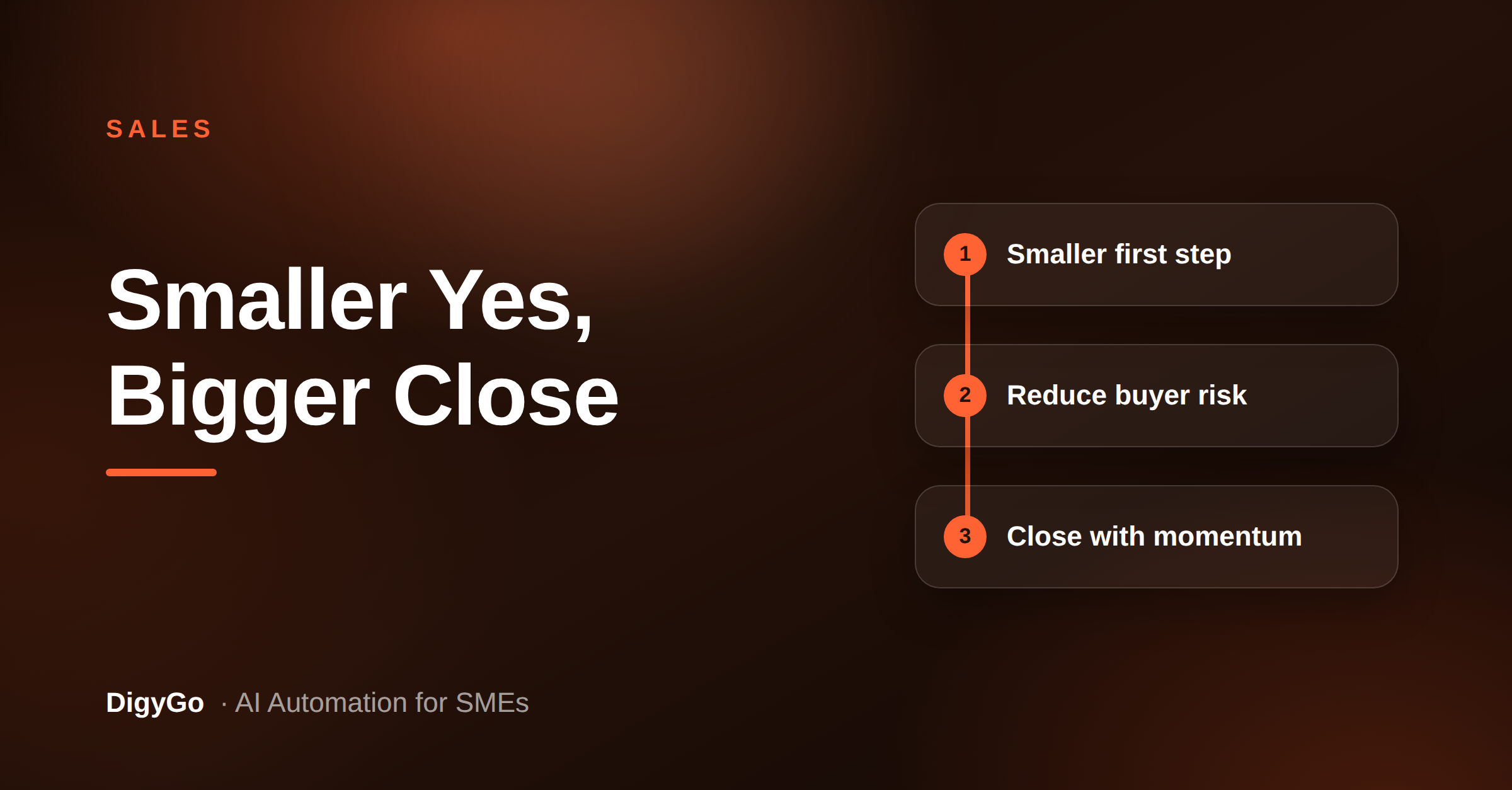
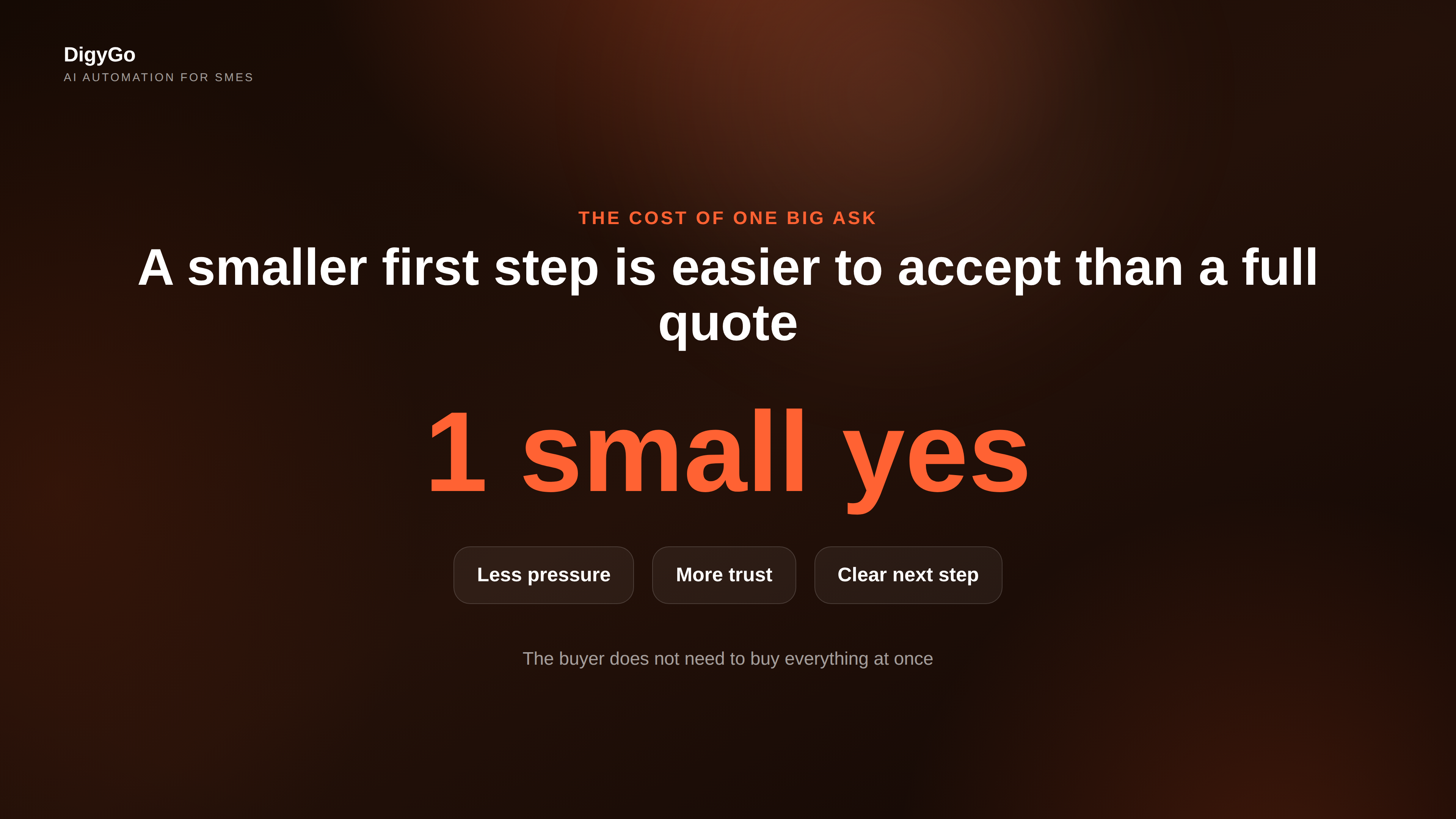
Most SMEs try to close one big offer too early. That can create friction, especially when the buyer is still unsure about fit, timing, or budget. A ladder works because it breaks the buying decision into smaller moves. Instead of asking for full trust on the first call, you ask for the next logical step.
For founders and sales teams, that usually means moving from diagnostic conversation to a scoped starter offer, then to the full implementation or retainer. Each step should feel natural. The prospect should understand why that step exists and what it solves.
Build the ladder from the buyer’s hesitation
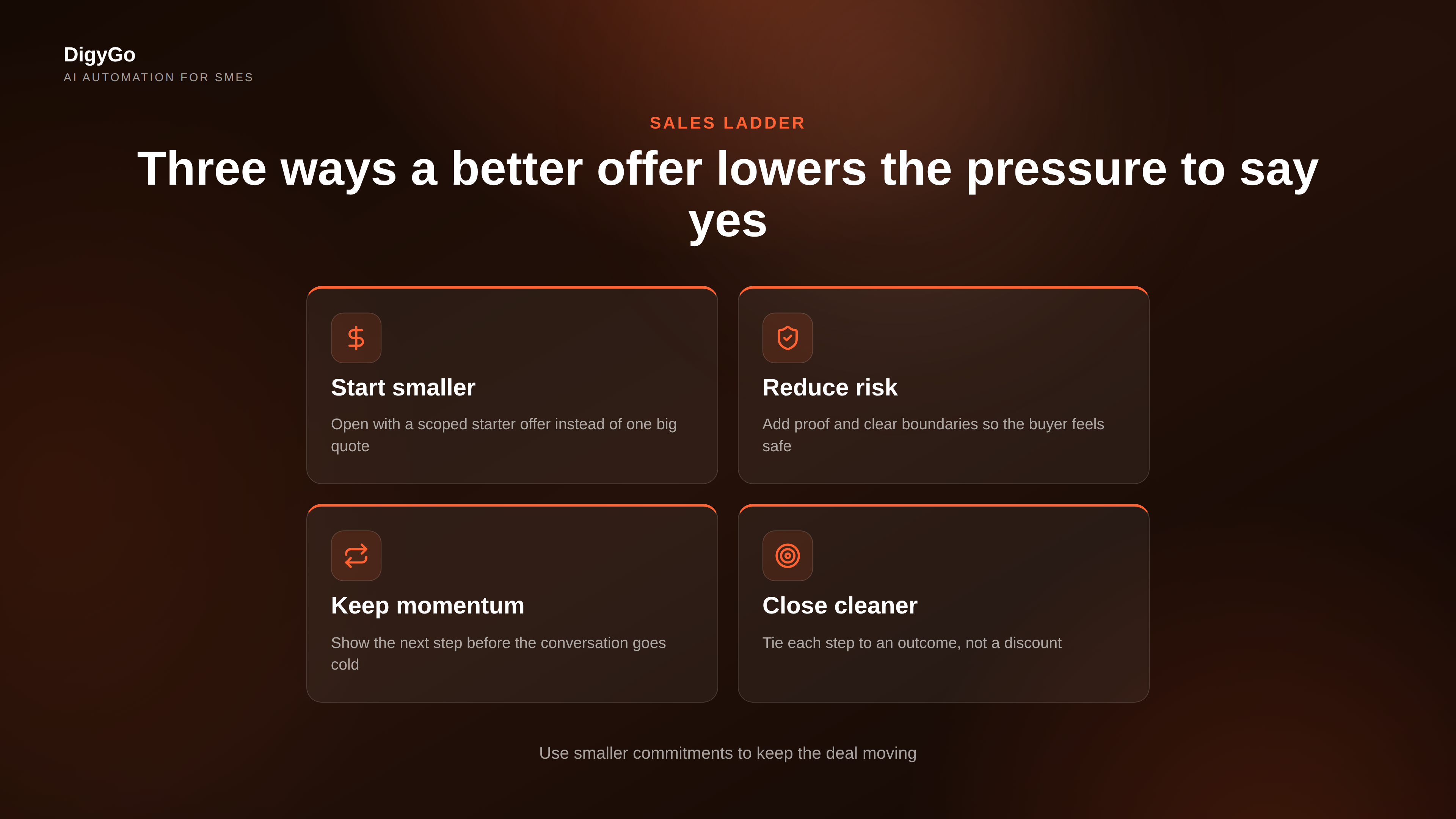
Start by writing down the three most common reasons a deal stalls. For many SME sales teams, those reasons are price, scope, and confidence. Then build one offer stage for each hesitation.
- Price hesitation: offer a lower-commitment starting point.
- Scope hesitation: define exactly what is included and excluded.
- Confidence hesitation: add proof, case studies, or a short pilot.
The goal is not to discount everything. The goal is to make the decision easier to say yes to by removing uncertainty one layer at a time.
What each step in the ladder should contain
Every offer in the ladder needs the same basic ingredients, but at different depths:
- Clear outcome: what the buyer gets if they say yes.
- Defined scope: what you will do, and what you will not do.
- Proof of value: one relevant result, result type, or client example.
- Next step: the obvious upgrade path if the buyer wants more.
If the buyer cannot see the next step, the offer feels like a dead end. If they can see the path forward, they are more likely to start small and grow later.
How to talk about the ladder in a sales call
Do not present the ladder like a hidden trick. Present it like a helpful path. For example, you might say, “We can start with a smaller scope to prove the fit, then expand once the first result is visible.” That language lowers pressure without lowering value.
It also helps when a decision-maker is not ready to approve the full budget. A smaller entry point keeps the conversation alive instead of ending the deal on the first objection.
Common mistakes to avoid
- Too many steps: keep the ladder simple so the buyer does not feel trapped.
- Random pricing gaps: each step should make business sense.
- Weak proof: every stage needs a reason to trust the next one.
- Feature overload: focus on outcome and momentum, not long feature lists.
If your ladder looks complicated, it will slow down the sale instead of helping it. Simplicity wins because it reduces the mental load on the buyer.
A simple sales ladder example for SMEs
You can adapt the structure below to consulting, services, software, or operations support:
- Discovery call: identify the problem and qualify fit.
- Starter scope: solve one high-priority part of the problem.
- Full engagement: expand once the buyer sees the first result.
- Ongoing support: keep the win alive with maintenance or growth work.
This model helps the buyer move forward without feeling forced into a large commitment on day one.
Bottom line
A sales offer ladder turns a hard close into a series of easier decisions. When the buyer can start small, see proof quickly, and understand the next step, your close rate usually improves without any discounting.
Talk to DigyGo about building a sales offer ladder for your business