Most SME brand messaging sounds polished but does not move a buyer to action. The fix is not more adjectives — it is a clearer promise, a sharper point of view, and a message system that keeps turning attention into enquiries.
A practical guide for SME founders on turning brand messaging into a clearer demand engine through positioning, proof, content, and follow-up.
Why brand messaging should do more than look good
If your audience cannot tell what you do, who it is for, and why you are different in a few seconds, they will move on. Good marketing messaging is not a slogan. It is a decision-making shortcut for the right buyer.
For SMEs, that matters because every ad, post, page, and sales conversation borrows from the same core story. When the story is weak, demand generation becomes expensive. When the story is clear, every channel gets easier.
- Brand messaging should make the offer easier to understand fast.
- One clear promise beats five different claims across channels.
- Content works better when it repeats the same buyer problem and outcome.
The messaging system that turns attention into demand
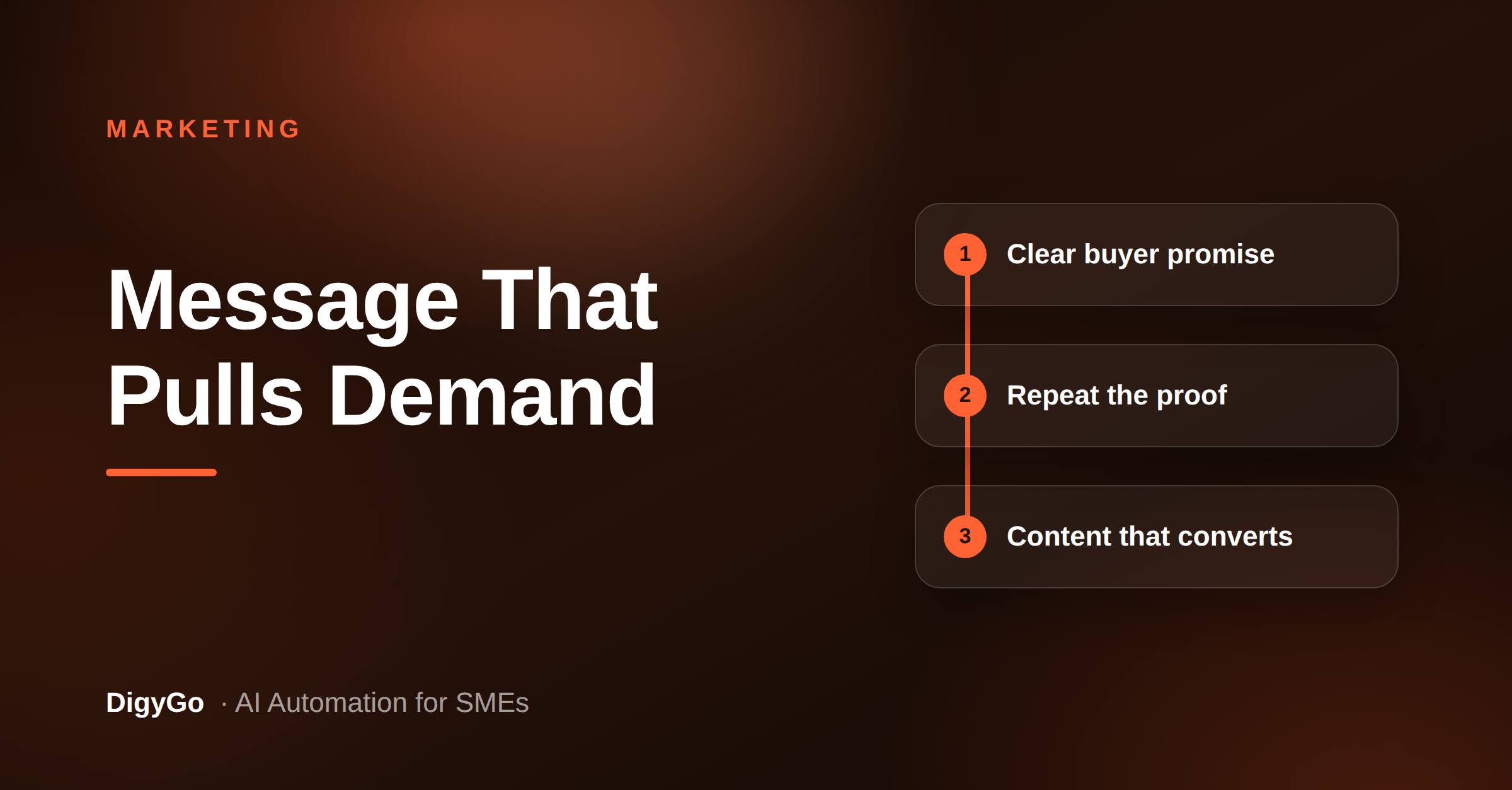
The most effective SME message is built in layers: positioning, proof, content, and follow-up. Each layer removes a little more doubt until the buyer is ready to respond.
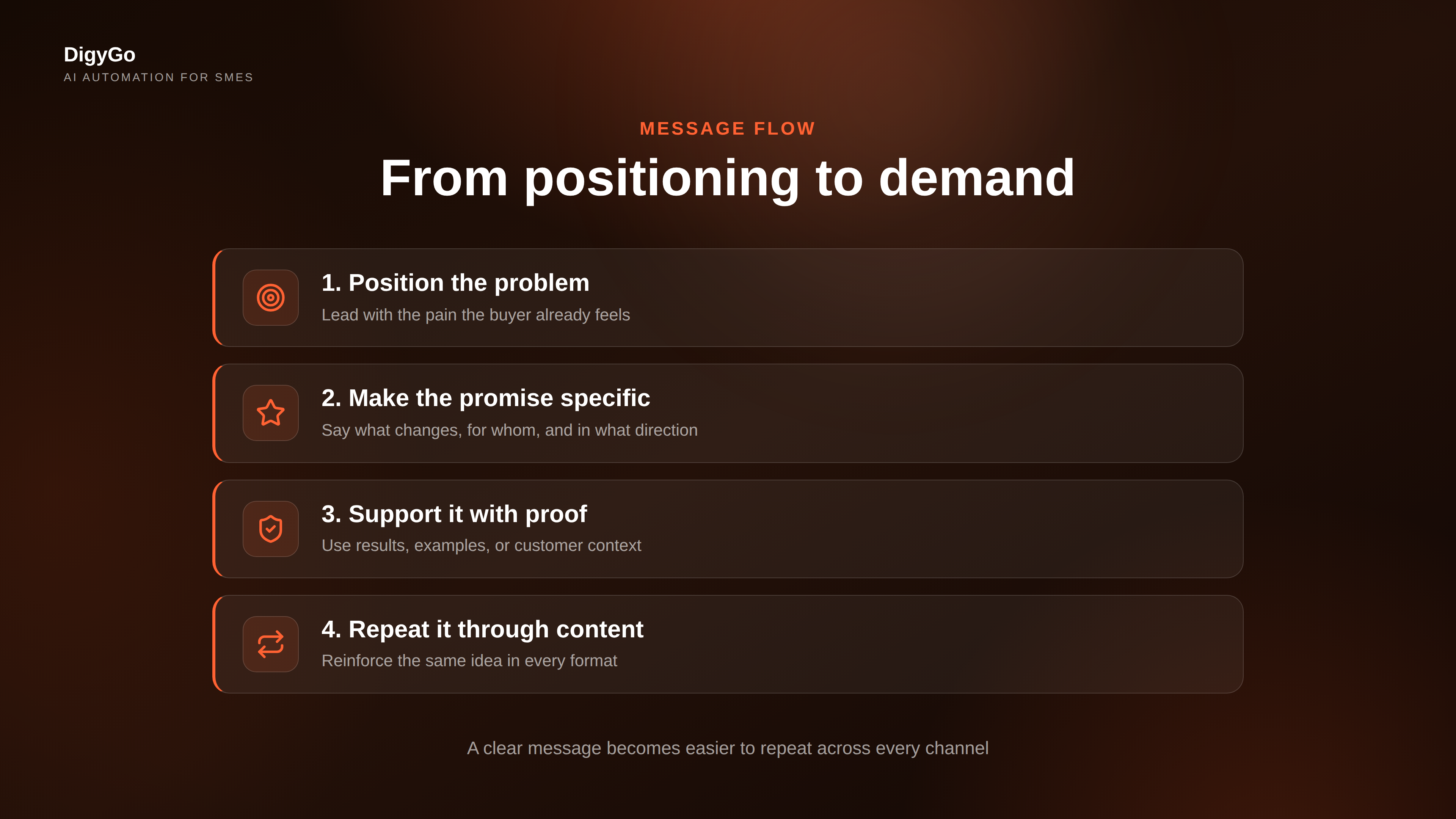
1. Position the problem clearly
Start with the problem your buyer already feels. Do not lead with your service list. Lead with the pain, the missed opportunity, or the bottleneck that is already costing them time or revenue.
2. Make the promise specific
A demand-generating message is specific enough to be believed. Say what changes, for whom, and in what direction. The clearer the promise, the less work the buyer has to do to understand your value.
3. Support it with proof
Proof can be a result, a process, a customer type, a comparison, or a simple example. The goal is to reduce doubt, not impress people with noise.
4. Repeat it through content
Content should not invent a new story every time. It should reuse the same core promise in different formats — a post, a case study, a FAQ, a comparison, or a short explainer. That repetition builds memory and trust.
What to say on each channel
Different channels play different roles, but they should all point back to the same message. If the website says one thing, social media says another, and sales says a third, the buyer experiences friction instead of confidence.
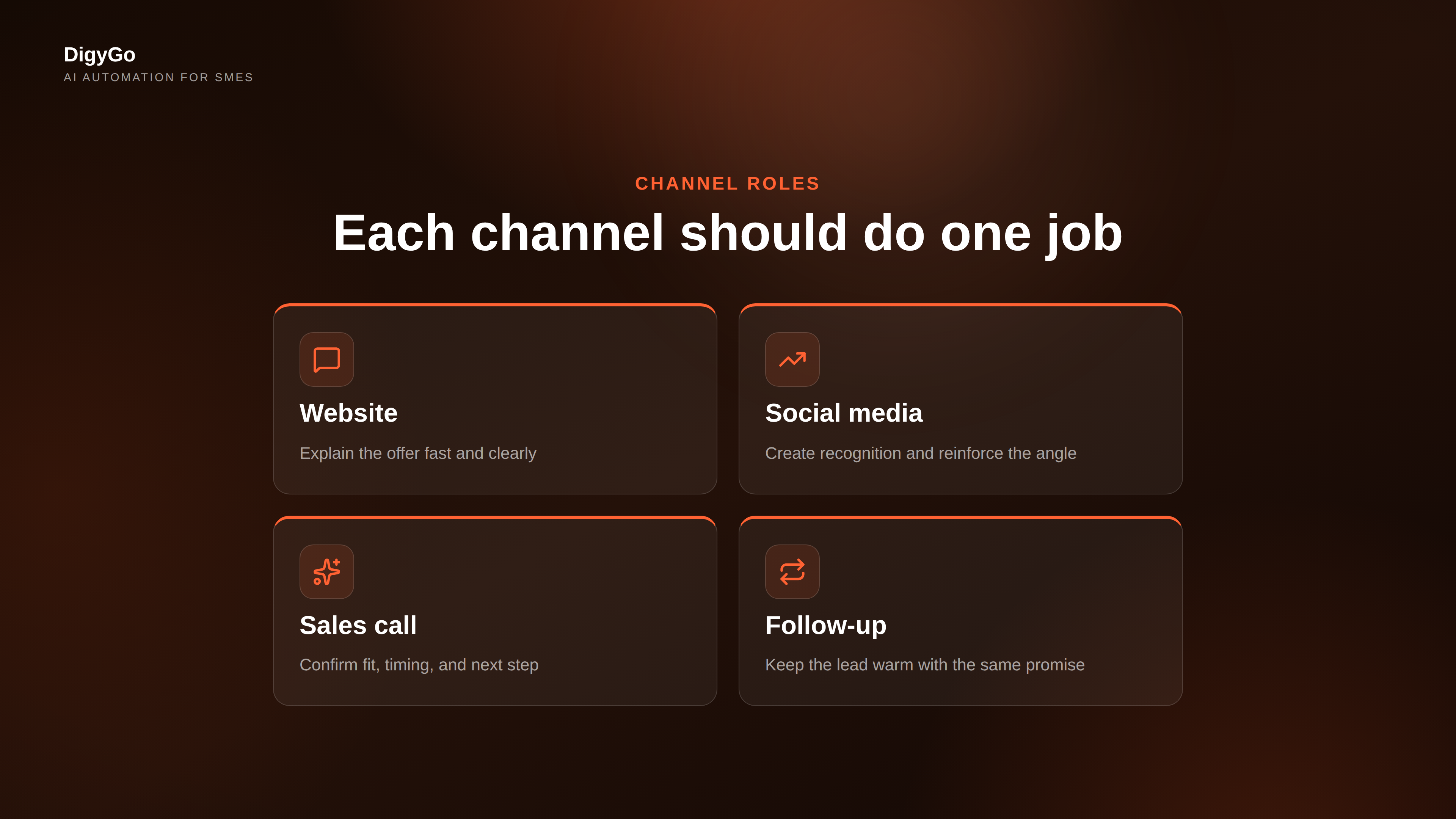
| Channel | What it should do | Best message job |
|---|---|---|
| Website | Explain the offer fast | Clarity and conversion |
| Social media | Create recognition | Reinforce the same angle |
| Sales call | Confirm fit and timing | Reduce hesitation |
| Follow-up | Keep the lead warm | Repeat the core promise |
How SMEs should build the message in practice
Use one sentence to describe the buyer problem, one sentence to describe your outcome, and one proof point that makes the claim feel real. Then reuse that structure everywhere until the market starts repeating it back to you.
- Problem: What is the buyer struggling with right now?
- Promise: What change do they want?
- Proof: Why should they trust you?
- Repeat: How will the same idea show up across content?
A good message does not try to speak to everyone. It speaks so clearly to the right buyer that the wrong buyer self-selects out.
FAQ
Is brand messaging the same as branding?
No. Branding is the broader identity and perception. Messaging is the words and angles you use to explain value.
How often should an SME change its messaging?
Not often. Improve it when the market changes, the offer changes, or the message is clearly not converting.
Can content alone fix weak positioning?
No. Content can amplify strong positioning, but it cannot rescue a vague offer. Fix the message first, then scale the content.