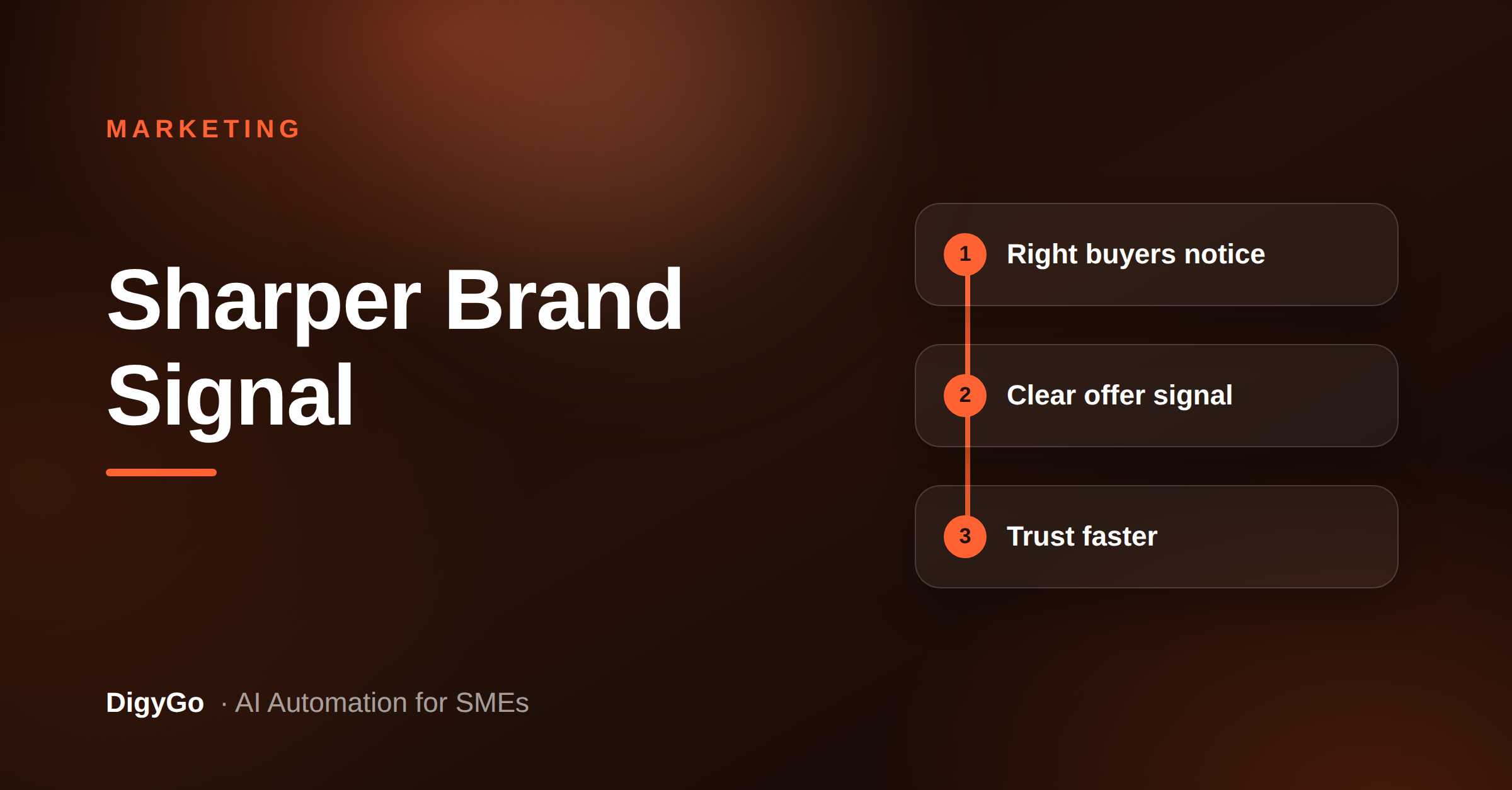
If your market is crowded, better positioning does not mean louder messaging. It means the right buyer should understand, in seconds, what you do, who it is for, and why they should trust you now.
A practical guide for SMEs on building clearer positioning so the right buyers recognize the offer faster and move toward enquiry.
Why positioning fails for SMEs
Most SMEs do not have a marketing problem first. They have a clarity problem. Their homepage says too much, their services page says too little, and every channel sounds slightly different. The result is simple: buyers do not remember the business, even when the service is good.
- Too many offers confuse the reader.
- Generic claims sound like everyone else.
- Proof is not visible early enough.
- The team sells different stories in different places.
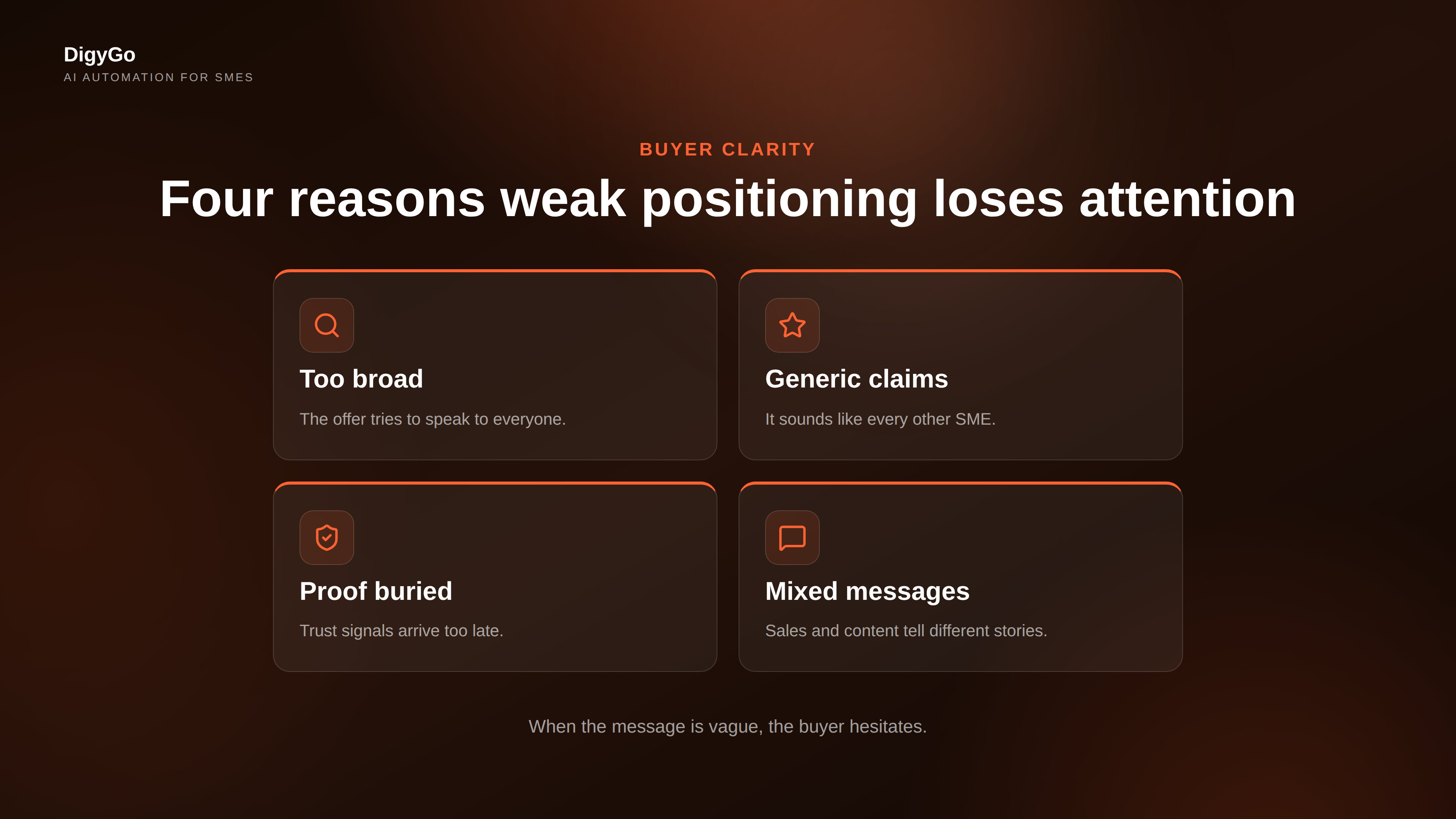
When a buyer cannot quickly place you, they delay. They may keep your name in mind, but they will not act. Strong positioning makes the next step obvious, so attention turns into enquiry instead of hesitation.
Make the offer easy to recognize
Good positioning answers three questions fast: what you do, who you help, and what outcome you are known for. If those answers are buried in long paragraphs, the market will do the sorting for you and often sort you into the wrong box.
Use one clear promise across your main touchpoints. Then support it with specific proof, a narrow audience, and a simple CTA that matches buyer intent. If you serve SMEs, say so. If your edge is speed, process, or automation, say that plainly.
Turn positioning into demand generation
Positioning is not only about brand perception. It is also a demand-generation lever. When the message is sharp, your content attracts the right traffic, your social posts get better clicks, and your sales team starts fewer conversations from zero.
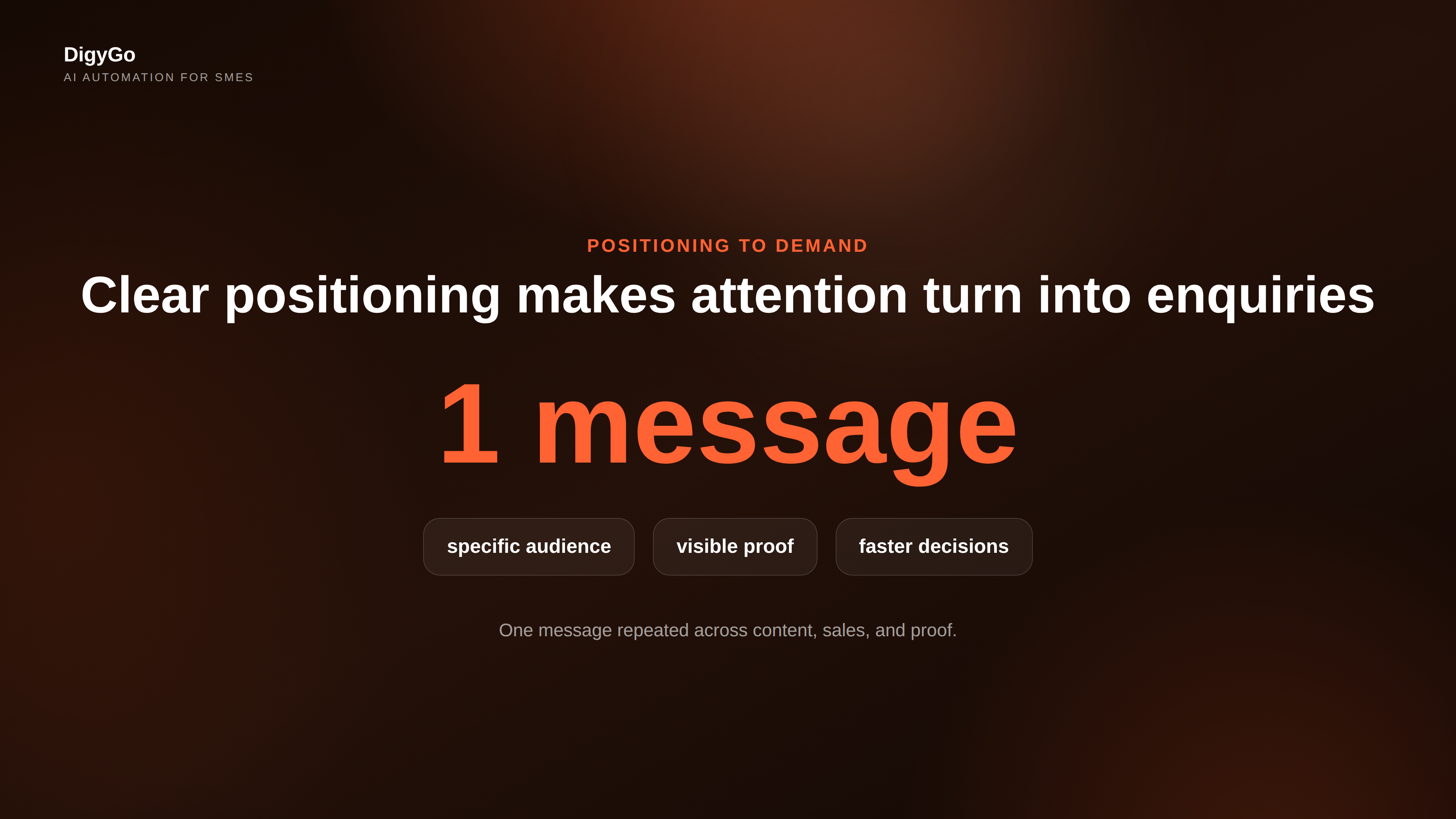
That is why content should not float separately from your offer. A blog post, a case study, or a short LinkedIn update should reinforce the same market idea. Over time, this repetition builds familiarity, and familiarity lowers the friction to enquire.
- Pick one ideal buyer segment.
- State one painful problem clearly.
- Show one believable outcome.
- Repeat the same proof everywhere.
Signals that build trust
Buyers do not only evaluate the offer. They evaluate confidence. Small trust signals matter: a clear founder story, specific case results, consistent visuals, and language that sounds human instead of inflated.
For SMEs, trust is often won in the details. The faster people can see what makes you different, the easier it becomes to move them toward a call, a demo, or a quote request.
- Use one core message on every key page.
- Show proof near the first CTA.
- Keep the language direct and specific.
- Remove anything that makes the offer feel generic.
FAQ
Is positioning the same as branding?
Not exactly. Branding is how people recognize you. Positioning is the space you want to own in their mind. Strong SMEs need both, but positioning should come first because it shapes the story the brand tells.
How often should we refine our positioning?
Whenever the market, buyer, or offer changes materially. In practice, review it at least once a quarter and every time you notice the same confusion repeating in sales calls.
What is the fastest way to improve positioning?
Cut the extras. Narrow the audience, sharpen the outcome, and make the proof visible. In most SMEs, clarity beats creativity.
Talk to DigyGo about clearer positioning and demand generation