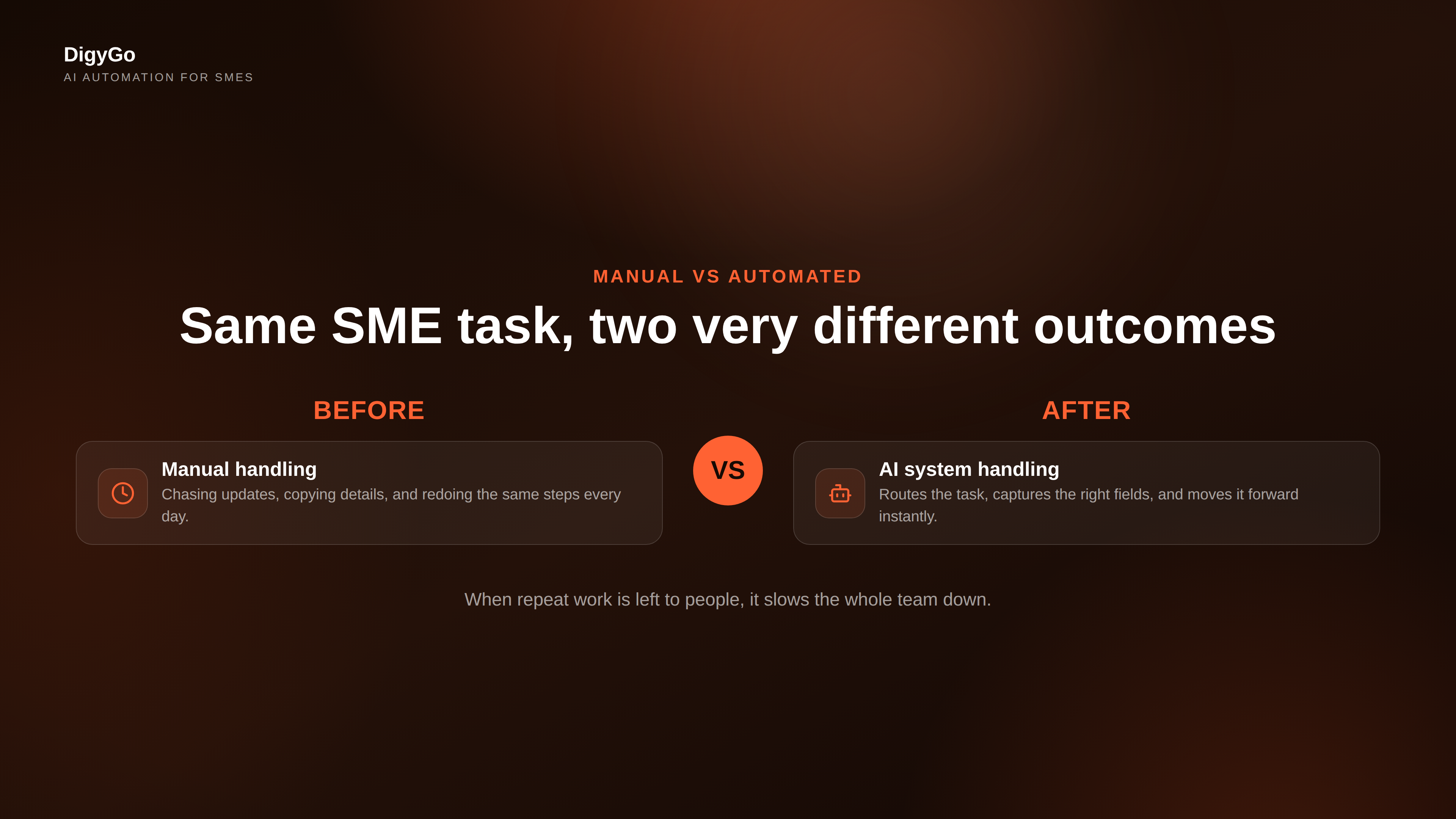
Most SME operations do not fail because the team is lazy. They fail because the same small tasks keep landing on people’s desks every day: capture the request, ask for missing details, assign the owner, and chase the next update. An AI system does not replace the team. It removes the repeat work that slows the team down.
A practical guide for SME founders on turning repetitive operational work into a simple AI runbook that reduces manual chasing and keeps work moving.
What a good AI system should actually do
A useful AI system for an SME is not a fancy chatbot sitting on top of your website. It is a daily operating layer that watches for repeated work, understands what came in, and moves the task to the right place without someone babysitting it.
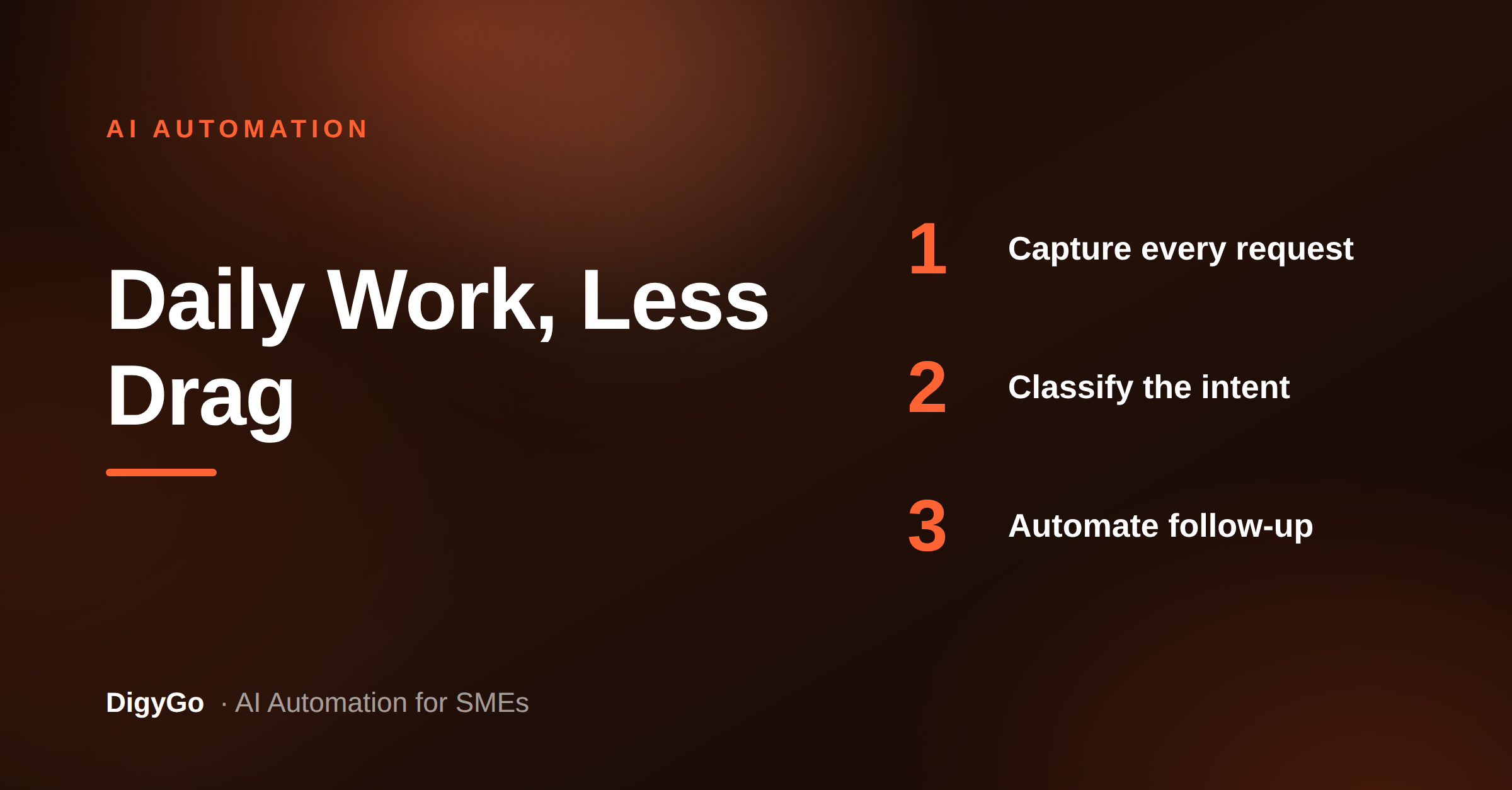
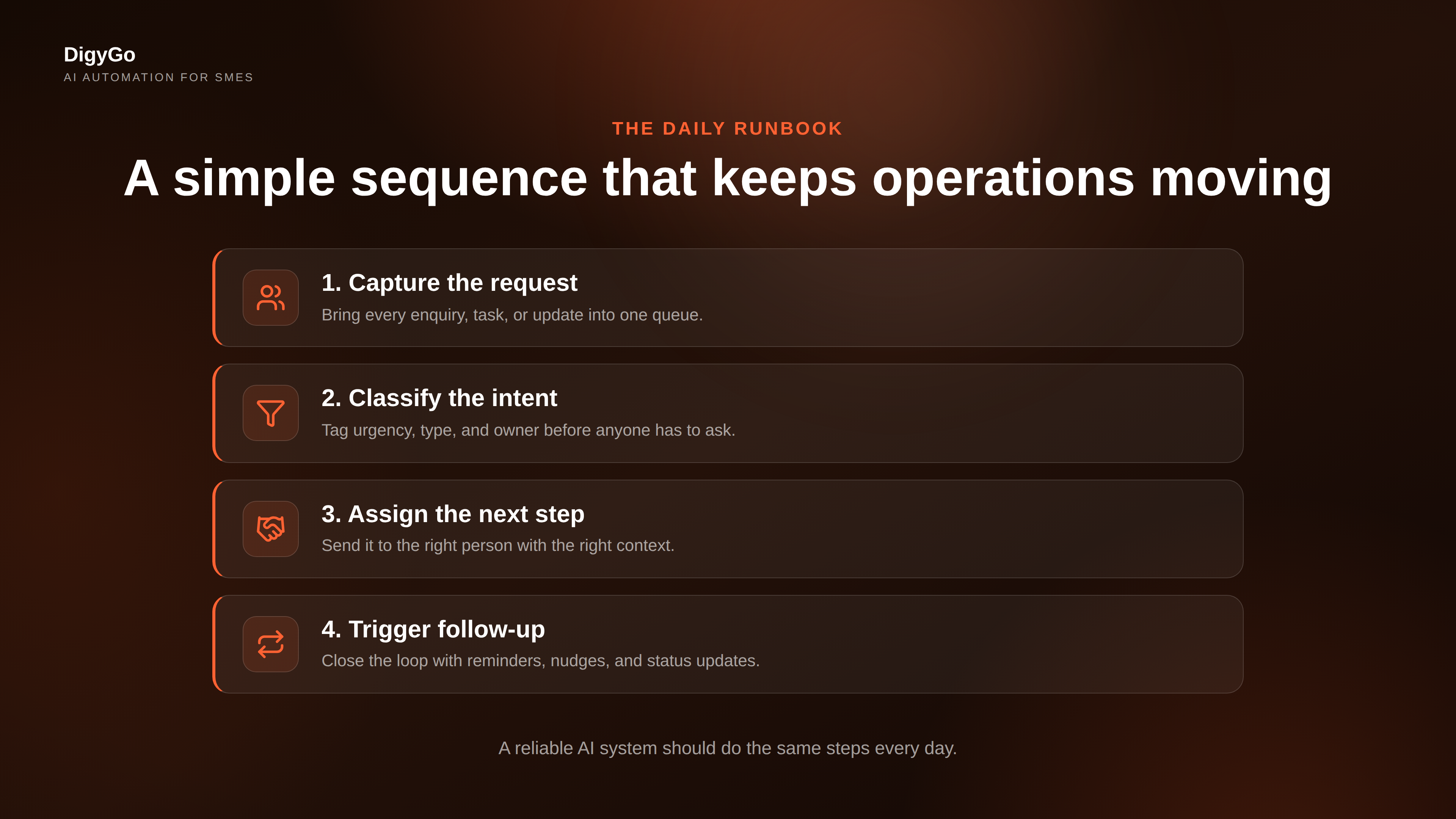
In practice, that means four things: capture the request, classify the intent, assign the next step, and trigger follow-up. If any one of those steps is manual, the whole system becomes fragile again.
Why repetitive work is the real bottleneck
Founders usually look for big automation wins, but the biggest time leak is often the smallest repeat. One missed update in WhatsApp turns into three follow-up messages. One form submission turns into a manual check. One sales handoff turns into a reminder that someone forgets to send.
That is why AI systems work best when they target work that happens every day, not just once in a while. If a process repeats often enough, it deserves a system.
- Capture: bring every enquiry, task, or update into one queue.
- Classify: tag urgency, type, and owner before anyone has to ask.
- Assign: send it to the right person with the right context.
- Follow up: close the loop with reminders, nudges, and status updates.
Build the runbook before you build the bot
The mistake I see most often is trying to automate a process that is not clear yet. If your team handles leads, support, and internal tasks differently every time, the AI has nothing stable to follow. Start by writing the runbook in plain language first.
Ask three questions: what enters the system, who should own it, and what should happen next if nobody responds. Once those answers are fixed, the AI can do the boring part consistently.
Where SMEs usually see the fastest win
The fastest improvement usually comes from routing and follow-up. When a request reaches the right person faster, the team stops wasting time on internal handoffs. When follow-up is automatic, fewer opportunities go cold while someone is waiting to “get to it later.”
That is why we like to start with one narrow workflow, prove that it saves time, and then expand to the next repetitive process. The goal is not to automate everything at once. The goal is to make one daily workflow dependable.
What to measure after launch
If an AI system is working, you should see fewer manual touches and faster response times. You do not need a complex dashboard to know that. Track the basics: how fast the first action happens, how often the right owner gets assigned, and how many follow-ups happen without a human reminder.
- First response time
- Assignment accuracy
- Follow-up completion rate
- Time saved per workflow
The best SME automation is not the one with the most features. It is the one that quietly removes the daily friction your team has learned to tolerate.
If you want help mapping one repetitive workflow into an AI runbook, talk to DigyGo.