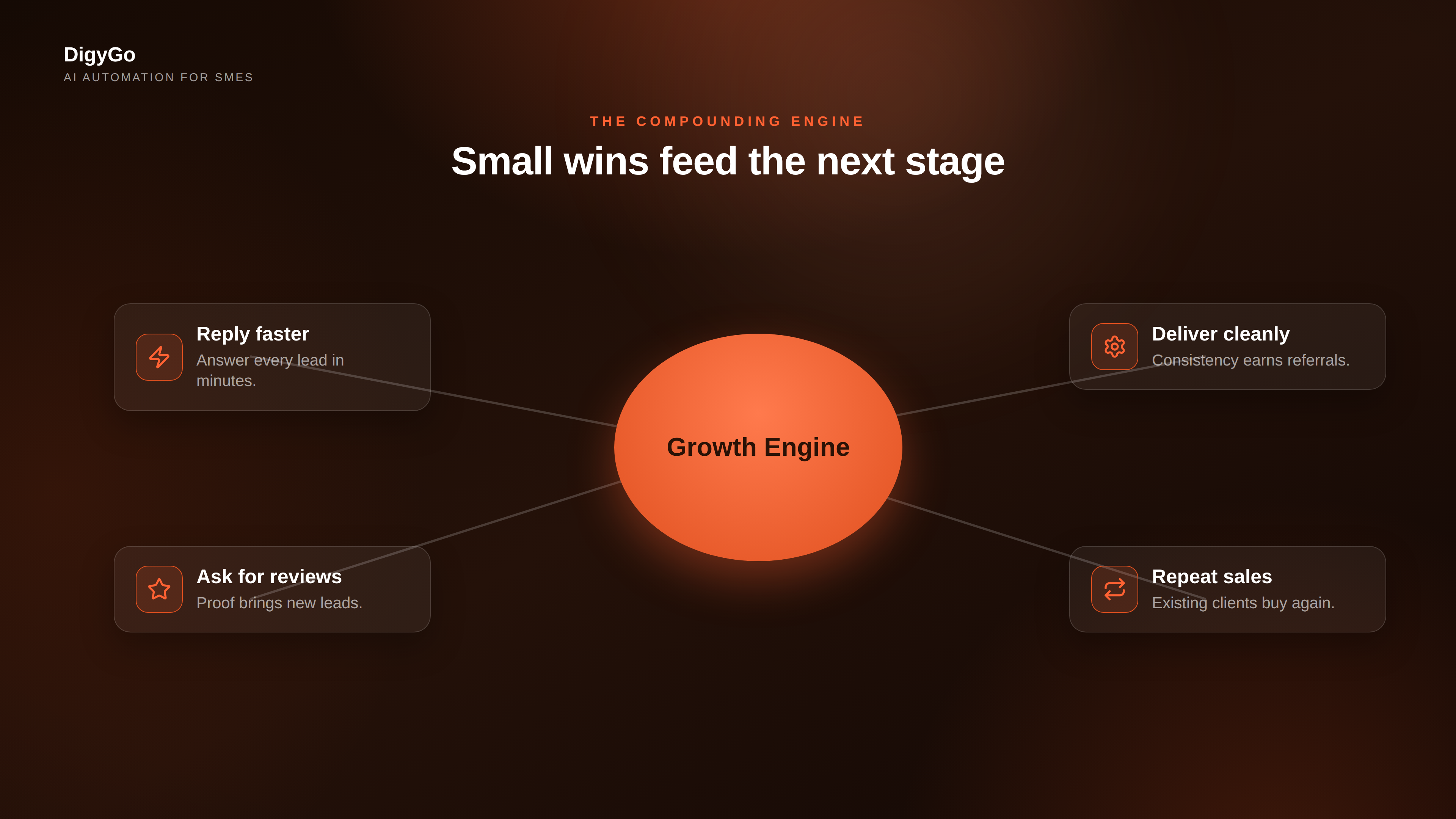
Most SME growth problems are not caused by a lack of effort. They come from scattered effort. When leads, follow-up, delivery, and retention all run in separate ways, the business keeps working hard but growth stays flat. A growth system changes that by making each win feed the next one.
A practical guide to building growth systems that connect lead flow, delivery, and retention so SME results become more consistent and easier to scale.
If you want growth that keeps showing up, you need more than campaigns. You need repeatable systems that handle enquiries, protect follow-up, and keep customers coming back. That is what compounds over time.
Key takeaways
- Growth slows when every part of the business is run manually
- Systems create consistency, and consistency creates compounding results
- The best place to start is lead flow, then retention, then internal operations
- Small repeatable wins matter more than one-off bursts
Cover line for thumbnail: Build Growth That Compounds
Why SME growth usually stalls
In many SMEs, every new sale depends on a person remembering the next step. Someone has to reply, someone has to follow up, someone has to update the sheet, and someone has to remember the customer after the invoice is paid. That works for a while, then breaks under load.
Once the volume increases, the cracks show up fast. Leads slip through. Customers are not reactivated. Internal work gets delayed. The business is still busy, but the output is inconsistent.
system beats ten scattered habits.
growth loops can carry most SME momentum.
compounding starts when wins feed the next win.
What a growth system actually is
A growth system is a repeatable process that turns input into outcome without depending on memory. It defines what happens, when it happens, and who owns it. That makes growth more predictable and much easier to improve.
For SMEs, the goal is not to automate everything at once. The goal is to make the most important steps stable enough that the business can grow without chaos.
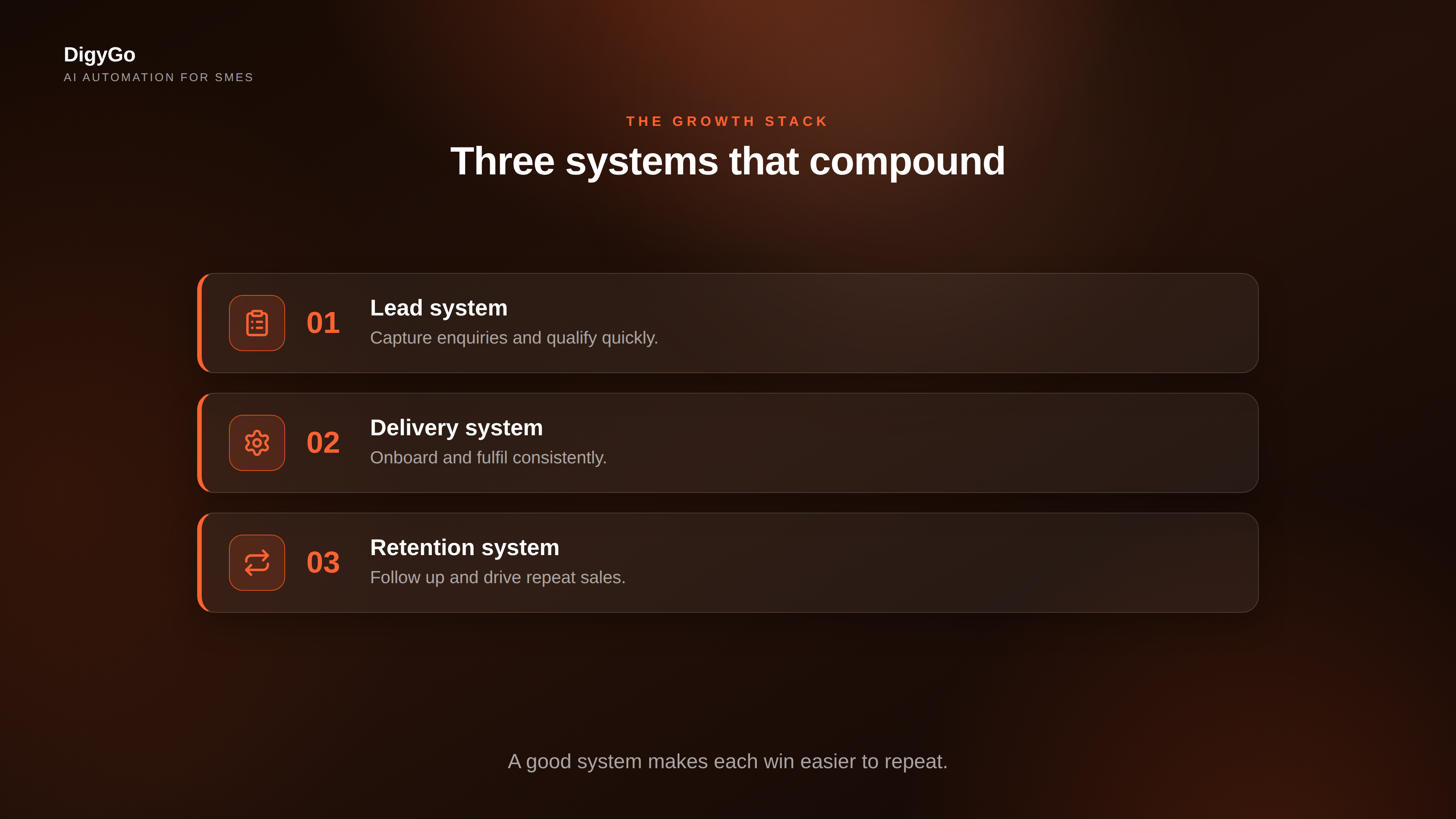
The 3-system stack that compounds growth
Lead system
Capture, respond, qualify, and route enquiries fast.
Delivery system
Onboard, fulfill, update, and hand off with consistency.
Retention system
Follow up, re-engage, ask for reviews, and win repeat business.
Compounding
Each layer strengthens the next one instead of leaking value.
This stack matters because the best new lead in the world still loses value if delivery is messy. And the best delivery in the world still loses value if there is no retention plan after the first sale.
Make first contact reliable
- Instant acknowledgement
- Simple qualification questions
- Clear ownership
- Fast handoff to a person
Make service delivery repeatable
- Standard onboarding
- Status updates at set points
- Checklists instead of memory
- Escalation when work stalls
Make post-sale revenue predictable
- Reminder sequences
- Review requests
- Repeat offer prompts
- Win-back messages
Make the back office support growth
- Task ownership
- Standard reports
- Simple dashboards
- Weekly review rhythm
What to measure so the system keeps improving
Systems are not successful because they exist. They are successful because they improve the numbers that matter to the business.
- First response time for enquiries
- Qualification rate for incoming leads
- Handoff accuracy between teams
- Repeat purchase rate from existing customers
- Review rate and referral rate after delivery
- Task completion rate for weekly operations
When these numbers improve together, growth becomes easier to forecast. That is the real advantage of a system-first business.
Best starting point: Build the system around the highest-volume or highest-leakage part of your business first. For most SMEs, that is lead response or retention.
FAQ
Do I need software before I build a growth system?
No. Start by defining the steps and owners. Software should support the system, not replace the thinking.
What if my team is small?
Small teams benefit the most because systems reduce guesswork and keep important work from being forgotten.
Can one system fix all growth problems?
Usually not. Start with one bottleneck, prove the gain, then layer the next system on top.
Build the system before the chaos gets expensive
SME growth gets easier when it becomes repeatable. If you build systems that capture leads, keep delivery clean, and bring customers back, you stop chasing short bursts and start compounding progress.
When you are ready to map that into a practical operating system, book a free call with DigyGo.